Capsule House Price in Indonesia: True Landed Cost
What a capsule house costs landed in Indonesia: humid-climate configuration, freight and island distribution, customs and taxes, site works and commissioning.

Indonesia is not the Middle East with a different flag. The landed cost of a capsule house there is shaped by conditions that do not appear in Gulf or Chinese enquiries: an archipelago's logistics, high ambient humidity year-round, seismic and volcanic design loads, and a regulatory environment with its own national standard and local content dimensions. This page sets out the five cost blocks and the five local variables, in the order they affect a budget. It deliberately publishes no price figures, because they depend on configuration, route and a date that only your suppliers can quote. The general pricing framework is in the capsule house price guide, and the market background is in the Indonesia capsule house guide.
The Five Blocks of an Indonesian Landed Cost
The structure is the same everywhere; the weights are what change. In Indonesia the two blocks that most often surprise buyers are the third and the fifth.
- Unit as configured — size, glazing, interior fit-out, air conditioning and any items added for Indonesian conditions.
- Export handling and ocean freight to the discharge port.
- Customs, taxes and clearance, including broker handling, terminal charges and any storage.
- Inland distribution, which for island sites may mean a further sea leg.
- Site works, utilities and commissioning, which are site-specific and frequently underestimated.
Ask every supplier to quote against these same five blocks with the Incoterm and named place stated. It is the only way two quotes become comparable, and it is the single highest-value line you can put into your RFQ. The template for doing it is in the capsule house RFQ template.
Block 1: Configuration, and What Indonesian Conditions Add
Configuration is the only block the supplier controls, and it is where Specification decisions made later become change orders. Beyond size and layout — the Haishu Galactic A range runs from the compact A30 through the A50 to the larger A70, frequently configured as two storeys — five items deserve specific attention for this market.
- Humidity and condensation. High ambient humidity with heavy air conditioning produces cold internal surfaces and mould risk. Ask for frame thermal breaks, the glazing build-up and the ventilation provision with a stated fresh-air rate. See condensation in humid climates.
- Coastal exposure. Much of the demand is on or near the sea. Corrosion protection — substrate, preparation standard, coating system and fastener specification — belongs in the order rather than in a later complaint: coastal corrosion protection.
- Electrical supply. Confirm voltage and frequency at your specific site before the order; equipment must suit the local supply, and the cooling plant is the governing load.
- Seismic parameters. Indonesia sits on active seismic ground. Ask your engineer for the site-specific design parameters and require the unit's structural provision to be stated against them: seismic considerations.
- Volcanic ash exposure. Some sites sit within ash-fall zones. Where relevant, ask about filtration, external equipment protection and cleaning access.
Block 2: Freight, and Why the Island Changes the Quote
Ocean freight is quoted on volume and weight, and for out-of-gauge cargo on the space occupied. In Indonesia the destination is frequently not the discharge port, which means the freight question and the distribution question have to be answered together.
- Transport form first. A unit that folds within container dimensions moves as containerised cargo, with frequent sailings and easier re-booking. A finished unit beyond those dimensions moves as out-of-gauge cargo on a flat rack or break bulk, with fewer sailings and higher handling. Ask for both, priced side by side, including the inland legs.
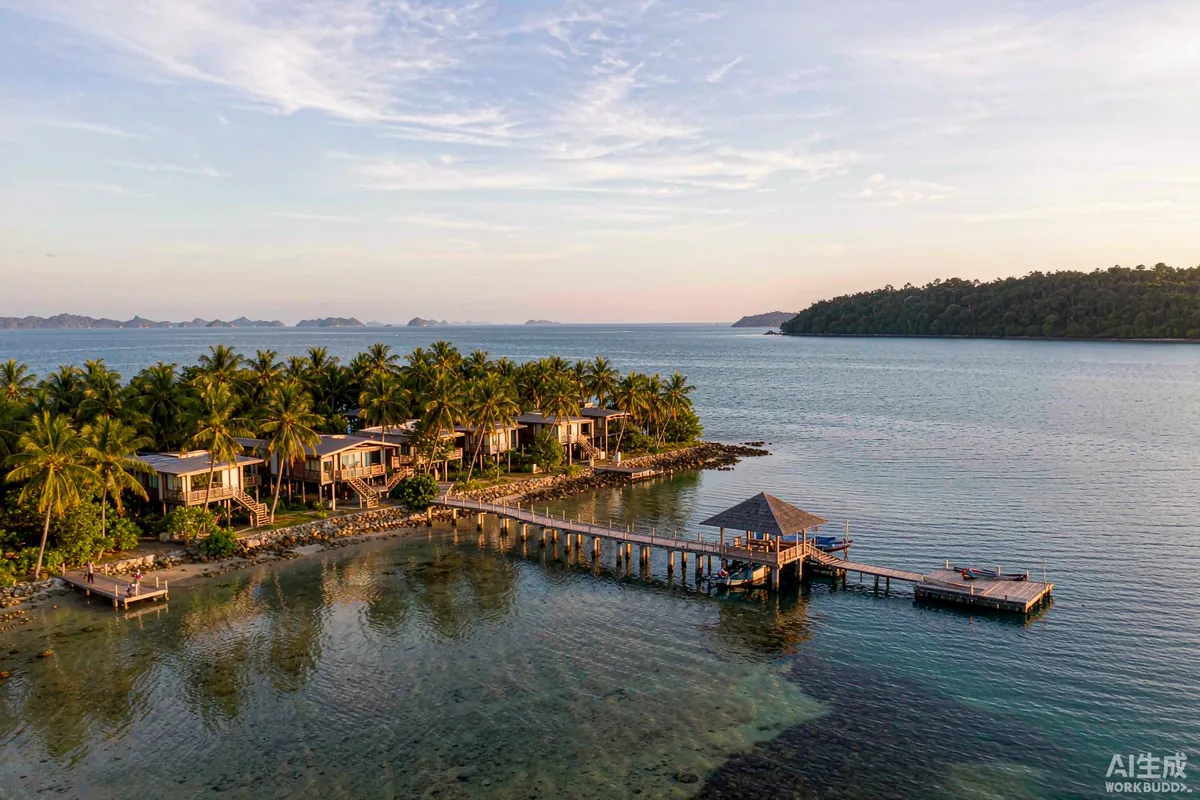
- Discharge port versus final site. A unit landing at a major container terminal may still require a domestic sea leg, a barge or a smaller vessel to reach an island site. Quote the whole route, not the first leg.
- Transhipment adds risk. Where no direct service exists, each additional handling point is another opportunity for damage and delay. Ask how many times the cargo is handled.
- Batching. Freight carries substantial fixed costs — booking, documentation, equipment positioning — so the per-unit figure falls as the shipment grows.
Block 3: Customs, Taxes and Clearance
This block is determined by authorities, not by suppliers, and it is where accuracy matters most. We do not publish duty or tax rates: they depend on the customs classification assigned to the goods as presented and on the rates in force at the entry date. What should be fixed in advance is the structure.
- Classification. Duty is applied according to the tariff classification of the goods. Ask your broker to state the code they intend to use, with the reason, in writing before the goods ship.
- Taxes. Value-added tax and any import-related withholding taxes are levied under national rules. Ask your broker or tax adviser to state which apply to your consignment and on what basis.
- Customs value. Generally derived from the transaction value, with freight and insurance treated as part of it in many jurisdictions — but the exact basis should be stated by your broker rather than assumed.
- Clearance costs. Brokerage, documentation, terminal handling, and storage or demurrage if the file is incomplete on arrival. Free time is limited and charges accrue daily.
- National standard and local content. Indonesia operates a national standard system, and some projects carry local content expectations. Whether a particular product, component or project falls within either depends on its classification and on the project's requirements; confirm this with your adviser rather than accepting a general assurance from any supplier. Where a supplier offers a certificate, request the number, issuing body, scope and validity dates and verify with the issuer.
Requirements may vary by application, market and applicable standard. The practical rule: classification is the importer's declaration. The broker advises; the importer carries it.
Block 4: Inland Distribution and Crane
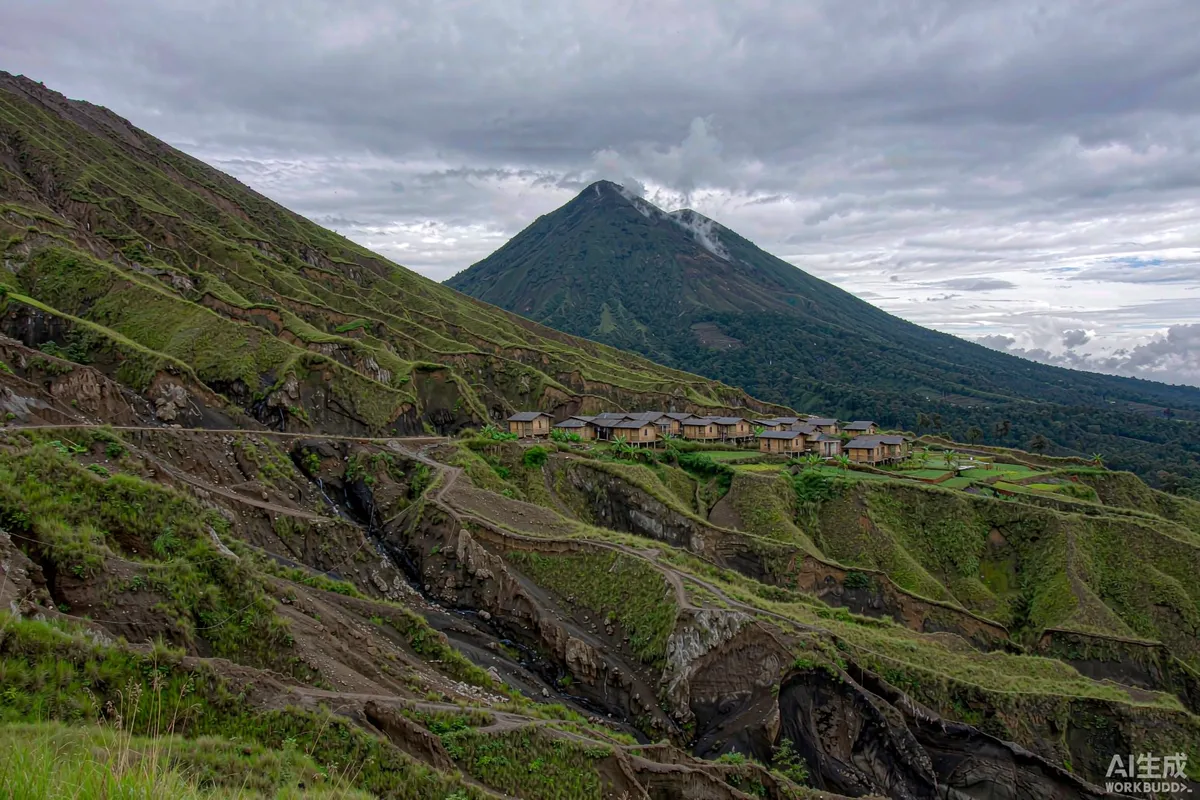
Indonesian sites add two variables that Gulf projects rarely face: narrow or steep access and a genuine possibility that the final approach is over water.
- Access survey before the crane is booked. Width, gradient, turning circle, overhead restrictions and bridge capacity. A unit that cannot reach the pad is a project-level problem, not a transport one.
- Barge or landing craft, where applicable. Jetty availability, tidal windows and beach landing all need to be planned rather than improvised.
- Crane capacity and reach radius. Cost is driven by radius, not weight. One mobilisation for several units is materially cheaper per unit — provided all pads are ready.
- Sequencing. Utilities to their connection points before the lift, so commissioning follows in one run.
The on-site sequence and the interface between the factory-made structure and the locally built foundation are covered in installation, foundations and utilities and foundation cost drivers.
Block 5: Site Works, Utilities and Commissioning
Usually the second largest block after the units, and the most site-sensitive. The same units on two plots can have very different site costs, which is why this block should be built from local unit rates multiplied by measured quantities rather than from a percentage.
- Geotechnical investigation and foundation. Tropical soils and sloping sites vary sharply; investigate before designing.
- Power, water and wastewater. Connection costs, any extension of services, and wastewater treatment appropriate to the location.
- Drainage. High rainfall intensity on sloped tropical ground makes surface water a design item: water supply and drainage.
- Approvals. The permit and compliance sequence is local and depends on the site's classification; confirm it with the authority having jurisdiction — this page cannot state what applies to your project.
What to Require in the Quote
| Line | Why it governs the budget |
|---|---|
| Incoterm and named place | Two quotes without it are not comparable |
| Transport form and packed dimensions | Determines freight mode, sailings and handling cost |
| Discharge port and final destination, quoted together | The last leg frequently exceeds the ocean rate per unit |
| Options priced per unit and per item | Enables re-costing a later phase without renegotiating |
| Lead time from a defined trigger | Deposit date, drawing approval or production slot — not a vague range |
| Documentation pack list | Delays here convert into daily terminal charges |
| Warranty and spare parts in writing | Determines who pays to ship a replacement |
Local conditions change what you buy as well as what you pay: the specification notes above are the difference between a unit that performs in Indonesian humidity and one that becomes a maintenance problem. Current configurations are on the product pages. For a project quantity, send the site location, the unit count and your delivery window and we will build the landed cost with you block by block.
More from the Blog

Capsule Home Cost Guide: What You Really Pay in 2026
EXW, shipping, install and the hidden line items — a transparent breakdown of total landed cost.
Read article →
How to Install a Capsule Home in 3 Days: A Step-by-Step Guide
From site prep to first guest — the exact sequence our install crews follow on every deployment.
Read article →
Real Owners, Real Numbers: Success Stories
How a lakeside resort, a Spanish glamping site and a Singapore dealer hit their targets.
Read stories →Talk to the Factory
Ready to Ride the 2026 Wave?
Get the latest catalog, pricing tiers and a layout sketch for your land — straight from the engineering team.