Capsule House RFQ Template: What to Ask Suppliers
A copy-and-use RFQ structure for capsule house suppliers: project facts, technical response fields, commercial terms, documents and a comparison scorecard.

Most capsule house enquiries fail in the same way: the buyer asks for a price, receives three numbers that were never built on the same basis, and then spends two weeks discovering why they differ. The fix is not a longer email. It is a request structure that forces every supplier to answer the same fields with stated values. Below is that structure — five sections you can copy into your own document, plus a comparison sheet. The evaluation logic behind it is in the supplier evaluation guide, and the normalisation method in how to write an RFQ that gets comparable quotes. Requirements may vary by application, market and applicable standard.
Section A — Project Facts You Fill In Before Sending
Suppliers can only quote what you tell them. Completing this section yourself is what makes the responses comparable, and it is the part buyers most often skip.
- Quantity and phasing: [ units in phase 1 ], [ units in later phases ], [ delivery window ].
- Destination: [ country ], [ nearest port ], [ site location or region ].
- Intended use and occupancy: [ overnight rental / staff accommodation / office / other ], [ occupants per unit ], [ seasonal or year-round ].
- Climate and site conditions: [ summer design temperature ], [ winter design temperature ], [ wind exposure ], [ coastal salt exposure ], [ altitude ], [ seismic requirement ].
- Electrical supply: [ voltage ], [ frequency ], [ single or three phase ], [ available capacity ].
- Water and wastewater: [ mains / tanker / on-site ], [ sewer / septic / treatment ].
- Applicable standards and approvals: [ list the ones you know ], [ state that others may apply ].
- Access constraints: [ road width and height limits ], [ crane availability ], [ pad type ].
The last two lines do the most work. Naming the standards you are aware of shifts the burden of completeness onto the supplier, and stating the access constraints prevents a quote for a unit that cannot reach your site.
Section B — Technical Response Fields
Ask for a value in every field and an explicit "complied / not complied / alternative proposed". A blank field is an answer, and it usually means the item is excluded.
| Field | Ask supplier to state |
|---|---|
| Dimensions | External and internal dimensions, deployed and packed where applicable, with drawings attached |
| Structure | Structural system, design loads used, and the connection or anchorage detail for the foundation |
| Envelope | Wall, roof and floor build-ups with layer thicknesses and stated U-values |
| Glazing | Type, coating, U-value and solar heat gain coefficient |
| Cooling and heating | Capacity and the outdoor design ambient it was calculated at |
| Electrical | Voltage and frequency rating of all equipment, load list, single-line diagram, protection ratings |
| Plumbing | Schematic, fixture list, connection point sizes and locations, drainage gradient |
| Fire provisions | Detector type and position, extinguisher type and rating, egress widths, material declarations |
| Finishes and furniture | Included items listed by room, with the exclusion list stated separately |
| Mechanism, if expandable | Cycle life with test data, joint sealing method, seal replacement interval and method |
Require drawings with every response. A quotation without a general arrangement drawing and a single-line diagram cannot be compared with anything, and it cannot be submitted to an authority either.
Section C — Commercial Terms
Each of these is a field the supplier fills in, and each one is a place where quotes silently diverge.
- Incoterm and named place: [ e.g. FOB named port / CIF named port / DAP named place ].
- Currency and validity period: [ currency ], [ valid until date ].
- Unit price and the options list priced separately: base configuration [ ], each option [ ].
- Minimum order quantity and price breaks: [ MOQ ], [ break at N units ].
- Payment terms: [ deposit ], [ stage payments ], [ balance trigger ].
- Lead time from a defined trigger: [ days from deposit / from drawing approval ].
- Packing: [ number of packages ], [ dimensions ], [ gross weight ].
- Warranty: [ duration ], [ scope ], [ who pays freight on replacement parts ].
- Spare parts supplied with the order: [ list ].
- Documentation pack: [ list of drawings, schedules and declarations included ].
Note the last two. Spare parts and documentation are cheap at production and expensive as a later consignment, and they are the two items most often conceded in a price negotiation.
Section D — Documents to Require with the Quote
- General arrangement and section drawings with dimensions.
- Structural calculation summary and the anchorage or tie-down detail.
- Electrical single-line diagram and load list with equipment ratings.
- Plumbing schematic and fixture schedule.
- Envelope build-ups with stated performance values.
- Packing list with dimensions and weights.
- Appliances and components list with model numbers and ratings.
- Warranty document and the spare parts schedule.
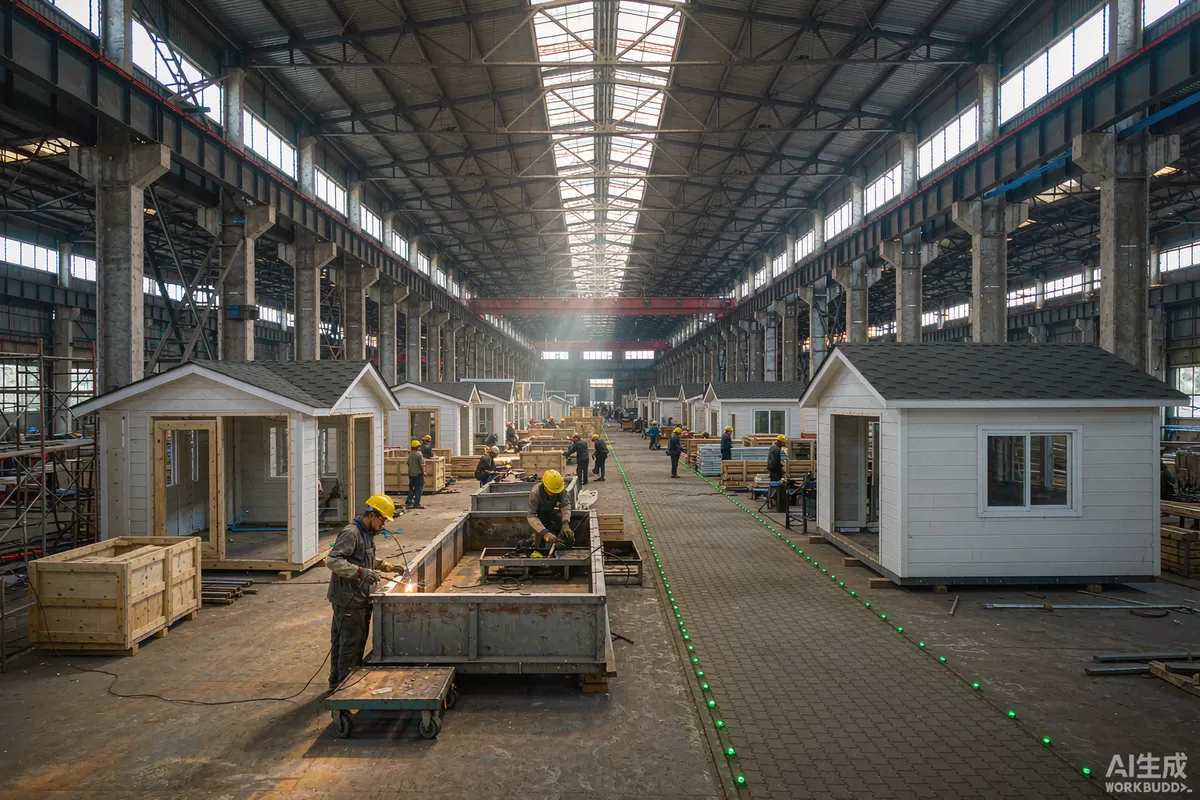
- Photographs of the actual production line, not only of finished units.
- References for projects of comparable size and market.
On certification, one rule is worth stating explicitly. Where a supplier claims a certificate, require the certificate number, the issuing body, the scope and the validity dates, and verify with the issuer. Claims of compliance without a document behind them should be recorded as unverified rather than accepted. We do not publish certification claims on behalf of suppliers, and neither should a buyer rely on one.
Section E — The Comparison Sheet
Score before you price. Assign a weight to each criterion, mark each as mandatory or preferred, and score the responses before the commercial envelope is opened — because once a number is visible, the score tends to follow it.
| Criterion | Weight | Mandatory? | Supplier A | Supplier B | Supplier C |
|---|---|---|---|---|---|
| Meets stated dimensions and layout | [ ] | Yes | [ ] | [ ] | [ ] |
| Electrical rating matches site supply | [ ] | Yes | [ ] | [ ] | [ ] |
| Cooling sized at stated ambient | [ ] | Yes | [ ] | [ ] | [ ] |
| Structural data and anchorage detail supplied | [ ] | Yes | [ ] | [ ] | [ ] |
| Full documentation pack supplied | [ ] | Yes | [ ] | [ ] | [ ] |
| Transport form suits site access | [ ] | Yes | [ ] | [ ] | [ ] |
| Warranty scope and spare parts | [ ] | No | [ ] | [ ] | [ ] |
| Landed cost per usable unit | [ ] | No | [ ] | [ ] | [ ] |
A mandatory criterion that is not met should remove the supplier from the comparison rather than be traded against price. The point of the sheet is to make that decision before the negotiation, not during it.
How to Normalise a Quote That Is Not Like-for-Like
Even with the same template, responses differ. Rather than scoring them down, cost the difference. For each supplier, list the items that are missing or below your requirement, and price what it would take to bring them up — an air conditioner, a different glazing specification, a 60 Hz appliance set, a containerised transport form, a second year of warranty. Add that normalisation cost to the quoted price, and compare the adjusted totals. The result is often a different ranking from the raw one, and it is always a more honest one.
Do the same for the commercial terms: a shorter validity, a larger deposit or a longer lead time each carry a cost, and they should be recorded even if they are not scored.

Red Flags in the Answers
- Refusal to state a value for a field where you asked for one, particularly on cooling sizing, envelope performance or electrical rating.
- "Certified" with no certificate number, issuer, scope or validity dates.
- No drawings, or drawings without dimensions.
- A price valid for a very short period with no explanation, which makes comparison impossible.
- No packing dimensions or weights, which means the freight cannot be quoted and the access feasibility cannot be checked.
- Warranty described in a sentence rather than a document.
- No exclusion list. A quote with no exclusions is not more complete; it is less clear about where the risk sits.
- Pressure to skip the drawing approval step, which is the mechanism by which the specification is fixed.
Individually these are warning signs; together they describe a supplier who will be difficult during production and difficult during commissioning. The evaluation sequence in the supplier and manufacturer guide covers what to do next, including what to check on a factory visit or a video audit.
Putting It to Work
Assemble the five sections into one document, send it to three or four suppliers at the same time with the same response deadline, and require the answers in writing in the original order. Then score before pricing, normalise the gaps, and compare adjusted totals per usable unit. The whole exercise takes a little longer at the start and removes most of the surprises later — and the specification you build in Section A is the same specification you will use for the approvals file, the foundation design and the snagging list.
Current configurations and their standard provisions are on the product pages. If you are preparing an enquiry, send the completed Section A and we will return a completed technical response for the models that fit. Requirements may vary by application, market and applicable standard.
More from the Blog

Capsule Home Cost Guide: What You Really Pay in 2026
EXW, shipping, install and the hidden line items — a transparent breakdown of total landed cost.
Read article →
How to Install a Capsule Home in 3 Days: A Step-by-Step Guide
From site prep to first guest — the exact sequence our install crews follow on every deployment.
Read article →
Real Owners, Real Numbers: Success Stories
How a lakeside resort, a Spanish glamping site and a Singapore dealer hit their targets.
Read stories →Talk to the Factory
Ready to Ride the 2026 Wave?
Get the latest catalog, pricing tiers and a layout sketch for your land — straight from the engineering team.