Capsule House Water Supply Philippines: Islands
Capsule house water supply in the Philippines: source ranking, coral sand salinity limits, rainwater storage for the dry season and storm redundancy.
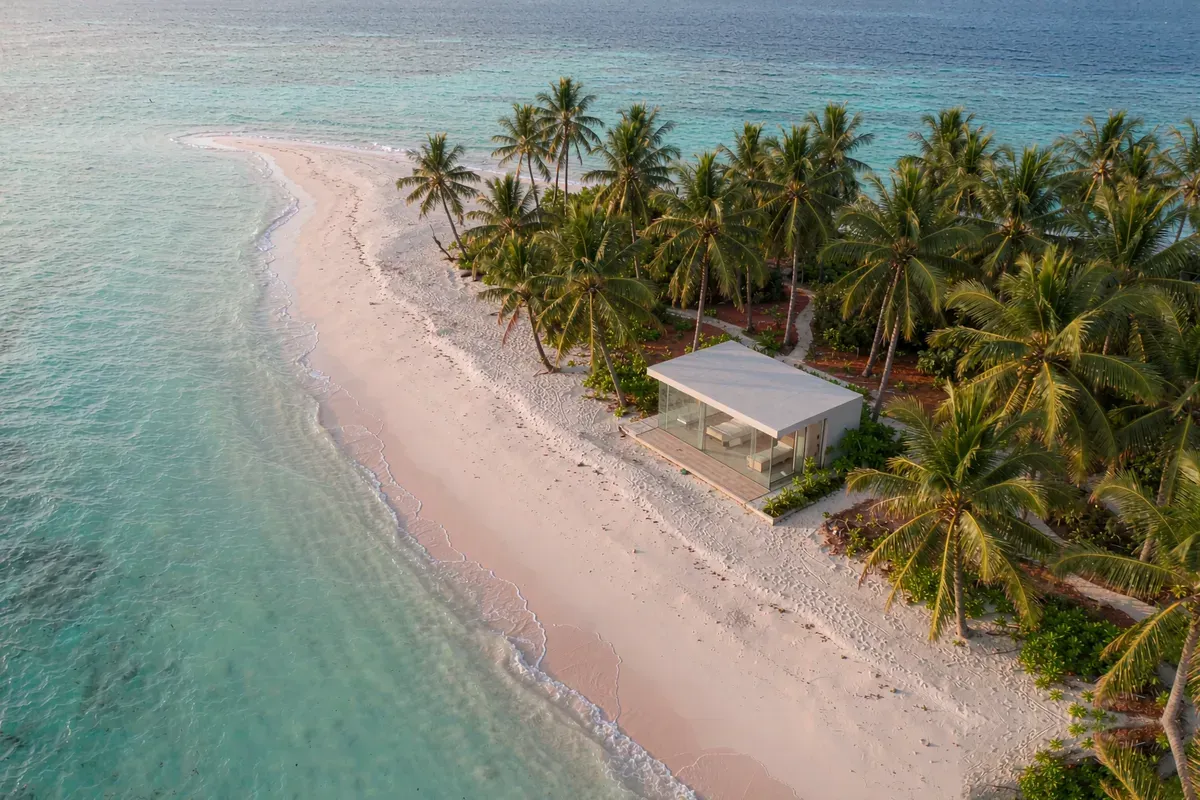
On a Philippine island site, water is rarely a single decision. It is a ranked list of sources, and the ranking changes with geology, season and how much service you promised the guest. Municipal supply ends somewhere; everything past that point you own. This page covers freshwater supply, storage and discharge for island and remote coastal sites in the Philippines. The Philippines market overview is on our capsule house Philippines page, and permits and documentary requirements sit on our Philippines compliance page.
Rank the Sources Before You Draw Anything
Resort builders tend to start with pipe layout. That is the wrong end of the problem. The first deliverable is a ranked source list written in words, with the reason each source sits where it does:
- Municipal or water district supply — if the line physically reaches the plot. Get the available pressure at the boundary and the tariff class in writing, not verbally.
- Groundwater — a deep well or a shallow well, subject to yield and to salinity on coastal limestone and coral sand.
- Rainwater catchment — roof area times seasonal rainfall, minus first-flush losses, with a storage volume sized against the dry spell rather than the annual average.
- Hauled water — delivered by truck or by boat. Expensive per cubic metre in operating terms but the fastest path to opening.
- Desalination — technically available, but it converts a water problem into an energy and maintenance problem. Treat it as a design branch, not a default.
The order matters because each option changes what you buy. A site with reliable water district supply needs small storage and no treatment beyond filtration. A site on hauled water needs storage measured in days of operation and a delivery contract with a storm clause.
What Coral Sand and Limestone Do to Groundwater
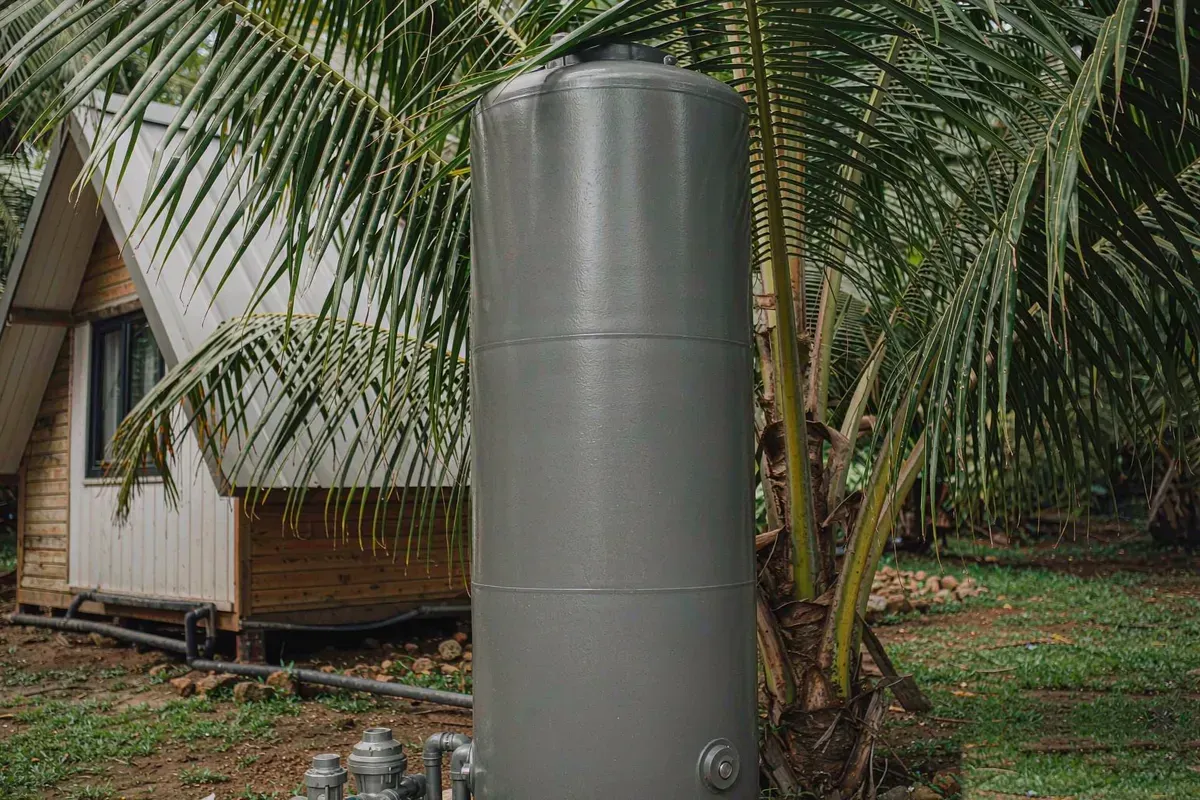
Much of the Philippine coastline sits on coral limestone or on carbonate sand. That geology changes three things about groundwater.
- The freshwater lens is thin. On small islands fresh water floats on denser salt water in a lens that thins with pumping. Draw too hard and you pull the interface up into the well.
- High permeability means fast contamination. What would be filtered out over metres of soil on a mainland site can reach the aquifer quickly here. Separate wells from soakaways and from any fuel storage by real distance, and get that distance confirmed locally.
- Salinity is a hardness and corrosion issue before it is a taste issue. Slightly brackish water raises treatment costs, shortens the life of fixtures and heaters, and leaves spotting on glass and stainless surfaces that guests read as poor housekeeping.
Before committing to a well, ask for a yield test of realistic duration and a salinity reading at the end of it, not at the start. A well that tests fresh in the first hour and trends saline over a day of pumping is not a supply, it is a sampling error. Confirm abstraction requirements with the relevant national and local authority; Requirements may vary by application, market and applicable standard.
Size Rainwater Against the Dry Spell, Not the Wet Season
Catchment yield is roof area multiplied by rainfall, which makes it easy to produce an impressive annual number. The number that matters is the longest consecutive dry period the site experiences, multiplied by daily occupancy demand. If your dry spell is eleven weeks and your occupancy is steady, annual rainfall is irrelevant to tank sizing.
Two practical corrections apply on every Philippine project I would want reviewed:
- First-flush loss. The opening part of every storm washes dust, salt spray, bird deposits and leaf residue off the roof. Diverters cost little; leaving them out means dosing maintenance crews with filter changes forever.
- Roof material compatibility. Confirm that the actual roof surface, coating and any anti-corrosion treatment on the unit are compatible with potable catchment before the first flush is declared usable.
The physics of collection and the sizing method are set out on our rainwater harvesting page. The point here is seasonal: tropical rainfall arrives concentrated, so the same total delivered over fewer days demands more storage, not less.
Storage Redundancy Over Storm Outage Days
Water supply fails on island sites in predictable ways: power failure stops pumps, storms stop deliveries, and turbidity spikes after heavy rain. Decide the number of days of full service the site must ride through unaided, then size the tank to that number. Three days is a common minimum for a small resort; five is more comfortable where the supply chain goes by boat.
Redundancy also means a second path. A single pump without a bypass, or a single tank without a valved spare, converts a minor fault into a closed booking calendar. Put isolation valves on every tank so one can be drained and cleaned while the others stay in service.
Wastewater: Split It Early and Assign Ownership
Island sites usually dispose of greywater and blackwater differently. Kitchen and shower water can often go to a simple soakaway where soils permit; blackwater needs a sealed treatment step. Whether your installation is treated as a small domestic discharge or as a commercial one changes the permit path and the required treatment level.
- Decide the split at concept stage, because retrofitting separate plumbing through a finished unit costs far more than specifying it.
- Establish in writing who applies for the discharge permit — owner, operator, contractor or supplier — and who carries the penalty if operation is found outside the permit.
- Separate the disposal field from any potable source by distance, and check the separation against local requirements rather than against the last project you did.
Discharge rules, setback distances and treatment requirements differ between national and municipal levels. Confirm them with the authority having jurisdiction; Requirements may vary by application, market and applicable standard.
Pressure, Pumping and Multi-Unit Layouts
A single unit on a flat plot can run on gravity from a header tank. Add units, add elevation, or add distance and you need pressure. Figure out early whether you will:
- Run one central pump set with a pressure vessel and distribution pipework, or
- Run a booster per block so a single failure takes out one building rather than the site.
Central plant is cheaper to buy and cheaper to maintain per unit; distributed plant fails more gracefully. On sites where occupancy is seasonal and partially closed, distributed boosters also let you shut down part of the site without draining everything. The hydraulic detail — pipe sizing, storage interconnection, backflow protection — follows the same principles as any small building network, set out on our water supply and drainage page.
Keep the electrical side honest: pumps on generator-backed circuits during storm season need their surge and duty cycle accounted for, otherwise the emergency supply is sized for lights and nothing else.
What to Put in the Specification Before You Order
These are the water-related items that belong in the unit specification rather than in a site contractor's scope, because they are far cheaper to build in than to add later:
- Roof surface identified as catchment-compatible, with the first-flush volume stated.
- Plumbing runs routed so that greywater and blackwater leave as separate connections.
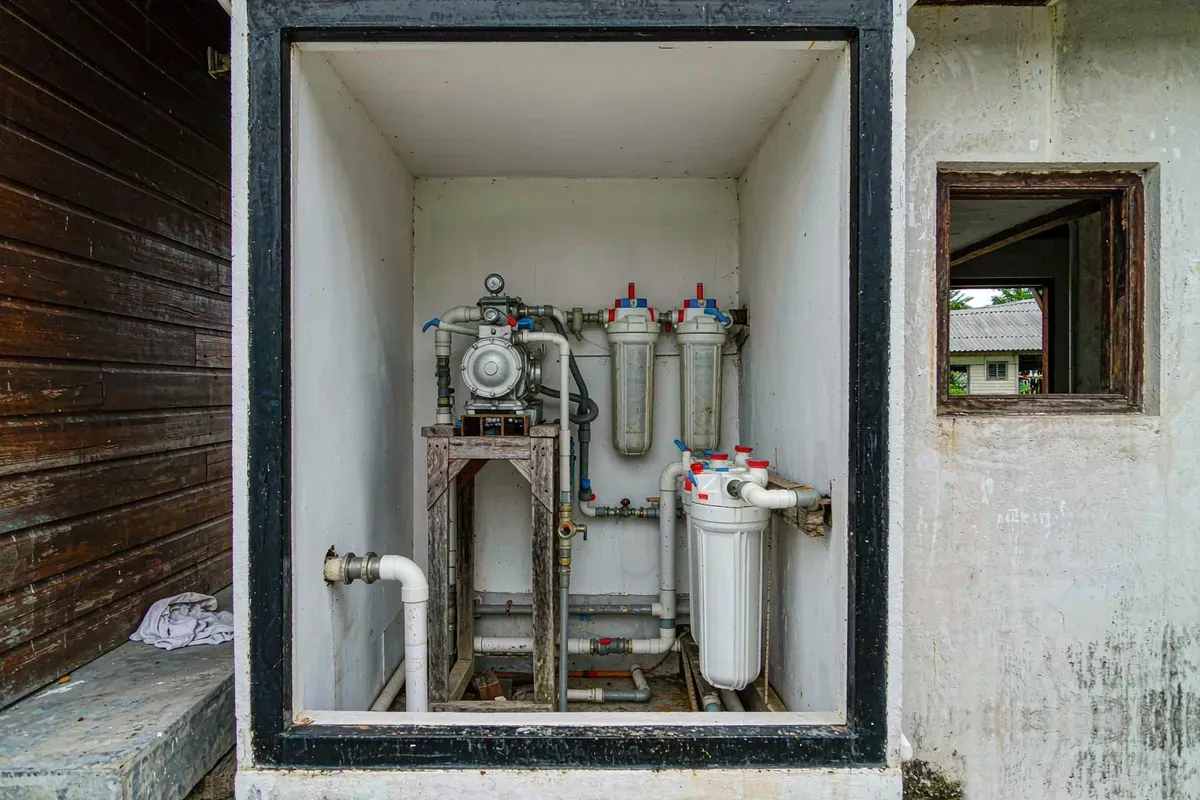
- Space allocated for a pressure pump, filtration and a backflow device, with access panels rather than sealed ceilings.
- Tank tie-down and shading designed into the elevated the unit sits on, not improvised after delivery.
- Corrosion spec elevated above inland practice, because a salt-laden site oxidises everything faster. For the corrosion side specifically, see our Philippines coastal protection page.
Sources Compared
| Source | Decides it | Fails when | Owner burden |
|---|---|---|---|
| Municipal / water district | Line physically reaches the plot | Power outages stop boosting; storms damage the network | Low until pressure drops |
| Groundwater well | Yield test and salinity at the end of the test | Over-pumping pulls saline water into the well | Test, permit, pump maintenance |
| Rainwater catchment | Roof area against the longest dry spell | Poor first-flush control, undersized storage | Cleaning, filter changes |
| Hauled delivery | Road or barge access in all seasons | Weather cancels the delivery | Operating cost per cubic metre |
| Desalination | Energy budget and brine disposal accepted | Membrane fouling, power cost | High: energy, spares, skilled service |
Where This Usually Goes Wrong
The common failure is sequencing. Land is secured, units are ordered, and water is left for the site contractor to solve three months before opening. By then the cheap options are gone and the expensive ones — desalination, deep wells, tankering — are the only ones left on the table. Run the source ranking during site selection, before the unit configuration is frozen, and the water budget stops being a surprise line item.
If you are at that stage now, send us the plot location, expected occupancy profile and any existing water test results, and we will tell you what information we still need. Reach our team through the contact page.
More from the Blog

Capsule Home Cost Guide: What You Really Pay in 2026
EXW, shipping, install and the hidden line items — a transparent breakdown of total landed cost.
Read article →
How to Install a Capsule Home in 3 Days: A Step-by-Step Guide
From site prep to first guest — the exact sequence our install crews follow on every deployment.
Read article →
Real Owners, Real Numbers: Success Stories
How a lakeside resort, a Spanish glamping site and a Singapore dealer hit their targets.
Read stories →Talk to the Factory
Ready to Ride the 2026 Wave?
Get the latest catalog, pricing tiers and a layout sketch for your land — straight from the engineering team.