Capsule House Compliance in the Philippines: Guide
The approval route for a capsule house in the Philippines: building permit, BFP fire clearances, electrical inspection, NSCP wind loads and import conformity.

Compliance for a capsule house in the Philippines runs on three parallel tracks that most buyers treat as one. Building approval sits with the local government unit through its Office of the Building Official, under the National Building Code and its implementing rules. Fire safety sits with the Bureau of Fire Protection, which issues a design-stage clearance and then a certificate before occupancy. Electrical and mechanical installation is inspected before energisation, and on top of all of that is the import side, where the unit and its components are classified and cleared by customs. This article walks each track in the order you will meet it. The market background is in the Philippines capsule house guide. Requirements may vary by application, market and applicable standard.
The Building Track: OBO and the Permit Sequence
The Office of the Building Official of the city or municipality is the entry point. The sequence is broadly consistent across LGUs even where the forms differ.
- Land and zoning confirmation. Confirm the use is permitted on the plot: tourism accommodation, residential, commercial, or agricultural with an allowed ancillary use. A unit on land zoned for the wrong use cannot be legalised by better drawings.
- Locational or zoning clearance from the LGU planning office, where the project type requires it.
- Barangay and other local clearances, which some LGUs require as part of the building permit application.
- Building permit application with a full set of plans — architectural, structural, sanitary, mechanical and electrical — signed and sealed by professionals licensed in the Philippines.
- Payment of permit fees and assessment, then release of the permit.
- Construction and inspection, including any required inspections at defined stages.
- Certificate of occupancy after completion, which requires the fire safety inspection certificate as a prerequisite.
The step that holds up modular projects is step four. Manufacturer drawings are useful technical input but they are not a permit set: the local submission has to be produced or endorsed by licensed professionals who carry the professional responsibility for it. Budget for that as a service line, and engage the engineer before the unit ships, because they will want to see structural and electrical data that is much easier to obtain during production than after delivery.

Structural: Wind Loads Under the NSCP
The Philippines is a typhoon market, and the National Structural Code of the Philippines sets out the wind load provisions that the structural design must satisfy. The design wind speed depends on the location and on the importance of the structure; a unit used for overnight accommodation is not in the same category as a storage shed. Three things follow for a modular unit.
- The tie-down is the structure. A light factory-built unit performs in high wind according to how it is anchored and how the load path reaches the ground. The foundation and hold-down detail designed by the local engineer is the governing element, not the shell.
- Debris and openings. Glazing and door protection, and the behaviour of large areas of glass, are part of the wind discussion in exposed coastal and island sites.
- Site exposure. A ridge or an open shoreline has a different exposure category from a sheltered inland plot, and the same unit on two plots can have two different anchorage designs.
Ask your engineer to state the design wind parameters used, and require the supplier to provide the structural data and connection details that those calculations need. The typhoon-specific detail is covered in typhoon-proofing a capsule house in the Philippines, and the practical site work in installation, foundations and utilities.
The Fire Track: FSEC, Then FSIC
The Bureau of Fire Protection runs a two-stage process. At design stage it issues a Fire Safety Evaluation Clearance based on the submitted plans and the fire safety compliance report; at completion it conducts an inspection and issues a Fire Safety Inspection Certificate, which is required before a certificate of occupancy is released. In practice this means the fire provisions have to be designed in, not added.
- Means of egress. Door widths, the route from the sleeping area to outside, and the arrangement for grouped units.
- Detection and suppression. Smoke detectors and portable extinguishers of an appropriate type and rating, with positions shown on the plans.
- Emergency lighting and exit signage, where the occupancy and capacity trigger the requirement.
- Interior finishes and furnishings. Material declarations for wall and ceiling linings and for mattresses and soft furnishing.
- Site provisions. Access for fire apparatus, separation between units, water supply availability, and the arrangement of any cooking facilities.
The pattern to notice is that most of these are layout decisions. A unit whose layout already provides a clear egress path, a detector position and an extinguisher location will pass the design review with the drawing set; a unit where those items were not considered will require re-submission, and re-submission is a calendar problem rather than a technical one.
Electrical, Mechanical and Product Conformity
Electrical installation is inspected before the supply is energised, and the inspection covers the installation rather than only the products. Separately, electrical appliances and wiring devices that appear on the mandatory certification list administered by the Department of Trade and Industry's standards body require either a Philippine Standard licence or an Import Commodity Clearance. That list covers categories such as certain wiring devices, lighting, appliances and similar items, and it changes, so the check should be done against the current list by your broker or importer rather than from memory.
- Confirm the supply. Philippine residential supply is commonly 220 V at 60 Hz, with 110/120 V present in some legacy installations and some buildings. Confirm the supply at your site with the distribution utility before ordering, because the equipment rating follows from it.
- Confirm which components are in scope for the PS licence or ICC route, and who registers them. Registration has a lead time and cannot be completed at the port.
- Confirm installation inspection requirements with the LGU and the utility; energisation normally follows an inspection and is not a formality.
- Keep the documentation consistent. The model numbers on the packing list, the certificate and the installed equipment should match, because the inspection compares them.
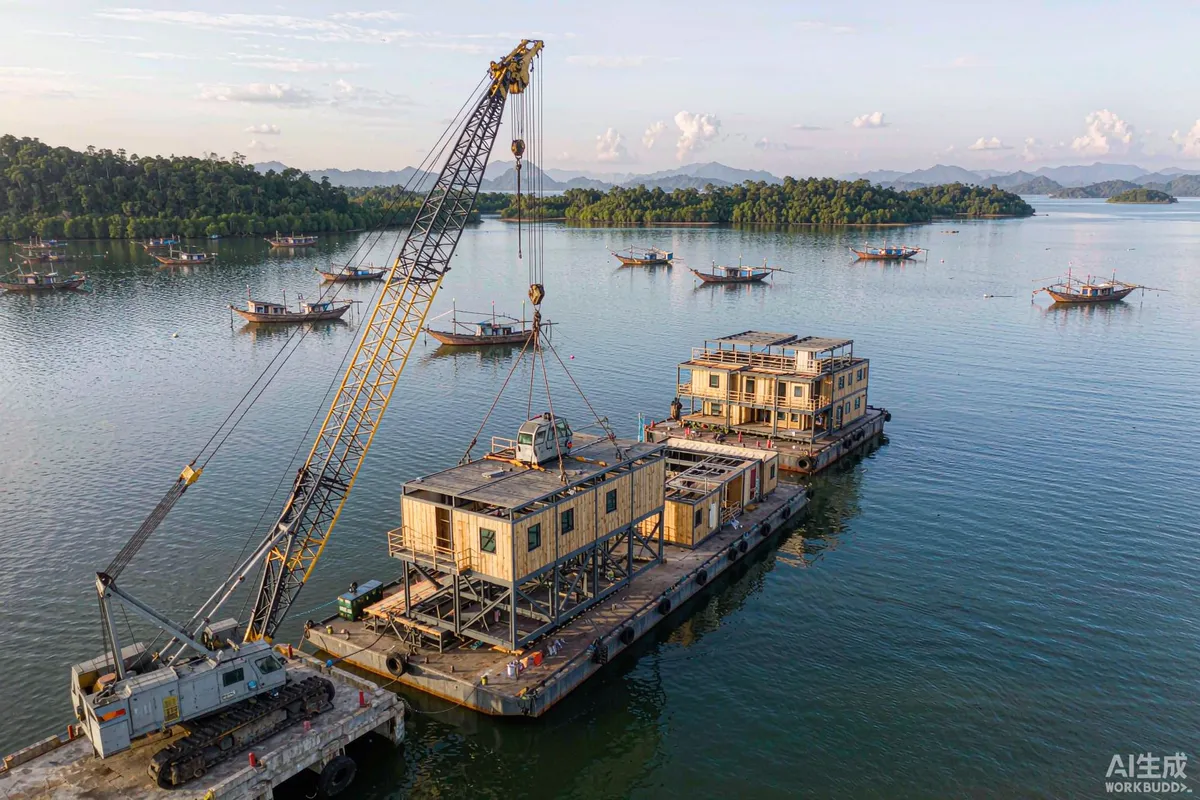
The Import Track: Classification, Duty and VAT
The customs leg is a separate project with its own sequence, and it is covered in detail in importing a capsule house to the Philippines. The parts that bear on compliance are these.
- Classification drives everything. The HS code assigned to the goods as presented determines the duty rate and whether additional product clearances are triggered. Give the broker the specification, drawings and packing list before sailing.
- Product clearances can gate release. Where an included item falls under mandatory certification, the clearance has to exist before the shipment is released. This is the most common reason a compliant unit sits at the port.
- Registration and accreditation. Confirm your entity can act as importer of record before the vessel sails.
- Duty and VAT are applied on the assessment basis in force at entry. We do not publish rates here; ask your broker to state the code, the rate and the basis in writing with a date.
Tourism and Environmental Overlays
Two further layers can apply depending on the project, and both are easier to plan for than to retrofit.
- Tourism accreditation. Accreditation of tourism enterprises by the Department of Tourism is commonly sought by resorts and is tied to certain incentives and programmes. Whether it is required for your specific operation should be confirmed with the DOT.
- Environmental compliance. Projects in environmentally critical areas, or of a scale that brings them within the environmental impact system, may require an environmental compliance certificate before a building permit is issued. Coastal, island and forest-adjacent sites are the usual trigger.
- LGU tourism and business permits. Operating a resort requires local business permits and, in many LGUs, a tourism-related clearance, separate from the building permit.
Where a project sits in an economic zone or a special development area, an additional layer of zone administration applies. Confirm early which regime your site falls under, because it changes both the approval route and the incentives.
Document Checklist
| Track | Documents | When needed |
|---|---|---|
| Land and zoning | Title or lease, tax declaration, zoning or locational clearance, site development plan | Before building permit |
| Building permit | Signed and sealed architectural, structural, sanitary, mechanical and electrical plans; specifications; bill of materials | Design stage |
| Structural | Supplier structural data, connection and anchorage details, engineer's wind calculations | Design stage |
| Fire | Fire safety compliance report, egress plan, detector and extinguisher schedule, material declarations | Design stage for clearance, completion for the certificate |
| Electrical | Single-line diagram, load list, protection ratings, product conformity documents for in-scope items | Before energisation |
| Import | Commercial invoice, packing list, bill of lading, classification advice, product clearances | Before vessel sails |
| Handover | As-built drawings, maintenance manual, spare parts list, warranty documents | At delivery |
The single highest-leverage action is to start the local engineering engagement before production finishes rather than after delivery. Everything else in this list follows from it. Configurations are on the product pages; if you are planning a Philippine project, send the location, the intended occupancy and the quantity and we will tell you which of these tracks applies to your case. Requirements may vary by application, market and applicable standard.
More from the Blog

Capsule Home Cost Guide: What You Really Pay in 2026
EXW, shipping, install and the hidden line items — a transparent breakdown of total landed cost.
Read article →
How to Install a Capsule Home in 3 Days: A Step-by-Step Guide
From site prep to first guest — the exact sequence our install crews follow on every deployment.
Read article →
Real Owners, Real Numbers: Success Stories
How a lakeside resort, a Spanish glamping site and a Singapore dealer hit their targets.
Read stories →Talk to the Factory
Ready to Ride the 2026 Wave?
Get the latest catalog, pricing tiers and a layout sketch for your land — straight from the engineering team.