Collecting Rainwater from a Capsule Home Roof: What Is Realistic
What rainwater collection from a capsule home roof can realistically supply: catchment from a curved shell, first-flush, storage sizing, filtration, and where the water can and cannot be used.
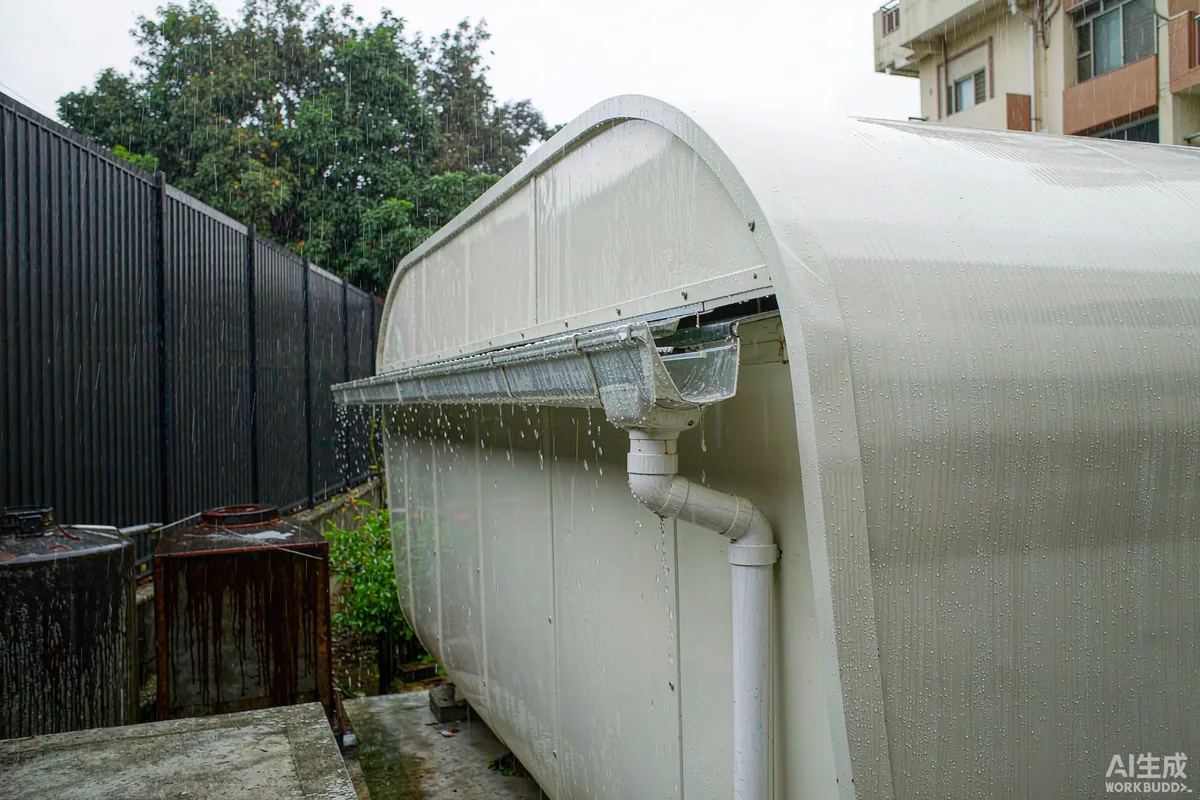
Rainwater collection from a capsule home roof is genuinely useful on an off-grid or water-scarce site, provided it is sized honestly. A compact footprint means a modest catchment area, so the realistic output is a supplementary supply: toilet flushing, exterior washing, landscape irrigation and a buffer against delivery interruptions. Treating it as a full potable supply is a different project with different obligations. Start from the roof area and the local rainfall record, then decide what the water is for. Requirements may vary by application, market and applicable standard.
Start with Catchment Area, Not with Tank Size
The most common planning error is buying a tank first. Yield is a function of how much roof you actually have and how much rain actually falls.
- Use the plan-projected roof area. A curved or sloped shell has more surface area than its footprint, but the water caught is governed by the horizontal projection of that surface where the rain falls.
- Get the local rainfall record. Annual average is not enough; the monthly distribution tells you whether the tank fills when you need it.
- Expect losses. Not every litre that lands reaches the tank. Some wets the surface and evaporates, some is lost at the first flush, and some never makes it off a textured surface in light rain.
- Check the dry season length. Storage has to bridge the gap between rain events, and that determines tank size more than annual total does.
A quick estimate - catchment area multiplied by rainfall depth, less a realistic loss allowance - tells you whether the idea is worth pursuing before you spend anything.
Decide the End Use Before Designing the System
End use drives the whole design, and it is much cheaper to decide now than to upgrade later.
| End use | Typical treatment level | Notes |
|---|---|---|
| Landscape irrigation | Screened, settled storage | Lowest requirement; often the best first use for harvested water |
| Exterior washing, vehicle and equipment rinse | Screened, settled storage | Useful volume, low treatment burden |
| Toilet flushing | Screened storage plus filtration; fixed plumbing connection | Needs a defined backflow prevention arrangement and a clear non-potable identification |
| Showering and hand washing | Higher treatment and water quality management | Confirm what is permitted for your accommodation type and location before designing |
| Drinking and cooking | Highest treatment and testing obligations | Treat as a regulated water supply question, not a plumbing add-on |
Most rental operators get the best return by targeting irrigation, exterior washing and toilet flushing, and keeping the drinking water supply separate. That keeps the treatment burden proportionate.
Components and What Each One Does
- Catchment surface. The roof itself. Its material and condition affect runoff quality, so keep it clean and avoid treating it with anything you would not want in the tank.
- Guttering or edge collection. A curved shell does not naturally shed to a single point; confirm how runoff is meant to be collected for the specific model.
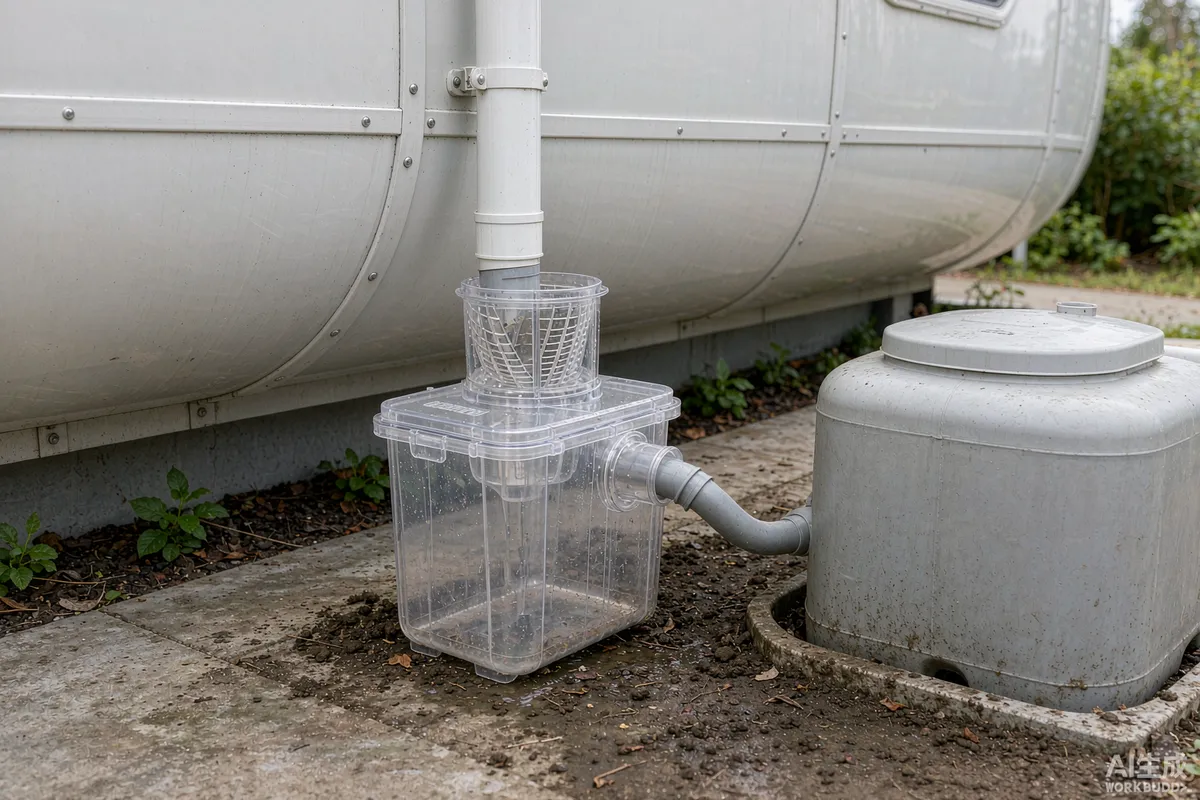
- Leaf and debris screens. The cheapest component and the one that prevents most downstream problems. Size them generously and clean them often.
- First-flush diversion. Diverts the initial runoff that carries the accumulated dust and debris from the roof surface, improving water quality in storage.
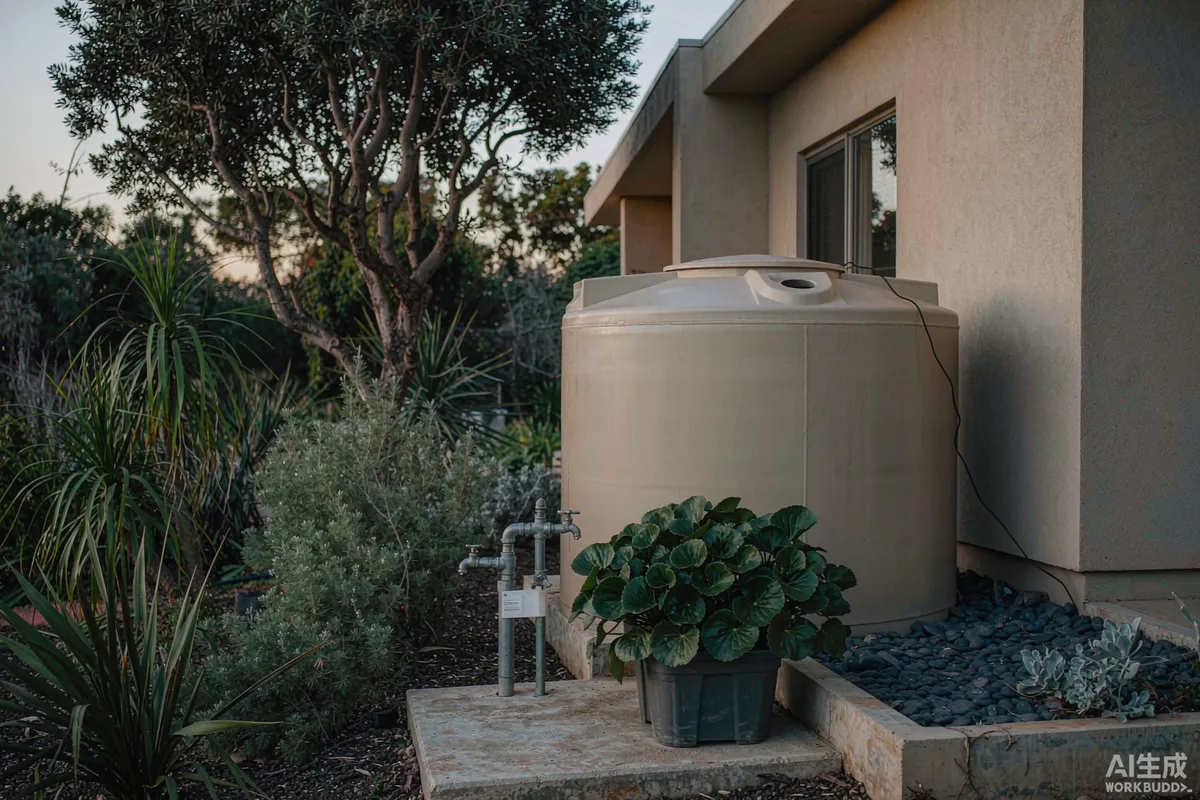
- Storage. Sized to bridge the dry period, positioned on stable ground, and either opaque or protected from light to limit biological growth.
- Filtration. Selected to match the end use, with a stated replacement interval.
- Delivery. Gravity where the site allows it; otherwise a pump, which brings its own power and maintenance needs.
- Backflow prevention. Essential wherever harvested water connects to a plumbing system that also carries mains or treated water.
Sizing Storage Without Overbuying
Tanks are the visible cost of a rainwater system, so it is worth being deliberate rather than generous.
- Work from the dry spell, not the annual total. The tank has to carry you through the longest gap between meaningful rain events, at the demand rate you expect.
- Define the demand rate honestly. Number of occupants multiplied by a realistic per-person figure for your chosen end uses, not for every possible use.
- Remember the tank only fills when it rains. A large tank on a site with a long dry season may never fill, which is worse than a smaller tank that cycles.
- Check the space and the ground. A full tank is heavy; it needs stable, level, accessible ground and a route for delivery and cleaning.
- Consider modularity. Two linked tanks let you start with one and add later once you know your real yield.
- Plan the overflow. A full tank has to send water somewhere that will not undermine anything or annoy a neighbour.
Keeping Stored Water Usable
Storage is where harvested water either stays sound or turns into a problem. The controls are simple but must be consistent.
- Exclude light. Algae needs light; an opaque tank or a light-excluded position is the first control.
- Keep debris out. Screens and sealed lids prevent the organic load that feeds growth.
- Manage the inlet. A calm inlet reduces disturbance of settled material at the tank bottom.
- Clean on a schedule. Inspect and clean screens frequently, and inspect and clean the tank at an interval that reflects your conditions.
- Do not let it stagnate indefinitely. Long static storage with no turnover behaves differently from a tank that cycles.
- Label clearly. Any outlet or tap supplied from harvested water should be identifiable as non-potable unless it has been treated and cleared as drinking water.
Freeze, Heat and Storm Considerations
- Freezing: above-ground pipework, diverters and pumps need freeze protection appropriate to the site; frozen components split and fail silently until the thaw.
- Heat: stored water in a hot climate warms quickly, which affects biological growth; shading the tank helps.
- Storm events: heavy rain can overwhelm screens and diverters, and can stir settled material; plan an inspection after the event.
- Drought: plan the fallback. A harvested supply with no backup is a business risk, not an independence statement.
What to Tell Guests and Staff
Rainwater systems fail socially before they fail technically. Two short communications prevent most issues.
- Tell guests what the water is for. If a tap is non-potable, label it and say so in the welcome sheet.
- Set expectations about pressure and appearance. Harvested supply may behave differently from mains; a one-line explanation prevents a complaint.
- Give staff a maintenance card. Which screen, how often, and what "needs attention" looks like.
- Define the fallback. What happens when the tank is low - who orders water, and how long it takes.
Questions to Resolve Before You Build
- What is the local monthly rainfall distribution, and what is the longest realistic dry spell?
- What is the plan-projected catchment area of the specific model?
- What end uses are permitted for harvested water in your location and accommodation type?
- What backflow prevention is required where harvested water meets a plumbing system?
- How will the tank be delivered, positioned and later cleaned?
Confirm water quality, plumbing and public health requirements with the relevant local authority or a qualified professional for your use case. Requirements may vary by application, market and applicable standard.
More from the Blog

Capsule Home Cost Guide: What You Really Pay in 2026
EXW, shipping, install and the hidden line items — a transparent breakdown of total landed cost.
Read article →
How to Install a Capsule Home in 3 Days: A Step-by-Step Guide
From site prep to first guest — the exact sequence our install crews follow on every deployment.
Read article →
Real Owners, Real Numbers: Success Stories
How a lakeside resort, a Spanish glamping site and a Singapore dealer hit their targets.
Read stories →Talk to the Factory
Ready to Ride the 2026 Wave?
Get the latest catalog, pricing tiers and a layout sketch for your land — straight from the engineering team.