Capsule House Shipping to UAE: Freight and Crane
The five stages of delivering a capsule house to a UAE site: transport form, port choice, clearance, inland haulage and crane set, and what governs each cost.
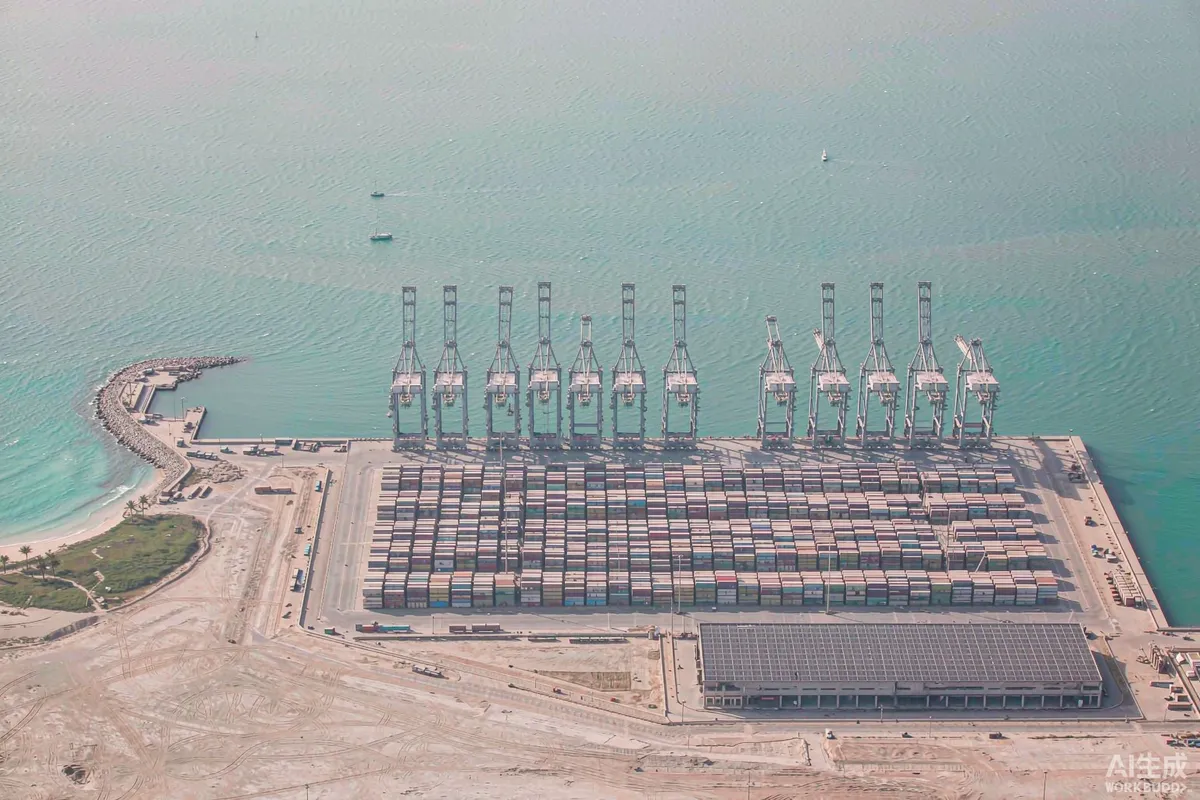
Most UAE delivery problems are not freight problems. They are specification problems that surface at the port: a unit too wide for the equipment that was quoted, a consignment that cannot be split because the invoice does not match the packing list, or a crane booked before anyone checked whether the pad could take it. Getting a capsule house to a Gulf site is a five-stage chain — export handling, ocean leg, clearance, inland haulage and the lift — and each stage has one decision that governs its cost. This page walks the chain in that order. The cost structure behind each stage is set out generally in the capsule house price guide.
Stage 1: Choose the Transport Form Before You Ask for a Freight Rate
The single largest freight decision is made at the factory, not by the forwarder. It is whether the unit travels folded inside a container envelope or finished on a flat rack, and it changes every subsequent quote.
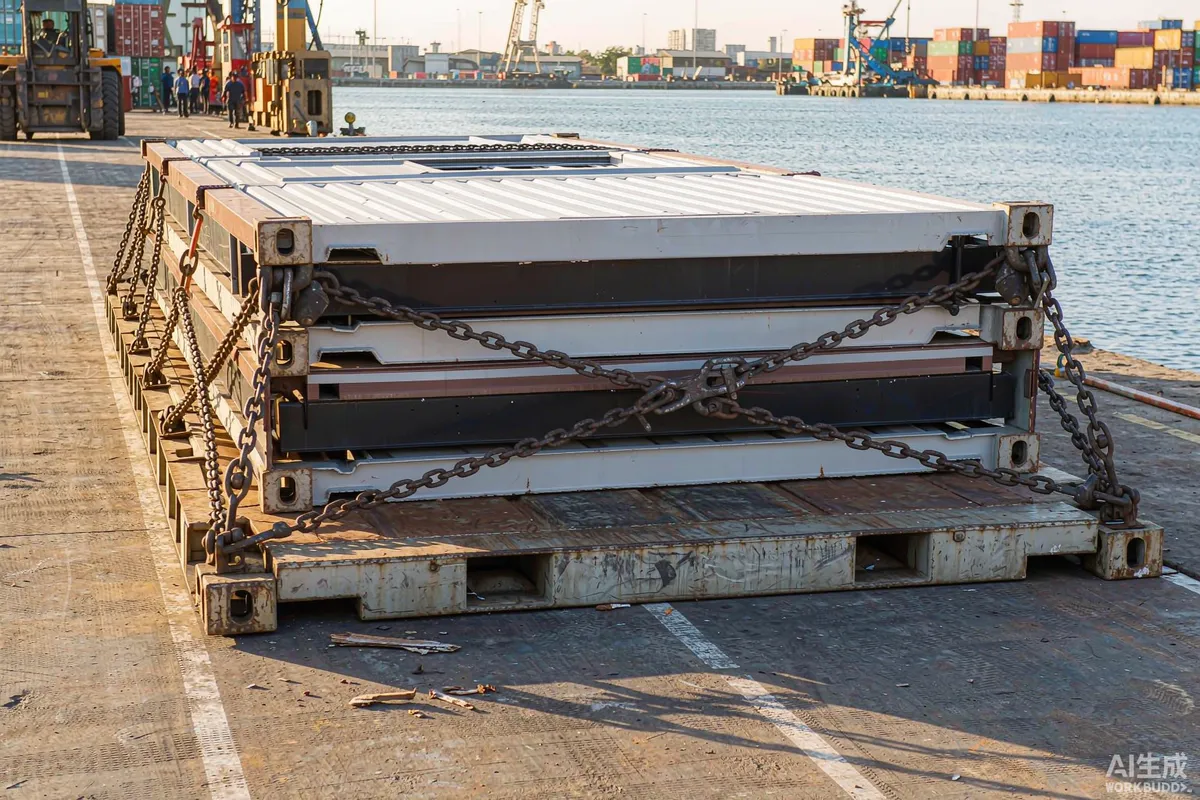
- Folded, containerised. A unit that reduces to ISO container dimensions moves as ordinary containerised cargo. Sailings are frequent, equipment is plentiful, and re-booking after a missed cut-off is usually simple. It also protects the finished surfaces from weather during the voyage.
- Finished, flat rack or break bulk. A unit that exceeds standard dimensions travels as out-of-gauge cargo. Space is booked rather than bought off a tariff, and fewer sailings can take it. Cost per unit is higher, but no unfolding and re-sealing is required at destination.
- Ask for both, priced side by side. Once inland haulage, handling and destination labour are included, the finished-unit route sometimes wins despite the higher ocean rate. Do not assume — price it.
Whichever form you choose, require the packing details in writing before the goods are booked: number of packages, dimensions and gross weight per package. Forwarders quote volume and weight, and without those numbers every subsequent figure is a guess.
Stage 2: Pick the Port for Your Site, Not for the Ocean Rate
Jebel Ali is the deep-water terminal most projects default to, and for good reason: it has the widest liner coverage and the heaviest out-of-gauge handling capability in the region. Other ports — Khalifa, Sharjah, and the Musandam-side options depending on site location — can be materially better if your site is closer to them, because the inland haulage leg is often the larger variable.
- Compare landed totals by port, not ocean rates. Ask the forwarder to quote the same unit into two ports including discharge, clearance handling and line haul.
- Check out-of-gauge capability at the discharge port. Heavy-lift and out-of-gauge handling is not uniform; confirm the equipment exists before booking.
- Check free time terms. Storage and demurrage accrue daily. Free time varies by terminal and carrier, and it should be confirmed in writing as part of the booking.
Stage 3: Clearance — Get the File Right While It Is Still at Sea
Clearance is an office task with a physical consequence: when it slips, daily charges start. The three documents that most often cause delays are ordinary, and all three are available weeks before the vessel arrives.
- Commercial invoice and packing list that agree with each other and with what was actually loaded. Where structure, loose furniture, appliances and spares are shipped together, ask for them to be itemised separately so the valuation is straightforward.
- Classification and duty basis in writing. Customs duty and VAT rates depend on the classification assigned to the goods as presented and on the rates in force at entry. We do not publish rates; your broker should confirm the code, the duty basis and the rate with their date, in writing, before you commit a budget. Classification is the importer's declaration — the broker advises, the importer carries it.
- Product conformity where applicable. Some components may fall within product conformity or registration systems depending on their classification. Registration has a lead time and cannot be completed at the port, so confirm the scope early with your broker.
The structural point is that duty, VAT and clearance charges are determined by rules and rates that are set by authorities, not by suppliers. Treat any figure quoted without a stated code, basis and date as provisional. The broader treatment of these topics is in import duty considerations.
Stage 4: Inland Haulage — The Leg That Is Usually Underestimated
Distance is the obvious variable and rarely the expensive one. Three other things cost more.
- Permits and routing for out-of-gauge loads. Oversize movements typically require permits and sometimes escorts, and they may be restricted to certain roads and hours. Ask whether the loaded height, width and turning radius can pass the chosen route, including any bridge, signage or gate restriction.
- Equipment availability. A lowbed with the right axle count and the right ramp angle is not always available at short notice. Book it when the vessel is booked, not when it berths.
- Site access readiness. A truck that cannot get within operating distance of the pad will either wait or offload in the wrong place. Confirm the access road, the turning circle, ground bearing under the truck, and overhead clearance before booking.
Price the haulage as one activity with a stated number of movements and a stated waiting-time allowance. Allocation of demurrage and detention risk belongs in the contract — asking "who pays if clearance is delayed" is free; discovering the answer at the terminal is not.
Stage 5: Crane, Set and the Sequence on Site
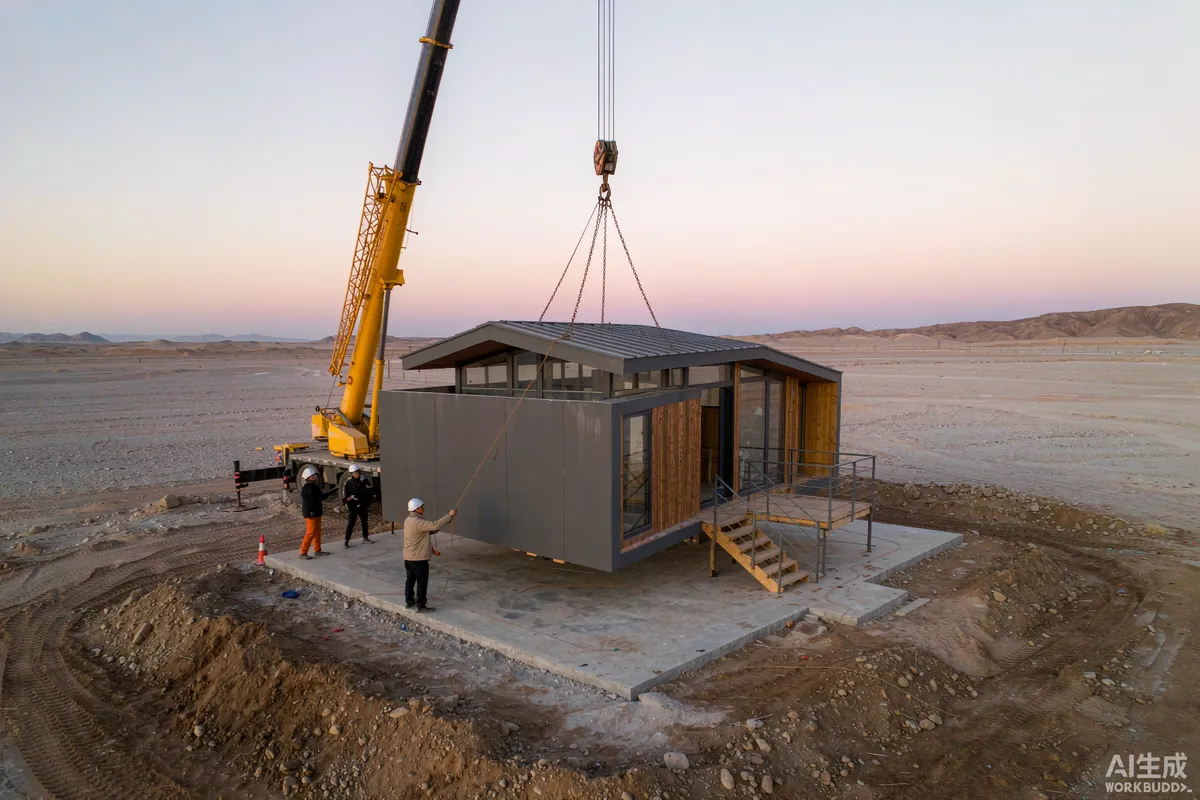
The lift is short and expensive, and crane cost is driven by capacity and reach radius, not by weight alone. A lift that has to reach over structures, trees or a slope needs a larger machine than the same load placed close in.
- One mobilisation beats several. Crane hire has a large mobilisation component. Batching several units into one mobilisation is usually the largest controllable saving available at this stage, provided all the pads are ready.
- The pad must be ready and verified first. The crane waiting for the pad is the most expensive idle time in the project. Verify level tolerance and bearing before the crane is booked; see foundation cost drivers and delivery access and crane planning.
- Unfolding and sealing. For folded units, the field work includes opening, levelling and sealing. Confirm who does it, whose labour it is, and whether it is included in the quote.
- Utilities before finishing. Power, water and drainage should be brought to their connection points before the lift so that commissioning can follow in one continuous run. Lifetime sequencing advice is in installation, foundations and utilities.
- Inspect on arrival, photograph before unlash. Any damage claim is far easier to support if the pre-discharge condition is documented. The process is set out in freight damage claims.
Timing: Fit Logistics to the Production Slot
Freight is a downstream activity whose schedule has to be coordinated with the factory. Three alignment points prevent most surprises.
- Readiness versus booking. Do not book a vessel for a date the factory has not confirmed as a readiness date. Ask what "ready" means in their terms — finished, inspected, packed, or loaded.
- Cut-off dates. Carriers have documentation and cargo cut-offs ahead of sailing. Missing one moves the whole chain by the next available sailing, which may be weekly.
- Documentation parallel to production. Registration, conformity steps and the clearance file can all be progressed during manufacture. Companies that do this in parallel ship soon after completion; those who wait add weeks.
Where multiple units ship together, ask whether a single sailing carries them all. Splitting a project across two vessels introduces two sets of fixed costs and two sets of risks for no advantage.
Questions to Put to Your Forwarder
| Question | Why It Governs Cost or Risk |
|---|---|
| Rate for folded-containerised and flat-rack-finished, side by side | The cheaper ocean option is often the more expensive landed option |
| Out-of-gauge capability at the discharge port | Equipment has to exist at that port, not merely in the carrier network |
| Free time for demurrage and detention, in writing | Daily charges are the most common cause of a blown logistics budget |
| Permits, escorts and routing for the final leg | Oversize permits have lead times and route restrictions |
| Waiting-time allowance at site | Unallocated waiting time is a dispute waiting to happen |
| Who carries demurrage and detention risk | Should be allocated in the contract, not discovered at the terminal |
What to Fix in the Order
- Incoterm and named place — FOB at a named Chinese port, or CIF or DAP to a named UAE destination. Without it, two quotes are not comparable.
- Transport form: folded containerised or finished flat rack, confirmed by the supplier in writing with dimensions.
- Packing list with package count, dimensions and gross weight per package.
- Port of discharge chosen against the site, not the ocean rate.
- Documentation pack the supplier must deliver: drawings, load list, declarations, and any certificates with numbers and validity dates requested rather than assumed.
- Site readiness clause: pad tolerance, access route and overhead clearance confirmed before the crane is mobilised.
- Spare parts shipped with the order, which cost little in the container and much later as a separate consignment.
Logistics decisions are least costly in the order document and most expensive at the port. Put these lines into your RFQ as mandatory fields — the method is in the capsule house RFQ template. Current configurations and their folded dimensions are on the product pages; if you have a site and a target delivery window, send the location, unit count and earliest date you need units on the ground and we will work through the routing with you.
More from the Blog

Capsule Home Cost Guide: What You Really Pay in 2026
EXW, shipping, install and the hidden line items — a transparent breakdown of total landed cost.
Read article →
How to Install a Capsule Home in 3 Days: A Step-by-Step Guide
From site prep to first guest — the exact sequence our install crews follow on every deployment.
Read article →
Real Owners, Real Numbers: Success Stories
How a lakeside resort, a Spanish glamping site and a Singapore dealer hit their targets.
Read stories →Talk to the Factory
Ready to Ride the 2026 Wave?
Get the latest catalog, pricing tiers and a layout sketch for your land — straight from the engineering team.