Capsule Home Delivery: Access Roads, Crane Lifts and Site Readiness
Delivery day goes wrong on the road, not in the factory. Measure gates, check ground bearing and plan the lift radius before your capsule home ships.
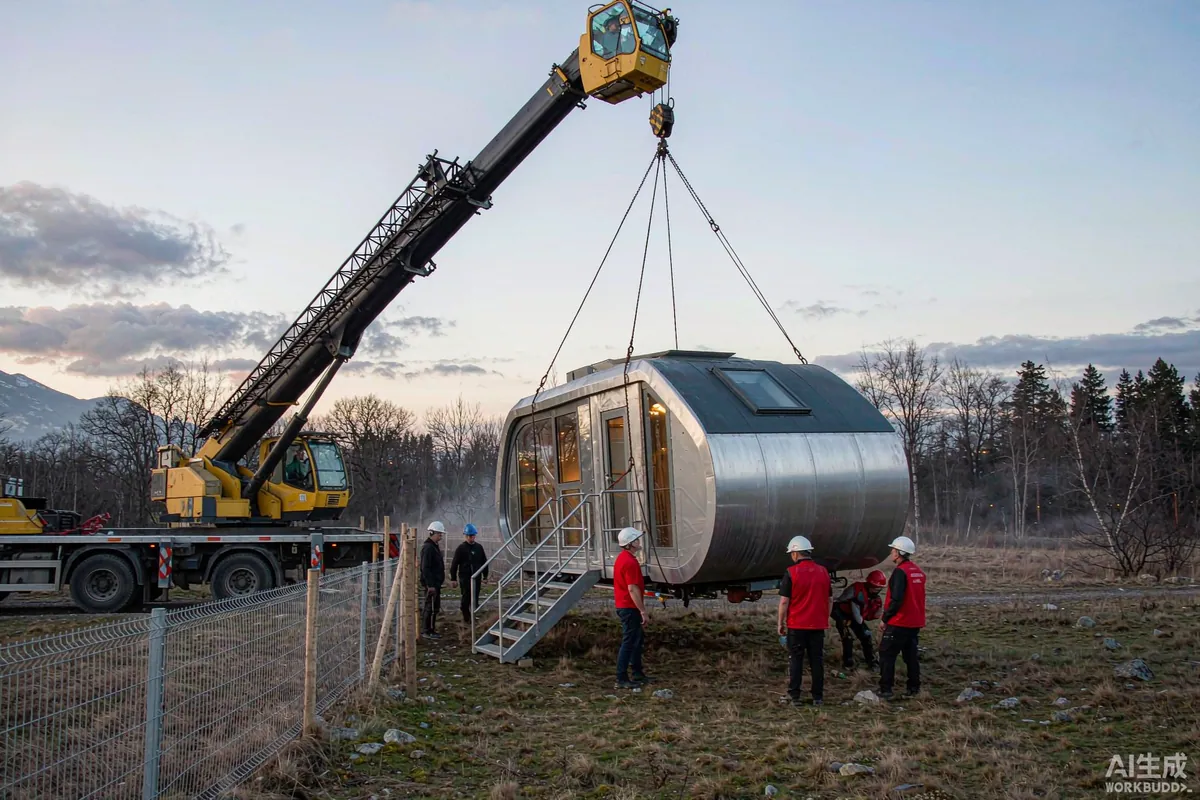
A capsule home travels from the factory to your plot as a finished, wrapped unit. Almost every delivery problem that owners report - refused access, a stuck truck, a cancelled crane - is a route problem, not a product problem. Work through the route with a tape measure and a camera before you confirm a shipping date, and delivery day becomes a short, predictable job.
Start With the Route, Not the Unit
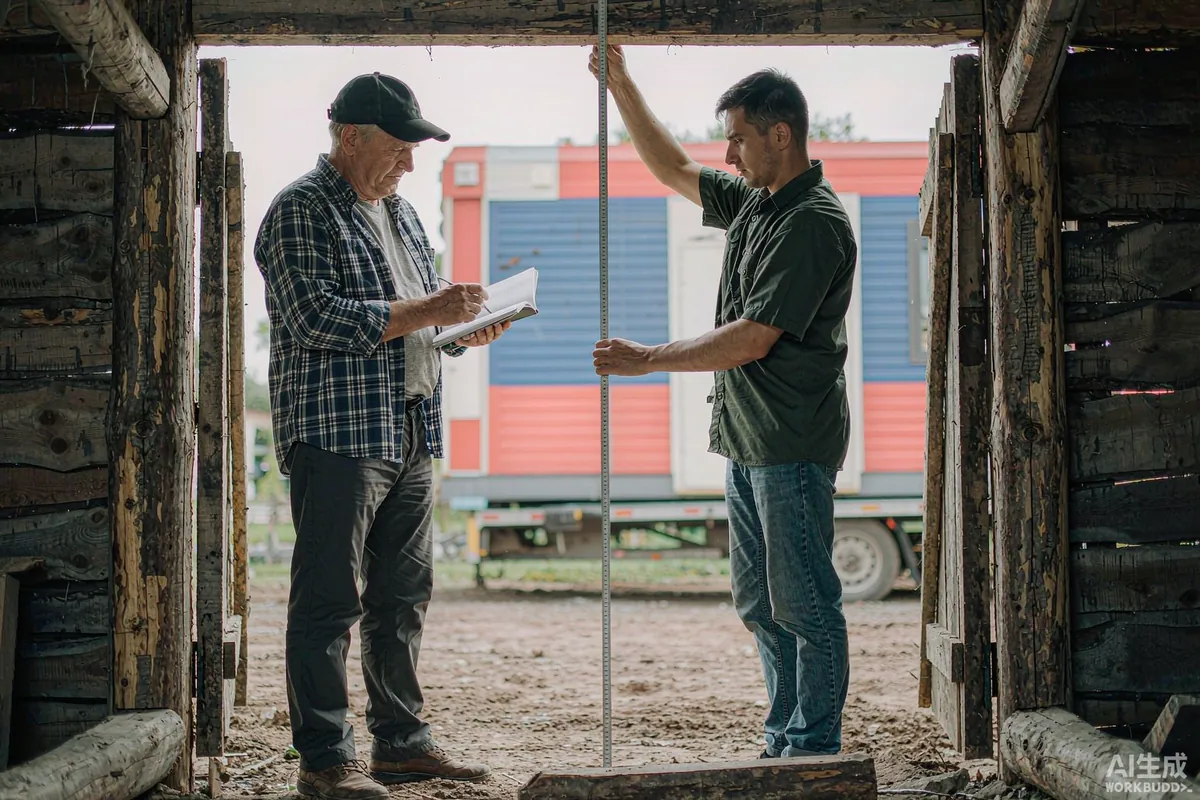
The limiting dimension is rarely the unit itself. It is the narrowest point on the last mile: a gate, a bridge, a sharp bend between trees, or a low cable. Measure the tightest three points and photograph them, then send the numbers with your order. Suppliers can plan a different trailer or a different approach only if they know in advance.
- Gate and gap width. Measure at the narrowest point, at handle height, not just at ground level.
- Turning radius. A long trailer cannot reverse around a tight bend; look for a place to turn, or plan a reversing route with a spotter.
- Surface and gradient. Soft verges, steep driveways and wet grass stop loaded trucks. Gravel compacted over a geotextile handles far better than topsoil.
- Overhead obstacles. Power lines, tree limbs and conservatory eaves are the usual reasons a truck stops short.
Ground Bearing: The Constraint People Forget
A crane is only as stable as the ground under its outriggers. Loaded outriggers concentrate a large force into four small pads, and if the ground is soft, saturated or recently filled, the crane operator will refuse the lift - correctly. Compacted crushed stone, spreader plates or mats, and a dry window in the weather solve most cases.
The same applies to the delivery truck. If it cannot get within working radius of the pad, you move to a shuttle: transfer the unit to a smaller vehicle, or place it further away and move it on a specialist trailer. All of that is cheaper to arrange before shipping than after.
Choosing Between Crane and Slide-Off
| Method | When it suits | What it needs |
|---|---|---|
| Crane lift | Obstructed plots, placement over fences or up a bank | Firm ground for outriggers, overhead clearance, short radius |
| Slide-off / self-unload | Open sites with a straight, level approach | Level standing for the truck, firm pad at the set-down point |
| Hi-ab truck crane | Single units, tight sites, quick turnaround | Shorter radius, lower cost than a full mobile crane |
Your supplier can advise which is realistic, but they need photographs and dimensions to do it. A five-minute video walking the route from the road to the pad is more useful than a page of description.
Plan the Lift Radius
Crane capacity falls as radius increases. The question is never "how heavy is the unit" alone, it is "how far from the truck must it travel". Every extra meter of radius can push you into a larger, more expensive crane. Move the pad closer to where the truck can stand, clear the landing zone, and you will often drop a crane size.
- Clear the landing zone of materials, vehicles and branches at least a day ahead.
- Mark underground services so outriggers are not placed over a tank or a soakaway.
- Keep non-essential people outside the lift radius - a simple barrier tape line is enough.
- Confirm who gives the signal. One person, clearly identified, is the standard on a well-run lift.
Timing and Weather
Book delivery for a dry window. Wet ground, high wind and poor visibility all stop lifts, and crane time is charged whether or not the lift happens. In exposed coastal or hillside locations, wind is the more common cause of delay - ask your operator what wind speed they work to and build slack into the schedule.
If you are coordinating with a factory shipment, remember that production, inland transport, port handling and the final mile are separate legs. A delay in one does not automatically hold the others, so keep the site crew's number and the haulier's number and confirm the day before.
Site Readiness Checklist
- Pad compacted, level and photographed, with levels recorded in writing.
- Support piers or screws in place and confirmed against the supplier drawing.
- Access route cleared, gates open, overhanging branches cut back.
- Standing area for truck and crane firm and dry; mats available if not.
- Service stubs located, marked and protected from vehicle traffic.
- Neighbors informed if a road will be temporarily blocked.
- Named site contact present for the whole window, with a phone that works on site.
On the Day
Photograph the unit before unwrapping, note any transit damage on the delivery paperwork, and check the serial plate against your order. Unwrap only once the unit is in final position so the shell stays protected during the lift. With a compact A30 unit, the whole operation is often finished in a morning; a double-deck A70 needs a larger crane and a longer window, but the sequence is identical.
After Set-Down
Once the unit is on its supports, the remaining work is leveling, anchoring and connecting services. Keep the crane until the unit is confirmed level and stable - releasing early to save an hour is a false economy. Only then should the crew strike the rigging and clear the site.
When Access Is Genuinely Difficult
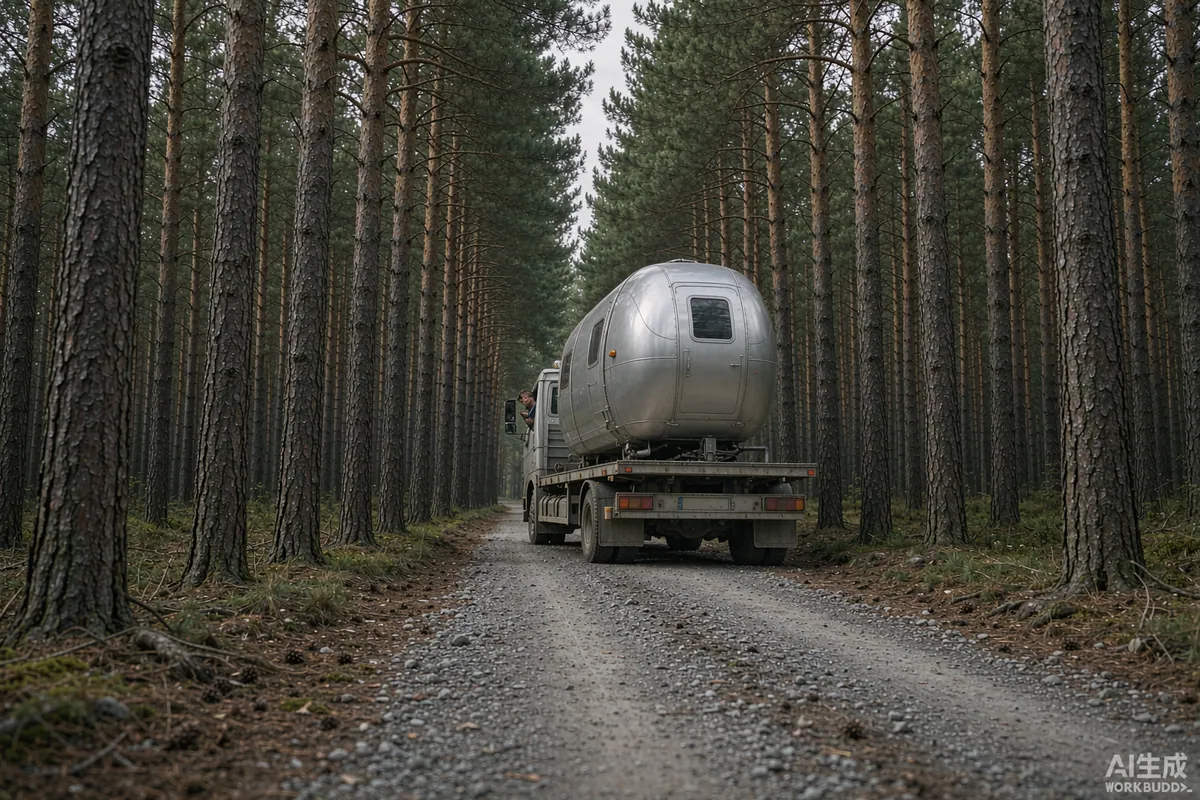
Some plots are genuinely hard: a long single-track lane, a steep climb, a bridge with a posted limit, a woodland ride with tight trees. None of these are automatically disqualifying, but each has a known workaround and a known cost, and it is much better to choose the workaround deliberately than to discover it when a driver refuses to proceed.
Shuttle the Unit
The most common solution for a narrow final approach is to transfer the unit to a smaller vehicle at a suitable point - a layby, a yard, a wide field gateway - and run the last leg on a shorter truck. It adds a handling operation and a second crew, so it costs more, but it routinely unlocks sites that a full-size trailer cannot reach. The transfer point needs firm ground and enough room for both vehicles and a crane.
Improve the Route Instead
Sometimes the cheaper answer is to spend money on the ground rather than on the logistics. Widening a gateway, laying a compacted stone track over a soft section, or removing two trees can cost less than a specialist trailer and leaves you with a better access road permanently. Get both quotations before deciding - the comparison is often surprising.
Accept a Different Sitting Position
If the scenic spot is unreachable, look again at where the unit can go. A position twenty meters from the ideal, chosen because a truck can stand there, is usually better than the perfect spot that costs a day of crane time and a damaged verge. Walk the site with the haulier or your supplier's logistics contact if you can; they will see constraints you have stopped noticing.
- Ask for the vehicle dimensions early - length, width, height and turning circle.
- Walk the route at the same time of year you plan to deliver; a dry summer lane can be a wet spring problem.
- Have a fallback position agreed in advance so nobody improvises under time pressure.
- Budget for one delay. Working to a schedule with no slack turns a minor hold-up into a crisis.
Delivery is the last step of a long chain and the one with the most variables outside anyone's control. Sites that go well are almost always the ones where somebody walked the route twice and measured it once.
More from the Blog

Capsule Home Cost Guide: What You Really Pay in 2026
EXW, shipping, install and the hidden line items — a transparent breakdown of total landed cost.
Read article →
How to Install a Capsule Home in 3 Days: A Step-by-Step Guide
From site prep to first guest — the exact sequence our install crews follow on every deployment.
Read article →
Real Owners, Real Numbers: Success Stories
How a lakeside resort, a Spanish glamping site and a Singapore dealer hit their targets.
Read stories →Talk to the Factory
Ready to Ride the 2026 Wave?
Get the latest catalog, pricing tiers and a layout sketch for your land — straight from the engineering team.