Capsule House Red Sea Coast Saudi Arabia Site Guide
Red Sea coast capsule house siting in Saudi Arabia: salt spray, humidity and UV versus inland desert, and the coastal spec items to raise with your supplier.
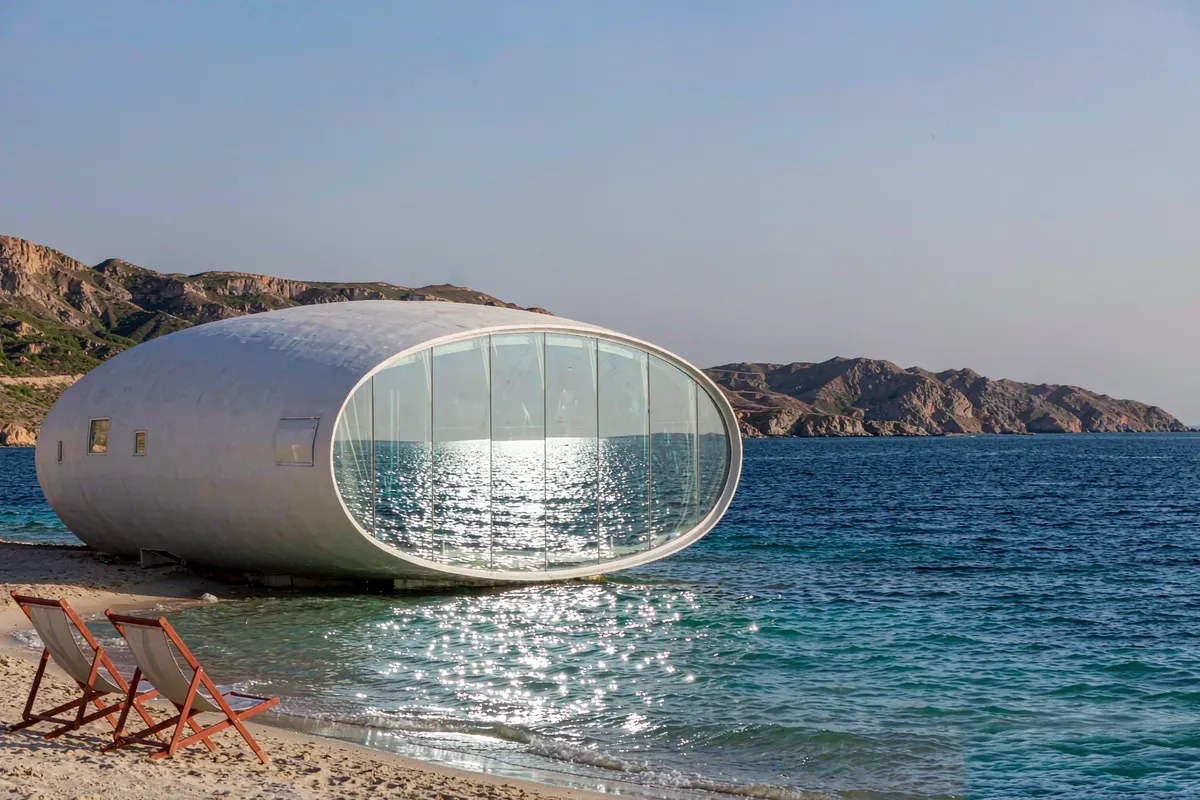
A capsule house on the Saudi Red Sea coast faces a different engineering problem from the inland desert cities that dominate most Saudi discussions. Salt spray, humid sea air and intense sun attack steel, glass and fasteners in ways that Riyadh projects never see, and the region's tourism ambitions mean more buyers are siting units on beaches and islands than ever before. This guide covers what coastal siting changes, and assumes you have already read the general Saudi Arabia market overview.
Why the Coast Is a Different Problem from Riyadh or Jeddah
Our Riyadh and Jeddah comparison deals with city projects where dust, heat and permitting dominate the conversation. Move the same unit to a beach north of Jeddah and the load profile changes. Sea salt settles on every exposed surface and works into joints, seams and fastener heads. Humidity stays high at night, so condensation cycles through the enclosure daily rather than occasionally. UV intensity at a low-latitude coast degrades coatings and sealants faster than inland exposure.
None of these are reasons to avoid the coast. They are reasons to specify differently, and to raise the coastal package with the supplier in writing before the order is placed rather than after the first season of corrosion appears.
What Salt and Humidity Do to the Structure
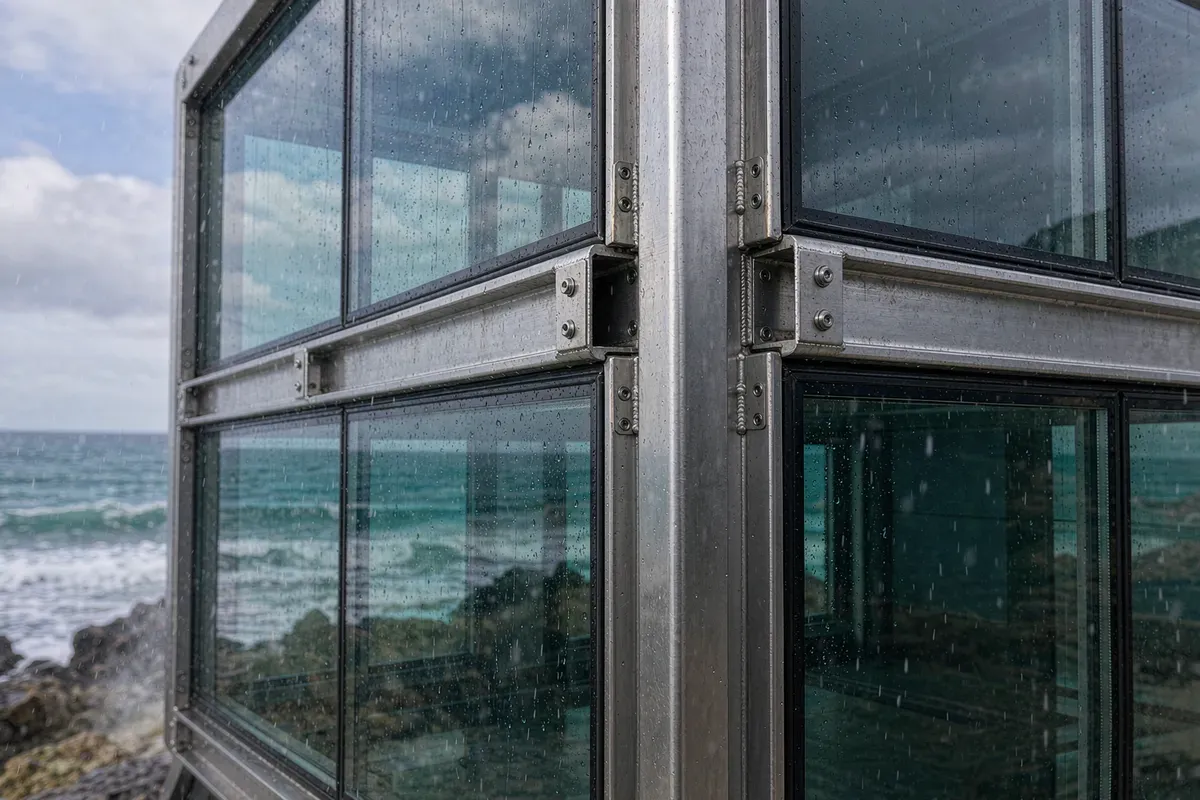
Salt attack concentrates where water can linger. Frame crevices, welds, fastener penetrations, door tracks and the bottom edge of wall panels all collect brine that evaporates and leaves crystals behind, which then absorb moisture again the next night. The cycle repeats daily, so coating systems that perform inland can underperform at the shore.
Steel frames and fasteners
Ask which steel grade and coating system the frame uses, and what fastener material is specified for external connections. Dissimilar metal contact, for example stainless bolts in plain steel frames or aluminum trim against galvanized steel, accelerates galvanic corrosion in salty air, so the material pairing deserves a direct question. Marine environments also punish any cut edges where coating was field-touched-up; ask how field cuts are sealed.
Glass, seals and moving parts
Coastal glass lives with salt film and mineral deposits, which matters for a product whose selling point is panoramic glazing. Sealants and gaskets age faster under combined UV and salt exposure, and sliding door tracks are the classic trap, collecting grit and salt until they bind. Our glazing and heat gain article covers the thermal side of large glass areas in the Gulf, which compounds the coastal maintenance picture because shaded interior comfort depends on seals staying tight.
The contrast between the two Saudi environments is sharpest when set out side by side, and it is the table worth handing to a supplier when you request a coastal quotation.
| Exposure factor | Inland desert cities | Red Sea coastal plots |
|---|---|---|
| Corrosion driver | Dust and occasional condensation | Daily salt deposition and humid nights |
| Thermal load | Extreme dry heat, large day-night swings | High heat with humidity, warmer nights |
| Glass priority | Heat rejection and dust sealing | Heat rejection plus salt-film cleaning access |
| Maintenance focus | Filter and track cleaning, seal checks | Wash-down regime, fastener and coating inspection |
| Failure point | Cooling undersizing, seal dust ingress | Fasteners, tracks, coatings and field-cut edges |
Read the table as a specification instruction, not a summary. Each coastal row should map to a line in your purchase contract, because a supplier quoting the same unit for Riyadh and for a beachfront plot is not pricing the second job honestly.
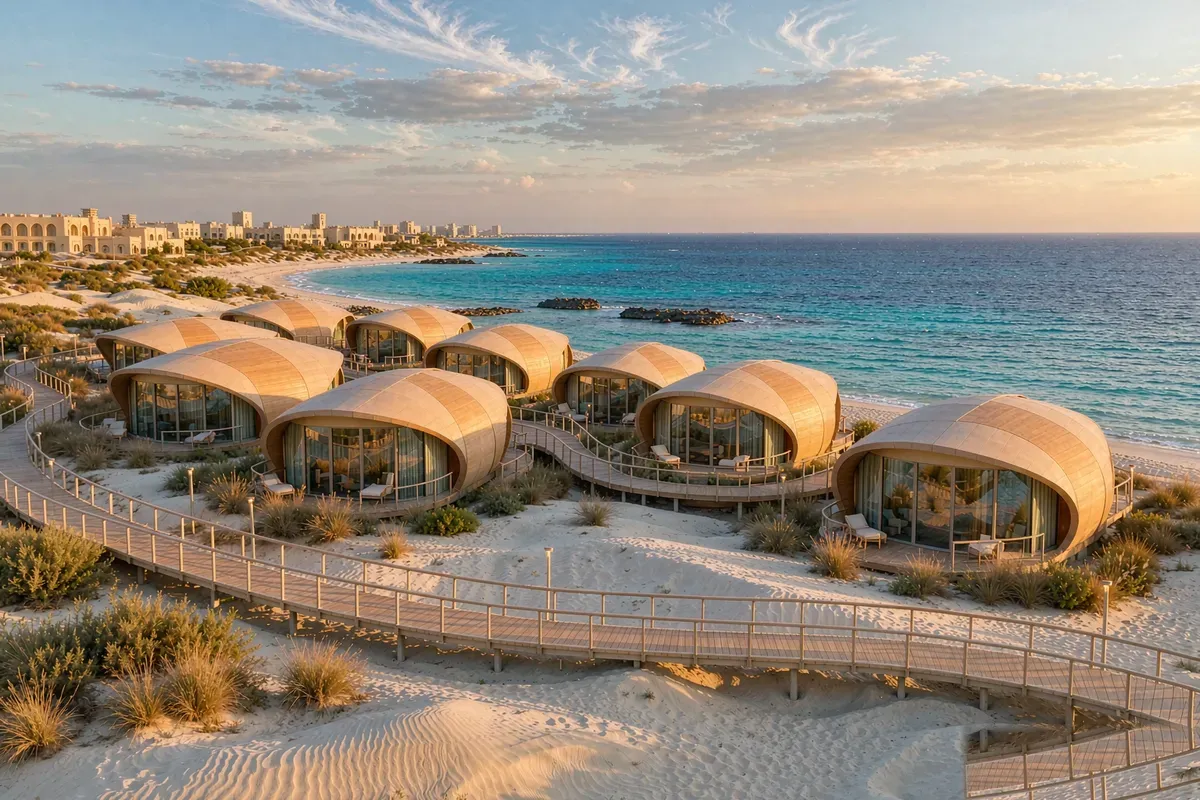
Specification Items to Raise with the Supplier
A coastal order should be quoted against a written list of enhanced items, not a verbal assurance that the unit is suitable for seaside use. Buyers on the Red Sea coast typically put the following on the table.
- Coating system and steel grade for the frame, with the maintenance interval the supplier expects at a marine site.
- Fastener and hardware material for all external connections, hinges and tracks.
- Sealant specification and the recoat or reseal schedule the supplier recommends.
- Drainage detailing around the base so that wash-down water and rain exit freely.
- A cleaning regime for glass and exterior surfaces that matches salt exposure rather than generic guidance.
Coating and corrosion classes are often cited in standards, and the right class for a specific site depends on exposure distance from the waterline, prevailing wind and local practice. Confirm the appropriate class with the supplier and the authority having jurisdiction instead of accepting a generic label.
Foundations and Utilities on Beach and Island Plots
Red Sea coast plots vary from firm coral ground to soft sand, and islands add barge logistics to every delivery. The foundation conversation needs a local engineer who has worked the shoreline, because anchoring into coral, sand or reclaimed ground each has different answers. Our Saudi shipping article covers the freight leg, and the final delivery to an island plot deserves the same scrutiny as the ocean crossing itself.
Elevation is the coastal foundation habit worth copying from island resorts across the region. A raised base or short stilts lift the chassis above spray-wet ground, keep the underside ventilated and make wash-down water drain away instead of pooling under the frame. On sandy plots, a geotextile layer and confined fill under the pad reduce settling, and on any plot within sight of the waterline, the base design should assume standing water at least once a year.
Island and remote beach plots also change the installation equation. Crane reach, barge scheduling and tide windows are real cost items, and a unit that cannot be lifted at the planned date starts incurring standby charges that no quotation highlighted. Build the schedule with slack and put standby rates in writing with the lifting contractor.
Water is the other coastal constraint. Desalinated or trucked supply shapes both operating cost and system design, and our Saudi water supply article explains the options. On a beachfront unit, add outdoor showers and guest rinse-offs to the demand estimate, because they are real loads at a coastal resort that a desert unit never sees.
How the Tourism Push Shapes Demand
Saudi Arabia's coastal tourism development has put the Red Sea shoreline on the map for resort and glamping projects, and independent operators are following the same logic: the coast is where guests will pay for the view. That demand pulls capsule homes into a market segment where guest expectations run high, and where a corroded track or a salt-filmed window shows up in reviews immediately. Operators comparing markets often weigh the Red Sea against other Gulf options covered in our GCC overview, and the coastal specification premium is one of the real differences.
Pricing follows specification, and our Saudi price guide explains how the landed cost builds up. A coastal package adds items to that stack, which is why the specification list belongs in the request for quotation, not in the negotiation after the quote arrives.
Buyers who already operate in humid coastal markets know the pattern from elsewhere. Our Vietnam salt corrosion article and the UAE maintenance guide both describe maintenance regimes shaped by aggressive air, and the Red Sea coast rewards the same discipline. Confirm coating, material and inspection requirements with the supplier in writing, and confirm local requirements with the authority having jurisdiction. Requirements may vary by application, market and applicable standard.
More from the Blog

Capsule Home Cost Guide: What You Really Pay in 2026
EXW, shipping, install and the hidden line items — a transparent breakdown of total landed cost.
Read article →
How to Install a Capsule Home in 3 Days: A Step-by-Step Guide
From site prep to first guest — the exact sequence our install crews follow on every deployment.
Read article →
Real Owners, Real Numbers: Success Stories
How a lakeside resort, a Spanish glamping site and a Singapore dealer hit their targets.
Read stories →Talk to the Factory
Ready to Ride the 2026 Wave?
Get the latest catalog, pricing tiers and a layout sketch for your land — straight from the engineering team.