Capsule House Port Klang Shipping: Import to Site
Port Klang capsule house deliveries: clearance steps, documents your agent needs, lowbed last-mile limits and site checks before the truck leaves the port.

Port Klang is the default entry point for capsule house deliveries to Kuala Lumpur, Selangor, Putrajaya and most of Peninsular Malaysia, and the route from vessel to site is more predictable than most buyers expect. The key is knowing who does what between the ship's arrival and the truck at your gate. This guide walks through the Port Klang leg step by step, and leaves the general freight arithmetic to our capsule house shipping cost guide.
Why Port Klang Serves Most West Malaysia Projects
Malaysia's west coast faces the Strait of Malacca, which puts Port Klang within practical trucking distance of the densely populated corridor from Klang Valley down to Johor and up to Penang. For a unit shipped from a Chinese factory, Port Klang is usually the shortest total route to a Kuala Lumpur area plot, and sailings are frequent enough that a missed vessel is an inconvenience rather than a crisis. Our Malaysia market guide covers the broader logistics picture; this article zooms in on the port itself.
The port is large and busy, which cuts both ways. Frequency and competition among forwarders keep the ocean leg efficient, but a busy terminal also means storage clocks start running the moment your container is discharged. Free time at the port is finite, and every day beyond it costs money, so the paperwork needs to be ready before the vessel arrives, not after.
What Happens Between Vessel Arrival and Gate Release
The sequence from discharge to gate release follows a predictable pattern, and knowing it helps you schedule the site crew realistically.
- The container is discharged and moved to the terminal yard, where it waits for customs clearance to be completed.
- Your appointed clearing agent lodges the import declaration and pays any duties and terminal charges.
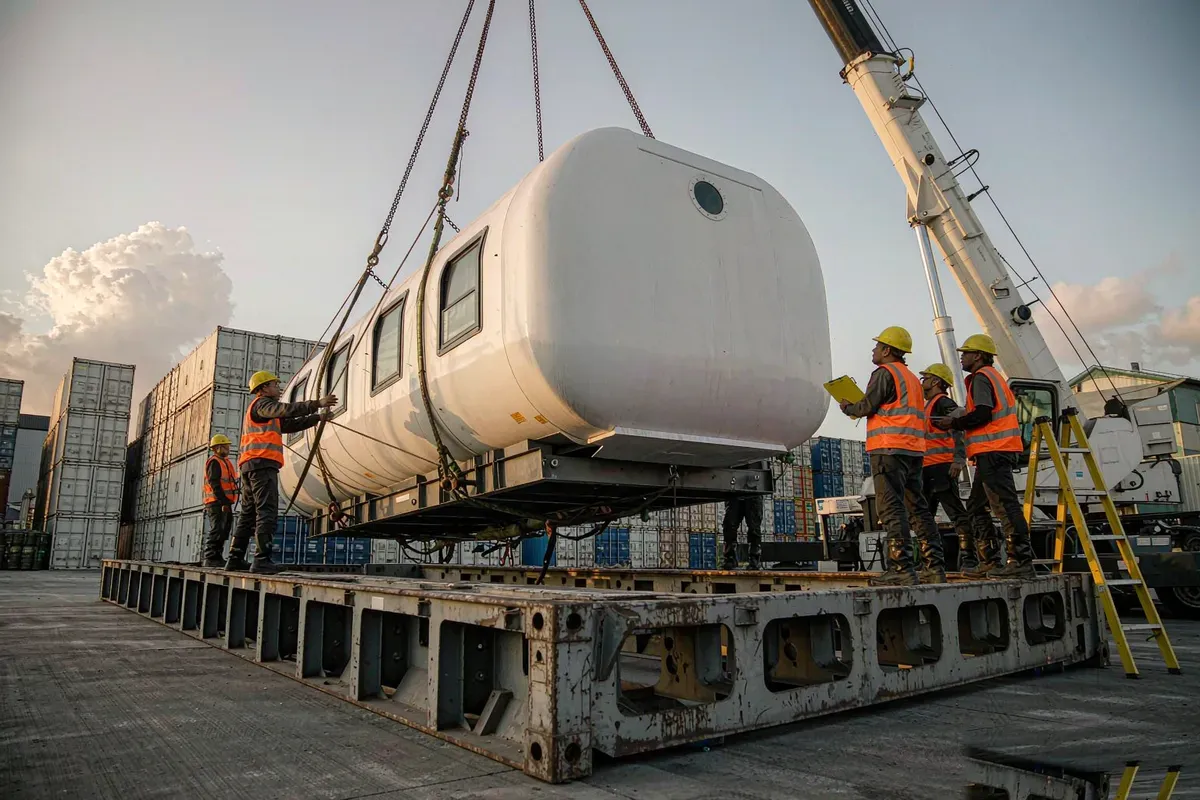
- Once released, the container is hauled to a yard where the capsule can be unloaded, inspected and transferred to road transport.
- The unit travels to site on a lowbed or crane lorry and is either lifted directly onto its foundation or set down for a second crane mobilization.
Each arrow in that list is a handoff, and each handoff needs a responsible party named in your contract. The most common delays are not physical; they are missing signatures, unpaid duties and transport that was booked a day later than the release date.
Documents Your Clearing Agent Will Ask For
Customs clearance runs on documents, and the set for a prefab structure is straightforward if your supplier prepared them properly. Expect your agent to request the commercial invoice, the packing list, the bill of lading, certificates of origin where preferential tariffs may apply, and any technical specifications that establish what the unit is. A well-documented shipment from the factory, which our container loading plan article describes from the packing side, clears in days. A shipment with a vague description of goods invites queries, and queries cost storage days.
Duties and taxes on a prefab unit depend on its classification and on current rates, which we deliberately do not quote here. Our import duty guide explains how the classification works and why the description on the invoice matters more than most buyers realize. Confirm the applicable rates with your clearing agent before the shipment sails, because surprises at the terminal are always more expensive than answers obtained early.
Last-Mile Constraints on Malaysian Roads
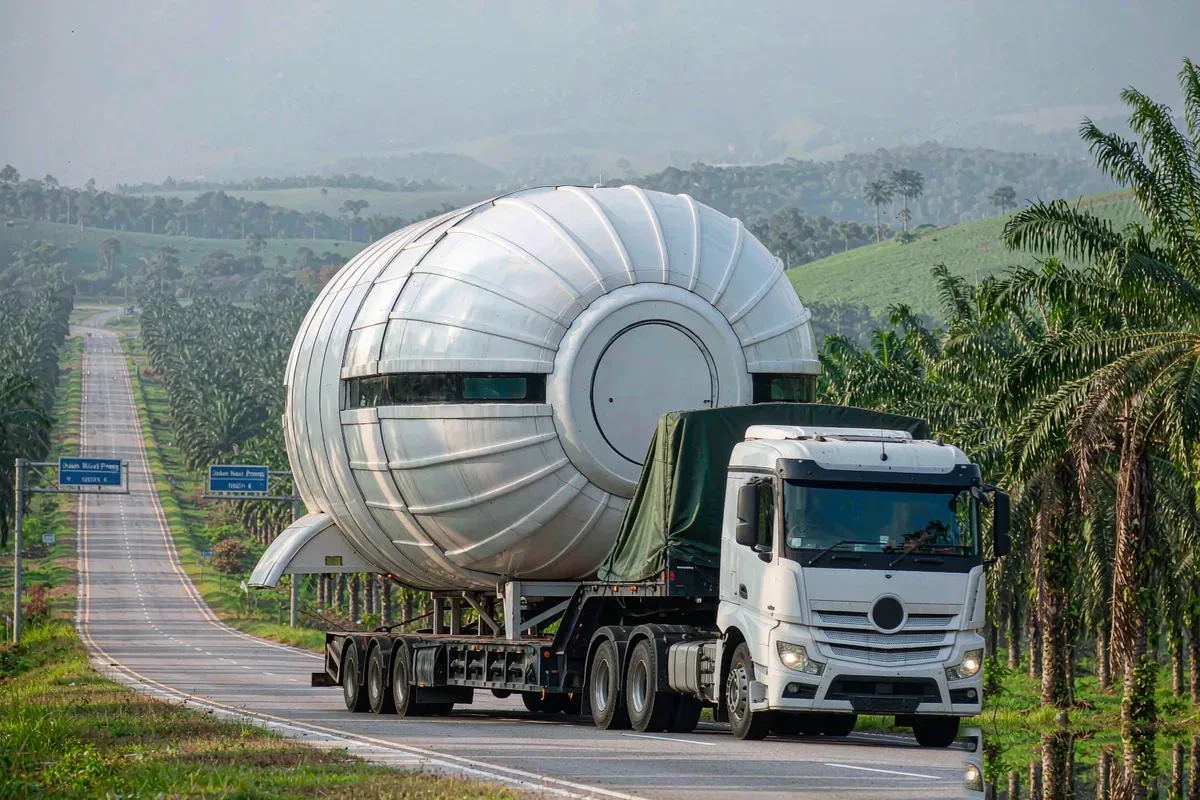
The drive from Port Klang to your site is the part of the journey with the most physical constraints. A capsule house moves as oversized cargo, which means permits, escort arrangements where required, and route planning around bridges, overhead clearances, turns and weight-limited roads. Kuala Lumpur's urban core adds its own complications, with certain corridors effectively closed to oversized loads during peak hours.
Give the transport contractor a genuine site address and photographs of the approach road, not just a map pin. A unit that cannot make the final turn ends up on a storage yard at your expense while a smaller truck or a crane shuttle is arranged. Our delivery access and crane article explains how to survey a site so the last hundred meters are planned as carefully as the ocean crossing.
Timing matters too. Many operators schedule the road leg for early morning to avoid city traffic windows, which means the site needs to be ready the previous afternoon, with the foundation cured, access clear and a crane or the truck's own unit on standby.
Cost and Time Items the Port Route Adds
The ocean freight number on a quotation is rarely the number you pay. The Port Klang route adds local charges that first-time importers forget to budget, and they cluster around time at the terminal.
Storage, demurrage and detention exposure
Once the container is discharged, free time starts counting. Clearance delays convert directly into storage charges at the terminal, demurrage on the container and detention if the box returns late. Because a capsule shipment often uses flat rack or open-top equipment, the daily rates on these special containers run well above standard boxes. The practical defense is administrative: lodge documents before the vessel arrives, nominate the clearing agent in advance, and book road transport against the expected release date with a day of margin.
| Cost item | Who normally arranges it | How it escalates |
|---|---|---|
| Terminal handling and documentation | Shipping line via your forwarder | Fixed per container, rarely moves |
| Customs duty and taxes | Clearing agent pays on your behalf | Depends on classification and valuation |
| Terminal storage | Agent on your account | Charged per day once free time ends |
| Container demurrage | Shipping line on your account | Special equipment rates, rises in steps |
| Oversized road permit and escort | Transport contractor | Route dependent, varies by state road rules |
Transit risk on the port leg is also insurable, and the premium is small against the value of a glazed unit. Our freight insurance cost article explains what marine cover should include for a prefab shipment, and our damage claims article explains the photographic evidence that makes a claim survive.
West Malaysia Versus East Malaysia Deliveries
Port Klang serves the peninsula. Projects in Sabah and Sarawak route through a different set of ports, and the eastern journey involves additional legs that change both cost and timeline. We keep the two markets separate on purpose, because mixing their logistics produces bad estimates. Our Sabah and Sarawak delivery guide covers the East Malaysia route in detail, including the barge and feeder services that connect it to Peninsular Malaysia.
If your project spans both regions, treat them as two separate deliveries with two separate schedules, even when the units ship from the same factory on the same vessel. Terminal handling, customs and inland transport are all quoted per leg, and consolidating them on paper rarely matches what actually happens on the ground.
How Clearance Differs for New and Used Units
A new unit ships with factory documents that match its invoice cleanly. A used or redeployed unit, for example one moved from another project, raises extra questions: the declared value needs support, prior export documents may be requested, and the condition on arrival should be photographed in case of disputes. The clearance mechanics are the same, but the evidence file is thicker. If you are buying secondhand, budget a little more agent time and confirm the valuation approach with the agent in advance.
Electrical and utility reconnection after arrival is another practical difference buyers forget to schedule. Our Malaysia electrical setup article covers what happens once the unit is on its foundation, which is a separate trade from the port work described here.
Budget the full Port Klang leg as a chain of named responsibilities: the supplier to the vessel, the forwarder through the terminal, the agent through customs, the hauler to your gate. When each link has a name, a phone number and a deadline, the route from Malaysian pricing on paper to a unit on your foundation stays predictable. Confirm current terminal procedures and charges with a licensed customs agent. Requirements may vary by application, market and applicable standard.
More from the Blog

Capsule Home Cost Guide: What You Really Pay in 2026
EXW, shipping, install and the hidden line items — a transparent breakdown of total landed cost.
Read article →
How to Install a Capsule Home in 3 Days: A Step-by-Step Guide
From site prep to first guest — the exact sequence our install crews follow on every deployment.
Read article →
Real Owners, Real Numbers: Success Stories
How a lakeside resort, a Spanish glamping site and a Singapore dealer hit their targets.
Read stories →Talk to the Factory
Ready to Ride the 2026 Wave?
Get the latest catalog, pricing tiers and a layout sketch for your land — straight from the engineering team.