Capsule House Shipping Cost: Freight Breakdown
Capsule house shipping cost by line: freight mode, port handling, clearance, haulage and cranage, and which delivery term puts each cost on which party.
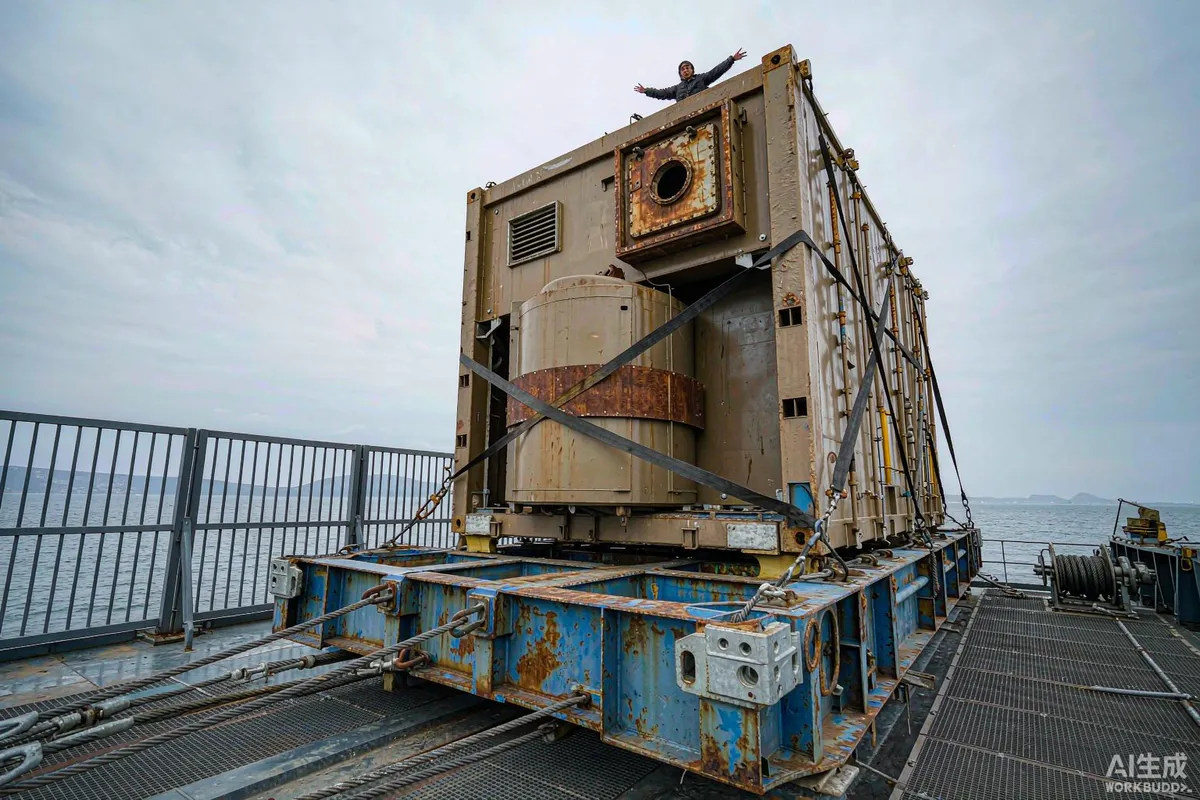
Shipping is usually the second largest line in a capsule house project after the units themselves, and it is the line most often quoted in a form that cannot be compared. This page is about the cost structure and the quotation basis: what the money is for, who pays it under each delivery term, and how to ask for a number you can budget. It is not a transport process guide - the operational sequence is covered separately in our shipping and logistics guide. We do not publish freight rates: they move with the market, the lane and the season.
The Five Families of Shipping Cost
- Origin costs - factory-to-port haulage, export clearance, terminal handling and documentation at load port.
- Main carriage - ocean freight for the chosen mode, plus the surcharges attached to it.
- Risk transfer - marine insurance, priced against the declared value including freight.
- Destination costs - terminal handling, customs clearance and brokerage, duty and tax as assessed under the classification, and any storage or demurrage that accrues.
- Last leg - inland transport to the site, cranage, setting and the standby time that accompanies them.
A quotation that covers only the middle family looks cheap and is not. Ask which of the five are included, in writing, for every quote you receive.
How Unit Dimensions Decide the Mode
Freight mode is not a preference; it follows from the transport envelope of the unit. That envelope is why two superficially similar units can arrive with very different freight costs.
| Mode | When it applies | Cost behaviour |
|---|---|---|
| Containerised | Unit or kit packs within standard container dimensions and weight limits | Priced per container; predictable, widely available |
| Flat rack | Unit exceeds container width or height but can be lashed to a rack | Priced as out-of-gauge; equipment availability affects the rate |
| Open top / out-of-gauge | Height or handling constraints require specialised equipment | Equipment surcharges and fewer sailings |
| Break bulk | Dimensions or weight rule out containerised handling | Priced per unit of volume or weight; port handling dominates |
| Road / rail only | Overland destinations where sea legs are not required | Priced by distance, permits and escort requirements |
A unit that folds or expands for transport can move a deployed footprint larger than any container at containerised rates, which is a design decision with a direct freight consequence. Ask the supplier for both the transport dimensions and the deployed dimensions, and give both to the forwarder.
Who Pays What: Delivery Terms in Plain Terms
The delivery term on the quotation decides which side of the ledger each family sits on. In broad terms:
- EXW - the buyer collects at the factory and carries everything from that point, including export formalities.
- FOB - the seller clears export and loads the vessel; the buyer carries main carriage and everything after.
- CIF / CIP - the seller pays carriage to the named port or place, but risk transfers at shipment, and destination charges remain the buyer's.
- DAP - the seller delivers to a named place, with import clearance and duties typically still on the buyer.
- DDP - the seller delivers with duties paid, which sounds complete and still needs the exclusions read carefully.
Two practical points. First, a term that shifts a cost to the seller does not remove it from the project - it is in the unit price. Second, under any term, the party that controls the document flow controls the dwell time, and dwell time is where unexpected cost accumulates. Confirm which specific edition of the trade terms is being referenced, and name it in the contract.
The Destination Lines That Surprise Buyers
- Terminal handling at destination, charged by the terminal operator.
- Demurrage and detention once free time on the container or the port slot expires - a daily charge, and the single most common unplanned cost.
- Storage where the unit is held at the port pending clearance.
- Customs brokerage and processing, plus duty and tax as assessed on the declared value under the classification assigned.
- Inland haulage priced by distance, permits and, for out-of-gauge loads, escort and route survey requirements.
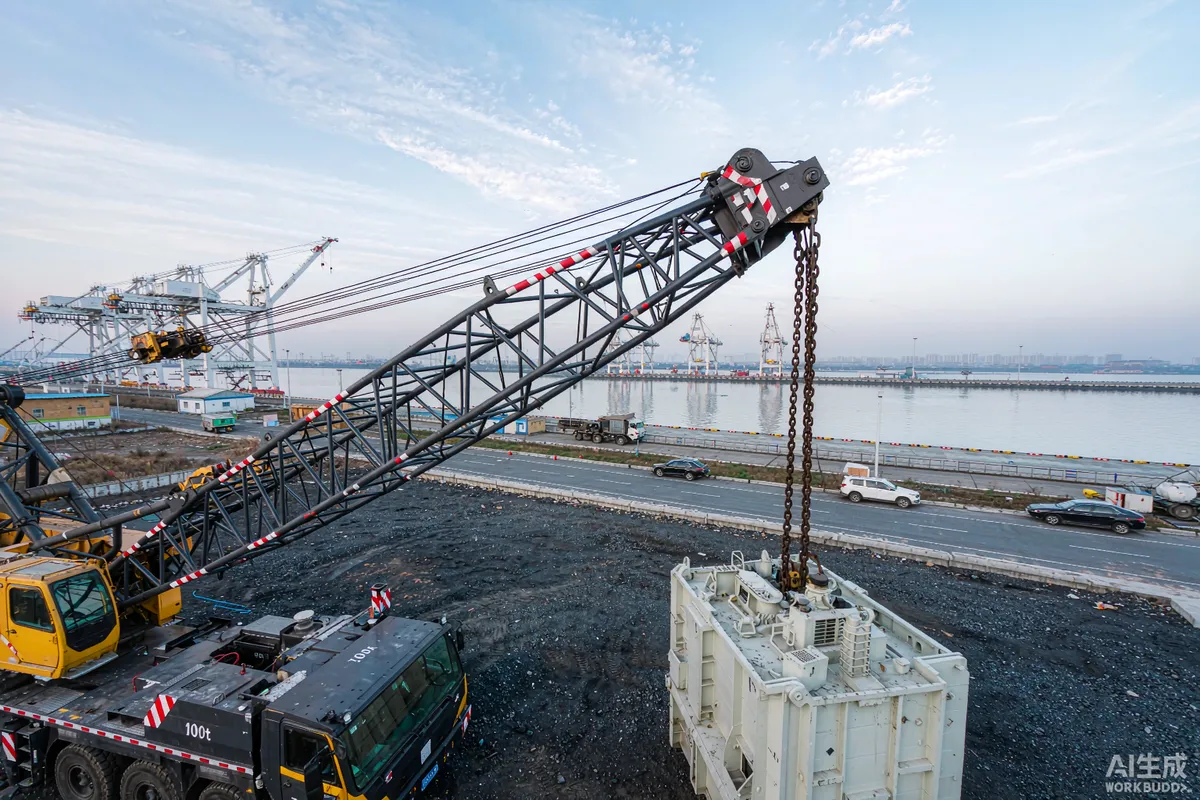
- Cranage with standby - the crane is booked for a window, and delays inside the window are billed.
- Re-delivery where the first attempt fails because access or ground conditions were not ready.
Route survey, access and outrigger bearing are covered in our delivery and crane access guide; damage and claims handling in the freight claims guide.
Seasonality and Rate Volatility
Freight is a traded price, not a fixed one, and the date you book matters as much as the mode you choose. Four things drive the number you are given on any given day.
- Capacity on the lane. When sailings are full, out-of-gauge cargo is the first to be rolled, and rolling costs dwell time.
- Surcharges. Bunker, currency and peak-season adjustments are applied and withdrawn; ask which are in the quote and for how long they hold.
- Equipment availability. Flat racks and specialised equipment are not always where you need them; positioning an empty unit is a charge.
- Validity. A quotation has a validity window. Beyond it, the number is an indication, and budgeting against an expired quote is a common cause of overrun.
The practical response is to build a range rather than a point: ask for an indicative rate early for budgeting, and a firm rate with a validity date at the point of booking. Where the programme allows, avoid shipping into known peak windows.
Why Two Quotations Are Not Comparable
- Different terms. A CIF port number and a DAP site number are not the same product.
- Different validity. Freight rates are quoted for a validity window; a quote from last quarter is not a quote.
- Different surcharge treatment. Bunker, currency and peak-season adjustments may be included or excluded.
- Different assumptions about free time and about who arranges clearance.
- Different scope at the last leg - delivery to a kerb is not delivery onto prepared foundations.
- Different currency and payment schedule. Both should be stated on the face of the document.
Insurance: What the Number Is Based On
Insurance is frequently treated as a checkbox and then discovered to be inadequate at exactly the moment it is needed. Three questions separate a usable policy from a decorative one: what the declared value is, what perils are named, and where cover begins and ends in both place and time. Cover that stops at the port gate leaves the highest-risk part of the journey - the lift and the placement - uninsured.
Marine insurance is priced against a declared value and a scope of cover. The declared value should include the goods, the freight and the expected charges, because a claim settled on goods value alone will not reconstruct the project cost. Ask what perils are covered, what the excess is, where cover starts and ends, and how a claim is notified and evidenced. Photograph the unit at loading and at discharge; condition evidence at those two moments settles most disputes.
How to Request a Freight Number You Can Budget
| Ask for | Why |
|---|---|
| Transport and deployed dimensions, gross weight, package count | Determines mode and equipment |
| Origin port and the delivery point on site | Defines both ends of the quote |
| The named delivery term and its edition | Defines who pays what |
| Freight, surcharges, destination charges and last leg as separate lines | Makes quotes comparable |
| Free time for containers and port storage, and the daily rate after it | Quantifies dwell risk |
| Validity, currency, payment schedule | Makes the number usable |
| Transit time and the assumptions behind it | Separates port-to-port from door-to-site |
Shipping is one input to the landed number; the full structure is set out in our capsule house price guide. Current models are on the product pages; to request a freight and landed-cost quotation, send the model, quantity and delivery site.
More from the Blog

Capsule Home Cost Guide: What You Really Pay in 2026
EXW, shipping, install and the hidden line items — a transparent breakdown of total landed cost.
Read article →
How to Install a Capsule Home in 3 Days: A Step-by-Step Guide
From site prep to first guest — the exact sequence our install crews follow on every deployment.
Read article →
Real Owners, Real Numbers: Success Stories
How a lakeside resort, a Spanish glamping site and a Singapore dealer hit their targets.
Read stories →Talk to the Factory
Ready to Ride the 2026 Wave?
Get the latest catalog, pricing tiers and a layout sketch for your land — straight from the engineering team.