Glamping Pod With Kitchen: Buyer Spec Checklist
Glamping pod with kitchen checklist: wet vs dry kitchens, ventilation, appliance loads, drainage, fire safety and turnover questions for operators.

A glamping pod with kitchen facilities earns its keep only if the kitchen is specified as carefully as the bedroom, because a small cooking space that smokes, floods or trips its breaker will dominate your maintenance log. Buyers comparing pods usually arrive from our glamping pods guide already knowing the category; this article is the kitchen-specific checklist, and it complements our pod with bathroom article, which handles the wet room side.
Wet Kitchen or Dry Kitchen First
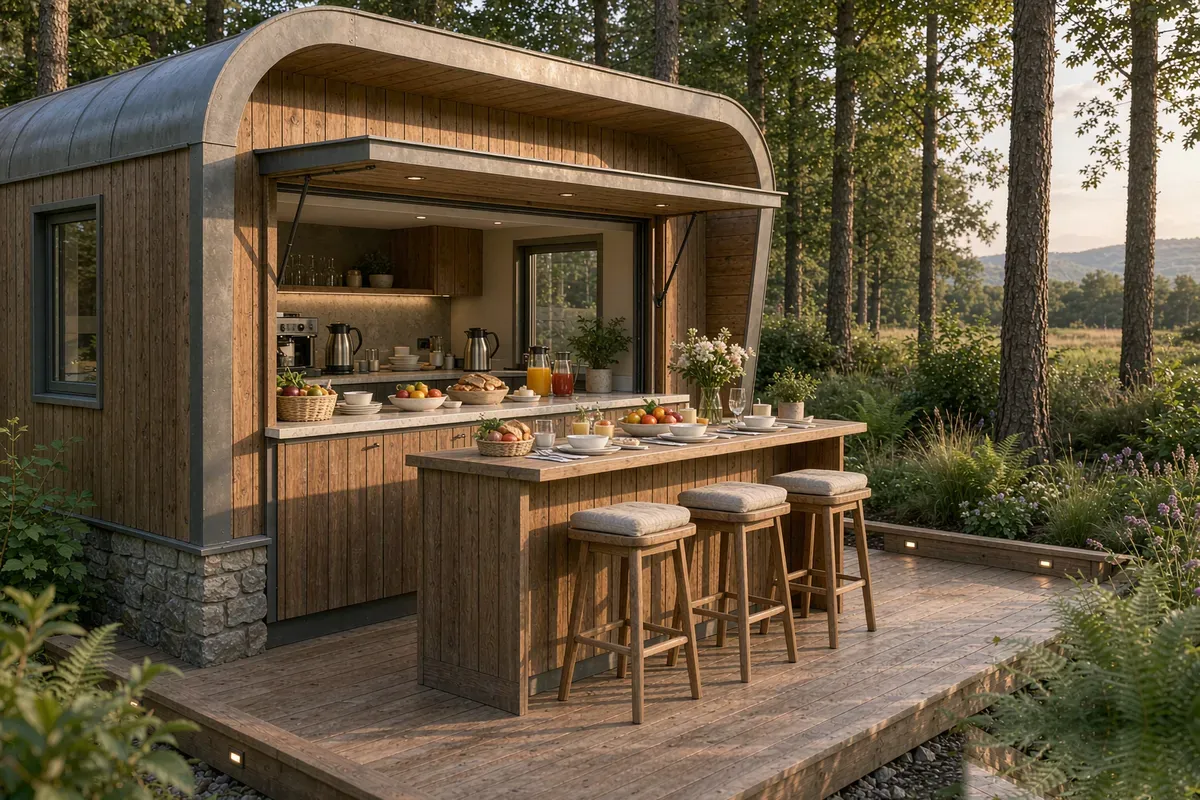
The first decision is how much kitchen the pod actually needs, and it should follow from your operating model rather than from a supplier's default. A dry kitchen, meaning sink, counter, fridge and storage with no cooking appliance, suits pods that position around nearby restaurant service and keeps fire risk low. A wet kitchen with a hob and oven supports longer stays and family bookings but demands ventilation, drainage and electrical capacity that a small pod must be engineered to carry.
| Kitchen type | Typical equipment | Operational fit |
|---|---|---|
| Dry kitchenette | Sink, fridge, storage, coffee facilities | Short stays, breakfast model, low fire load |
| Light wet kitchen | Induction hob, microwave, compact sink | Self-catering couples, moderate turnover |
| Full wet kitchen | Oven, hob, full drainage, extract hood | Family pods, long stays, resort outposts |
Choose the type before choosing the pod, because the kitchen decision drives the electrical, ventilation and drainage specifications that follow.
Ventilation and Grease Management
Cooking in a small, sealed, well-insulated enclosure is a ventilation problem before it is a comfort problem. Steam, grease particles and combustion byproducts need a path out, and that path must work in winter and monsoon conditions, not only on mild evenings.
Extract hood and make-up air
A hood over the hob that simply recirculates through a charcoal filter removes some grease but no moisture or heat. A ducted hood that exits the shell is the serious option, and it needs matched make-up air so the extract fan does not fight the pod's sealed envelope. Ask how the duct penetrates the roof or wall, how that penetration is sealed against driving rain, and how the hood and its duct are cleaned. A duct nobody can reach becomes a grease line within a season.
Condensation and moisture balance
Cooking loads push indoor humidity up fast, and the condensation pattern our insulation article describes becomes visible on the inside of well-sealed pods after a pasta night. Balanced ventilation, meaning extract paired with controlled intake, keeps surfaces dry without dumping the heating or cooling budget.
Appliance Power Loads and Electrical Planning
Every appliance in the pod competes for a modest electrical supply, and the kitchen is the hungriest occupant. Induction hobs, kettles, air conditioners and water heaters stacked on the same small feed will trip breakers at the worst moment, which is usually dinner service on a full night.
- List every appliance with its rated load and ask the supplier for the pod's total electrical capacity.
- Ask whether the kitchen circuit is separate from lighting and bedroom circuits.
- Confirm how the pod connects to site power and whether the site feed can carry the kitchen's peak demand.
- For remote sites, check how the kitchen load fits the solar and battery budget in off-grid designs.
Electrical standards differ by market, and connection requirements for a hospitality unit are set locally. Confirm the electrical design with a licensed electrician and the authority having jurisdiction rather than relying on the factory's home-market assumption.
Water Supply and Drainage for a Kitchenette
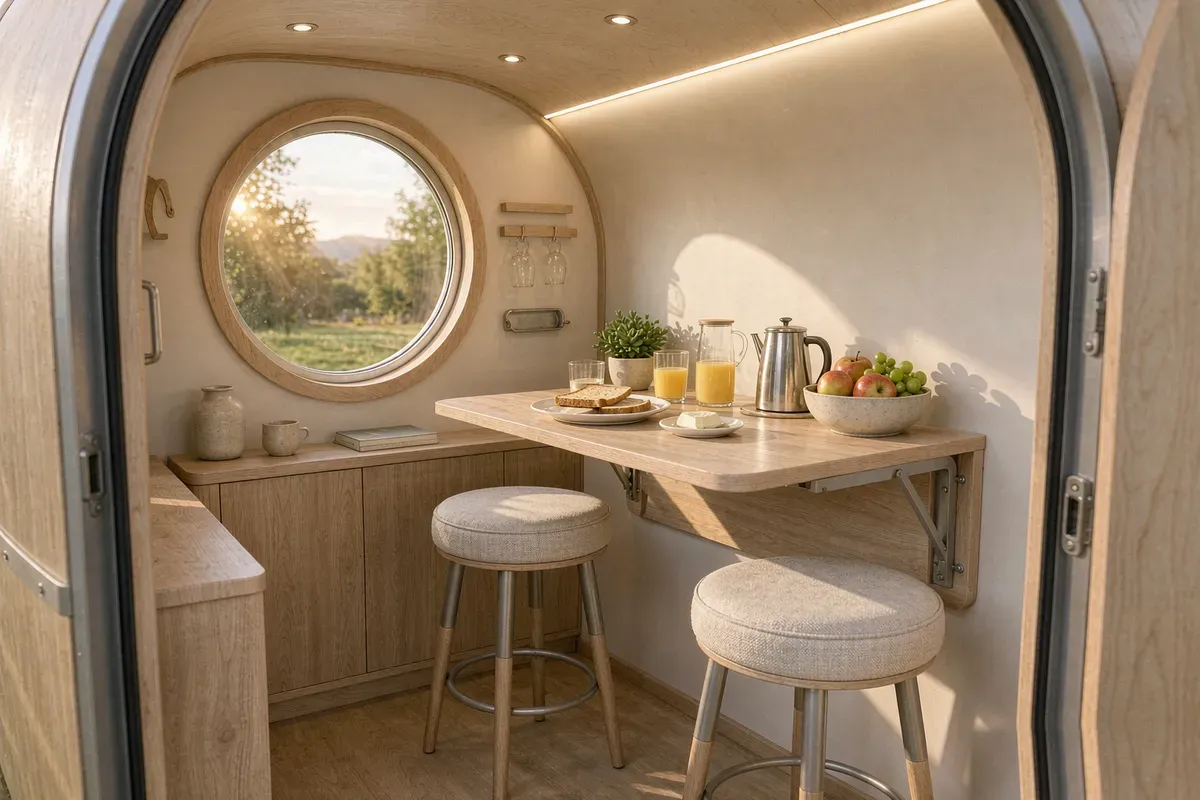
A kitchen adds a second wet point to the pod, and it inherits everything the bathroom already demands plus grease. The supply side needs adequate pressure and, in seasonal operations, protection against freezing or stagnation. The drainage side needs a trap that stays primed, a grease management approach, and a route to the same wastewater system the bathroom uses. Our pod sizes article shows how floor plans allocate the wet zone, and the plumbing logic there applies to the kitchen run.
Grease is the operational risk. A small grease trap or an enforceable kitchen rule about frying changes the maintenance picture more than any hardware choice. Operators who skip grease planning spend their first year clearing drains.
Fire Safety and Local Compliance Questions
Cooking appliances are the main fire load in an otherwise low-risk structure, so the checklist is short but non-negotiable. Ask where the hob's cut-off is, whether a extinguisher and smoke detection are specified as standard, what surface materials surround the cooking zone, and how the escape route stays clear in a compact floor plan. Our luxury pod article discusses how higher-spec pods handle these items, and the same logic applies at every price point.
Compliance for a cooking facility in tourist accommodation is regulated locally, and requirements differ by jurisdiction and by whether the pod is classified as a building, a caravan or a temporary structure. Confirm the classification and any kitchen-specific rules with the authority having jurisdiction before ordering the kitchen package.
Staffing and Guest Safety Around the Kitchen
A kitchen changes the staffing profile of a pod as much as its plumbing. Housekeeping takes longer per turnover, because counters, appliances and floors in a cooking space need real cleaning rather than a refresh, and the difference compounds across a season. Operators should time a full turnover on the pilot pod before setting turnover standards for the fleet, and price the extra housekeeping minutes into the rate rather than absorbing them silently.
Guest safety practice also shifts. Matches, hot surfaces and small spaces share a footprint, so the induction hob's residual heat indicator, the placement of the extinguisher and the clarity of the evacuation path all matter more than they would in a conventional room. A laminated card with three instructions, how to cut power, where the extinguisher lives, what never to place on the hob, prevents most incidents before they start.
Inventory rounds out the operating picture. Kitchen pods disappear small items at a rate bedroom pods do not, and a missing kettle or pan shows up as a guest complaint the same evening. A fixed checklist, photographed and laminated inside the cupboard door, turns replenishment from a memory task into a sixty-second check, and it gives housekeeping staff a defensible record when guests dispute a missing item.
Cleaning and Turnover for Operators
Finally, the kitchen is a turnover cost. Open shelving photographs well and doubles cleaning time. A hob that must be disassembled to clean is a hob that does not get cleaned. Choose sealed worktops, splashback surfaces that wipe in one motion, and a fridge sized to be emptied between guests. Our pod prices article shows where kitchen options appear in the quote, and our customization cost article explains how factory-fitted options are priced more predictably than site-fitted ones. If your wider project mixes pods with larger units, our resort glamping article covers how kitchen-equipped pods fit a full property plan, and our manufacturer guide explains what to verify in the factory before the kitchen is signed off.
Specify the kitchen around your operating model, put ventilation and electrical capacity in writing with the supplier, and confirm requirements with the authority having jurisdiction. Requirements may vary by application, market and applicable standard.
More from the Blog

Capsule Home Cost Guide: What You Really Pay in 2026
EXW, shipping, install and the hidden line items — a transparent breakdown of total landed cost.
Read article →
How to Install a Capsule Home in 3 Days: A Step-by-Step Guide
From site prep to first guest — the exact sequence our install crews follow on every deployment.
Read article →
Real Owners, Real Numbers: Success Stories
How a lakeside resort, a Spanish glamping site and a Singapore dealer hit their targets.
Read stories →Talk to the Factory
Ready to Ride the 2026 Wave?
Get the latest catalog, pricing tiers and a layout sketch for your land — straight from the engineering team.