Capsule House Utility Connection Cost Breakdown
What it costs to connect power, water, wastewater and data to a capsule house: capacity, distance, ground conditions and the charges people forget.
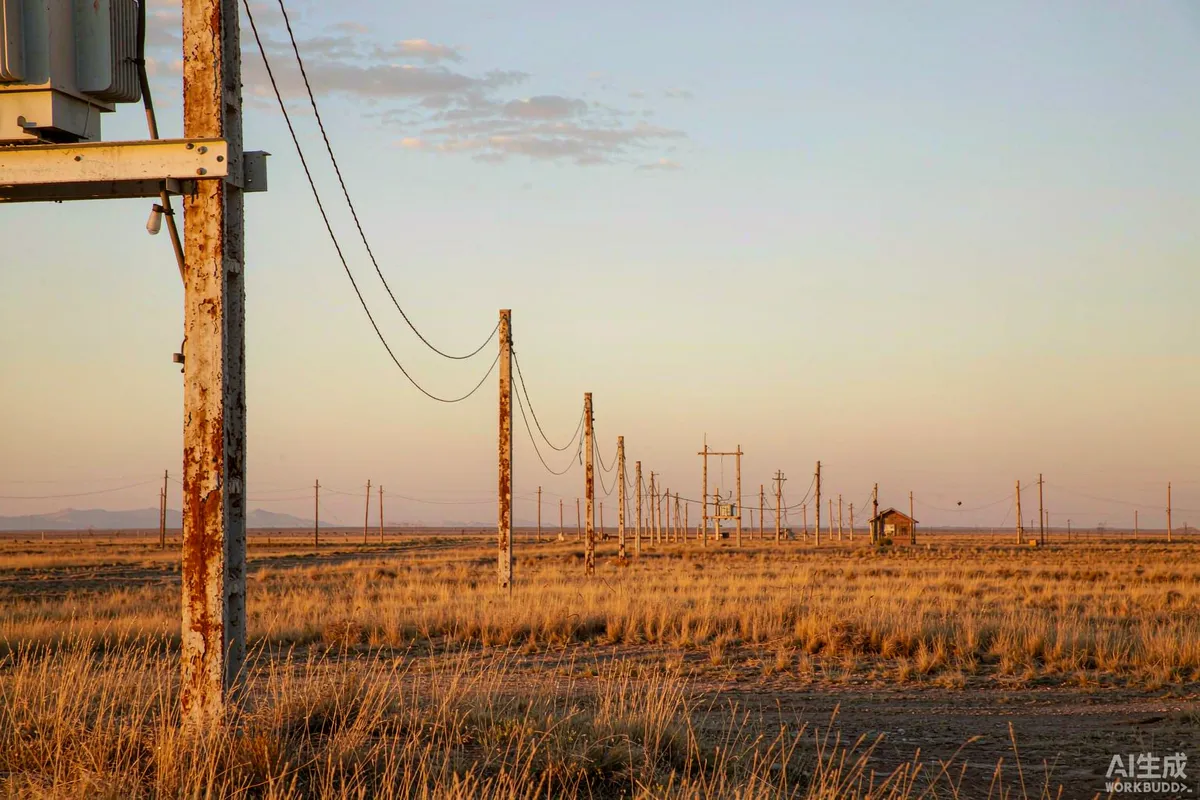
Connecting a capsule house to services is priced by two variables above all others: how far the unit is from the existing network, and how much capacity is being asked for. Everything else — trenching method, ground conditions, meter type, inspection sequence — follows from them. This article breaks the connection cost into its component lines so the number can be estimated before a survey and audited after a quote. It is not a price list, because the figures are local and site-specific; it is the structure of the bill. For the wider budget see the capsule house price guide, and for the site-side earthworks the foundation and site prep cost guide. Requirements may vary by application, market and applicable standard.
The Four Lines, and What Each One Costs
A habitable unit needs power, water, wastewater disposal and, in practice, data. Some projects also need gas or LPG. Each line has its own distance problem and its own authority.
- Power. The most capital-intensive line, because capacity is expensive to deliver over distance.
- Water. Either a mains connection or a storage-and-delivery arrangement; the choice is driven by distance and by the reliability of supply.
- Wastewater. Either a sewer connection or an on-site treatment and disposal system, which brings its own testing and permitting.
- Data. Fixed line where available; otherwise a wireless link, which is a capital item on the unit rather than a utility charge.
The pattern in remote sites is that each line has a threshold distance beyond which the on-site alternative becomes cheaper than the connection. Find that threshold for each line at your site before committing to any of them, because the answer is rarely the same for all four.
Power: the Capacity Ask Drives the Bill
Connection cost is not proportional to consumption; it is proportional to the capacity requested, because the network has to be able to deliver the peak on demand. A unit asking for a modest single-phase service and a unit asking for three-phase with electric cooking, electric hot water and multiple air conditioners are two very different connection projects.
- Establish the simultaneous peak. Not the sum of nameplate ratings, but what is actually on at once, including motor starting current. The method is set out in electrical load planning.
- Decide single or three phase with the utility. Three-phase may be necessary for the load, and may or may not be available at the point of connection; both answers change the scope.
- Ask whether it is a tap or an extension. A tap from an existing adjacent line is a small project. Extending the network with new poles or a new transformer is a different one, and the charge structure changes accordingly.
- Get the connection charge in writing with its basis, including any contribution towards network reinforcement.
The common budgeting error is to request more capacity than the project needs because it feels safer. Oversizing is not free: it can trigger a transformer, a larger cable, a larger service and a higher standing charge. Size it from the load calculation, then apply a deliberate margin — not a hopeful one.
Water and Wastewater
Where a mains supply exists within a reasonable distance, connection is usually straightforward: an application, a connection charge, a meter, and the pipework from the boundary to the unit. Where it does not, the cost shifts to storage, pumping and delivery.
- Mains connection. Application and connection charges, meter, and the pipework. Pressure and continuity at your specific location should be confirmed, because low or intermittent supply forces storage anyway.
- Storage and delivery. Tank capacity, a pumped set, and a delivery contract. The running cost is a per-cubic-metre figure that should be in the operating model, not discovered in month three.
- Treatment where the source is not potable. Filtration or treatment appropriate to the source, with a maintenance and consumables schedule.
- Wastewater. A sewer connection where available; otherwise a septic system or a small treatment plant. On-site systems require a site assessment — percolation, water table, separation from water sources — and a permit, and the assessment result determines the system type and its size.
- Discharge permitting. Where treated effluent is discharged rather than infiltrated, the discharge consent and any monitoring obligation is a project item with its own timeline.
On-site water and wastewater are capital items rather than utility charges, which changes the financing: they sit in the build budget and depreciate, rather than in the operating budget. For the configuration options, see off-grid power, water and waste options.
Trenching versus Overhead, and What the Ground Does
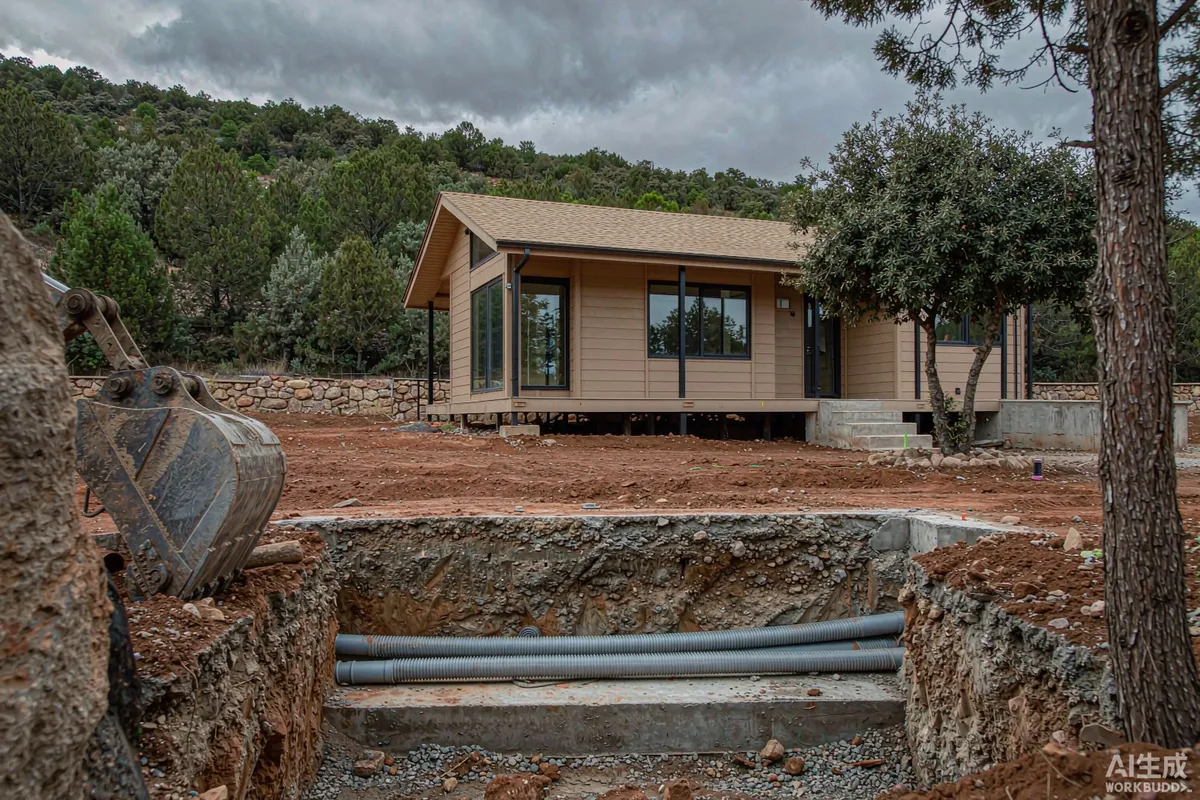
For power and data the choice between underground and overhead is usually made by the utility's own standards, local practice and the aesthetic requirement of the site. Underground is generally preferred in resorts and generally more expensive, and its price is dominated by ground conditions rather than by cable.
- Rock or coral requires breaking rather than digging, and can change both the plant and the programme.
- A high water table may require dewatering during the work and a different backfill specification.
- Road and track crossings require reinstatement to a standard, and sometimes a crossing permit from the road authority.
- Existing services in the line of the trench require locating and hand digging, which is slower than machine digging and cannot be skipped.
- Shared trenching for power, water and data in one excavation is the single most effective saving in this section, provided the separation requirements are respected.
Ask for the trenching to be priced as a rate per metre with a stated method and a stated reinstatement standard, and then measure the route. A lump sum with no stated method is a number you cannot audit.
The Charges That Are Usually Forgotten
These are the lines that appear after the first budget is approved, and collectively they are often a significant fraction of the connection cost.
- Application, inspection and energisation fees, charged by the utility or the authority.
- Security deposits for connection and metering, which are cash out even if refundable.
- Meter and materials, where the utility does not supply them.
- Wayleave, easement or crossing permissions where the route crosses land that is not yours.
- Permits and reinstatement for working in or near a public road.
- Standby and mobilised labour where a utility crew attends and the site is not ready.
- Design and as-built drawings, which some utilities require to be produced by a registered contractor.
- Temporary supply during construction, which is a separate connection in many places.
When Connecting Is Not Worth It
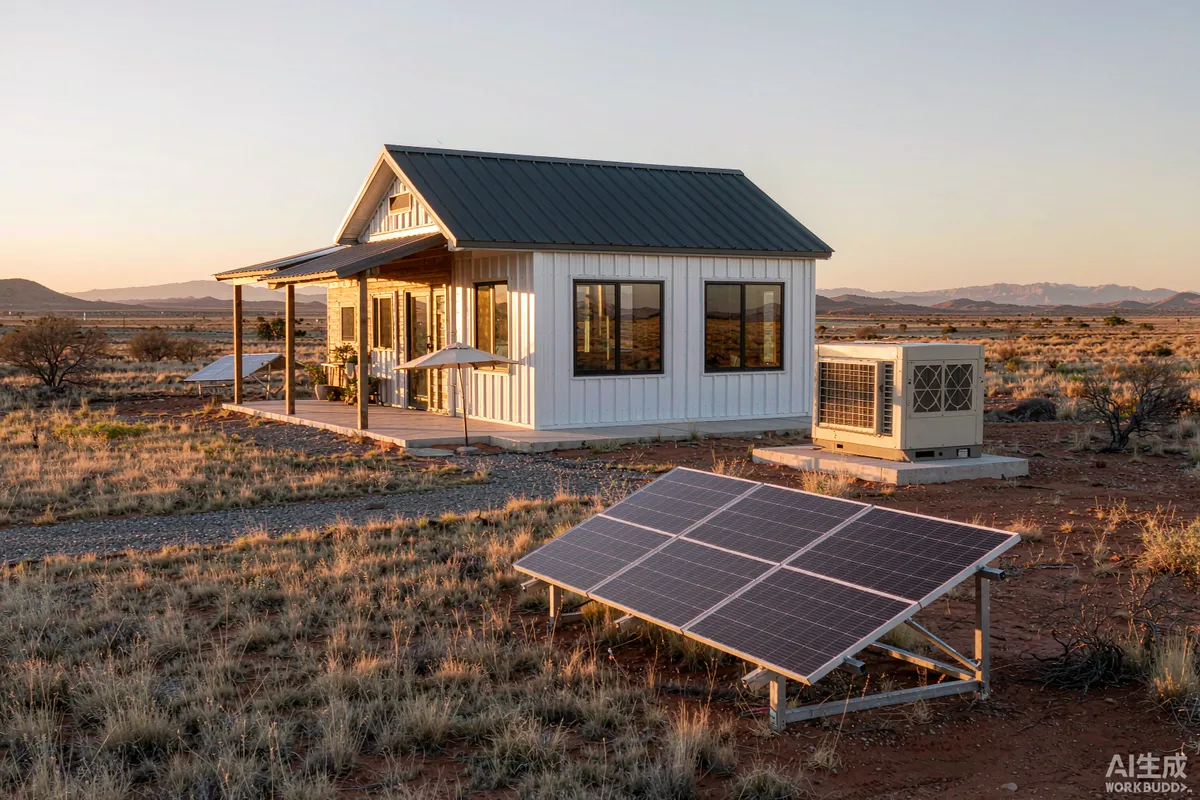
On a genuinely remote site, the connection cost can exceed the cost of generating and storing on site — and the on-site option has the further advantage of being under your control. The trade is capital against operating cost: generation and storage are capital, plus fuel and maintenance; a mains connection is a contribution towards capital, plus a standing charge and consumption. The comparison has to be made over a stated period with a stated discount rate, and it should include the reliability difference, because a unit that loses power and cancels bookings has a cost that does not appear in either column.
A hybrid is often the answer: a modest mains connection sized for base load, with generation or storage covering the peak. That reduces both the connection capacity and the generator size, and it is worth pricing as a third option before deciding. The technical side is covered in off-grid utilities and the planning side in electrical load planning.
How to Budget Before a Survey
Early budgets are wrong in a predictable direction: they understate distance and they forget the standing charges. Two techniques reduce the error without pretending to precision.
- Price by unit rate. Ask local contractors and the utility for rates per metre of trench, per pole, per pit, per metre of pipe, per cubic metre of tank. Multiply by measured quantities from a map or a site walk, and record the quantity separately from the rate so it can be re-measured later.
- Use provisional sums with stated bases. For the items that cannot be quantified yet — the network contribution, the transformer, the treatment system — carry a provisional sum and name the assumption behind it, so that when the real figure arrives the variance is explainable rather than alarming.
- Add a contingency that reflects uncertainty, not optimism. A site that has not been surveyed has more uncertainty than one that has; the contingency should say so.
- Get the utility's answer in writing early. Most connection estimates require an application, and the application takes time. Start it during the design phase.
Configurations and standard service provisions are on the product pages. If you are budgeting a site, send the site location, the distance to the nearest network and the intended occupancy, and we will list the connection lines that apply to your case. Requirements may vary by application, market and applicable standard.
More from the Blog

Capsule Home Cost Guide: What You Really Pay in 2026
EXW, shipping, install and the hidden line items — a transparent breakdown of total landed cost.
Read article →
How to Install a Capsule Home in 3 Days: A Step-by-Step Guide
From site prep to first guest — the exact sequence our install crews follow on every deployment.
Read article →
Real Owners, Real Numbers: Success Stories
How a lakeside resort, a Spanish glamping site and a Singapore dealer hit their targets.
Read stories →Talk to the Factory
Ready to Ride the 2026 Wave?
Get the latest catalog, pricing tiers and a layout sketch for your land — straight from the engineering team.