Capsule House Island Delivery Philippines: Barge
Island delivery for capsule houses in the Philippines: barge and landing craft choice, beach landings, island road surveys, crane access and season windows.
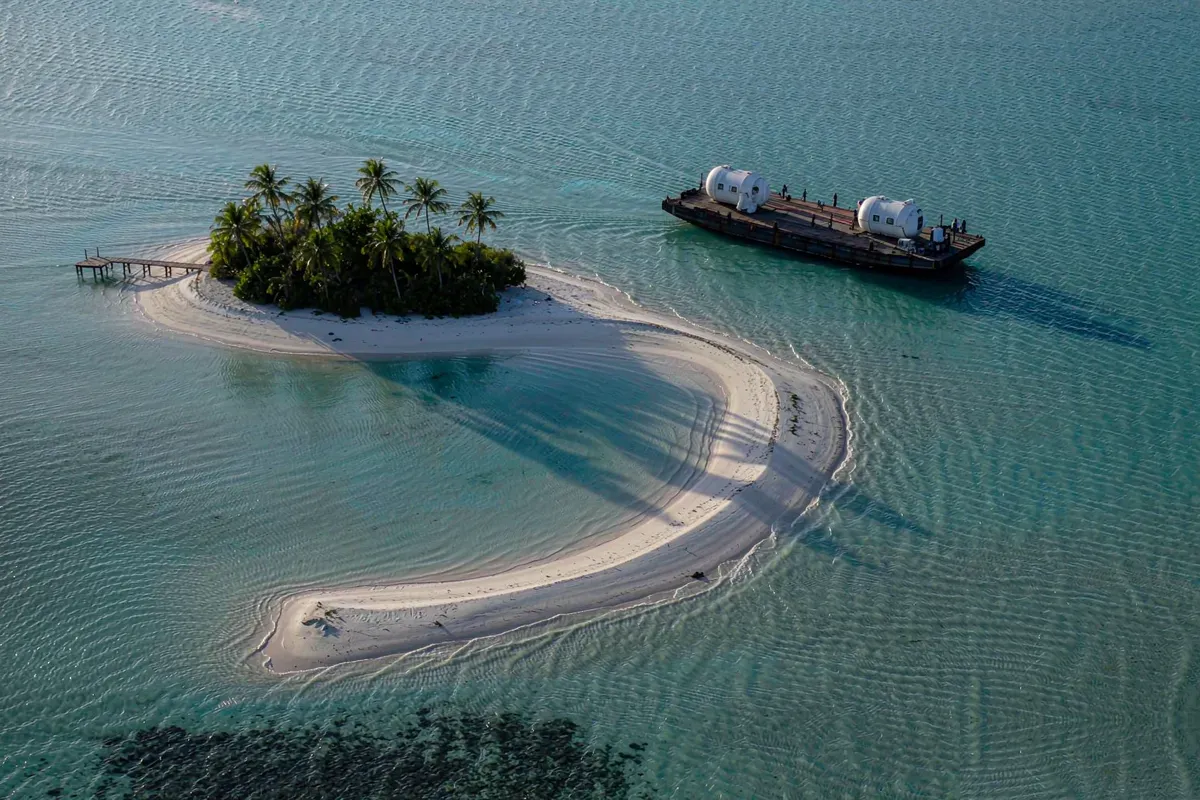
On an island site, the ocean leg is rarely what delays a project. The delay happens in the last three kilometres: getting a finished unit off a vessel, across a beach or a municipal dock, along a road that was never built for wide loads, and onto a prepared pad with a crane that can actually reach it. This page covers only that final leg for Philippine island projects. Design decisions such as wind load are covered on our typhoon wind load page, the market background on our Philippines page, and duties and documentation on our import page.
Why the Last Leg Costs More Than the Ocean Leg
A container moves across open water on a schedule that a shipping line controls, at a cost that scales predictably with volume. The island leg has none of those properties. It depends on a vessel you charter by the day, a tide window measured in hours, a road you may have to widen, and a crane you may have to bring in by barge as well. If the crane cannot reach the pad, the whole delivery stops regardless of how well the ocean freight went.
Budget the last leg as a separate work package with its own owner. Projects that fold it into the freight line discover the problem on the day the vessel arrives, when every alternative costs more and every delay compounds.
Choosing Between RORO, Barge and Landing Craft
Three vessel types appear in most Philippine island deliveries, and they are not interchangeable. The decision is driven by whether a dock exists at the destination, how far the unit must travel over water, and whether the vessel can put its ramp on firm ground.
| Option | Works when | Main constraint | Typical failure mode |
|---|---|---|---|
| RORO ferry | A scheduled route serves the island and a dock exists | Vessel deck height, ramp angle, sailing schedule | Unit is too wide or too tall for the assigned lane, or the sailing is cancelled after the truck is already loaded |
| Chartered barge | No dock, or the unit is oversize for scheduled vessels | Charter is by the day; weather cancels without refund of mobilisation | Barge arrives and waits because the shore side is not ready |
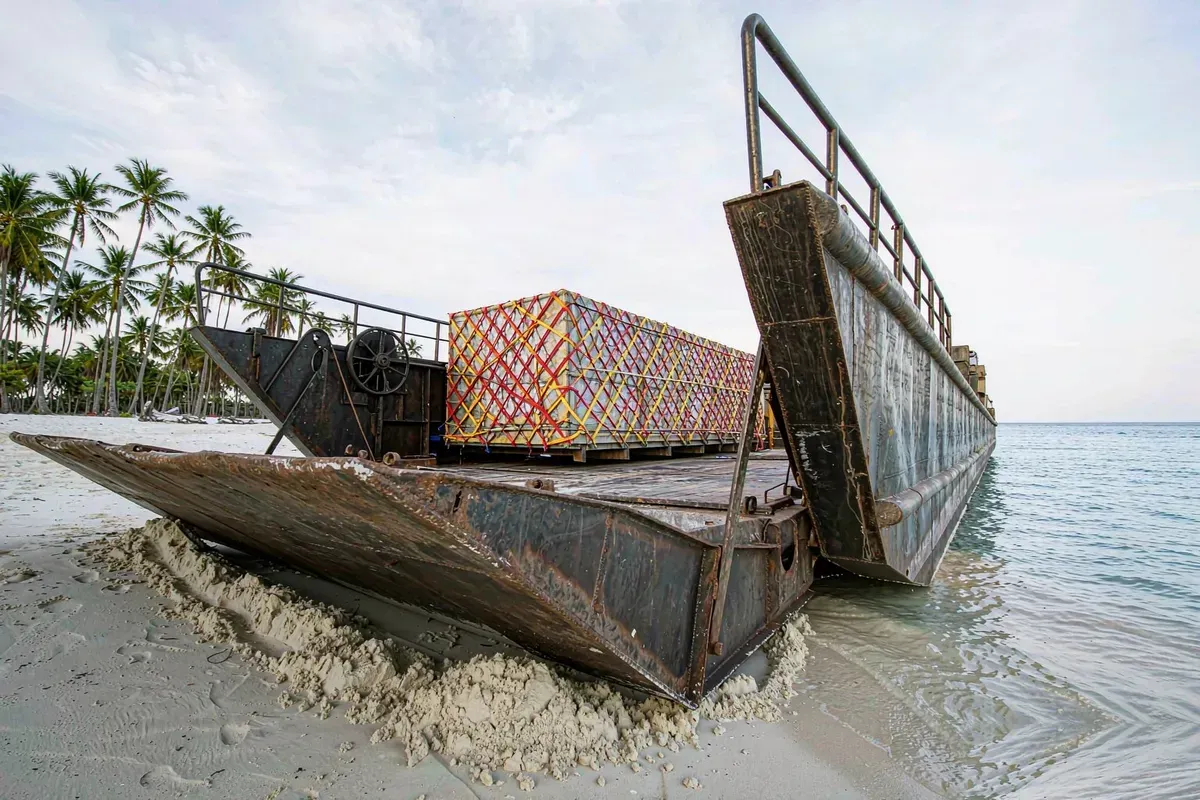
| Landing craft (ramp bow) | Beach landing is the only option | Tide, beach gradient, ground bearing under the ramp | Ramp grounds on soft sand and the unit cannot be winched off safely |
Whichever you choose, confirm three dimensions before you book: overall transport width and height including the shipping frame, total weight including cribbing and lashing, and the loaded draft of the vessel at the landing point. A barge that can carry the weight may still sit too deep to reach the beach.
Beach Landings: Tide, Gradient and Ground
A beach landing is a short operation with three variables that must all be true at the same moment.
- Tide state. The ramp needs water deep enough to approach and ground firm enough to bear the ramp load. On a shallow gradient those two conditions may not overlap for long, which is why a landing plan should name a window, not a day.
- Beach gradient and material. Steep coarse sand bears load better than a flat fine-sand beach. Where the surface is soft, matting or a prepared ramp of compacted material is usually required.
- Exit route off the beach. The unit must move clear of the landing zone before the next tide. If the exit is a single narrow track, the operation is one vehicle wide and cannot be undone.
Walk the beach at low tide before committing. Photographs taken at high tide flatter every site. Requirements may vary by application, market and applicable standard.
The Road From the Landing Point to the Pad
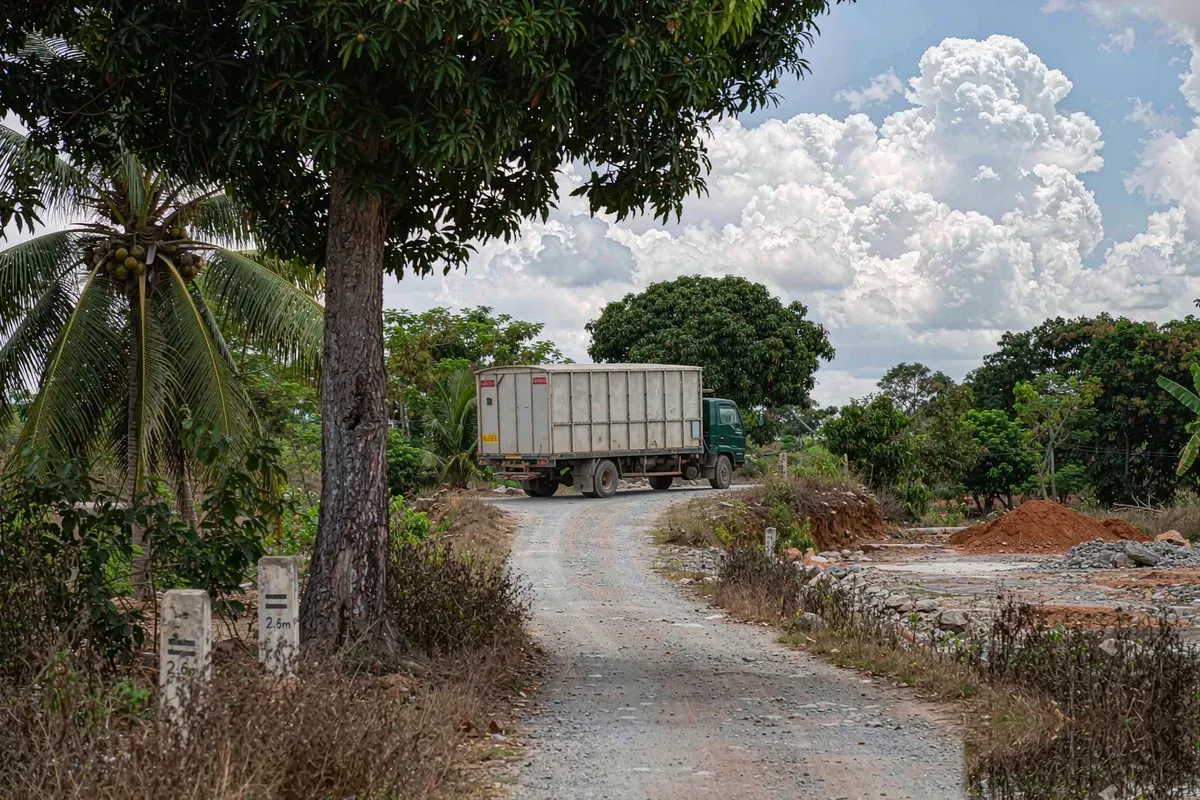
Island roads are the most common hidden constraint, and they fail on geometry rather than strength. A unit that fits down a road in width may still not get round a corner, under a canopy, or past a culvert with a low headwall.
- Survey the route with a tape and a camera, not a map: carriageway width at the narrowest point, overhead clearance, bridge and culvert ratings, and corner radii.
- Identify which constraints are removable. Overhanging vegetation and removable signage are cheap; a bridge deck is not.
- Decide whether the unit travels complete or in sections. Sectional transport reduces width and weight per load and increases the number of lifts and the amount of site joinery.
- Confirm the pad is finished before the vessel is booked, not while it is sailing.
Sectional transport is not a compromise to be avoided automatically. On narrow island roads it is often the only viable route, and the factory can prepare the unit for it if the decision is made before production rather than after.
Crane Access and Final Placement
The crane is usually the single largest cost in the island leg and the most likely item to be unavailable on short notice. Two questions decide it: what capacity is needed at what radius, and how does the crane itself get to the site. On many islands the crane travels on the same barge as the unit, which means the charter cost covers two mobilisations, not one.
Plan the lift in terms of radius rather than weight. A unit that is well within a crane's capacity at close range may be outside it at the radius required to place the unit over a finished deck or behind a retaining wall. Agree the crane position, the outrigger bearing area and the ground preparation before the vessel sails.
Season Windows
Storm season compresses the delivery calendar. Sea state limits when a barge can sail and when a landing craft can put a ramp down, and insurance and charter terms often tighten as well. Treat a seasonal window as a planning constraint on the whole project: production should finish early enough that the unit waits for a window, not the other way round. Storage at the mainland port is cheaper than a barge waiting at anchor.
Decisions to Lock Before the Unit Leaves the Factory
- Transport configuration: complete unit or sectional, and how the sections rejoin on site.
- Lifting provisions: certified lifting points, spreader beam requirement, and the centre of gravity stated by the manufacturer.
- Packaging for sea exposure: wrapped and sealed against spray, with drainage rather than trapping water against finishes.
- Documentation carried with the load: packing list, dimensions, weights, and the handling instructions a local crew will actually read.
- Shore-side readiness: pad cured, access route prepared, crane booked, and a named person authorised to accept the load.
Four Failure Patterns to Design Out
Island deliveries go wrong in recognisable ways. Each of the following has a cheap countermeasure if it is addressed during planning and an expensive one if it is discovered on the day.
- Vessel arrives, shore side is not ready. Countermeasure: a written readiness checklist signed off by the site lead 48 hours before sailing, covering pad cure, route clearance and crane confirmation.
- Unit will not fit the assigned RORO lane. Countermeasure: confirm transport dimensions with the carrier in writing at booking, including the shipping frame and any protrusions.
- Crane cannot achieve the required radius. Countermeasure: agree the lift plan from the manufacturer's centre-of-gravity and lifting point drawing, and confirm outrigger bearing ground is prepared.
- Salt spray damage discovered at handover. Countermeasure: photograph the packaging and the unit at each handover point, and note exceptions on the delivery document before signing.
Who Signs for What
Responsibility changes hands several times on an island route: factory to port, port to carrier, carrier to landing, landing to site. Each handover should produce a signed record noting condition and quantity. Without it, damage discovered at the pad becomes an argument between parties who were all careful. Name one person on your side with authority to accept or reject the load at the landing point, and make sure that person is present when the ramp goes down.
What to Send Us
Send the island and nearest port, whether a dock exists, the route from landing point to pad with its narrowest width and tightest corner, the pad type and your target month. We will advise on transport configuration, lifting provisions and packaging for the sea leg. Review the factory-direct configurations on our products page and send your site details through the contact page.
More from the Blog

Capsule Home Cost Guide: What You Really Pay in 2026
EXW, shipping, install and the hidden line items — a transparent breakdown of total landed cost.
Read article →
How to Install a Capsule Home in 3 Days: A Step-by-Step Guide
From site prep to first guest — the exact sequence our install crews follow on every deployment.
Read article →
Real Owners, Real Numbers: Success Stories
How a lakeside resort, a Spanish glamping site and a Singapore dealer hit their targets.
Read stories →Talk to the Factory
Ready to Ride the 2026 Wave?
Get the latest catalog, pricing tiers and a layout sketch for your land — straight from the engineering team.