Prefab House vs Concrete: Philippines Cost Guide
Prefab house vs concrete villa in the Philippines: cost structure, programme, typhoon wind design, island logistics and asset treatment compared.

For a Philippine resort or villa development, the choice between factory-built units and in-situ concrete is not a style decision. It is a decision about where cost certainty sits, how long capital is tied up, how much of the programme depends on weather and labour availability on a remote site, and how the asset is treated afterwards. This comparison is written for developers and operators weighing the two routes on the same plot. It does not publish prices - the numbers depend on specification, site and market - but it sets out the cost lines and the decision logic that produce them. Current models are on the product pages.
What Changes When the Building Is Made Somewhere Else
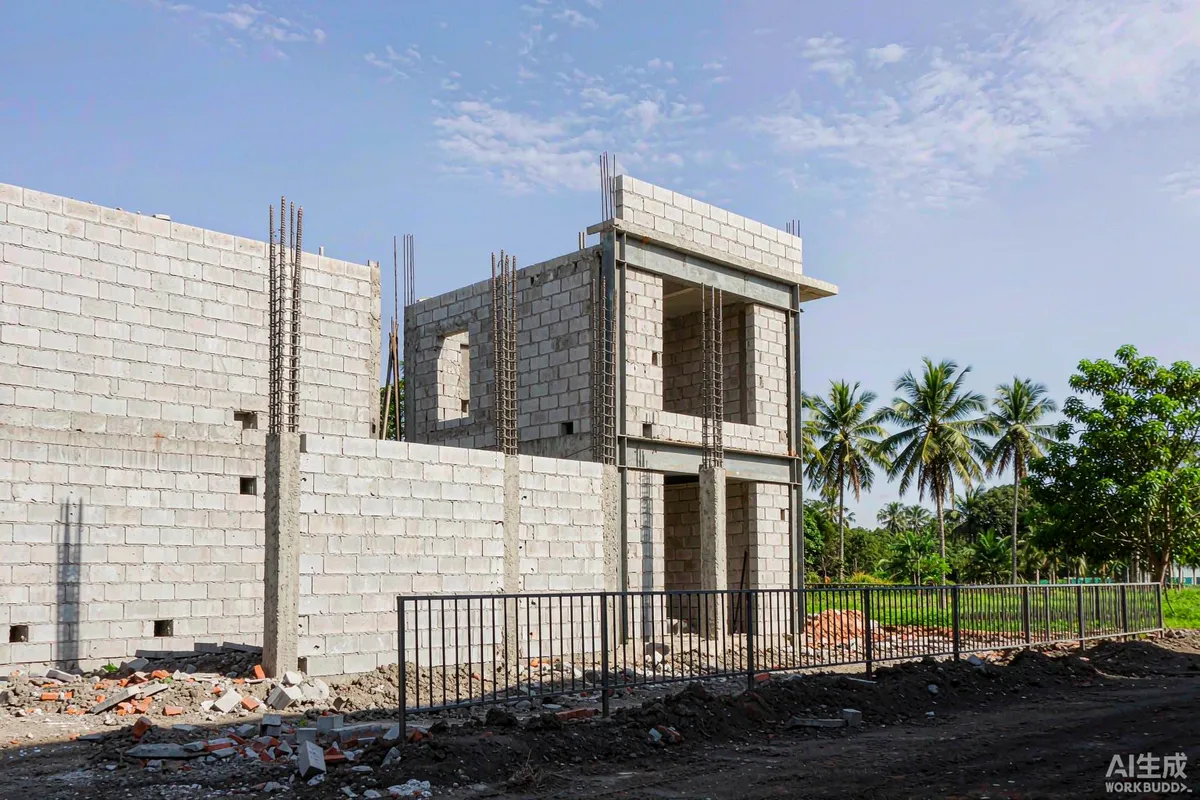
Concrete construction converts design into a building on the site, with the site's constraints applied to every step. Factory-built construction converts design into a building in a controlled environment and then delivers it. The practical consequences are structural rather than cosmetic.
- Weather exposure moves. Concrete work stops in heavy rain and after typhoons; factory production does not. On an exposed Philippine site this can be worth months of programme.
- Labour moves. Site trades are sourced locally and vary in availability; factory labour is fixed to the production schedule.
- Quality control moves. Finishes, glazing and services are commissioned in the factory where they can be inspected before shipment.
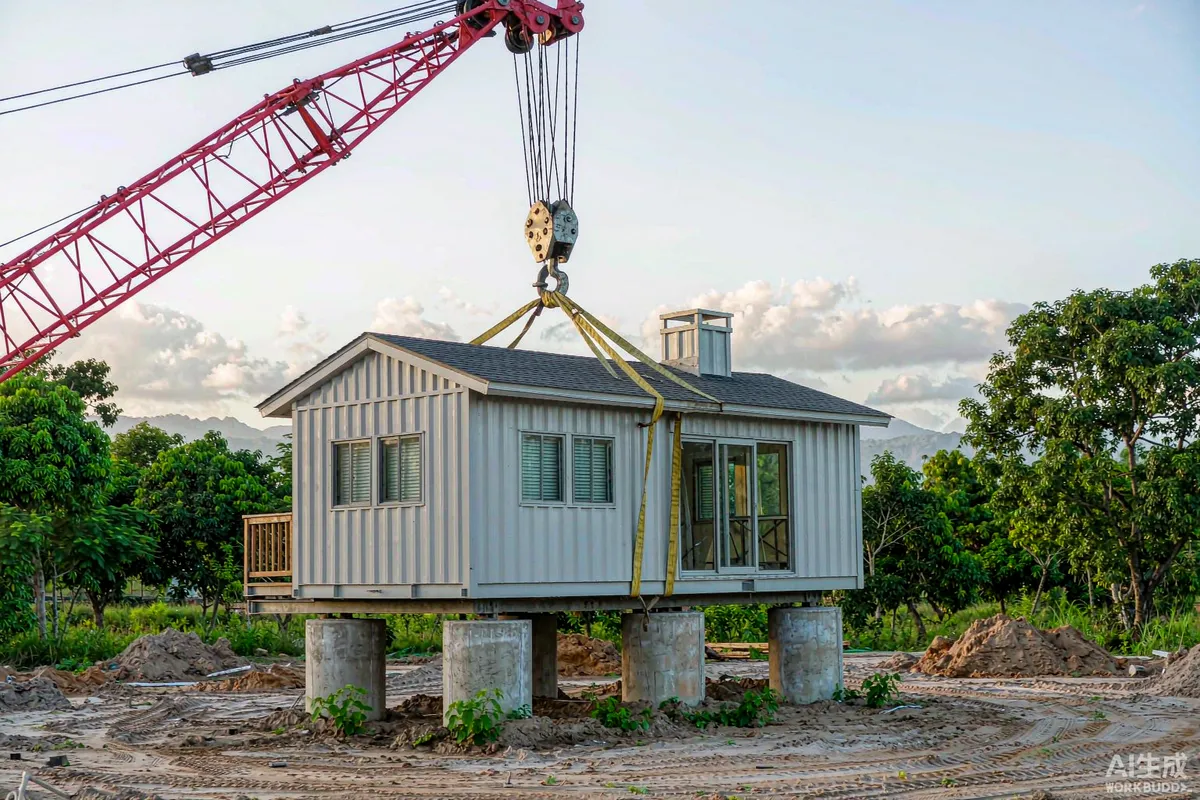
- Risk moves to logistics. You trade site risk for a transport, crane and access problem, which has to be surveyed and planned in advance.
Cost Lines Compared
| Cost line | Factory-built route | Concrete route |
|---|---|---|
| Design and engineering | Model specification plus local foundation and anchoring design | Full structural and architectural design for the site |
| Production | Fixed factory price against a signed specification, staged payments | Trade packages priced locally, subject to material price movement |
| Site works | Piers or slab, services stub-outs, crane pad | Full foundation, formwork, reinforcement, cure time |
| Logistics | Freight, port handling, inland transport, cranage | Material delivery in many small loads |
| Labour | Small installation crew, short window | Large site team over the full build |
| Programme risk | Concentrated in shipping and lifting windows | Spread across the build and exposed to weather |
| Variation exposure | Low once the specification is frozen | Higher, because scope changes on site are easy to make |
| Contingency | Logistics and access | Material prices, labour, weather delay |
The comparison that matters is not headline cost per square metre. It is cost per available key per month of revenue: a route that delivers earlier starts earning earlier, and on a resort that difference usually dominates the construction saving.
Programme and Capital
A concrete villa on an island site carries a long tail: material deliveries by barge, cure periods, finishing trades, and a punch list that can extend well past the nominal completion date. Factory-built units compress the on-site window to foundation work, a lift, and service connection - but they front-load the decisions, because the specification has to be frozen before production starts. For a phased resort, that trade is usually worth making: units can arrive in tranches, and revenue from the first tranche funds the next. For a single bespoke villa with no repetition and no schedule pressure, the conventional route stays competitive.
Operating Cost Over the Life of the Asset
Construction cost is paid once; operating cost is paid every night the unit is occupied. Three items differ systematically between the two routes.
- Thermal performance. A factory-built envelope is assembled under controlled conditions with the insulation and sealing inspected before it is closed up, which is easier to verify than in-situ work. In a hot, humid market the difference shows up in the cooling bill and in how often the plant runs at full capacity.
- Repairability. Standardised units have known components, known spare parts and a documented assembly. A bespoke concrete villa has to be diagnosed each time something fails, and matching finishes years later is its own exercise.
- Turnaround between guests. Identical layouts reduce housekeeping time and error rates, and the operating manual can be written once and applied to every key.
On the other side, a well-built concrete villa has a long service life with a maintenance profile that local trades understand without training, and it does not depend on an imported spare part chain. Where the supply chain to the site is slow, that matters. The honest comparison sets the annual maintenance and energy cost of each route against its construction cost over the holding period, rather than comparing build cost alone.
Typhoon Performance
Both routes can be engineered for Philippine wind conditions; neither is automatically adequate. What matters is that the load path is designed, not assumed.
- For a factory-built unit the governing items are the design wind load for the specific site, the anchoring detail that transfers it into the foundation, and the foundation itself. The unit and the ground have to be designed as one system.
- For concrete the governing items are reinforcement detailing, construction quality on site, and the connection between roof structure and walls.
- In both cases the design wind load must be stated by a qualified local engineer against the applicable national structural standard, and verified during construction rather than after handover.
Full wind and anchoring provisions are covered in our typhoon-rated specification guide. Requirements may vary by application, market and applicable standard.
Coastal and Island Sites
Salt air is the quiet cost driver on most Philippine resort sites. Concrete suffers from chloride ingress and steel corrosion where cover is inadequate; factory-built units suffer at coatings, fasteners and glazing frames. Both need a maintenance regime written into the operating plan, and for a prefab unit the specification should name the coating system, the fastener material and the inspection interval up front. An island site adds the delivery problem: barge windows, landing conditions, and a crane position with ground that will take the load. That survey should happen before either route is priced.
Permits, Valuation and Asset Treatment
Approvals and valuation are where the two routes differ most in practice, and both need checking early rather than at handover.
- Building approvals. The applicable national code and local requirements apply to the installation regardless of where it was made; the route of manufacture does not remove the obligation to obtain local permits.
- Permanence. Whether an installation is treated as temporary or permanent affects permitting, and should be established with the local authority for your intended use.
- Valuation and finance. Lenders and valuers treat factory-built and conventional assets differently in some markets. Establish the treatment before committing, not after.
- Relocation. A unit that can be moved is an asset with an option attached; a concrete villa is fixed to the plot. That option has value on leased land.
Where Each Route Wins
- Factory-built: phased resorts, remote or island sites with weak trade availability, leased land, projects with a fixed opening date, and repeatable unit types where standardisation reduces operating cost.
- Concrete: one-off bespoke villas on accessible sites, projects where local labour is abundant and cheap, designs requiring large spans or heavy custom structure, and cases where financing or valuation treatment favours conventional construction.
- Mixed: a common outcome - concrete for the reception, restaurant and back-of-house, factory-built units for the guest keys.
How to Compare Two Real Quotations
- Put both on the same scope: finishes, glazing, appliances, furniture, and external works.
- Put both on the same delivery basis: delivered to the site, not to the port or to the factory gate.
- Ask each for exclusions in writing; the exclusions list is more informative than the total.
- Ask for the programme with milestones and payment stages, not just a duration.
- Add the carrying cost of the slower option to the comparison, and the revenue it delays.
Cost structure for factory-built models is set out in the capsule house price guide, and the delivered-cost view in our Philippines price page. Current models are on the product pages; to discuss a specific plot, send the site, the intended use and the programme.
More from the Blog

Capsule Home Cost Guide: What You Really Pay in 2026
EXW, shipping, install and the hidden line items — a transparent breakdown of total landed cost.
Read article →
How to Install a Capsule Home in 3 Days: A Step-by-Step Guide
From site prep to first guest — the exact sequence our install crews follow on every deployment.
Read article →
Real Owners, Real Numbers: Success Stories
How a lakeside resort, a Spanish glamping site and a Singapore dealer hit their targets.
Read stories →Talk to the Factory
Ready to Ride the 2026 Wave?
Get the latest catalog, pricing tiers and a layout sketch for your land — straight from the engineering team.