Capsule House Price Philippines: DDP Landed Cost
Capsule house price in the Philippines: what a landed figure includes, how duties and clearance work, why DDP changes the comparison and island last-mile costs.
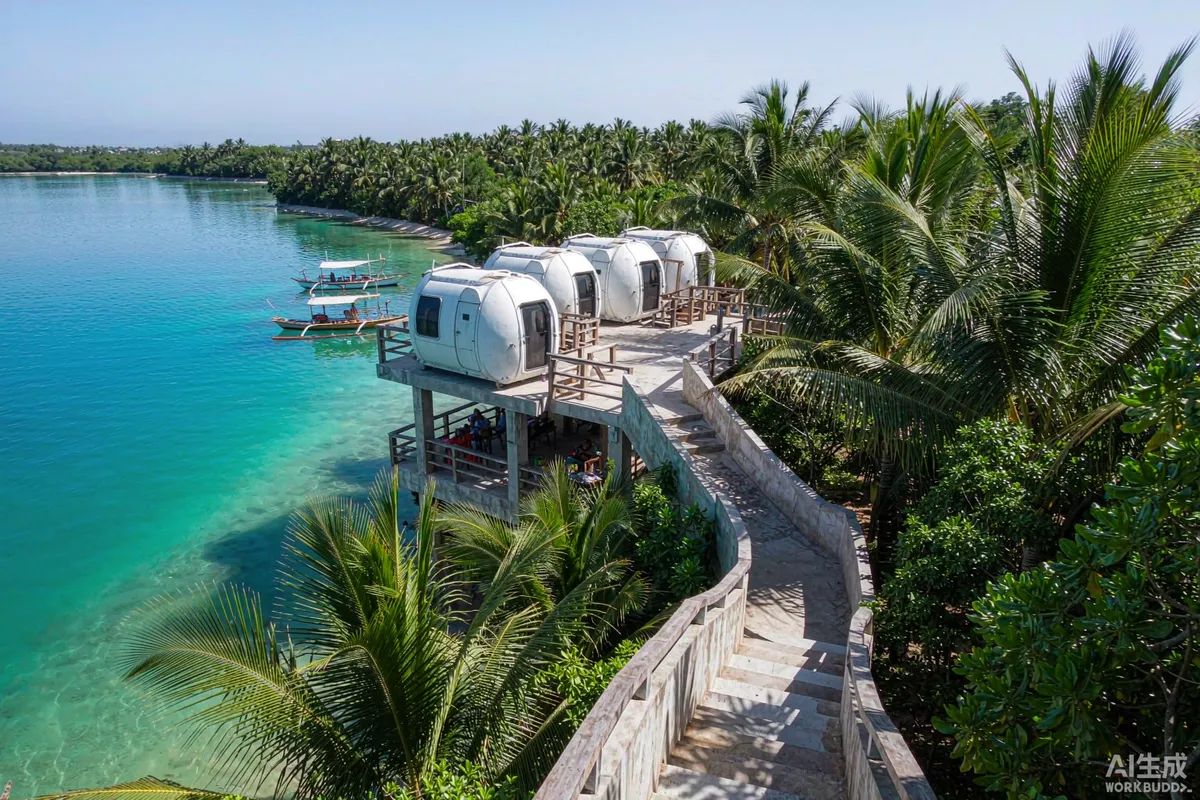
A capsule house price quoted for the Philippines is only meaningful once you know which delivery term it carries and what is excluded. This page does not repeat the general price discussion - that is on our capsule house price page - and it does not repeat landed cost mechanics in the abstract, which are covered in the cost guide. What follows is specific to importing into the Philippines: what the landed figure breaks into, where the local lines sit, and how DDP changes the comparison between two quotations.
Start by Naming the Delivery Term
Two quotations for the same unit can differ by a large margin and both be accurate, because they measure different things.
- Ex-works covers the unit at the factory gate. Everything after that is yours.
- FOB adds loading and export clearance at the origin port.
- CIF adds sea freight and insurance to the Philippine port.
- DDP adds import clearance, duties, taxes and delivery to the named destination.
The practical consequence: an ex-works or FOB number is not comparable to a DDP number, and the gap between them on an island delivery is not small. Always convert to a common basis before comparing, and ask each supplier to state the term on the face of the quotation.
What the Philippine Landed Figure Breaks Into
| Line | Who usually bears it | Notes |
|---|---|---|
| Unit price | Supplier | Depends on model, specification and quantity |
| Origin handling and export clearance | Supplier under FOB or above | Packing method matters for the next line |
| Sea freight | Buyer or supplier depending on term | Priced on packed dimensions and route, not on unit count alone |
| Marine insurance | Buyer or supplier depending on term | Cover should be stated, not assumed |
| Import duties and taxes | Buyer unless DDP | Follow the classification; confirm with your broker |
| Port and clearance charges | Buyer unless DDP | Includes storage if clearance is delayed |
| Inland or inter-island transport | Buyer | Often the most underestimated line on island sites |
| Cranage and placement | Buyer | Capacity and mobilisation are site-specific |
| Foundation and services | Buyer | Local design and local prices |
The table is a checklist, not a calculation. Fill in the local lines with prices from contractors who have seen the site rather than with percentages.

Duties, Taxes and Classification
Three points matter, and none of them should be settled from a general source.
- Classification drives the duty treatment. The customs classification applied to the product determines what is payable, and it should be confirmed with your broker before shipment rather than argued at the port.
- Rates and incentives change. Duty rates, tax treatment and any applicable incentive scheme should be confirmed for the current period. Requirements may vary by application, market and applicable standard.
- Valuation is documented. Whatever value is declared needs to be supported by the commercial documents, and those documents should be consistent with each other.
Ask your broker to state the classification, the rate and the documentary requirements in writing before the vessel sails. That single step prevents most clearance delays.
Why DDP Changes the Comparison
A DDP quotation is attractive because it is a single number, and it is sometimes the right choice. It also has consequences worth understanding.
- Advantage: certainty on the import lines. The party quoting DDP carries the classification and rate risk.
- Advantage: one counterpart for clearance. Useful where the buyer has no established broker relationship.
- Cost: the risk is priced in. A DDP number will include allowance for clearance risk and delay, and it may include items you could arrange more cheaply.
- Cost: less visibility. A single number does not tell you which lines moved, so you cannot challenge them or learn from them.
- Check the destination named. DDP to Manila and DDP to a provincial island site are very different undertakings, and the named place should be the site, not the port.
Island and Provincial Last-Mile
This is the line that most often breaks a Philippine budget, because it is the least visible at quotation stage.
- Confirm whether the quotation delivers to port or to site. The difference can exceed the sea freight.
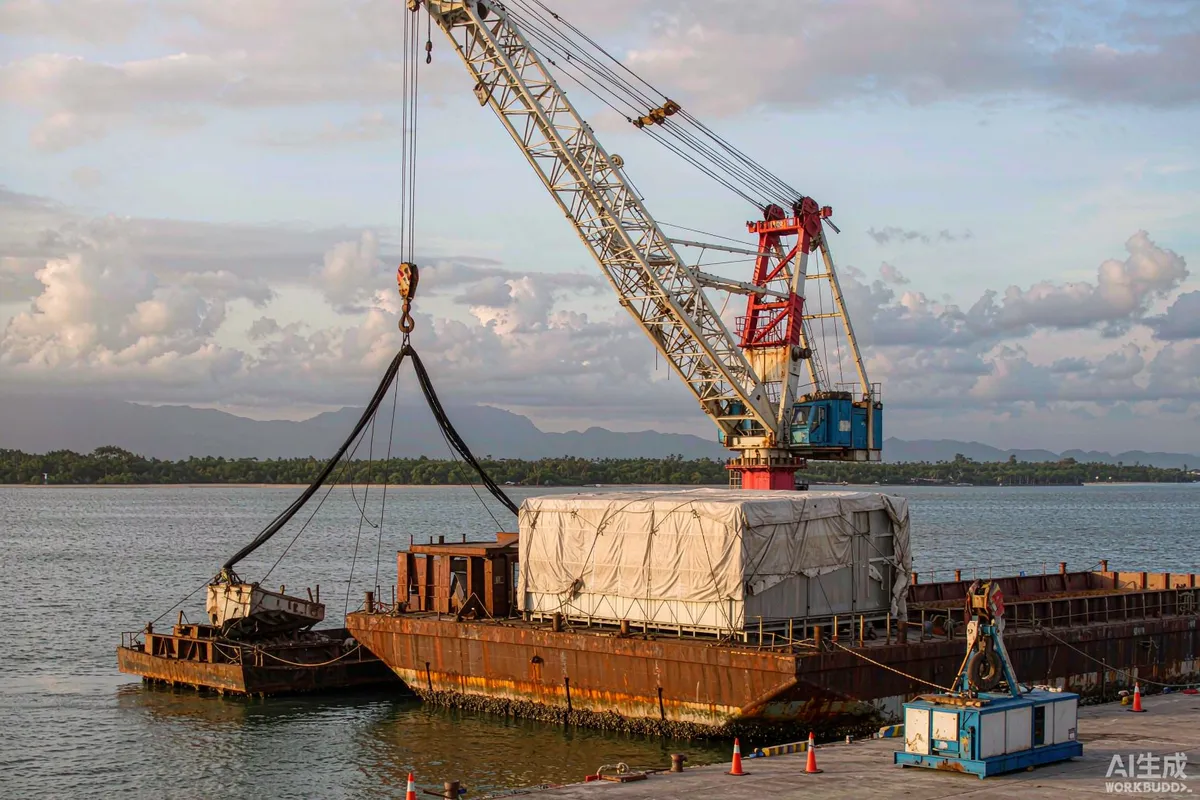
- Price the inter-island leg separately - vessel or barge capacity, deck space for the packed dimensions, and the landing method.
- Confirm crane availability in the province. Mobilising plant from Manila costs time and money, and it is frequently omitted.
- Survey the road route for width, bridge capacity, gradient and surface, in the wet season if possible.
- Price storage at the port as a contingency for slippage.
Three Budget Errors Worth Naming
- Comparing quotations on different terms. The commonest error and the easiest to fix: convert to one basis first.
- Assuming the local lines are a fixed percentage. Foundation, cranage and services depend on the ground, the route and the distance, and a generic percentage will be wrong in one direction or the other.
- Ignoring the calendar. Typhoon season affects sea conditions, road conditions and working days. A programme that ignores it will absorb the cost later.
How to Request a Comparable Quotation
- State the destination as the site, not the port, and name the delivery term you want.
- State the model and the specification rather than describing the project in general terms.
- Ask for freight, duties and local delivery as separate lines even under DDP, so you can see what moved.
- Ask for validity, currency and payment schedule on the face of the document.
- Ask what is excluded. The exclusions list is more informative than the total.
Currency and Payment Timing
Where the quotation is in one currency and the project budget in another, the exposure should be identified rather than assumed away.
- State the currency on the quotation and note the rate used when the budget was set.
- Map the payment schedule against the programme. Deposit, pre-shipment payment, clearance costs and site costs do not all fall at the same time, and the peak matters more than the sum.
- Ask what triggers a price change - specification, currency or freight - and which party carries each.
- Confirm the validity period of the quotation, since material and freight costs move.
Contingency: Two Separate Allowances
- A design contingency for what was genuinely unknown at estimate stage - ground conditions being the usual case.
- A programme contingency for delay: port storage, demurrage, re-scheduling of contractors, and in a revenue project, lost opening weeks.
- A weather allowance is not a formality in this market. Sea conditions and road conditions during the storm season affect both cost and calendar.
What a Philippine Quotation Should Itemise
- Unit price by model and specification, separated from freight.
- Freight and insurance as separate lines, naming the term.
- Estimated duties and taxes where the supplier is willing to state them, clearly marked as estimates.
- Local delivery and cranage as a separate line, or an explicit exclusion.
- Spares, documentation and commissioning support as named deliverables.
- Validity, currency and payment schedule on the face of the document.
With that structure two quotations can be compared properly, and the comparison - not the number - is where the decision is actually made.
Checking the Number Before You Sign
- Recompute the landed figure with local prices for foundation, cranage and services rather than estimates.
- Ask the broker to confirm classification and rate in writing before the vessel sails.
- Confirm the named delivery place under DDP is the site, not the port.
- Walk the last mile yourself or send someone who has, with the packed dimensions in hand.
- Confirm what happens if the site is not ready when the vessel arrives, since storage is a cost either way.
Wind and anchoring requirements for this market are covered in our typhoon-rated specification guide, and the wider market picture in the Philippines guide. Current models are on the product pages. To request a structured quotation, send the model, specification and delivery site.
More from the Blog

Capsule Home Cost Guide: What You Really Pay in 2026
EXW, shipping, install and the hidden line items — a transparent breakdown of total landed cost.
Read article →
How to Install a Capsule Home in 3 Days: A Step-by-Step Guide
From site prep to first guest — the exact sequence our install crews follow on every deployment.
Read article →
Real Owners, Real Numbers: Success Stories
How a lakeside resort, a Spanish glamping site and a Singapore dealer hit their targets.
Read stories →Talk to the Factory
Ready to Ride the 2026 Wave?
Get the latest catalog, pricing tiers and a layout sketch for your land — straight from the engineering team.