Modular vs Site-Built Homes: Cost and Timeline
Modular vs site built home on four axes only: programme duration, on-site wet work, finish consistency, and what a change costs once it has been requested.

Comparing a modular home with a site-built home on "which is better" produces nothing useful, because the two diverge on four specific axes and each one favours a different project. Those axes are: how long the programme runs, how much wet work happens on your site, how consistent the finish quality is across the build, and what a change costs once it has been requested. Read those four, and the right answer for a given project usually becomes obvious. This page is deliberately market-neutral; a Philippines-specific comparison against conventional concrete construction sits on our prefab versus concrete in the Philippines page. Manufacturing detail is on our capsule house manufacturing page, and quotation structure on our capsule house price page. No cost figures appear here.
Axis One: Programme Duration
The difference in programme is not that modular is faster in total. It is that modular runs two programmes in parallel where conventional building runs one in series.
- Site-built. Foundations, then structure, then envelope, then first fix, then second fix, then commissioning — each waiting for the one before it. Weather acts on the whole sequence, because the building is open for most of it.
- Modular. Foundations and site works run on site while the unit is being built indoors at the same time. The two converge on delivery day. Weather still affects the site works and the crane day, but it does not affect the interior trades, because they are already finished.
The compressed element is therefore the on-site occupation, not the total elapsed time from first sketch. A modular project can still take months between order and delivery, and that period is manufacturing lead time, which is a different kind of waiting. Where the compression genuinely matters is on sites with a short access window, a fixed opening date, or a permitting or seasonal constraint on how long works may run. Where it matters least is on a large, unconstrained site with good local labour and no deadline.
Axis Two: Volume of Wet Work on Site
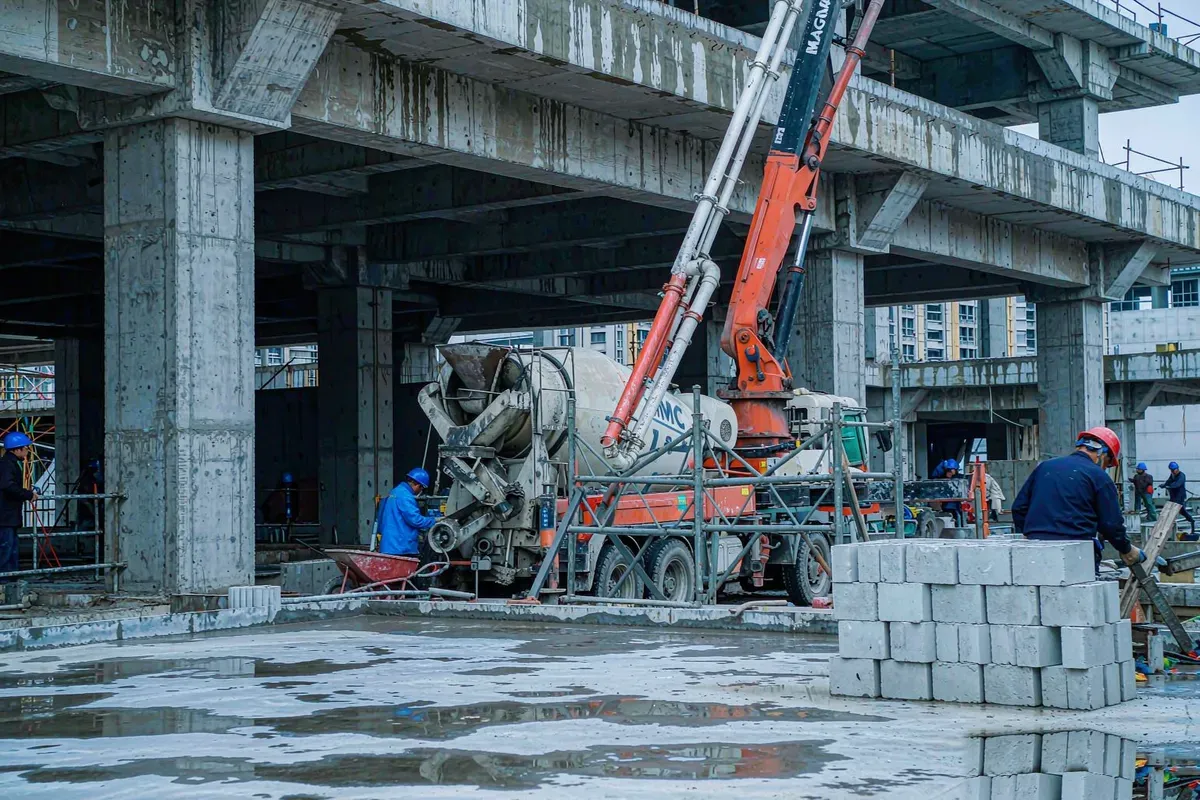
Wet work — concrete, mortar, screeds, plaster, tiling adhesives, anything that cures — is where site programmes become unpredictable. It is weather-sensitive, it requires drying time before the next trade, and it carries the majority of re-work in conventional building.
- Site-built construction puts most of its wet work in the critical path: foundations, blockwork, screeds, plaster, tiling, external render.
- Modular construction does not remove foundation wet work, which is unavoidable and site-specific, but it does remove most of the interior wet work, because finishes are applied in a dry factory environment and cured before dispatch.
The consequence for a difficult site is significant. On a remote plot, on an island, on a slope, or anywhere with a short dry season and unreliable labour availability, reducing on-site wet work reduces exposure to exactly the variables that are hardest to control. On a straightforward suburban plot with reliable trades, the advantage narrows considerably. This is also why the modular case is stronger the further the site is from a reliable supply of skilled labour — a point our Philippines comparison page examines in a market where that distance is acute.
Axis Three: Consistency of Finish Quality
This axis is usually argued with assertion, so it is worth stating what is actually different rather than what is claimed to be better.
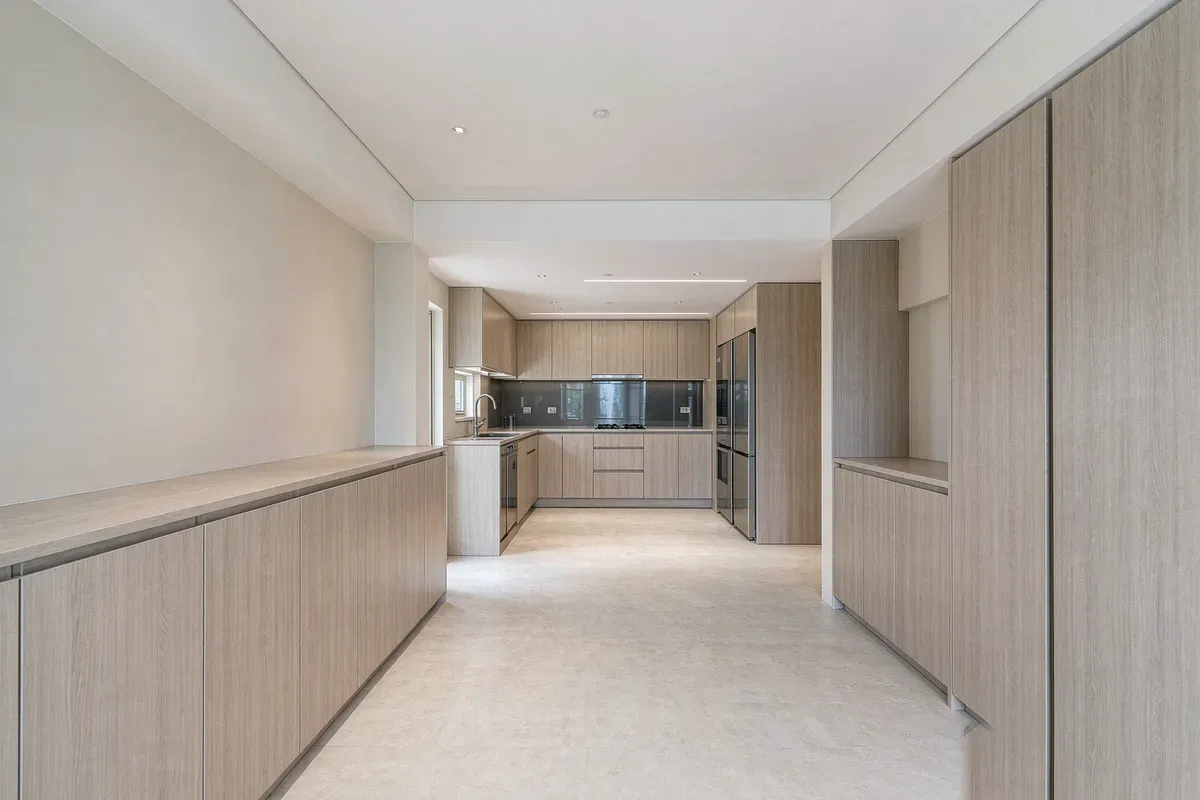
- Environment. Factory work happens under a roof, at stable temperature, with lighting and with materials stored dry. Site work happens in the conditions the site has. Materials that must be dry to perform — boards, insulation, adhesives, timber — are reliably dry in a factory and unpredictably dry on a site.
- Repetition. A factory team builds the same detail repeatedly, across the same batch and across many batches. A site team builds each detail once. Repetition produces consistency in any manufacturing process, and construction is no exception.
- Inspection. Factory work can be inspected at defined hold points, at a fixed location, by the same people. Site work is inspected in passing. Both can be done well; one is structurally easier to do well.
The counterweight is that a factory-built unit's quality is concentrated into decisions made before you see it. If the joint between two modules is poorly detailed, it is poorly detailed on every unit in the series, repeated exactly. A site-built defect tends to be a one-off. Neither is inherently superior — they fail differently, and the inspection that matters is the one you do before the unit ships, not after it lands. Ask the supplier which hold points you may inspect or have inspected on your behalf, and get that in the order.
Axis Four: The Cost of a Change
This is the axis buyers underestimate most, and it cuts against modular construction in one specific way.
- On a site build, a change requested before a trade starts is usually cheap. The same change requested after that trade has finished is expensive, but the expense is local — one wall, one room, one subcontractor.
- On a modular build, the equivalent change is cheap before drawing release and expensive after production starts, because production is a sequence of committed steps. Once materials are cut, once the line has been set up, and once the unit is in the finishing bay, the same change may require stopping the line, re-ordering materials, or re-working a completed area.
The modular penalty is larger per change, but it is also more predictable, because the point of no return is a defined event — drawing release — rather than a gradual drift. The practical instruction is to spend more time on drawings before ordering than you would on a conventional build, and to treat the drawing set as the contract document it actually is. If you expect the brief to keep moving, modular construction will punish that expectation in a way a site build will not.
Reading the Two Side by Side
The comparison in one view, with no figures attached, because the figures are project-specific and any general number would mislead:
- Programme. Modular compresses on-site occupation by running factory and site in parallel. It does not compress manufacturing lead time.
- Wet work. Modular removes most interior wet work from site; foundations remain wet work in both cases.
- Finish consistency. Factory conditions and repetition favour modular. Inspection discipline determines whether that potential is realised.
- Changes. Modular is less forgiving of late changes, but the point of no return is clearly defined.
- Site access. Modular requires a crane and a route capable of carrying the unit. Where that route does not exist, the comparison ends there — and it ends in favour of building on site.
That last line is the one that decides most real projects, and it is a site question rather than a building question. Before comparing anything else, establish whether the largest module you are considering can physically reach the position where you intend to put it. If it can, the four axes above apply. If it cannot, no amount of advantage on the other three matters. Requirements may vary by application, market and applicable standard.
For the commercial structure of a modular quotation once you have decided, see our capsule house price page.
More from the Blog

Capsule Home Cost Guide: What You Really Pay in 2026
EXW, shipping, install and the hidden line items — a transparent breakdown of total landed cost.
Read article →
How to Install a Capsule Home in 3 Days: A Step-by-Step Guide
From site prep to first guest — the exact sequence our install crews follow on every deployment.
Read article →
Real Owners, Real Numbers: Success Stories
How a lakeside resort, a Spanish glamping site and a Singapore dealer hit their targets.
Read stories →Talk to the Factory
Ready to Ride the 2026 Wave?
Get the latest catalog, pricing tiers and a layout sketch for your land — straight from the engineering team.