Capsule House Indonesia Humidity Control Guide
Capsule house humidity control in Indonesia: dew point, surface-side and air-side measures, ventilation, dehumidification drainage and closed-up housekeeping.
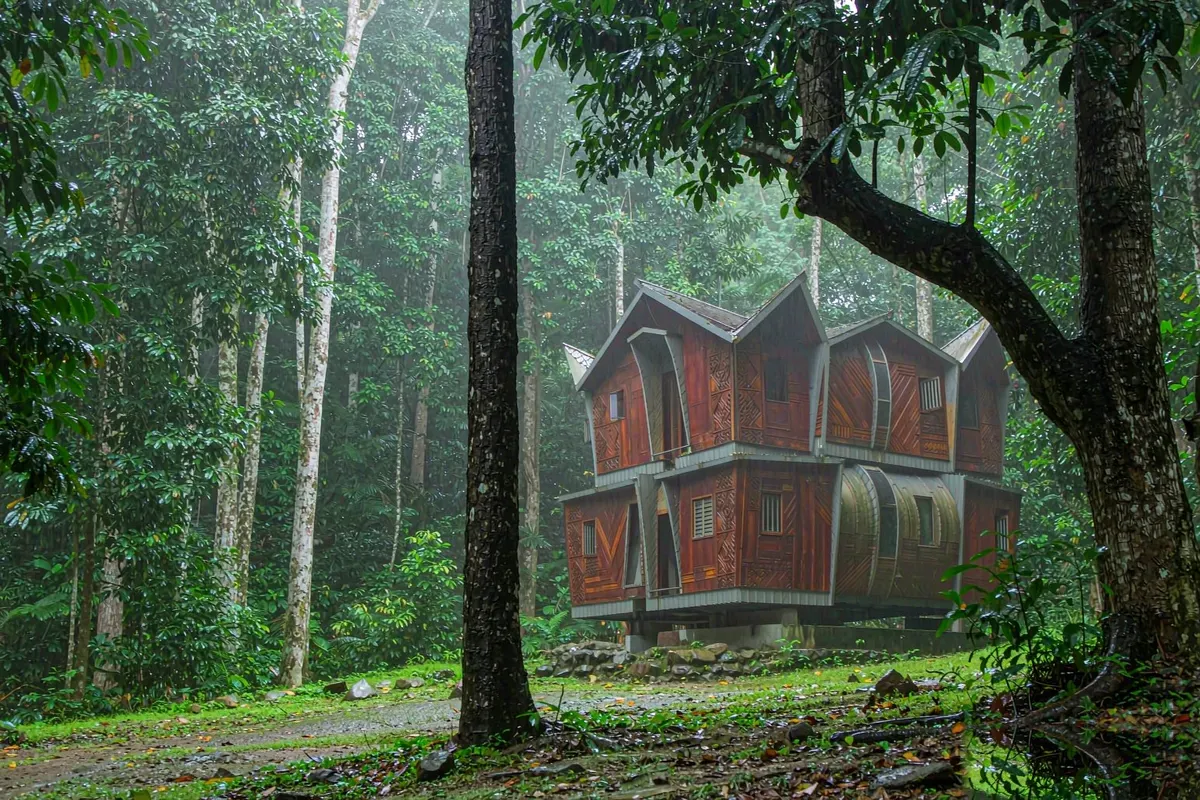
Capsule house humidity control in Indonesia is a surface temperature problem before it is an air problem. A factory-built unit with a large glass area and a well-sealed envelope behaves differently from an open-sided tropical building: the air inside is cooled, the surfaces are cold, and the moisture in the humid outside air condenses on whichever surface is below the dew point. Mould then follows the condensation, not the climate. This page covers the mechanisms in the order a buyer should deal with them — dew point, air-side and surface-side measures, ventilation and cross-ventilation, dehumidification duty and condensate drainage, material and finish selection, and the housekeeping regime when a unit is closed up. Country planning context is in the capsule house Indonesia guide, budget context in capsule house price in Indonesia and the general capsule house price page. Rainforest siting and off-grid power are separate subjects and stay in off-grid capsule houses in Indonesia.
Why the dew point is the design variable
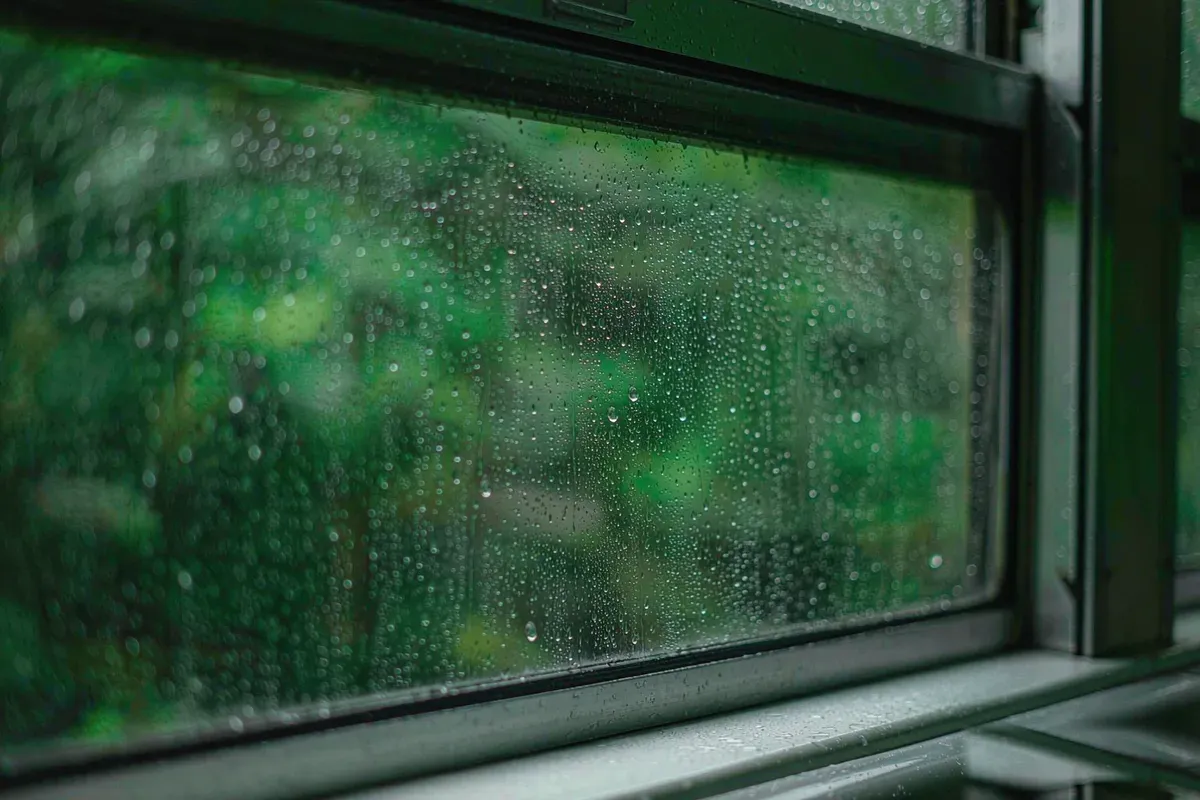
Warm air holds more moisture than cold air. When air at a high humidity meets a surface below the temperature at which that moisture becomes liquid, water appears on the surface. In a tropical unit the coldest surfaces are predictable: the glass, the metal frame at the glazing junction, the supply air outlet, the cold water pipe, and the back of any joinery standing against an external wall.
That means the defect has a location, and it is almost always the same one. If you know where the cold surfaces are, you know where the condensation will appear, and you can deal with the surface rather than chase the symptom with more ventilation.
Two families of measure, and the order to apply them
| Family | What it does | Examples | Limitation |
|---|---|---|---|
| Surface-side | Raises the surface temperature above the dew point | Better glazing specification, thermal breaks, keeping air moving across the glass, shading | Costs more at specification stage and is hard to retrofit after handover |
| Air-side | Removes moisture from the air, or dilutes it | Mechanical extract, dehumidification, controlled fresh air, cross-ventilation | Costs energy every hour it runs, and does nothing about a cold surface |
Apply surface-side measures first. They are bought once, at specification, and they work whether or not anyone remembers to operate them. Air-side measures are then sized for what is left. The reverse order — a big dehumidifier against a single-glazed wall — works, but it costs electricity for the life of the building and stops working the moment the power does.
Ventilation: the part most often mis-specified
A sealed, cooled unit needs mechanical extract in the wet areas and a deliberate fresh air provision. Without the extract, moisture from bathing and cooking has nowhere to go except onto the coldest surface. Without the fresh air provision, a tightly sealed unit has no dilution at all and relies entirely on door openings.
Cross-ventilation helps when the unit is open and unoccupied, and does nothing when it is closed and cooled. Plan for both states. A unit that is aired during the day and sealed at night needs the mechanical side sized for the night, not the day.
Any fresh air or extract rate should be taken from the applicable standard for the occupancy and use, and written into the order as a requirement rather than accepted as a default. Requirements may vary by application, market and applicable standard.
Dehumidification duty and where the water goes
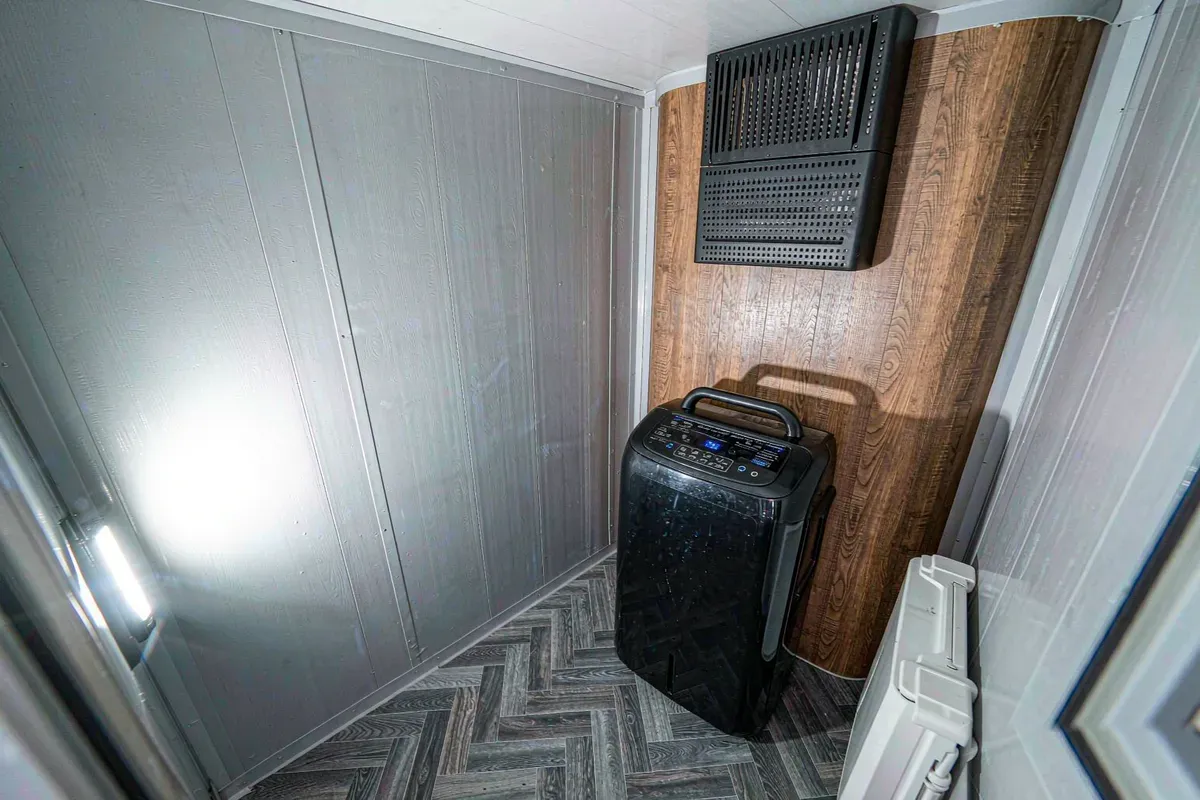
Dehumidification is the last measure, not the first, and it is the one most often installed without a plan for the water. A dehumidifier is a water-producing appliance: whatever it removes from the air has to be drained or emptied. In a resort unit that means either a plumbed condensate drain to a suitable discharge, or a tank that someone has to empty as a housekeeping task — and if it is the tank, it will be empty on the day the unit is closed up.
Specify the condensate route at design stage. It is a small pipe and a fall, and it is far harder to add after the finishes are in. Check also that the discharge point is not where it will stain the deck or erode the pad edge.
Materials and finishes that survive a humid interior
- Wet room construction. Continuous waterproofing rather than a tiled surface relying on grout, with a coved junction at the floor rather than a right angle.
- Joinery. Materials that tolerate moisture without swelling or delaminating, and a ventilation gap behind anything fixed to an external wall so the back of the unit can dry.
- Surfaces. Finishes that can be wiped dry and that tolerate the cleaning agent used, because in a humid interior the surfaces are wiped more often, not less.
- Textiles. Bedding and soft furnishing that dry quickly, and storage that is ventilated rather than sealed.
- Cold surfaces. Insulated or thermally broken where possible, including pipework, because an uninsulated cold pipe is a condensation generator running the length of the room.
The closed-up unit is where mould starts
A resort unit in Indonesia is often closed for part of the year, or closed between guests. A closed, cooled, unoccupied unit is the highest-risk state, because nothing is aired, nothing is wiped, and a small amount of condensation repeats every day for weeks.
The housekeeping regime should therefore be written for two states:
Closed and unoccupied
Set a dehumidification or timed ventilation regime rather than switching everything off. Leave internal doors and wardrobe doors open so air reaches the surfaces behind them. Remove or protect textiles. Inspect at a defined interval, and record the inspection.
In service
Wipe the glass and the frame reveals as part of turnover, not as a complaint response. Run the extract for a defined period after bathing. Keep the condensate route clear. Report a recurring wet patch rather than drying it — recurrence means the surface is still below dew point.
Two failure patterns worth naming
Most humidity complaints on a tropical unit reduce to one of two causes, and they are corrected differently.
The first is a surface below dew point. The symptom is localised and repeatable: the same patch of glass, the same corner of a ceiling, the same back of a wardrobe, wet at the same time of day. Ventilation will not fix it, because the surface is still cold. The fix is surface-side: better glazing, a thermal break, insulation continuity, or moving air across that specific surface.
The second is moisture generated faster than it is removed. The symptom is general rather than localised: a damp feel, condensation appearing in several places, a wet room that stays wet long after use. Here the air-side measures are the answer — extract that actually runs, a fresh air provision, dehumidification sized for the load, and a housekeeping regime that dries the surfaces rather than waiting for them to dry.
Diagnosing which of the two applies takes one evening and one instrument: note where the moisture is, and measure the humidity and the temperature near the surface. Guessing costs more, because the wrong measure is then applied for a season before anyone admits it did not work.
What to ask a supplier
- What is the glazing specification, and is there a thermal break at the frame?
- Where is the insulation and vapour control layer, and are there cold bridges at the junctions?
- What extract provision is fitted in the wet areas, and what is the discharge route?
- Is there a fresh air provision, and on what occupancy is it based?
- Where does condensate from cooling and dehumidification discharge?
- What is the recommended regime for a unit left closed for a season?
Haishu supplies space capsule homes and expandable prefab houses, and the humidity provisions above are specification choices to be agreed in the order rather than defaults to be assumed. Any performance figure quoted should be requested in writing and verified against the applicable standard. Climate figures vary by location and season; treat any number as a local condition to be measured on your site, not as a design value. Requirements may vary by application, market and applicable standard.
More from the Blog
Capsule Home Cost Guide: What You Really Pay in 2026
EXW, shipping, install and the hidden line items — a transparent breakdown of total landed cost.
Read article →
How to Install a Capsule Home in 3 Days: A Step-by-Step Guide
From site prep to first guest — the exact sequence our install crews follow on every deployment.
Read article →
Real Owners, Real Numbers: Success Stories
How a lakeside resort, a Spanish glamping site and a Singapore dealer hit their targets.
Read stories →Talk to the Factory
Ready to Ride the 2026 Wave?
Get the latest catalog, pricing tiers and a layout sketch for your land — straight from the engineering team.