Glamping Pods Oman: Mountain and Desert Camp Specs
Glamping pods for Oman: specifying for mountain highlands and desert camps, from insulation and sealed filtration to solar control glazing and access.
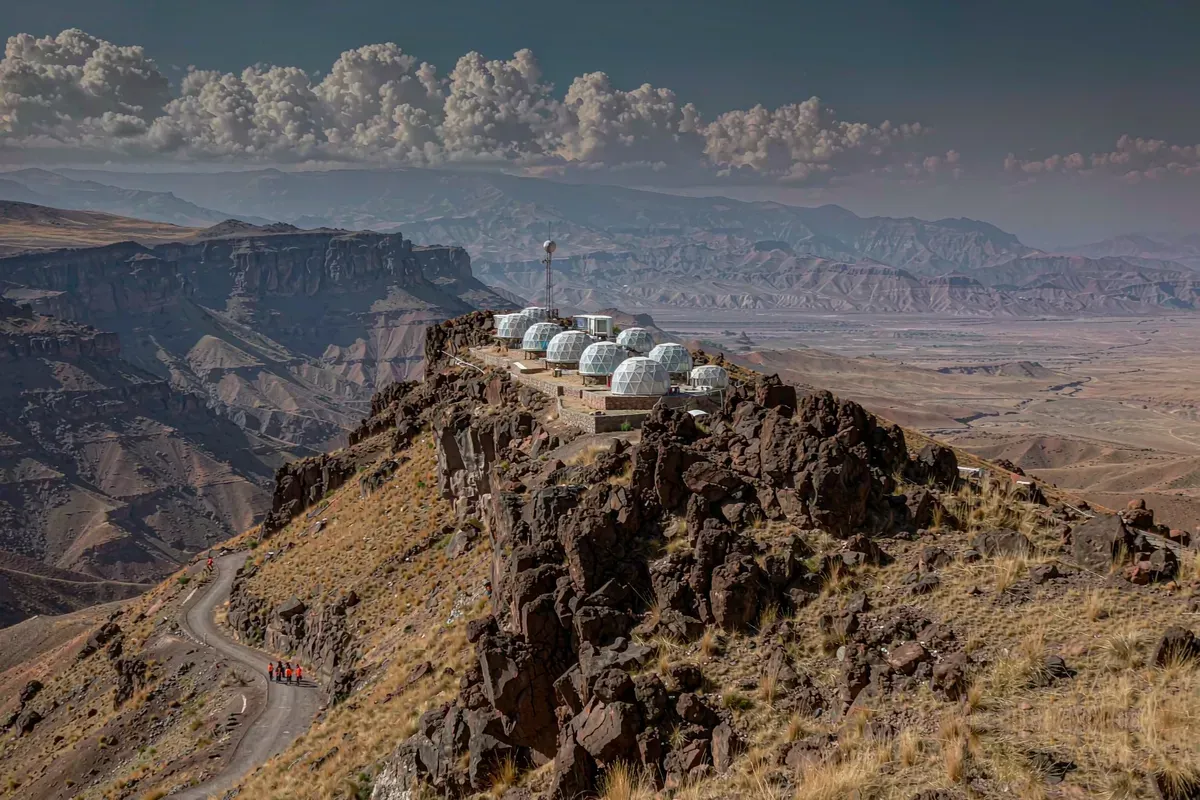
Oman is the strongest argument in the Gulf for glamping pods, because it has both conditions in one country: genuinely cool mountain highlands where guests sleep under blankets, and desert camps where they sleep under stars. Those two sites demand almost opposite specifications. This page sets out what changes between an Oman mountain camp and a desert camp, what to ask a factory for, and where operators get it wrong. For the product category in general, start with our glamping pods buying guide.
Two Sites, Two Specifications
| Mountain highlands | Desert camp | |
|---|---|---|
| Temperature swing | Large; cold nights even after hot days | Hot days, warm nights, extreme summer peak |
| Main water problem | Rock run-off and rare intense rain in wadis | Almost none — unless a flash flood reaches you |
| Main particle problem | Dust on approach roads | Fine airborne sand on everything, always |
| Access | Steep graded tracks, switchbacks, rock | Soft sand, long approach, navigation risk |
| Power | Often generator or long grid extension | Usually off-grid |
| Guest expectation | Warmth, view, silence | Cool interior, dark sky, outdoor living |
Buying one pod specification for both is tempting and usually produces one bad outcome. Where an operator runs both, the honest approach is one structural platform with two different envelope and services packages.
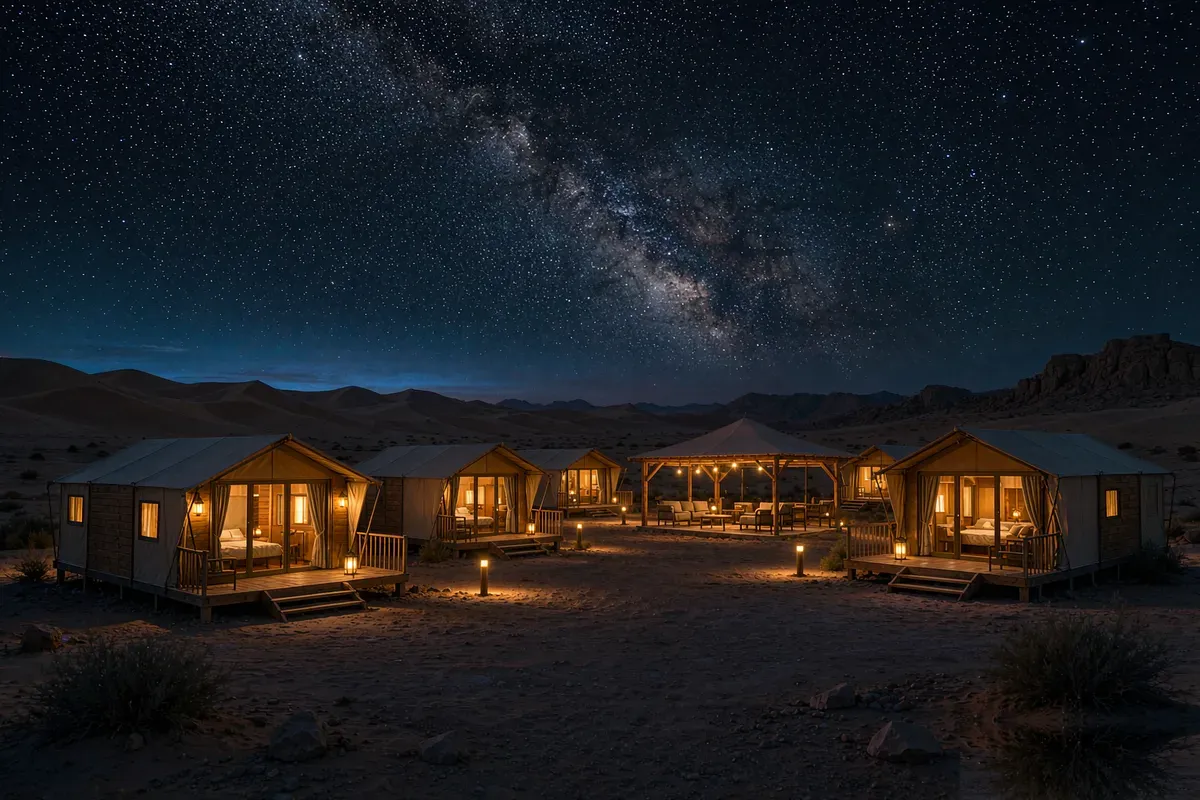
The Mountain Specification
Insulation That Works in Both Directions
Highland Oman has hot days and cold nights, so insulation has to slow heat gain in the afternoon and heat loss before dawn. Ask for the thermal performance of the assembled unit — glazing, doors, penetrations and floor included — not the panel figure alone. If the floor is not insulated, a raised unit on a steel substructure over cold rock will lose heat downwards all night.
Confirm where any vapour control layer sits. Get it on the wrong side of the insulation and you have created an condensation problem rather than solved one. Requirements may vary by application, market and applicable standard.
Glazing and Solar Gain
Panoramic glass is why the site is worth having. At altitude it also means double glazing should be the baseline, with thermally broken frames, because single glazing will run with condensation on a cold morning and will radiate heat away all night. Ask whether solar control coating is available — useful against daytime gain, though it slightly reduces beneficial winter gain, which is a trade worth stating explicitly rather than discovering.
Heating and Power
Decide heating before you size supply. Resistive electric heating is simple but adds substantial connected load, which matters where power comes from a generator or a long grid extension. Ask for the load schedule in writing, then size the generator or the extension against it with margin. Establishing background heating for unoccupied units between stays prevents damp, which matters more than it sounds in a cool highland climate.
The Desert Specification
Sealing Against Fine Sand
Fine airborne sand finds every gap. The specification lines that matter are the sealing detail at panel joints, the door and window seals, every service penetration, and the fresh air path. Ask whether the unit is designed to run at slight positive pressure with filtered intake — dust enters through the gaps you cannot seal, and positive pressure reduces that. Then ask what filter grade is used and how often it needs changing in desert conditions.
Access matters for the same reason: filters that cannot be reached will not be changed. Make filter access a specification question, not an afterthought.
Cooling Without a Grid Connection
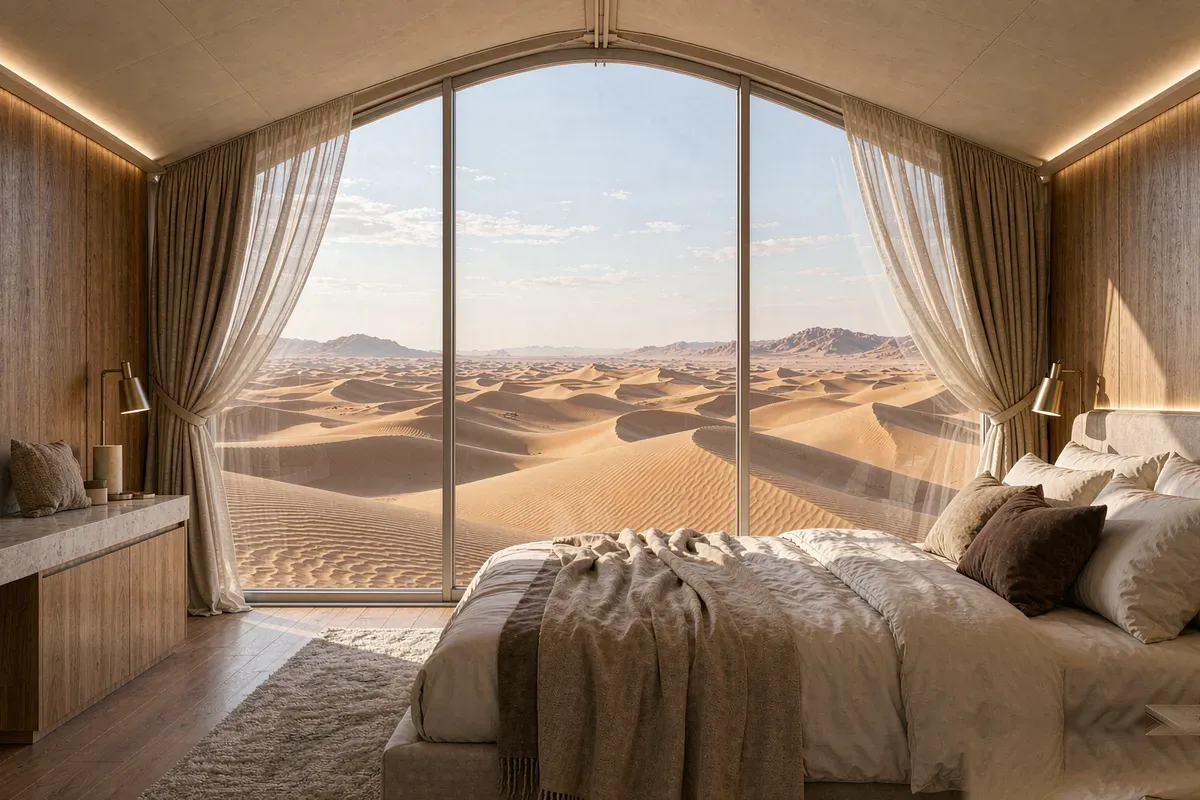
Desert camps are usually off-grid, so cooling is an energy system problem. The questions: what is the design ambient for the cooling system? How much solar and battery does the cooling load require? Is there shading of the condenser, and what corrosion protection is specified? Can the unit hold comfortable temperature through the hottest part of the day on stored energy rather than generator run time?
Then plan the guest experience around it. A pod that is cool at midnight and warm at four in the afternoon produces the review you do not want.
UV, Sand Abrasion and Outdoor Living
High ultraviolet load and wind-borne sand abrade coatings, seals and textiles. Ask what coating system is specified, what it is rated for under UV exposure, and what the maintenance cycle looks like. Choose exterior materials and shading structures with that cycle in mind rather than purely for appearance.
Access: Route First, Then Transport Form
Both site types are surveyed too late. Before the factory fixes the transport form, walk or drive the route: width at the narrowest point, gradient, surface, turning space, whether the pods must be transferred to a smaller vehicle, and what the ground bearing is where the crane will stand. Soft sand and steep switchbacks both rule out vehicle and crane combinations that would otherwise be normal.
Port choice follows the site: several Omani ports serve different coasts, so select the discharge port after choosing the site rather than before. On this point our climate and sealing write-up for the region, GCC heat and sand specification, covers the same problems for permanent installations.
Permits and Tourism Operation
Tourism accommodation in Oman operates under licensing administered by the authorities responsible for tourism, alongside planning and building control at the site level, and additional requirements where the site lies in a protected or environmentally sensitive area. We do not publish approval rules — they vary by location, by land designation and by project. Requirements may vary by application, market and applicable standard. Ask your local consultant to confirm, in writing, what applies to your plot and intended operating model before you order.
Water, Waste and the Off-Grid Reality
Desert and mountain camps both run on delivered or stored water, which makes consumption a design input rather than a utility detail. Establish the available supply first — delivered volume, storage capacity, or a bore where permitted — then specify accordingly: low-flow fittings, a wet-room layout that uses less water, hot water provision that matches the energy system, and greywater handling that suits the site rather than a generic package plant.
Blackwater is the line most often under-designed. A camp that fills its own treatment or holding capacity has to stop taking guests, which is an operating failure rather than an engineering one. Size waste handling for peak occupancy and confirm who services it and how often. Where units sit far apart, ask how the waste connection is routed and serviced before the layout is fixed.
Questions to Put to a Supplier
- Wall, roof and floor build-up in writing, including the position of any vapour control layer.
- Glazing: panes, coating, frame type, and replacement lead time for a damaged unit.
- Design ambient for the cooling system, and the resulting load schedule.
- Fresh air filtration strategy, filter grade and access for changing filters.
- Sealing detail at joints, doors, windows and penetrations.
- UV and corrosion protection specification for the site's conditions.
- Packed and deployed dimensions, weight and the lifting method.
- Warranty, exclusions and how spares reach Oman.
What to Send Us
Send the site location and type, altitude or desert exposure, access survey information where available, power arrangements, number of keys and target opening date. We will confirm which envelope and services package suits each site type and what remains local. Review the Galactic A series configurations and send your details through the contact page.
More from the Blog

Capsule Home Cost Guide: What You Really Pay in 2026
EXW, shipping, install and the hidden line items — a transparent breakdown of total landed cost.
Read article →
How to Install a Capsule Home in 3 Days: A Step-by-Step Guide
From site prep to first guest — the exact sequence our install crews follow on every deployment.
Read article →
Real Owners, Real Numbers: Success Stories
How a lakeside resort, a Spanish glamping site and a Singapore dealer hit their targets.
Read stories →Talk to the Factory
Ready to Ride the 2026 Wave?
Get the latest catalog, pricing tiers and a layout sketch for your land — straight from the engineering team.