Capsule House Kuwait: Desert Resort Buyer Guide
Capsule house Kuwait: flat coastal plots and groundwater, summer cooling against winter demand, combined dust and salt exposure, delivery and plot layout.

Kuwait is a compact, high-income market with a short, intense summer, a mild and genuinely pleasant winter, flat coastal terrain and a limited stock of distinctive accommodation. For a capsule house buyer that combination is specific enough to plan against directly rather than through a regional average. This page covers the Kuwait decision on its own: plot character, summer cooling against winter demand, combined dust and salt exposure, the delivery profile, and what a compact plot does to layout and shading. The wider regional comparison belongs to the capsule house GCC pillar, the thermal design background sits in capsule house GCC climate engineering, and the approval-side context in capsule house regulations in the GCC.

Plot character: flat, coastal, and often saline
Most developable land near the coast in Kuwait is flat, sandy or gravelly, and close to sea level. That is good news for access and crane work: flat ground simplifies the pad, the delivery route and the set-out. It is less good news for drainage, because there is no natural fall to discharge to, and it brings two ground conditions that need checking before the foundation is chosen.
The first is bearing capacity. Loose sand and reclaimed or filled ground can be adequate, but it should be verified rather than assumed, particularly where the plot has been levelled or filled. The second is groundwater and salt content. Shallow, saline groundwater affects concrete specification, buried metalwork and any below-ground service run, and it is the kind of condition that is far cheaper to design for than to remediate.
Because the plot is flat, drainage has to be created. Plan a positive fall away from the pad, a defined discharge point, and a route that does not rely on infiltration into ground that may already be near saturation. Where the site is close to the shore, treat the groundwater condition as a design input from the start.
Two design seasons, and they pull in opposite directions
The Kuwaiti summer is long, hot and humid on the coast, with very high solar gain on a flat unshaded site. The winter is short, mild and, for an outdoor accommodation product, the commercially valuable part of the year. A unit specified only for summer performance will be overshaded and inward-looking in the months when demand is strongest.
| Design pressure | Summer response | Winter response |
|---|---|---|
| Glazing | Solar control coating and external shading on the west and south-west faces | Keep the view and the daylight; shading should retract or be seasonal where possible |
| Envelope | Continuous insulation, airtightness, attention to thermal bridges at posts and junctions | Same envelope, lower load; check heating provision is not omitted by default |
| Outdoor space | Deep shade, reflective roof, misting or fan-assisted areas | Usable terrace is the product; it must not be permanently in shade |
| Ventilation and filtration | Sand-managed intakes, filtered fresh air, condensate management | Fresh air without heat penalty; cross ventilation where the site allows |
The practical resolution is to treat shading as adjustable and the envelope as fixed. Fixed structure that blocks the winter sun is a permanent revenue loss in a market with a short outdoor season; a shade element that can be opened, retracted or seasonally removed is not.
Dust and salt arrive together
A coastal Kuwaiti site is exposed to windblown sand and to salt-laden marine air at the same time. That combination is harder on a building than either alone, and it attacks three specific places.
- Openings and intakes. Sand finds its way past standard weatherstripping and into tracks and recesses. Intake louvres need sand management at the opening, not only filtration downstream, and sliding tracks need to be cleanable.
- Fixings and metalwork. Salt drives corrosion at fasteners, brackets, hinges and rail fixings. Material selection and coating class should be specified for a marine-adjacent exposure, and dissimilar metals should be separated.
- Coils and condensers. Air conditioning condensers live in the worst of it. Coil coating, accessible location for washing, and a realistic cleaning frequency protect both efficiency and service life.
Glass cleaning access is worth planning at layout stage. Large panoramic glazing is the selling feature of a capsule unit and it is also the surface that most obviously shows salt deposit and dust. If the cleaning method is not resolved in the design, the view degrades and the unit stops photographing well.

Delivery profile
Kuwait is a compact market with short inland hauls compared with the larger Gulf states, which simplifies the last leg. The practical constraints are rarely distance: they are port handling, the documentation set that releases the shipment, and access dimensions at the site itself. Factory-finished units reduce the on-site labour requirement and the number of separate trades that have to be coordinated, which matters where specialist subcontractors are in short supply. The import documentation, packing and freight considerations are covered in more detail in prefab house import into the GCC.
Because the market is small, plan the crew and the equipment early. A single crane booking that slips can move a whole installation week, and that is a scheduling risk rather than a cost risk.
Compact plots change the layout question
Many Kuwaiti sites, particularly coastal leisure plots, are small relative to the ambition for them. A compact footprint is an advantage here, but it puts pressure on three things: privacy between units, the amount of usable outdoor space per unit, and parking and service access.
Orientation does most of the work. On a small plot, staggering the units rather than lining them up buys privacy without adding land. Rotating each unit toward its own view and away from its neighbour's terrace is usually more effective than a screen wall. Service access should be drawn before the layout is fixed: a unit that cannot be reached by a service vehicle is a unit that will not be maintained.
What to confirm before committing
Two categories of question should be settled with the authority having jurisdiction rather than with a supplier. The first is land use and permission: whether the plot may lawfully carry the accommodation use you intend, and what the approval path is. The second is technical: which standards apply to the electrical installation, the cooling equipment and any life-safety provision, and what documentation will be expected at handover. Requirements may vary by application, market and applicable standard, and nothing on this page should be read as a compliance statement for a specific project.
Haishu manufactures space capsule homes and expandable prefab houses for resort, tourism and workforce applications, and can supply complete delivered units with the glazing, insulation, shading and services configuration stated on the order. Any certificate, test report or compliance document should be requested from the supplier and verified against the requirement of the receiving authority before shipment, rather than assumed to be included.
Operating cost and crew in a compact market
The operating profile in Kuwait differs from the larger Gulf markets in two ways that matter to a feasibility model. The market is small enough that specialist trades are thinly spread, and the summer is severe enough that the outdoor and mechanical plant carry the maintenance burden. Both push the same conclusion: specify for low intervention, and plan the maintenance function before the unit is ordered rather than after it is installed.
Cooling is the dominant running cost and the dominant maintenance item. Condenser coil condition, condensate drainage and filter discipline determine both the energy use and the service life of the plant, and they are all affected by dust and salt. Build the cleaning frequency into the operating plan from the first season, and hold filters and coils treatment on site rather than ordering them.
Housekeeping and turnover matter more than they appear to in a market where the lettable season is short. A unit that can be turned quickly and reliably in the mild months earns more than a unit with a marginally better finish that takes longer to prepare. Commercial terms and delivered pricing for the wider region are covered in capsule house GCC, and any cost figure should be built from your own site and utility data rather than from a regional average.
More from the Blog

Capsule Home Cost Guide: What You Really Pay in 2026
EXW, shipping, install and the hidden line items — a transparent breakdown of total landed cost.
Read article →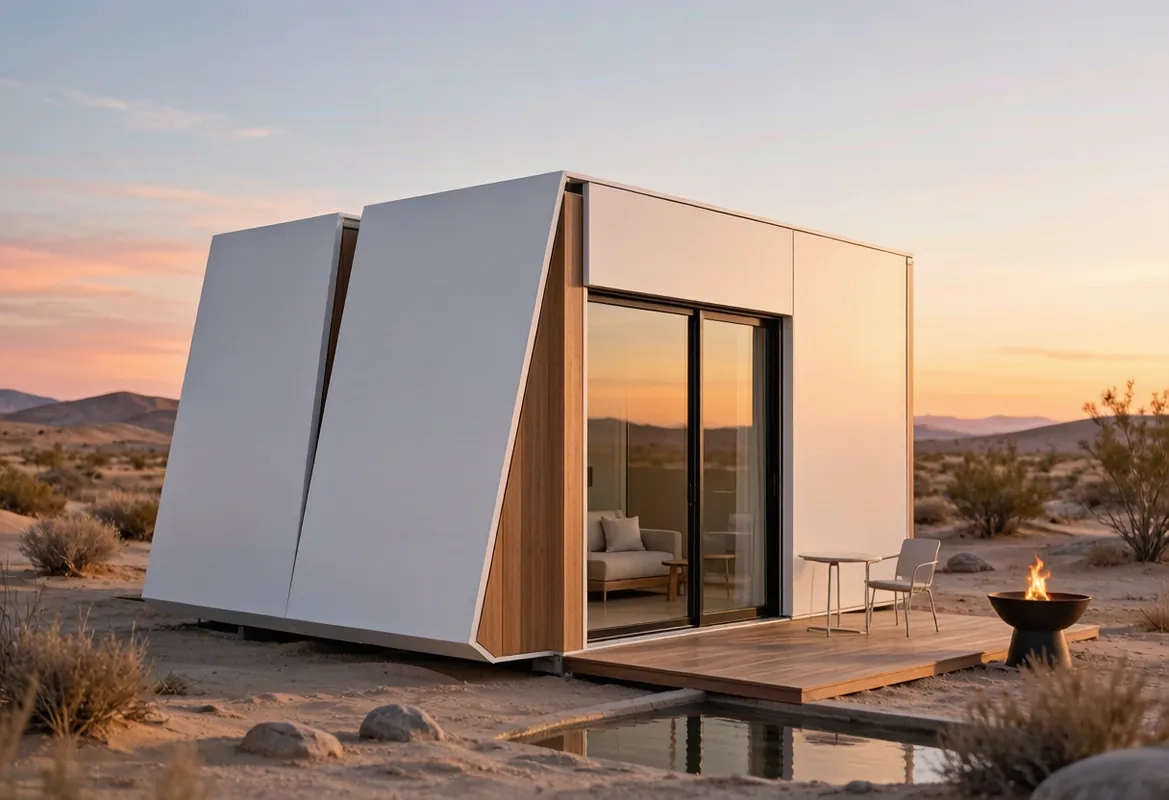
How to Install a Capsule Home in 3 Days: A Step-by-Step Guide
From site prep to first guest — the exact sequence our install crews follow on every deployment.
Read article →
Real Owners, Real Numbers: Success Stories
How a lakeside resort, a Spanish glamping site and a Singapore dealer hit their targets.
Read stories →Talk to the Factory
Ready to Ride the 2026 Wave?
Get the latest catalog, pricing tiers and a layout sketch for your land — straight from the engineering team.