How Much Does a Capsule House Cost? Landed Cost
Landed cost of a capsule house: the full equation from unit price to commissioning, the leg most often underestimated, duties and three budget errors.

Landed cost is the figure that matters, and it is rarely the figure a buyer first receives. The difference between a unit price and a commissioned unit on site is made up of ten or so line items, several of which are variable, destination-specific and easy to omit from a first budget. This page sets out the arithmetic so that the components can be filled in rather than guessed. It complements the capsule house price page, which covers quotation structure; this page covers what happens to the number on its way to your site.
The Landed Cost Equation
Written out, the calculation is unremarkable. What surprises people is the size of the later terms.
| Line | Description | Who usually pays |
|---|---|---|
| 1. Unit price | As specified, at the stated delivery term | Buyer |
| 2. Export packing | Materials, crating, securing | Often included to FOB |
| 3. Inland transport to port | Origin-side road or rail | Included to FOB |
| 4. Port and loading charges | Origin terminal handling, documentation | Included to FOB |
| 5. Ocean freight | Per container or per unit of volume | Buyer, unless CIF or DDP |
| 6. Marine insurance | Typically a small percentage of value | Buyer, unless CIF |
| 7. Import duties and taxes | Depends on classification and destination | Buyer, unless DDP |
| 8. Destination port charges | Terminal handling, storage if delayed | Buyer |
| 9. Inland transport to site | The leg most often underestimated | Buyer |
| 10. Crane and placement | Mobilisation plus lift | Buyer |
| 11. Site works and utilities | Foundation, services, drainage | Buyer |
| 12. Commissioning | Testing, snagging, attendance | Buyer or shared |
Two observations follow directly. First, lines 7 to 11 are the ones that vary most between projects and are least likely to be in a supplier's quotation. Second, lines 9 and 10 depend on your site, which no supplier can price without your access details.
The Leg That Is Most Often Underestimated
Inland transport to site, and the lift, are where budgets fail - particularly for island, hillside and remote projects.
- Abnormal load permits may be required for the size and weight involved, and they take time.
- Route restrictions - bridge limits, gradient, surface strength, overhead clearance - can force a longer route or a different vehicle.
- Crane mobilisation is charged separately from the lift itself, and for remote sites it can be a significant proportion of the total.
- Ground conditions at the lift position may require preparation before the crane can set up.
- Island transfers add a discrete leg - barge, landing, and often a second lift.
Get these priced before the order rather than after dispatch. They are knowable in advance and they are the least negotiable once the unit is on the water.
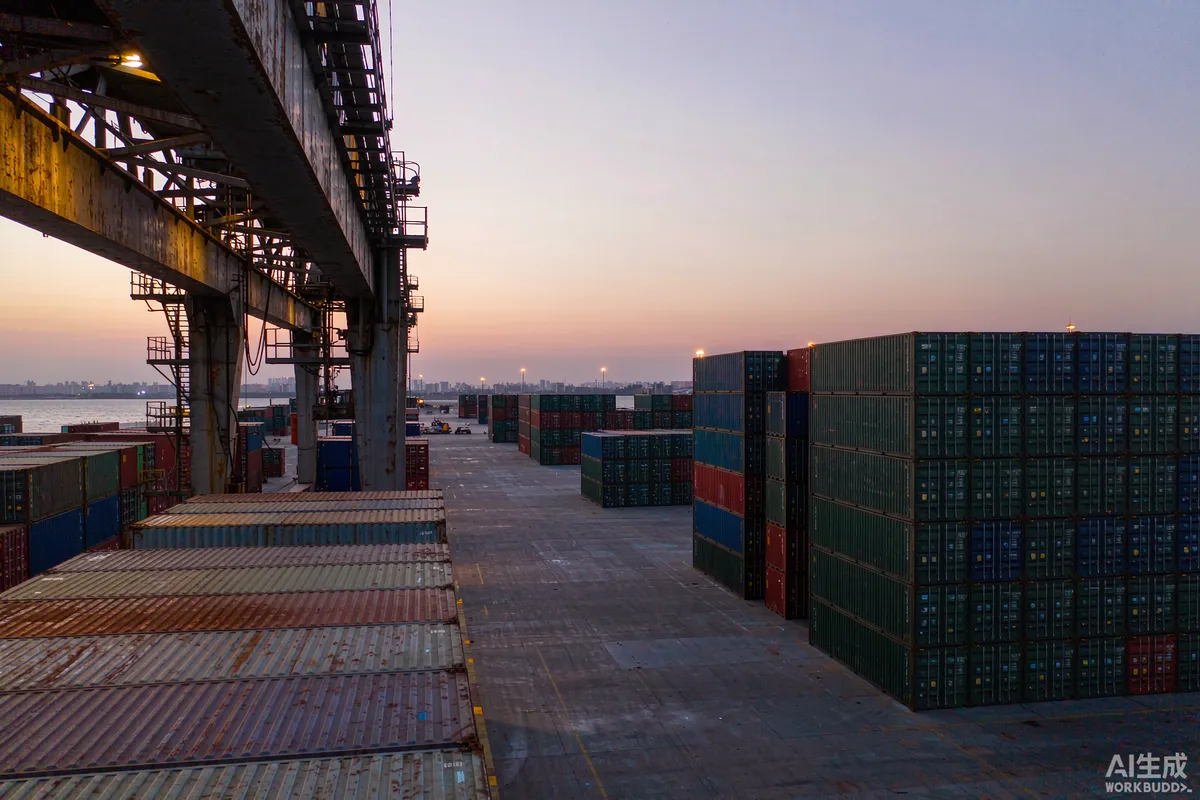
Duties, Taxes and Classification
Classification determines the duty treatment, and it should be confirmed rather than assumed.
- Confirm the classification for your market with a licensed broker before budgeting.
- Ask whether any preferential treatment applies under an applicable trade arrangement, and what evidence is needed.
- Check whether value-added or similar tax applies on import and whether it is recoverable.
- Check whether any conformity assessment is required before clearance, since that has its own cost and duration.
- Budget a contingency on this line. Classification decisions are made by the authority, not by the buyer or the supplier.
Duty rates, tax treatment and conformity requirements differ by market and change over time. Confirm the current position with a licensed broker or the relevant authority. Requirements may vary by application, market and applicable standard.
Three Budget Errors Worth Naming
- Comparing unit prices across different delivery terms. The commonest error and the easiest to fix.
- Omitting storage risk. Every day a unit sits at a port because clearance or inland transport is not ready is a cost, and demurrage is not a small number.
- Treating commissioning as free. Someone has to test the unit, and if that is you, it is a cost.
How to Build Your Own Number
- Get a structured quotation - written specification, stated term, named destination, stated exclusions.
- Get a freight quote for the actual route and the actual packed dimensions, not an estimate from a table.
- Get a local price for lines 9 to 12 from contractors who have seen the site.
- Add contingency of a meaningful size. Ten per cent is a common starting point for a first import; more for remote sites.
- Rebuild the number when the specification changes. Changes late in the process move more than one line.
Site-Side Costs That Are Not in the Unit Price
The unit price is the factory's number. Everything between the factory gate and a commissioned unit on site belongs to the buyer, and it is usually larger than expected.
- Groundworks and foundation. Designed locally, priced locally, and dependent on what the ground turns out to be.
- Cranage and placement. Capacity, hire duration and any road or access preparation.
- Services connection. Power, water, drainage and data from the unit to the source, including any trenching and any upgrade to the existing supply.
- External works. Decking, paths, steps, screening, lighting and landscaping, which are usually a separate package.
- Professional fees. Local engineering, planning and inspection.
- Site establishment. Access protection, temporary power, welfare for the installation crew and security while the unit is stored.
These items are local, and they are the reason a landed cost cannot be read off a product page. Obtain local prices for each rather than applying a percentage.
Cash Flow Timing
When money leaves matters as much as how much, particularly where the project is financed.
- Deposit at order starts the exposure well before anything arrives.
- Progress or pre-shipment payment is typically due while the unit is still in transit.
- Freight and duties are payable on arrival, at the point where site costs are also beginning.
- Site costs peak around delivery, when cranage, contractors and connections all fall due together.
- Revenue starts later still, after commissioning and, in a hospitality project, after the first bookings.
Plotting these against a timeline is more useful than a total, because the peak - not the sum - is what a budget usually fails to absorb.
Contingency: How Much and Why
Two separate allowances are needed, and conflating them is a common error.
- A design contingency for things that were genuinely unknown at the time of the estimate - ground conditions being the classic case.
- A programme contingency for delay: storage, demurrage, re-scheduling of contractors and, in a revenue project, lost opening weeks.
- An exchange allowance where the currency of the order differs from the currency of the budget.
Contingency is not pessimism; it is the recognition that an estimate is made before the facts are all available. Price levels and quotation structure are covered separately in our price guide.
Cost Behaviour at Different Project Sizes
Some costs scale with unit count and some do not, and knowing which is which changes what a larger order is worth negotiating.
- Unit production scales almost linearly, though a larger run usually improves material utilisation.
- Freight per unit falls as the shipment fills, because a container costs roughly the same whether it holds one unit or its full load.
- Site establishment, cranage mobilisation and professional fees do not scale - they are largely fixed per site and are spread across the units.
- Spare parts and tooling are better held per project than per unit.
- Contingency should be applied to the non-scaling items, since those are where a single unknown has the largest proportional effect.
The practical consequence is that a single-unit project carries a materially higher cost per unit than a twelve-unit one, and this is a property of the cost structure rather than a pricing decision.
For the wider financial picture - capital structure, operating cost and payback - see the capsule house cost guide and the resort investment model. For quotation structure and price levels, see the price page. Current models are on the product pages, and we can quote a named destination if you send the site details.
More from the Blog

Capsule Home Cost Guide: What You Really Pay in 2026
EXW, shipping, install and the hidden line items — a transparent breakdown of total landed cost.
Read article →
How to Install a Capsule Home in 3 Days: A Step-by-Step Guide
From site prep to first guest — the exact sequence our install crews follow on every deployment.
Read article →
Real Owners, Real Numbers: Success Stories
How a lakeside resort, a Spanish glamping site and a Singapore dealer hit their targets.
Read stories →Talk to the Factory
Ready to Ride the 2026 Wave?
Get the latest catalog, pricing tiers and a layout sketch for your land — straight from the engineering team.