Space Capsule Home vs Safari Tent: Which Glamping Unit Fits Your Site?
A practical comparison of safari tents and space capsule homes for glamping sites: season length, staffing, foundations, lifespan and the guest expectations each one meets.
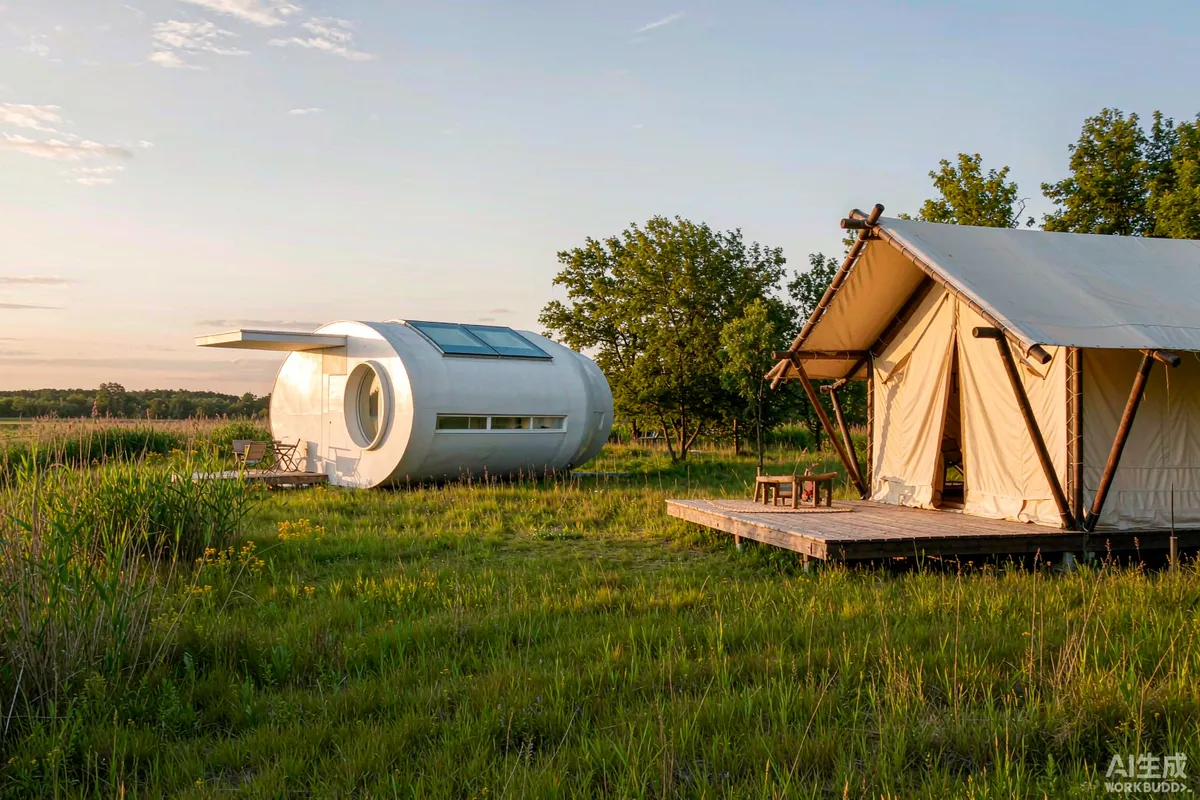
A safari tent and a space capsule home can stand on the same field and still serve two completely different businesses. The tent is a soft-shell, seasonal structure that wins on low entry cost, quick replacement and a canvas-and-lantern atmosphere many guests actively look for. The capsule home is a rigid, insulated, factory-finished unit that wins on four-season operation, acoustic privacy, security and a long service life. The decision usually comes down to three questions: how many nights a year you intend to sell, what your winter and storm calendar looks like, and whether your guests expect a bathroom and a kitchen inside their own unit. Requirements may vary by application, market and applicable standard.
What Each Structure Actually Is
Comparison only works if both sides are defined precisely, because "glamping tent" covers a very wide range of products.
Safari tent / lodge tent
- Structure: a tensioned fabric skin over a timber or steel frame, usually on a raised deck or platform.
- Envelope: single-layer canvas, sometimes with an inner liner, rarely with meaningful insulation.
- Interior: soft furnishing and freestanding furniture; plumbing and wiring are usually added on site rather than built in.
- Delivery: flat-packed, assembled on site over days by a small crew, and can be re-skinned without replacing the frame.
Space capsule home
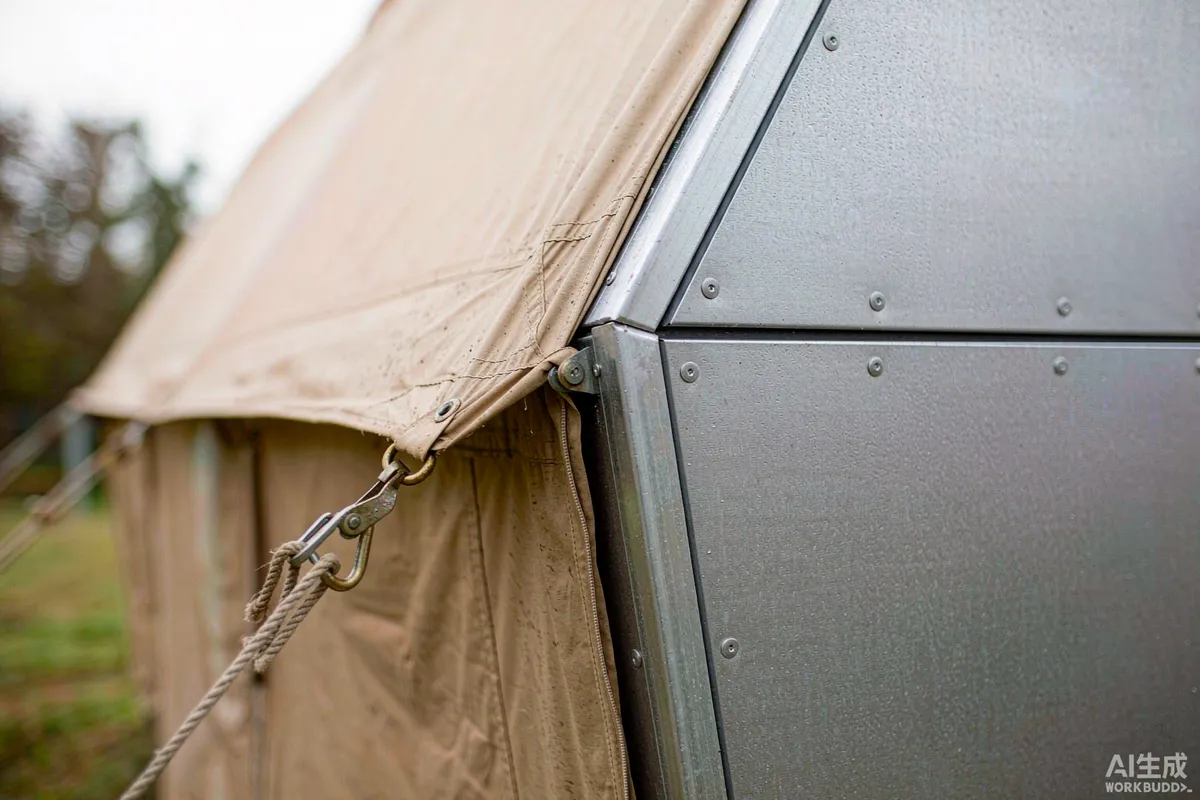
- Structure: a welded steel or aluminium frame with rigid insulated wall and roof panels, delivered as a finished volume.
- Envelope: factory-installed insulation, vapour control, sealed glazing and a weather-tested shell.
- Interior: bathroom, kitchen, lighting, power distribution and finishes installed before it leaves the factory.
- Delivery: arrives complete or as a folding unit that opens on site, then is craned or slid into position and connected to services.
The practical consequence is that the tent is a structure you fit out, while the capsule is a room you place. That single difference drives almost everything else in this comparison.
Side-by-Side Comparison
| Factor | Safari tent | Space capsule home |
|---|---|---|
| Typical season | Primarily warm months; comfort depends on the climate and on how the platform is serviced | Four-season, subject to the specification ordered and to local conditions |
| Thermal behaviour | Follows outdoor temperature closely; heating and cooling loads are high relative to the envelope | Insulated envelope holds setpoint with far smaller plant |
| Acoustic privacy | Fabric transmits sound; neighbours are audible | Hard shell plus sealed glazing gives room-like privacy |
| Wet room | Usually an add-on, often shared or external | Built in at the factory as part of the delivered unit |
| Security | Zipped or locked fabric entry | Solid door with a proper lock; compatible with keyless entry |
| Site works | Level deck or platform, services run to it | Foundation points or slab, services run to it, crane or slide access |
| Installation | Days of on-site assembly by a crew | Short on-site operation once the foundation is ready |
| Replacement cycle | Canvas is a wearing part; re-skinning is expected | Shell is long-lived; interior soft items are the wearing parts |
| Storm response | Often requires a defined strike or closure procedure | Remains in place; procedures focus on anchorage and loose items |
Where the Safari Tent Wins
There are real situations where the tent is the better commercial answer, and pretending otherwise leads to bad capital decisions.
- Low entry cost per sleeping unit. If you are proving demand on a new site, tents let you open with more units for the same money.
- Aesthetic demand. A meaningful segment of guests specifically book canvas. The tent is the product, not a compromise.
- Easy reconfiguration. Units can be moved, re-pitched or removed at the end of a season without heavy plant.
- Light footprint. On sensitive ground, a deck on adjustable supports disturbs less than a continuous foundation.
- Repairability. A damaged panel is a fabric repair rather than a structural one, and most operators can learn it.
Where the Capsule Home Wins
- Shoulder and winter nights. An insulated shell turns cold months from closed to sellable, which is where the revenue difference usually appears.
- In-unit bathroom and kitchen. Guests who will not share facilities are simply not addressable with a tent.
- Privacy and quiet. For couples, remote workers and longer stays, acoustic separation is the product.
- Lower routine labour. Hard surfaces, built-in wet rooms and integrated systems shorten the turnover cycle.
- Security and unattended periods. A lockable rigid unit is easier to leave empty between bookings or over a closed period.
- Predictable presentation. Every unit looks the same on day one and in year five, which protects review scores.
Think in Sellable Nights, Not in Unit Price
The most common mistake is comparing purchase price per unit without comparing sellable nights per year. A tent that sells 120 nights at a modest rate and a capsule that sells 260 nights at a higher rate are not competing on the same axis at all.
- Build a night-count model. Estimate open weeks for each option given your climate, then apply an occupancy assumption you can defend.
- Apply the rate difference honestly. Units with private bathrooms and four-season comfort usually command a higher rate, but not automatically - check comparable listings in your area.
- Add the operating cost per occupied night. Housekeeping time, laundry, heating, water and consumables differ between the two.
- Add the replacement reserve. Set aside a yearly amount for canvas, decking and soft furnishing in the tent case, and for interior refresh in the capsule case.
Once you divide annual contribution by capital cost, the ranking frequently flips away from whichever option looked cheaper on the invoice.
Foundations, Services and Delivery Access
Both options need the same three site questions answered, but the answers differ in weight.
- Ground conditions. A tent platform can often be adjusted to uneven ground; a capsule needs defined bearing points that must be level within the manufacturer's tolerance.
- Access. A crane or a delivery vehicle large enough for a finished unit is a hard constraint. Confirm the route before ordering, not after.
- Services. Power, water supply, drainage and data all terminate at a point. With a capsule that point is usually fixed by the unit's design, so the setting-out drawing matters.
- Drainage and surface water. Any hardstanding or deck changes how water moves across the site; plan it rather than discover it.
Staffing and Turnover Reality
Labour is where the two options diverge most in daily operation. A tent turnover involves fabric surfaces, rugs, cushions and a bathroom that may be detached; a capsule turnover is a compact hard-surfaced interior with a built-in wet room. Over a season, the difference in minutes per turnover multiplies by the number of changeovers.
- Measure it. Time three real turnovers for each unit type before you commit to a fleet decision.
- Count laundry. Soft furnishing-heavy interiors generate more linen and more drying time.
- Count weather delays. Drying a tent interior after a wet night is a real schedule risk; a sealed unit is not affected the same way.
The Mixed-Site Answer
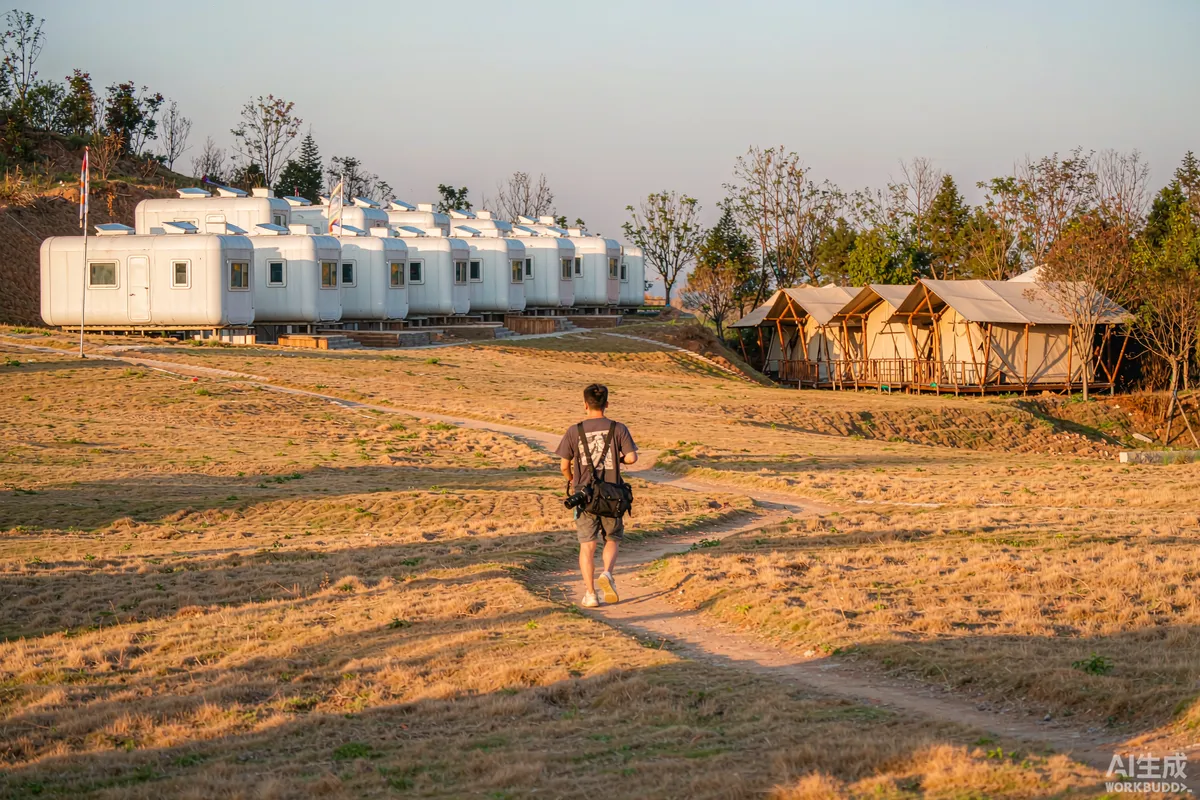
Many operators end up running both, and not by accident. Tents cover peak-season overflow at low capital cost; capsules carry the shoulder season, the longer stays and the guests who want a private bathroom. The mix also spreads risk: if canvas supply or a storm season disrupts one side, the other keeps trading.
A One-Page Way to Decide
- 1. Write your open season. Honest weeks per year, given weather and staffing.
- 2. Write your guest promise. Private bathroom and kitchen, or shared facilities and atmosphere?
- 3. Check delivery access. If a finished unit cannot reach the site, the capsule option needs a different access plan first.
- 4. Model nights, not units. Contribution per year against capital and replacement reserve.
- 5. Decide the mix. Start with the unit type that serves your highest-value nights, then add the other for peak coverage.
Where planning consent, fire safety, sanitation or accommodation licensing applies, treat the structure choice as part of that submission rather than a later add-on, and confirm expectations with the relevant local authority before you commit capital. Requirements may vary by application, market and applicable standard.
More from the Blog

Capsule Home Cost Guide: What You Really Pay in 2026
EXW, shipping, install and the hidden line items — a transparent breakdown of total landed cost.
Read article →
How to Install a Capsule Home in 3 Days: A Step-by-Step Guide
From site prep to first guest — the exact sequence our install crews follow on every deployment.
Read article →
Real Owners, Real Numbers: Success Stories
How a lakeside resort, a Spanish glamping site and a Singapore dealer hit their targets.
Read stories →Talk to the Factory
Ready to Ride the 2026 Wave?
Get the latest catalog, pricing tiers and a layout sketch for your land — straight from the engineering team.