Keeping a Capsule Home Cool: Shading, Ventilation and Glazing in Hot Climates
Glass that makes a capsule home beautiful also makes it warm. How shading, ventilation strategy and glazing specification control summer heat in a compact unit.

A capsule home with large panoramic glass gains heat faster than almost any other small building, because it has a high ratio of glazing to floor area and a low thermal mass to absorb the gain. That is the same feature that makes it worth living in. The answer is not less glass - it is shading the glass, moving air through the unit at the right times, and choosing glazing that rejects heat rather than just letting light in.
The Short Answer
Stop the sun before it reaches the glass, then remove the heat that does get in. External shading does roughly twice the work of internal blinds, because it intercepts solar radiation outside the envelope instead of trapping it between the blind and the window. Cross ventilation and night flushing clear the heat that accumulates. Glazing specification - coating, tint, double or triple glazing - determines how much of the remaining load the cooling system has to handle.
Why a Capsule Home Behaves Differently
Three properties of a compact factory-built unit shape its summer behaviour. None of them is a defect; all three need to be designed around.
- High glazing ratio. Panoramic glass is a defining feature of the Haishu A Series, and it means solar gain dominates the cooling load rather than being one contributor among several.
- Low thermal mass. A lightweight steel-and-panel structure heats up quickly in the morning. The upside is that it also cools quickly once the sun is off it.
- Large surface-to-volume ratio. More envelope per cubic metre of interior means every unshaded surface matters more than it would in a larger building.
The practical consequence is that a capsule home responds fast - to shading, to ventilation, and to the sun going down. Design for that responsiveness rather than fighting it with a larger air conditioner.
External Shading Is the First Line
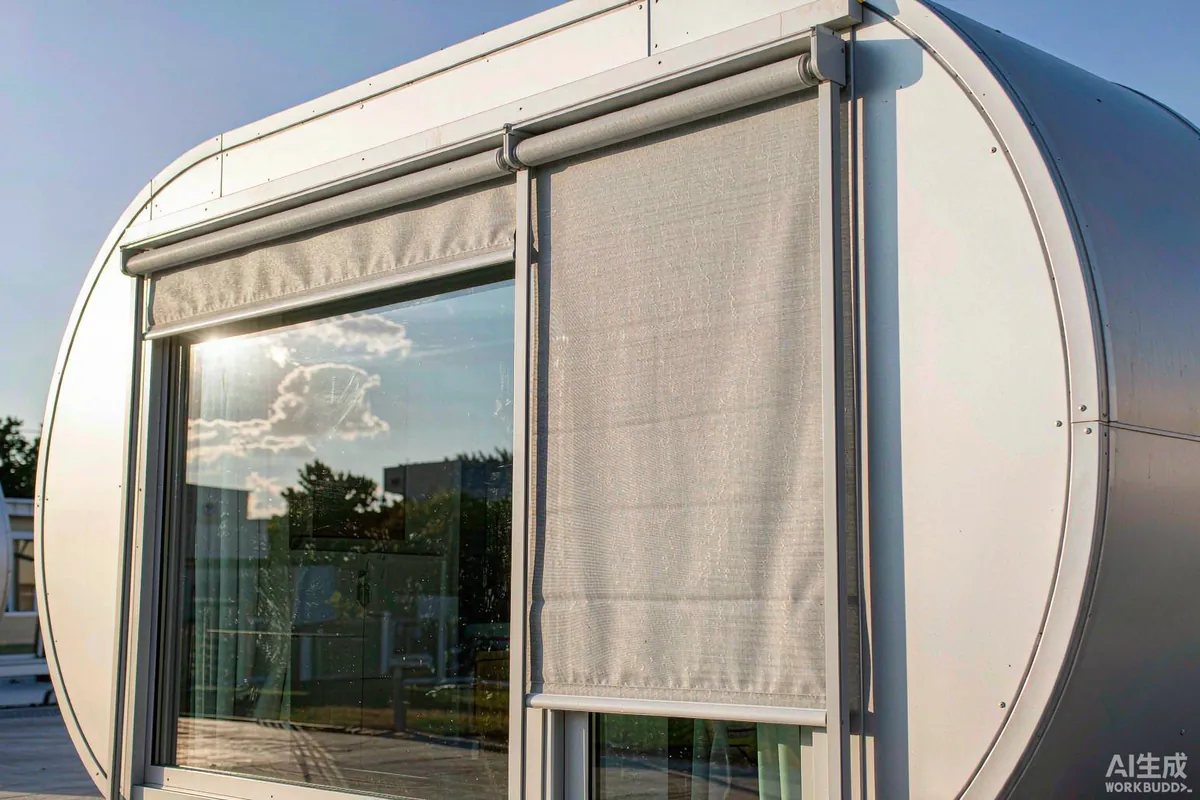
Any shading device outside the glazing stops solar radiation before it becomes heat inside. Internal blinds, by contrast, absorb radiation that has already entered and re-radiate a large part of it into the room. The difference in peak temperature is substantial and it is the single highest-value intervention in a hot climate.
| Shading type | Best for | Trade-off |
|---|---|---|
| Roof overhang or canopy | High summer sun on south-facing glazing | Fixed; sized for summer angle and may admit low winter sun, which is usually desirable |
| Vertical fins or louvres | Low east and west sun | Partially blocks view; needs orientation-specific design |
| External roller blinds | Retrofit and rental units; adjustable | Moving parts exposed to wind; needs a wind rating suitable for the site |
| Adjustable louvre screens | Units needing both view and shading | Higher cost; needs maintenance |
| Deciduous planting or pergola | Seasonal shading with summer leaf cover | Slow to establish; needs water and care |
Orientation decides which of these you need. East and west elevations receive low, intense sun that overhangs cannot block - vertical fins or blinds are the answer there. A north or south elevation, depending on hemisphere, is far easier to manage with a simple projection. Requirements may vary by application, market and applicable standard, particularly where wind loads on movable shading are concerned.
Ventilation: Move Air When It Helps
Ventilation strategy in a hot climate is about timing. Opening everything at two in the afternoon brings in air that is hotter than the interior; opening everything at nine at night replaces the day's accumulated heat with cooler air for free.
Cross ventilation
Air needs an inlet and an outlet on different sides of the unit. In a linear layout that usually means glazing or vents at both ends. The effectiveness depends on the pressure difference, so a single large opening on one side achieves much less than two smaller openings on opposite sides.
Stack ventilation
Warm air rises. A high-level vent or opening skylight lets it escape, drawing cooler air in at low level. In a double-deck unit this effect is strong, because the height difference between the lower and upper level does the work - but it only works if the upper opening is openable and the lower inlet exists.
Night flushing
In dry climates with a large day-night temperature swing, flushing the unit with night air is the cheapest cooling available. It works best with the low thermal mass of a prefab shell: the structure cools down overnight and starts the next day with a temperature advantage. It works poorly in humid climates where night air carries as much moisture as heat, and where condensation becomes the bigger problem.
Choosing Glazing for Heat, Not Just Light
Glass specification is where a lot of summer comfort is decided, and it is much cheaper to get right in the factory than to change later. The properties that matter are different from the ones people usually ask about.
- Solar heat gain control. A coating that reflects infrared while transmitting visible light reduces heat without darkening the interior. This is usually the most useful single upgrade in a hot climate.
- Double or triple glazing. Reduces conducted heat, and in a cooling-dominated climate it keeps heat out as effectively as it keeps heat in.
- Tint versus coating. Tint reduces both heat and light; selective coatings reduce heat more than light. Coatings usually win where views matter.
- Openable area. Fixed glass cannot ventilate. A panoramic wall that does not open means the cooling strategy depends entirely on the mechanical system.
- Frame conductivity. A well-specified pane in a conductive frame leaks heat around the edges. Ask about thermal breaks in the frame system.
There is a genuine trade-off with views. Aggressively tinted glass in a unit bought for its outlook is a poor exchange. Selective coatings and external shading let you keep the view and reject the heat, which is why they are usually specified together rather than either one alone.
Sizing Cooling Realistically
Once shading, ventilation and glazing have done their work, the mechanical system handles what is left. Sizing it from the glazing area alone produces an oversized unit that short-cycles, cools the air without removing humidity, and costs more to run than a correctly sized one.
- Size against the shaded load, not the unshaded one - but do not assume shading will always be deployed.
- In humid climates, prioritize dehumidification capacity. Comfort at 26°C with high humidity is worse than at 28°C with low humidity.
- Use a fan. Air movement over skin extends the comfortable temperature range by several degrees at a fraction of the energy cost.
- Think about where the condenser goes. A condenser discharging hot air into a shaded courtyard or under a deck will struggle.
Orientation and Siting Do Half the Work
The same unit on the same site can have very different summer loads depending on which way the glass faces and whether anything shades it in the afternoon. Two decisions made before delivery matter more than most of the equipment choices.
- Put the largest glazed area away from the low east and west sun where the site allows it.
- Keep the entrance and outdoor living area on the shaded side, so doors are not opened into full sun.
- Use existing trees, slope or neighbouring structures as shade rather than clearing them for the view and then paying to replace the shade.
- Provide a shaded outdoor transition zone. It keeps the entrance door cooler and gives occupants somewhere to be during the hottest hours.

Hot and Humid Is a Different Problem
Tropical and subtropical sites invert several of the assumptions above. Night flushing brings in moisture rather than relief; condensation forms on cold glazing and cold surfaces; and dehumidification, not cooling, becomes the dominant load. In those climates the priorities are a continuous moderate cooling setpoint rather than aggressive day cooling, good air movement, drainage of condensate, and careful attention to where cold surfaces meet humid air. Requirements may vary by application, market and applicable standard.
Where Haishu Fits
The A Series ships with panoramic glazing as a defining feature, and the envelope, glazing specification and shading options are set in the factory as part of a turnkey unit. That is the right moment to raise summer performance, because glazing coatings, external shading provisions and openable areas are all production decisions. Ask which glazing build-ups are available for your climate, what shading can be integrated into the shell, and how much of the glazed area can be opened for ventilation - then decide shading and orientation alongside them rather than after the unit arrives.
The Takeaway
Cool a capsule home in this order: shade the glass from outside, ventilate at the right times with a real inlet and outlet path, specify glazing that rejects heat while keeping the view, then size cooling for what remains. Orientation and siting change every one of those calculations, so decide them together. Get the sequence right and the panoramic glass stays an asset in August instead of a liability.
More from the Blog
Capsule Home Cost Guide: What You Really Pay in 2026
EXW, shipping, install and the hidden line items — a transparent breakdown of total landed cost.
Read article →
How to Install a Capsule Home in 3 Days: A Step-by-Step Guide
From site prep to first guest — the exact sequence our install crews follow on every deployment.
Read article →
Real Owners, Real Numbers: Success Stories
How a lakeside resort, a Spanish glamping site and a Singapore dealer hit their targets.
Read stories →Talk to the Factory
Ready to Ride the 2026 Wave?
Get the latest catalog, pricing tiers and a layout sketch for your land — straight from the engineering team.