How Many People Does a Capsule Home Sleep? Occupancy Planning for Buyers
How to decide what a capsule home should sleep: bed types, realistic occupancy, listing claims, service capacity, and how the A30, A50 and A70 layouts differ in practice.
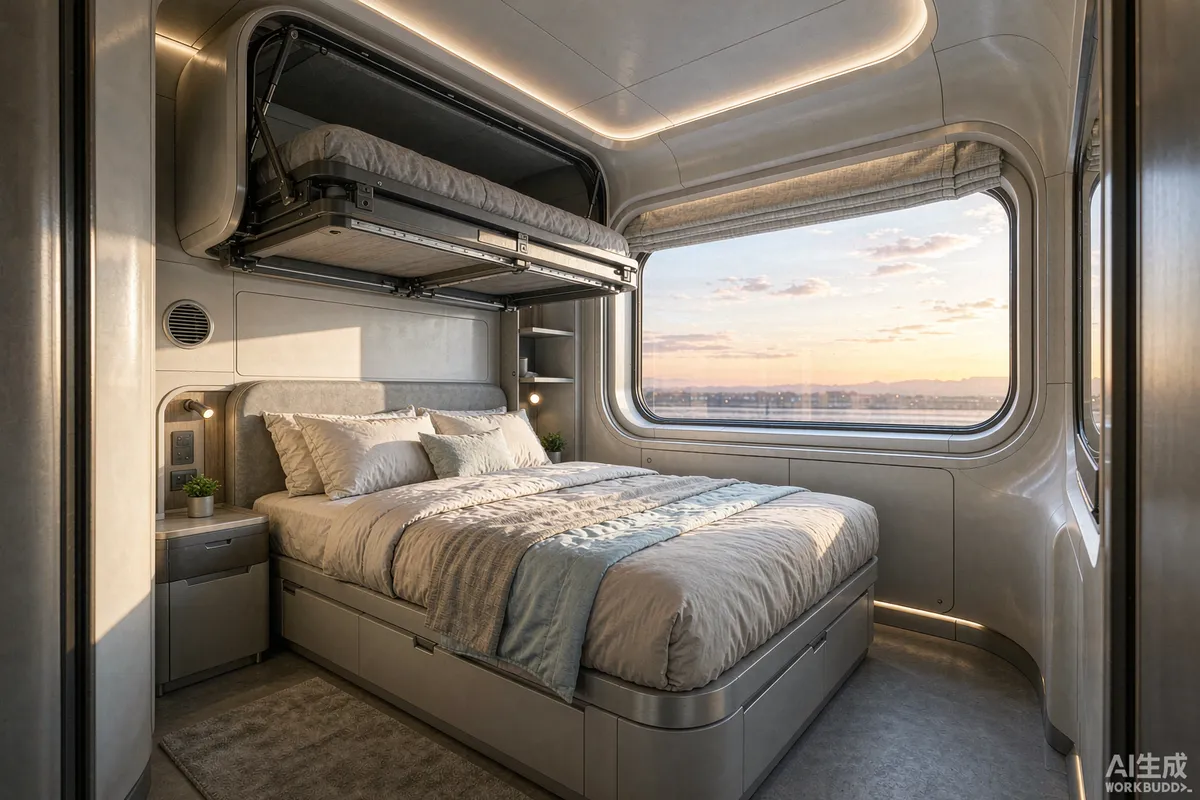
A capsule home's sleeping capacity is not the number of beds you can physically fit; it is the number of guests who can stay comfortably for the length of stay you are selling. Most units are bought for two people and then asked to host four, which is where disappointment starts. The right figure depends on the model, the bed configuration, how long guests stay, and what the unit's services can actually support. Decide it before ordering, because bed configurations, water heating capacity and storage are all specified at the same time - changing occupancy later is far more expensive than getting it right at the start.
Three Different Numbers That Get Confused
Ask three people how many a unit sleeps and you will get three answers, all defensible, all different. Separating them removes most of the confusion.
- Sleeping positions. The count of places a person could lie down, including sofa beds and bunks.
- Comfortable occupancy. The number of adults who can stay for a week without the unit feeling crowded.
- Maximum occupancy. A limit often set by safety considerations, local rules, or the operator's own policy.
Listings that advertise the first number while delivering the second generate the reviews that matter least flatteringly. Where a maximum occupancy figure is set by a local requirement or an insurer, that figure governs regardless of how many beds are fitted. Requirements may vary by application, market and applicable standard.
What Each Model Suits
Within the Galactic A series, the three sizes serve different occupancy patterns rather than simply offering more or less of the same thing.
| Model | Typical occupancy pattern | Where it fits |
|---|---|---|
| Galactic A30 | One or two guests; short stays of a night or two | Couples, solo travellers, compact sites, backyard or studio use |
| Galactic A50 | Two to three; a couple plus a child on a convertible bed | Short breaks, small families, rental fleets wanting one standard layout |
| Galactic A70 | Four or more; often arranged over two levels with separate sleeping zones | Family stays, longer bookings, flagship units in a mixed park |
The two-level arrangement available on larger models changes the question substantially. Separate sleeping zones allow an early riser and a late sleeper to coexist, which matters more on a week-long booking than on a Friday night. Two people in an A30 for one night is comfortable; the same two for ten days may not be.
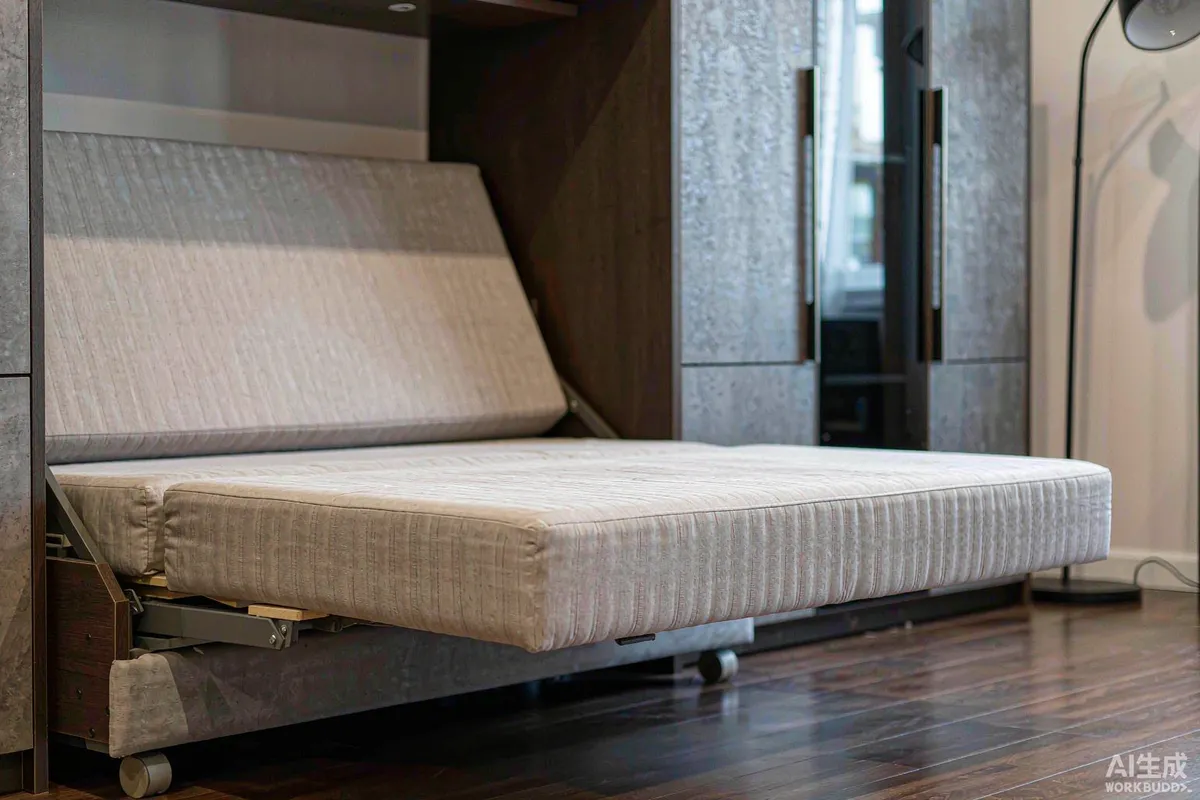
Bed Configurations and What They Cost You
Every additional sleeping position takes something away. Being explicit about the trade makes the decision easier.
- Fixed double bed. Most comfortable for two, but consumes the largest share of floor area and never converts back.
- Sofa bed. Recovers living space by day and suits children or short stays; less comfortable for an adult over a week.
- Bunk or fold-down bed. Efficient use of a small footprint, but needs clear headroom and, on upper levels, a safe access arrangement.
- Two singles. Attractive for friends or colleagues sharing, and avoids the question of who sleeps on the sofa.
- Convertible dining or bench seating. Useful as an occasional position, rarely as a regular one.
Ask for a dimensioned layout before committing, then check it against realistic furniture rather than the drawing's own scale. A bed that fits on paper may leave no route past it to the bathroom.
The Services Have to Keep Up
Occupancy is a services question as much as a floor-area one. A unit specified for two and then listed for four will show it first in water and ventilation.
- Hot water. Peak demand rises with the number of guests showering in sequence; size for the maximum you will advertise.
- Ventilation and humidity. More occupants means more moisture from cooking, showering and breathing, in a very small volume of air.
- Heating and cooling. Body heat and occupancy patterns shift the load; controls should still be simple enough for a guest to use.
- Waste and drainage. Where a unit is on a septic or shared system, occupancy assumptions were part of its design.
- Storage. Four people need wardrobe and bag space; running out of it is the most common family complaint in compact accommodation.
- Parking and outdoor space. Two extra guests usually means another vehicle and more outdoor seating.

Writing the Listing Honestly
How capacity is described drives who books and how they review. A listing that overstates occupancy attracts the wrong booking and loses the review argument immediately.
- State sleeping positions and comfortable occupancy separately if they differ.
- Name the bed configuration exactly - a double plus a sofa bed, not "sleeps four".
- Say who the extra beds suit: children, or occasional adult use.
- Photograph the sofa or bunk made up, not only folded away.
- If the unit is genuinely best for two, say so and price accordingly rather than inviting four.
Operators who under-promise on occupancy consistently outperform those who stretch the number, because the reviews that mention comfort and accuracy are the ones that drive the next booking.
Fleet Buyers: Standardise, Then Add One Exception
For a park buying several units, occupancy planning becomes a fleet question. Two configurations cover most markets better than five.
- A standard two-person unit as the volume product - simplest to clean, easiest to maintain, lowest cost per position.
- A larger family unit in smaller numbers, priced at a premium and used for longer stays.
- Identical bed configurations within each type so that linen, housekeeping routines and spare parts stay simple.
Mixing too many configurations is a common early mistake: it complicates linen stock, slows housekeeping, and makes it harder to move a booking between units when something needs maintenance.
Matching Occupancy to How You Sell
Occupancy is not only a design decision; it is a commercial one, because it determines which searches your listing appears in and what you can charge. Several practical effects follow from the number you choose.
- Guest-count filters. Booking platforms filter by number of guests. A unit listed as sleeping two will not appear in a family search for four, regardless of whether it could physically accommodate them.
- Per-guest pricing. If you charge extra beyond a base occupancy, the base figure becomes the anchor that guests compare against competing listings.
- Cleaning time and cost. Occupancy drives linen volume and turnover duration more than floor area does, so it directly affects your operating margin per booking.
- Cancellation and substitution. With a standardised fleet, a unit listed for two can absorb another two-person booking when a maintenance issue arises; unusual configurations cannot.
- Review language. Guests describe accuracy in their own terms - "as described", "tight for four" - and those phrases influence the next booking more than your own description does.
A useful exercise is to look at the searches you want to win and work backwards. If the local market is couples, an honest two-person unit with excellent finishes will outperform a stretched four-person one on both rate and occupancy. If the market is families, the larger two-level layout is usually the right product and should be specified for it from the start rather than adapted later.
Questions to Settle Before You Order
- Who is the target guest, and how long do they stay?
- What is the maximum occupancy you will advertise - and does any local requirement or insurer set a lower figure?
- Which bed configuration, and is there a dimensioned layout to check it against?
- Are hot water, ventilation and storage sized for that maximum?
- Where do bags, coats and outdoor kit go at full occupancy?
- Is there seating - indoors and out - for everyone at once?
Answer those six and the model choice usually becomes obvious. Buyers who skip them tend to buy the larger unit defensively, which costs more per unit and often solves the wrong problem.
More from the Blog

Capsule Home Cost Guide: What You Really Pay in 2026
EXW, shipping, install and the hidden line items — a transparent breakdown of total landed cost.
Read article →
How to Install a Capsule Home in 3 Days: A Step-by-Step Guide
From site prep to first guest — the exact sequence our install crews follow on every deployment.
Read article →
Real Owners, Real Numbers: Success Stories
How a lakeside resort, a Spanish glamping site and a Singapore dealer hit their targets.
Read stories →Talk to the Factory
Ready to Ride the 2026 Wave?
Get the latest catalog, pricing tiers and a layout sketch for your land — straight from the engineering team.