Signage and Wayfinding for a Capsule Home Park: What Guests Actually Need
Plan signage, unit numbering and wayfinding for a capsule home park - what goes where, how to handle night arrivals, and the mistakes that generate guest calls.
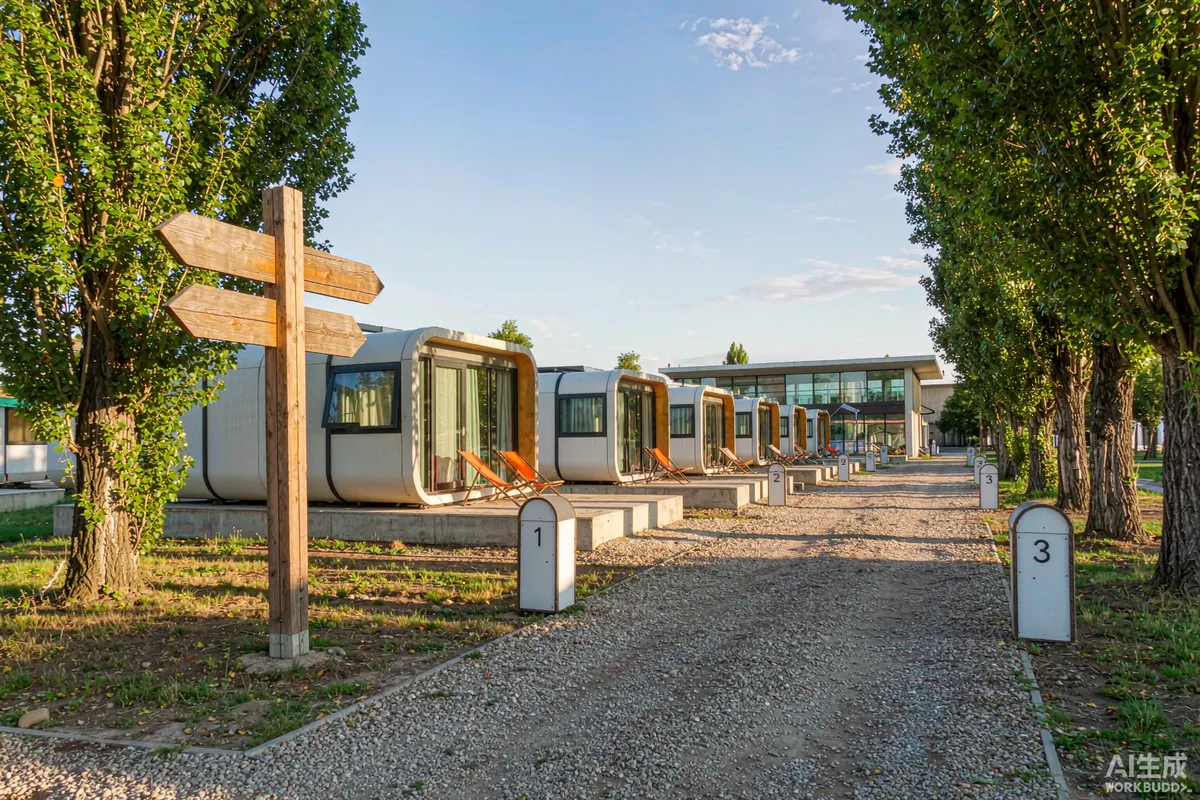
Good wayfinding on a capsule home site does three jobs: it gets a first-time visitor to the right unit without calling you, it keeps vehicles on the surfaces you built for them, and it tells people where to go in an emergency. Almost every guest call that starts with "we can't find..." is a wayfinding failure rather than a guest failure.
The solution is not more signs. It is the right sign in the right place, at the moment a decision has to be made - and a numbering scheme that a tired person can follow in the dark.
Four Layers of Signage
Think of signage as a sequence that matches the journey, not as a list of things to buy.
- Approach and entrance. Whatever tells a driver they have arrived and where to pull in. This is the highest-value sign on the site, because an error here sends everyone wrong.
- Route and decision points. A sign at every fork, turn and junction - placed before the junction, not after it.
- Unit identification. A clear, visible marker at each unit, readable from the path and from a vehicle at low speed.
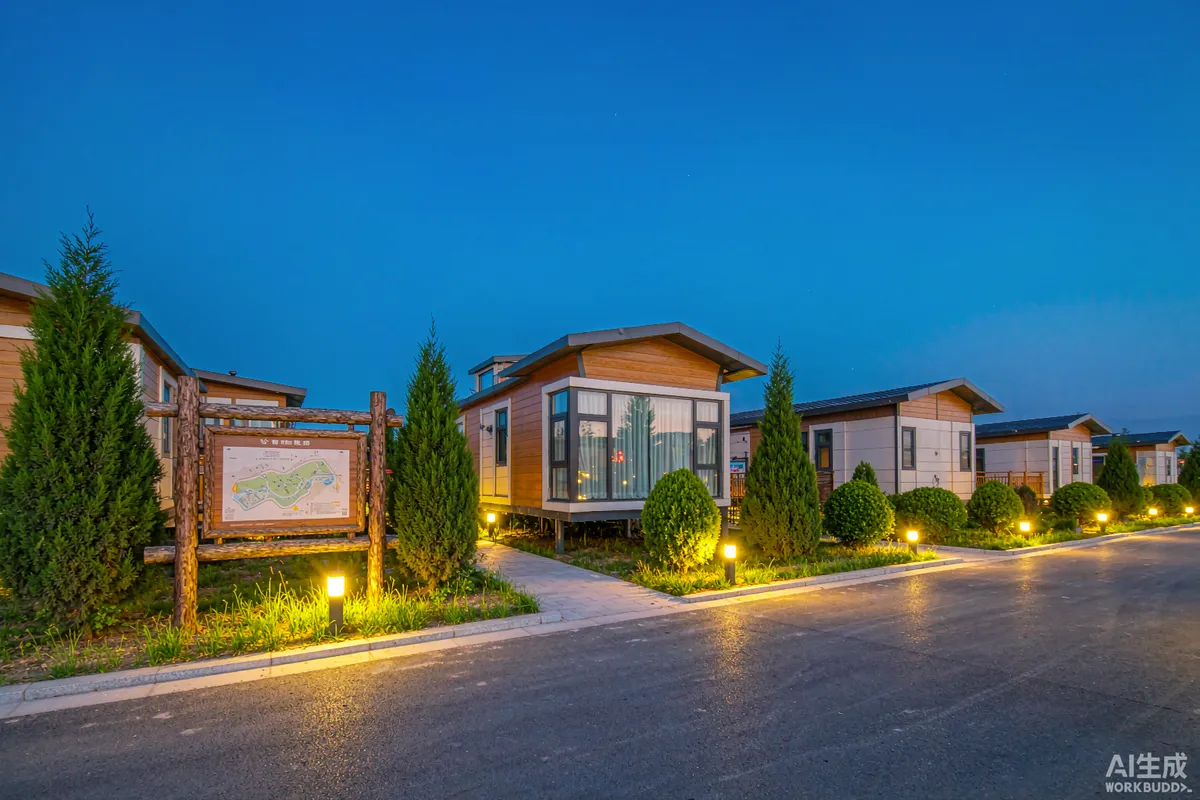
- Safety and orientation. Emergency assembly point, fire extinguisher locations, site map, and any notice your insurer or local authority asks for.
If a budget forces you to prioritise, spend it on the entrance and the unit markers. A beautifully designed site map at reception does nothing for a guest who is already standing outside the wrong unit.
Unit Numbering: Design It for Expansion
The numbering scheme you choose on day one has to survive the day you add units. Sequential numbering is simple but breaks when you insert a unit between two others; grid or zone-based schemes survive growth better.
- Zone plus number (for example a zone letter and a unit number) makes insertion easy and helps guests orient themselves.
- Logical order along the route - if the numbers follow the path a guest walks, nobody has to work it out.
- Avoid numbers that are easily confused when read at a distance or in poor light.
- Use the same identifier everywhere - sign, key safe, booking confirmation, house manual, utility meter label. A unit known as "3" to guests and "C-03" to maintenance will cause errors.
- Record the mapping between your physical numbering and your booking system, in writing, before the first season.
Night Arrivals Are the Real Test
Most arrival problems happen after dark, and most sites are designed by people who walked them in daylight. Do a night walk before opening, and again after any layout change.
- Markers need contrast or illumination, not just size.
- Path edges should be visible so guests do not cut across planting or trip at a level change.
- The entrance needs to be identifiable from the road at night - this is where a modest amount of lighting pays for itself.
- Reception or key collection must be obvious to someone who has never been there and cannot see the site layout.
- Reflection and glare from glazing can make a lit sign unreadable; check sightlines from the approach.
Walk it yourself, at night, with the luggage you expect a guest to carry. Anything you stumble over is something a guest will report.
Materials and Durability
Exterior signage sits in the same weather as the units and needs to be specified accordingly. Coastal, high-UV and freeze-thaw environments each punish different materials.
| Material | Character | Watch for |
|---|---|---|
| Timber | Warm, suits natural settings | Needs periodic refinishing; check fixing points |
| Metal (coated steel or aluminium) | Crisp, durable, modern | Coastal corrosion; check coating specification |
| Composite or laminate panel | Stable, printable | Edge sealing and UV fading over time |
| Recycled plastic board | Low maintenance, weather stable | Less rigid on large spans |
| Painted masonry or stone | Permanent, substantial | Cost and permanence - do not use where plans may change |
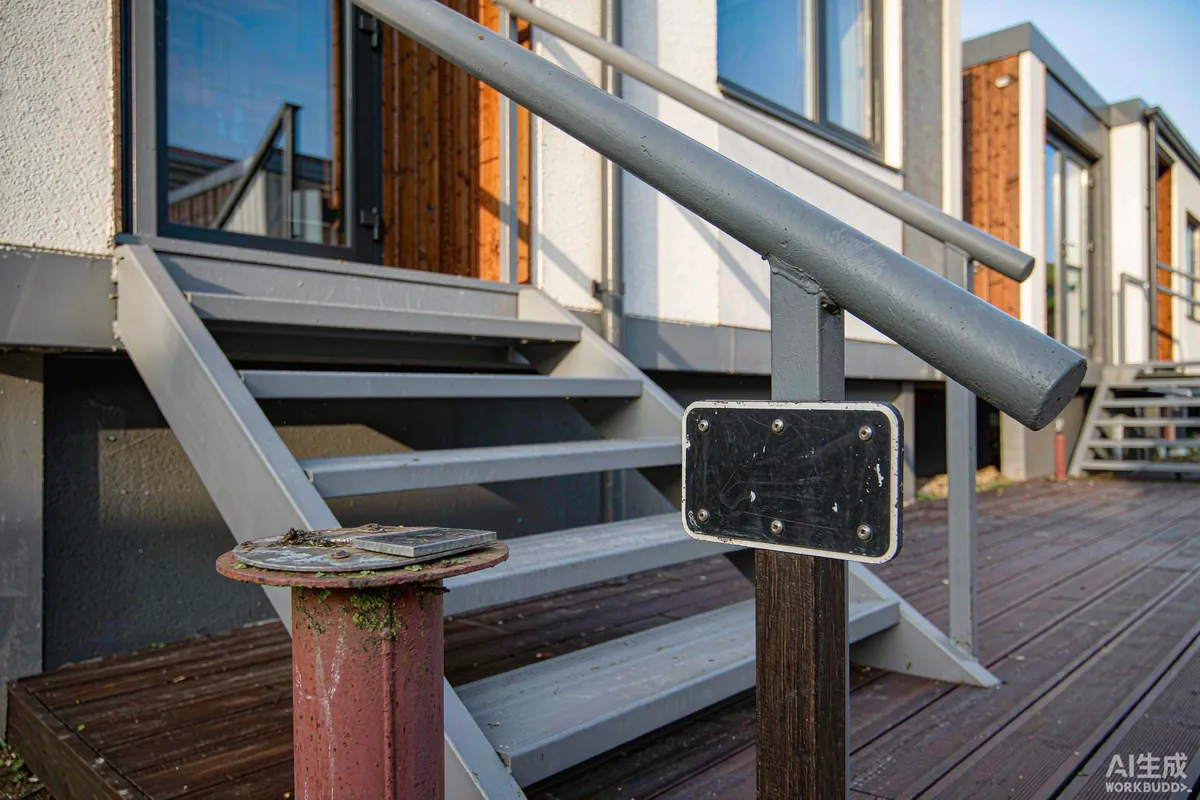
Fixings fail more often than faces. Whatever material you choose, specify fixings appropriate to the substrate and the exposure, and check them annually - a sign hanging by one screw is worse than no sign.
Readability, Language and Accessibility
A sign that is stylish but unreadable has failed. Keep the hierarchy simple: one main message per sign, large enough to read from the distance at which the decision is made.
- Use high contrast between text and background; avoid low-contrast colour combinations that photograph well but read badly.
- Keep one idea per sign. A sign that says four things gets none of them across.
- Consider pictograms for facilities, which cross language barriers.
- Where guests arrive from several countries, consider whether a second language is needed on safety signage.
- Place key signs at heights that work for wheelchair users and children, not only for standing adults.
- Do not rely on colour alone to convey meaning, for the benefit of colour-blind visitors.
Mistakes That Generate Guest Calls
- Relying on the booking app. Mobile coverage at your site is probably better than it was, and still not reliable enough to be the only wayfinding.
- Signs placed after the junction rather than before it.
- Numbering that does not match the confirmation email.
- Over-signing. Too many signs and guests stop reading any of them.
- Signs obscured by planting that has grown since installation - schedule an annual visibility check.
- No sign at the point where the path leaves the parking area. This single omission causes a disproportionate share of confusion.
- Temporary handwritten signs left in place through a whole season.
Safety and Regulatory Signage
Beyond helping guests find their unit, some signage exists because somebody requires it - fire assembly points, extinguisher locations, emergency contact details, capacity or occupancy notices, and anything your insurer specifies. What is required depends on how your site is classified and where it operates.
Ask your local authority and your insurer what they expect, and document what you install. Requirements may vary by application, market and applicable standard.
Phasing the Install
You rarely need every sign on the day you open, and you rarely know on that day exactly where the awkward decision points will turn out to be. A phased approach avoids spending money on signs that need moving once real guests start arriving.
- Phase one, before opening: entrance sign, route signs at the obvious decision points, and a unit marker on every unit. This is the minimum that lets a stranger arrive successfully.
- Phase two, after the first season: add signage where guests actually got lost - which you will know from the calls you took and the questions in reviews.
- Phase three, with expansion: extend the numbering scheme, add zone markers, and replace anything temporary that has quietly become permanent.
Resist the temptation to make phase one permanent-looking before it is proven. A modest marker that can be moved is better than a handsome masonry sign in the wrong place.
A Rollout Checklist
- Walk the arrival route as a first-time guest, in daylight and after dark.
- List every decision point and place a sign before each one.
- Choose a numbering scheme that survives expansion, and use it everywhere.
- Match physical numbering to the booking system, in writing.
- Specify materials and fixings for your exposure - coastal, UV, freeze-thaw.
- Check readability: contrast, size, one message per sign, pictograms where useful.
- Confirm required safety signage with your authority and insurer.
- Schedule an annual visibility and fixing inspection, including after planting growth.
Wayfinding is one of the cheapest parts of a park to get right and one of the most irritating to get wrong. It costs a fraction of a unit, and it determines whether a guest's first ten minutes on site feel welcoming or lost.
More from the Blog

Capsule Home Cost Guide: What You Really Pay in 2026
EXW, shipping, install and the hidden line items — a transparent breakdown of total landed cost.
Read article →
How to Install a Capsule Home in 3 Days: A Step-by-Step Guide
From site prep to first guest — the exact sequence our install crews follow on every deployment.
Read article →
Real Owners, Real Numbers: Success Stories
How a lakeside resort, a Spanish glamping site and a Singapore dealer hit their targets.
Read stories →Talk to the Factory
Ready to Ride the 2026 Wave?
Get the latest catalog, pricing tiers and a layout sketch for your land — straight from the engineering team.