Adding Capsule Homes to an RV Park or Campground
Campgrounds and RV parks can add capsule cabins without rebuilding the site. Here is what to plan for hookups, layout and operations.
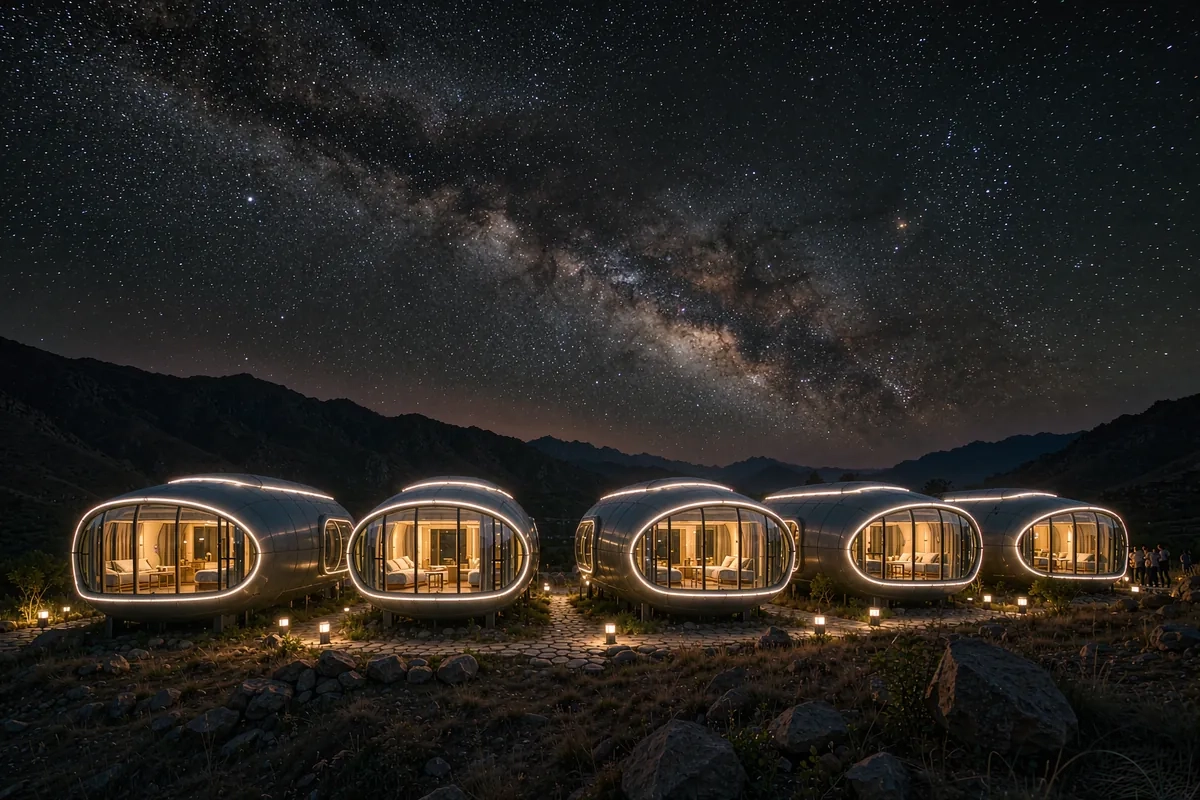
An established RV park or campground already has the hard part: land, access, services infrastructure, a booking channel and guests. Adding capsule cabins to that existing operation is one of the lower-risk ways to diversify - it reaches guests who do not own a recreational vehicle, fills shoulder-season gaps and lifts revenue per site without rebuilding the park.
The short answer: place cabins where the service runs are short, keep them out of the vehicle circulation pattern, decide deliberately what each cabin replaces, and treat the pedestal and drainage connection as an engineered item rather than an extension lead. Do that and the addition is incremental. Skip the circulation question and it starts affecting the pitches you already sell.
What Cabins Add to a Park
- A new guest segment - visitors without a vehicle, and travellers who want a roof without towing one.
- Shoulder-season demand - a heated, insulated cabin sells in months when a pitch does not.
- Higher revenue per footprint where the park is capacity constrained.
- Longer average stays in some markets, particularly for couples and remote workers.
- A distinct listing on booking platforms, which widens the park's reach.
The counterweight is that a cabin occupies ground that currently sells as a pitch. The economics only work if the cabin returns more than the pitch it displaced - which is a calculation, not an assumption.
Siting Within an Existing Layout
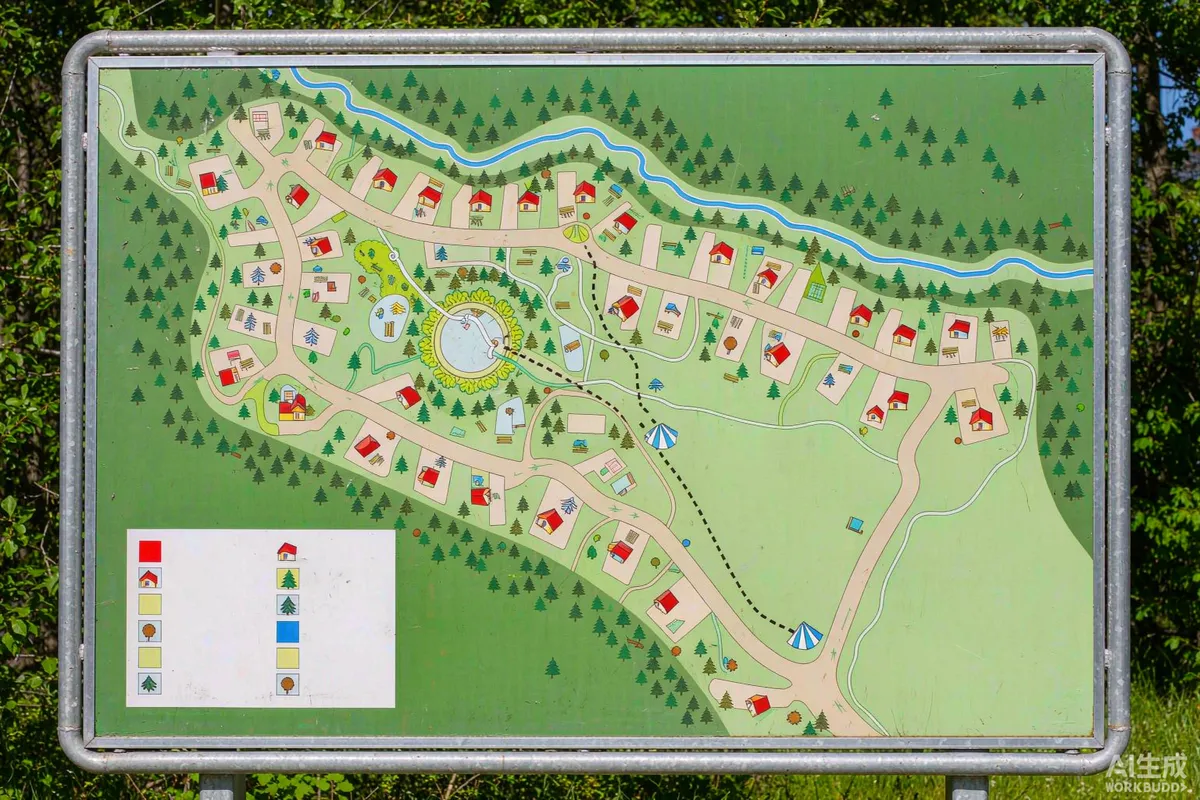
Existing parks are tightly optimised. Fitting cabins in means working with the circulation pattern that already exists.
| Location type | Advantages | Watch for |
|---|---|---|
| Convert the least popular pitches | Services already present; minimal new infrastructure | Losing capacity that already sells in peak season |
| Perimeter or wooded edge | Privacy, attractive setting, no disruption to circulation | Longer service runs; delivery access through the park |
| Underused corner or overflow area | Adds capacity rather than replacing it | May have poor drainage or awkward access |
| Near amenity block | Short service runs; guests accept the walk | Noise and foot traffic around the cabin |
Whichever you choose, keep cabins out of the turning and reversing paths of large vehicles. A cabin that forces a rig to make an extra manoeuvre will be hit within a season.
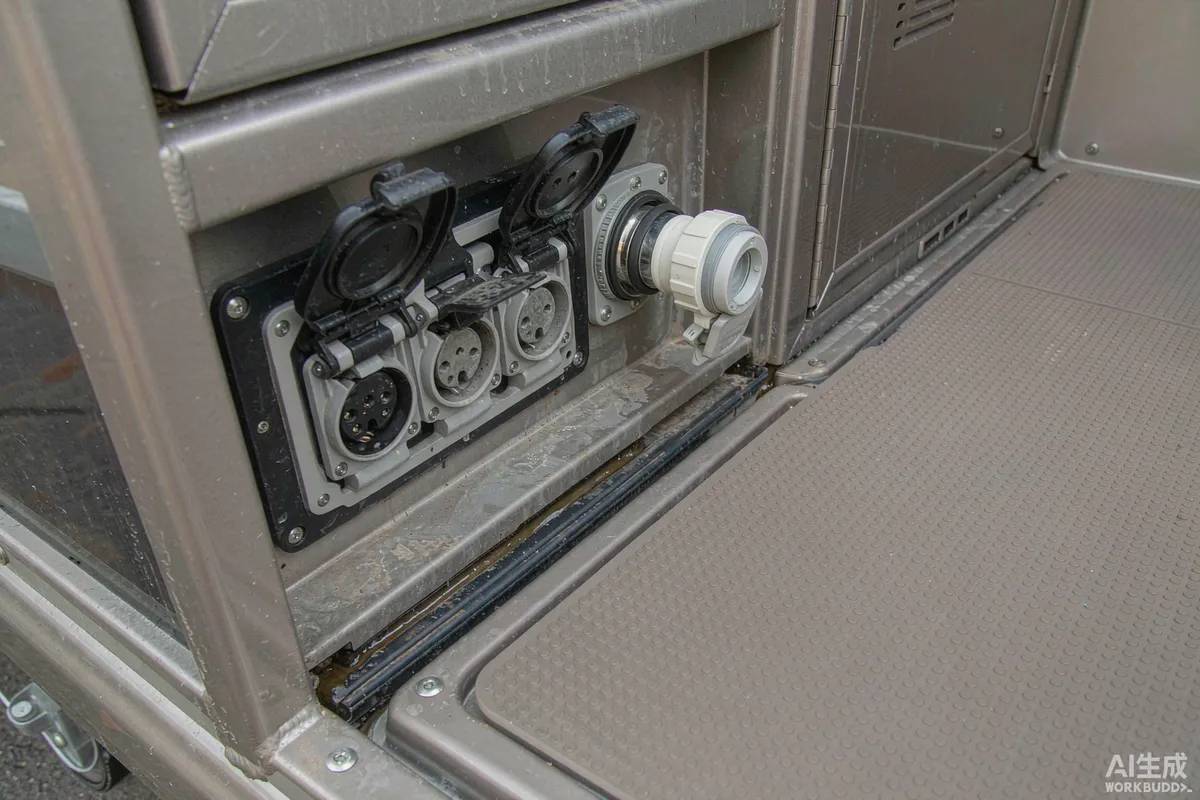
Hookups and Services
This is the part most likely to be underestimated. A cabin is a continuous load with different characteristics from an intermittent pitch connection.
- Power - confirm the pedestal rating, the protection devices, the cable route and whether the park's main supply has spare capacity.
- Water - a frost-protected connection if the park operates in winter, with isolation and a backflow prevention device as required.
- Drainage - cabins produce continuous wastewater; confirm the connection and the park's treatment capacity.
- Data - cabins are often expected to have usable internet; test coverage at the specific location.
- Metering - decide whether utilities are included or metered, and make it easy to read.
Confirm the total connected load against the park's supply before ordering multiple cabins. Adding several units at once frequently reveals a capacity ceiling that was never visible one pitch at a time.
Operational Fit
Cabins change the housekeeping pattern more than anything else. A pitch is reset in minutes; a cabin has a bed, a bathroom, a kitchenette and surfaces - and guests hold it to a higher standard than they hold a pitch.
- Turnaround time - plan the changeover window realistically, and check it against your arrival pattern.
- Linens and consumables - a new inventory category with its own storage and laundry requirement.
- Maintenance - cabins have appliances, plumbing and sealed glazing to maintain.
- Staff skills - cleaning and light maintenance rather than groundskeeping.
- Winterisation - if the park closes, cabins need a proper shutdown procedure.
Getting Them Onto the Site
Delivery through an operating park needs planning, because the obstacles are the park's own assets.
- Survey the route with the actual vehicle dimensions - width, length, height and turning circle.
- Check overhead clearance - trees and service drops along internal roads.
- Check ground bearing - grassed and gravel areas may not carry a loaded delivery or a crane.
- Confirm crane standing - firm, level ground within reach of the final position.
- Schedule around occupancy - a lift over guest pitches is a safety and a reputational issue.
- Plan the overrun - where the unit is set down if the final lift is delayed.
Positioning and Booking
Cabins should not simply appear on the same listing as pitches with a higher price. They attract a different guest, and listing them as a distinct product usually performs better than mixing them into one inventory.
- List them separately with their own photographs, amenities and description.
- Set the minimum stay deliberately. Cabins often suit two-night stays where pitches suit one.
- Price against local cabins and cottages, not against your own pitches - the guest is comparing different things.
- Decide the cancellation and cleaning policy before launch, and state it clearly.
- Use the cabins to extend the season rather than to discount the peak.
- Watch the occupancy interaction - if cabins cannibalise pitch bookings at peak, revisit the pricing.
The cannibalisation question is real and worth monitoring. Cabins that fill in shoulder season are an unambiguous gain; cabins that simply move a peak-season guest from a pitch to a cabin at a lower margin are not.
Two Details Guests Notice Immediately
Guests judge a cabin on things a park operator may never think about, and both are cheap to get right at specification stage. The first is sound: a cabin near a road, a generator or a late-night amenity block reviews badly no matter how it looks. The second is light - both the daylight the glazing admits and the glare from neighbouring security lighting at night. Walk the chosen position at night before finalising it, and choose blackout provision for the glazing. Neither detail costs much, and both appear in reviews within the first month.
Setbacks, Fire and Approvals
Parks have spacing rules for good reasons, and cabins are a different fire and occupancy case from recreational vehicles. Expect questions about separation distance between units, distance from propane storage, emergency vehicle access and occupancy limits per unit. Requirements may vary by application, market and applicable standard. Confirm them with the local authority and the park's insurer before placement - the insurer's view on a new structure type is often the overlooked one.
How Many to Add
Start small. Two to four cabins let you test demand, refine the housekeeping routine and learn what guests actually ask for, without risking the core pitch business. If they perform, the second phase is far easier to justify - and far easier to specify, because you will know what the first units taught you. Parks that add cabins in one large phase tend to discover their operational mistakes at scale.
A Planning Checklist
- Identify which pitches or areas the cabins will occupy, and what that displaces.
- Check the park's electrical and drainage capacity for the whole intended phase.
- Confirm cabin setbacks, separation and emergency access with the authority.
- Survey the delivery route with real vehicle dimensions.
- Budget housekeeping time and linen inventory as a new cost line.
- Decide the winterisation procedure if the park closes seasonally.
Done in that order, cabins extend a park's season and its market without putting the existing business at risk - which is the whole point of adding them.
More from the Blog
Capsule Home Cost Guide: What You Really Pay in 2026
EXW, shipping, install and the hidden line items — a transparent breakdown of total landed cost.
Read article →
How to Install a Capsule Home in 3 Days: A Step-by-Step Guide
From site prep to first guest — the exact sequence our install crews follow on every deployment.
Read article →
Real Owners, Real Numbers: Success Stories
How a lakeside resort, a Spanish glamping site and a Singapore dealer hit their targets.
Read stories →Talk to the Factory
Ready to Ride the 2026 Wave?
Get the latest catalog, pricing tiers and a layout sketch for your land — straight from the engineering team.