Turnover Day: Housekeeping and Operations for a High-Occupancy Capsule Rental
Short-stay rental economics depend on how fast and how well a unit can be turned around. The routines, layout decisions and stock levels that make capsule home turnover work.
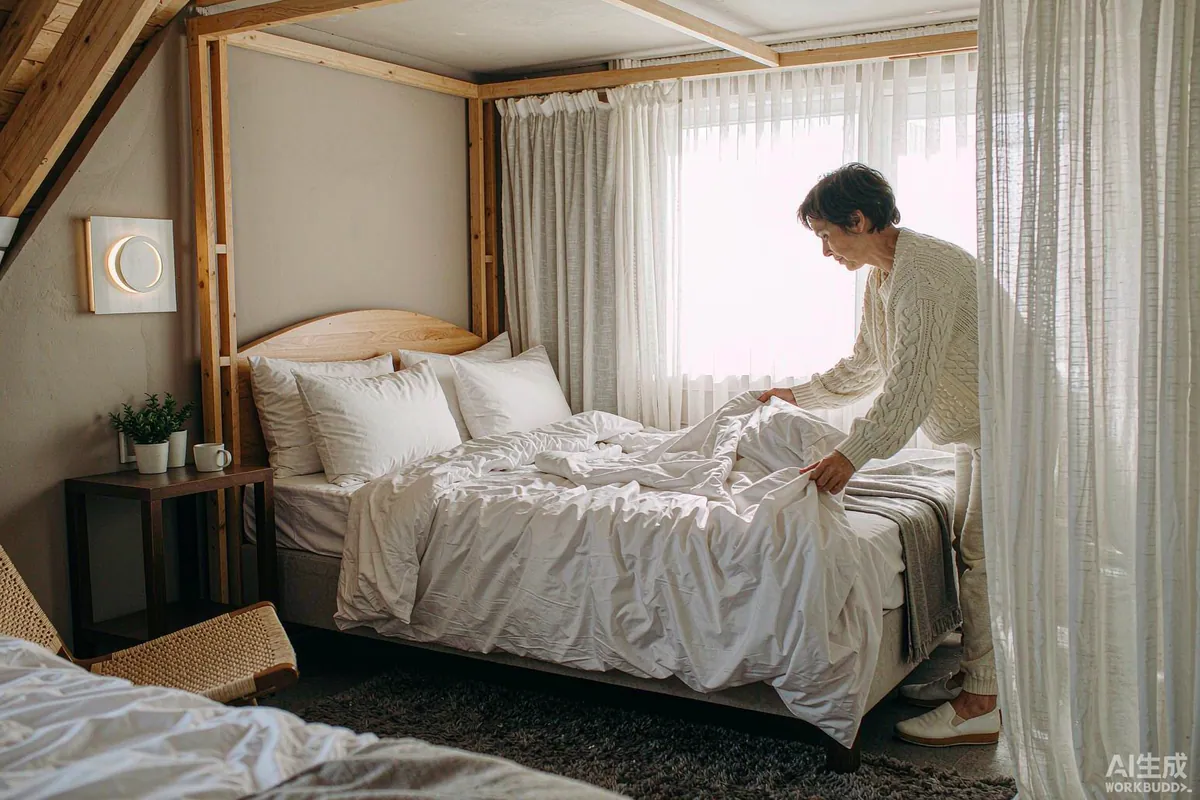
A capsule home rented by the night earns money only when it is occupied, which makes the hours between checkout and check-in the most valuable unproductive time in the business. A compact unit is genuinely faster to turn around than a house - less floor, fewer surfaces, one bathroom - but only if the layout, the stock and the routine are designed for it. Most operators discover the bottlenecks in month two rather than planning for them in week one.
The Short Answer
Design the unit so cleaning is a single pass rather than a circuit, hold linen at roughly three sets per bed, keep consumables on the unit rather than in a central store, separate the damage check from the clean, and write the routine down so it does not depend on one person's memory. Then measure the actual turnaround time and staff against it, because occupancy assumptions that ignore changeover time are the ones that fail.
Where Turnover Time Actually Goes
Operators tend to assume cleaning dominates. In practice the time splits across several activities, and the non-cleaning ones are usually the easiest to compress.
| Activity | Typical share | How to reduce it |
|---|---|---|
| Linen strip and remake | Large | Fitted or zip bedding; a clear place for used linen at the door |
| Bathroom and wet room | Large | Wall-hung fixtures, minimal ledges, squeegee and a fixed product set |
| Surfaces and floors | Medium | Fewer horizontal surfaces to clear first |
| Consumables and restaging | Medium | Stock stored in the unit, in one labelled cupboard |
| Damage and inventory check | Small but critical | A fixed photo routine at the same points every time |
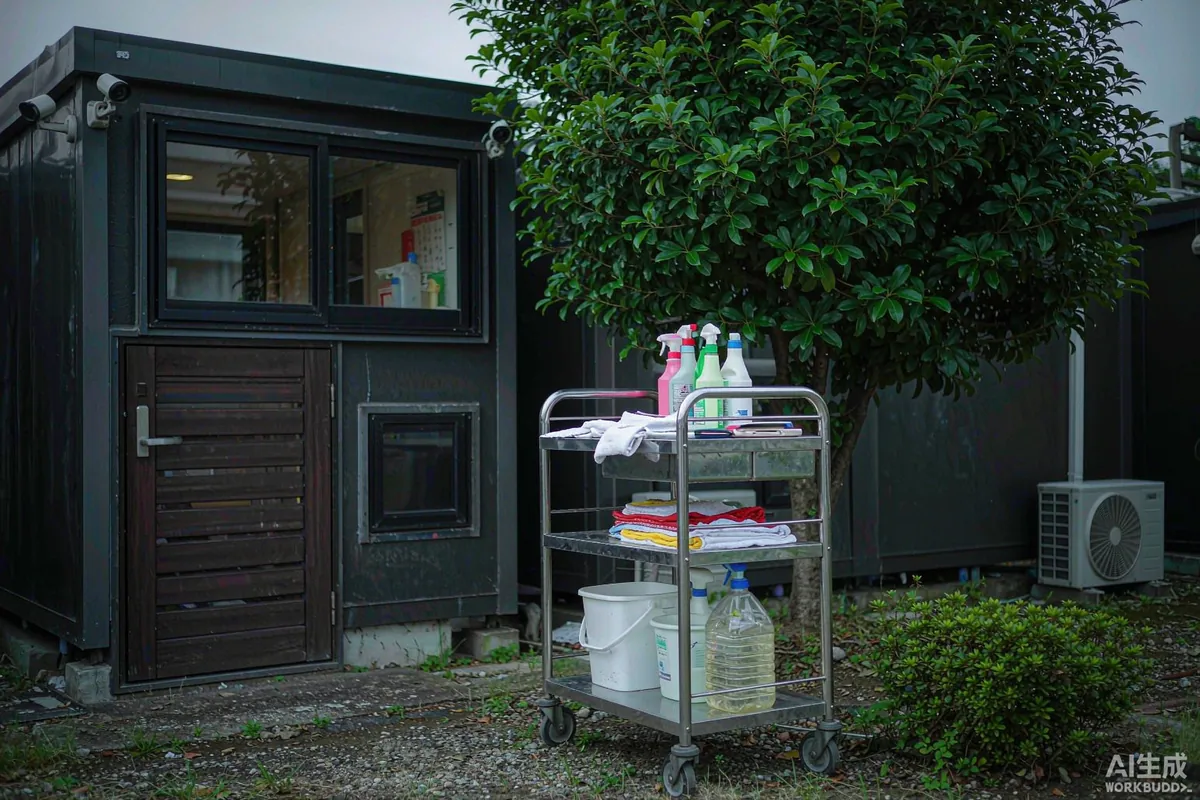
| Travel and access | Variable, often significant | Cluster units; keep a trolley or kit at the unit |
The last row is the one that surprises people. On a scattered site, walking time between units can exceed the cleaning time inside them. Clustering units and storing the kit on site converts travel into a few steps.
Layout Decisions That Speed Up Cleaning
Most turnover problems are layout problems that were decided before anyone thought about housekeeping. These are the choices worth making at the specification stage.
- Wall-hung sanitaryware and a floor-level shower. A wet room with nowhere for water to pool and no pedestal to clean around is faster than any alternative.
- Fewer horizontal surfaces. Every shelf, ledge and side table has to be cleared before it can be wiped. Open shelving is faster to clean than closed, but collects more dust.
- A clear drop zone at the entrance. Coats, shoes, keys and used linen need one place. Without it, they spread.
- Bedding that goes on in one motion. Fitted sheets and duvets with a single closure, or zip-on systems, remove the most fiddly part of the job.
- Dark grout, matt finishes, mid-toned floors. Not aesthetic advice - maintenance advice. Surfaces that show every water spot cost time every single turnover.
- Accessible service points. Filter changes and drain checks get skipped if they require dismantling joinery.
Linen: How Many Sets You Actually Need
Linen is the classic bottleneck, because it leaves the site. One set on the bed, one in the wash, one clean and ready - three per bed - is the standard working minimum, and four is more comfortable if laundry turnaround is slow or outsourced. On a multi-unit site, the calculation is per bed plus a buffer for peak changeover days when several units turn simultaneously.
- Count changeover days, not units. If six units all turn on Saturday, you need six sets in the buffer, not one.
- Decide in-house or outsourced laundry early. In-house is faster per cycle but needs space, water and drainage; outsourced is simpler but needs a bigger buffer.
- Standardise across units. One linen size across the fleet means any set fits any unit and no one sorts.
- Keep a labelled damaged-linen bag. Items get retired rather than quietly put back on a bed.
Where the unit is a double-deck model with sleeping on two levels, remember that beds on different levels still each need their own set, and that used linen has to travel down a stair. Plan where it is collected from.
Consumables and Restaging
Restaging - putting the unit back into the state a guest first saw - takes longer than most operators budget, because it involves decisions rather than motions. Reduce the number of decisions.
- Keep a fixed par level per unit, written on the inside of the storage cupboard door.
- Photograph the staged unit once and use the photograph as the reference. It ends arguments about how things "usually" look.
- Store consumables in a single labelled cupboard in the unit rather than centrally.
- Buy in the packaging sizes you dispense from, if possible, to avoid decanting time.
- Restock at the end of the clean, in the same order every time, so nothing is forgotten.
The Damage and Inventory Check
Separate this from cleaning. When it is folded into the clean, it gets skipped on busy days - which is exactly when it matters most.
- Take photographs at the same fixed points after every checkout. Same angles, same five or six shots.
- Check the things that break: shower screen, door seals, window catches, appliance doors, chair legs, remote controls.
- Check the things that disappear: kettle, hairdryer, adapter, umbrella, instructions folder.
- Log everything the same day, with the booking reference. A damage claim made three weeks later is much harder to support.
- Fix small things immediately. A catch that sticks will be reported by the next guest as a review rather than a maintenance note.
Photographic records also protect the operator against false claims, which is a real cost at high occupancy. They cost two minutes per turnover.
Writing the Routine Down
A routine that lives in one experienced person's head is a single point of failure. Write it as a checklist with an order, not as a description.
- One pass, one direction: start at the door, finish at the door.
- Wet areas before dry areas, so you are not re-cleaning.
- High surfaces before low ones.
- Damage check before restaging, so replacements go out once.
- Final walk-through from the entrance, looking at what a guest sees first.
Put the checklist in the unit, laminated. New staff, contractors and cover cleaners all perform better with it, and the unit cleans the same way whoever does it.

What Changes at High Occupancy
At 40% occupancy, problems are absorbed by slack time. At 80% and above, they are not, and a few specific practices start to matter.
- Same-day turns are the norm. Linen buffer, kit location and checklist all have to work without a gap between checkout and check-in.
- Preventive maintenance moves to a schedule. Filters, seals, drains and appliances get checked on a calendar, not when they fail.
- Wear shows faster. Plan a refurbishment cycle for soft goods and high-touch surfaces rather than reacting to complaints.
- Deep cleans need booking. A quarterly deep clean does not happen by accident when the calendar is full; put it in as a blocked night.
- Spare units matter. If one unit goes out of service for a week at 85% occupancy, the lost revenue exceeds almost any repair saving.
Choosing Units for Rental Operation
For rental use the interior specification matters more than the size. A compact A30 or A50 turns over faster than a large A70 and is easier to keep at high occupancy with short stays; the A70 earns its place for families and longer bookings, where the extra space supports a higher rate and a longer average stay. Many operators run a mix and let the booking pattern decide.
What helps across the range is consistency. Haishu's A Series shares a common interior logic across A30, A50 and A70, so a housekeeping routine, a linen set and a consumables list can be nearly identical from unit to unit. That consistency is worth more in daily operations than almost any individual feature, because it means staff do not have to relearn the unit every time they walk into a different one.
The Takeaway
Turnover is an operating system, not a cleaning task. Design the unit so it can be cleaned in one pass, hold three to four linen sets per bed, keep the kit and the consumables at the unit, separate the damage check from the clean, and write the routine down. Then measure the real changeover time and set your occupancy targets around it - because the nights you cannot sell are the nights spent turning the unit around.
More from the Blog

Capsule Home Cost Guide: What You Really Pay in 2026
EXW, shipping, install and the hidden line items — a transparent breakdown of total landed cost.
Read article →
How to Install a Capsule Home in 3 Days: A Step-by-Step Guide
From site prep to first guest — the exact sequence our install crews follow on every deployment.
Read article →
Real Owners, Real Numbers: Success Stories
How a lakeside resort, a Spanish glamping site and a Singapore dealer hit their targets.
Read stories →Talk to the Factory
Ready to Ride the 2026 Wave?
Get the latest catalog, pricing tiers and a layout sketch for your land — straight from the engineering team.