Can You Move a Capsule Home Once It Is Installed? A Relocation Guide
Need to relocate an installed capsule home? What has to be disconnected, how the lift and transport work, and when moving costs more than it is worth.
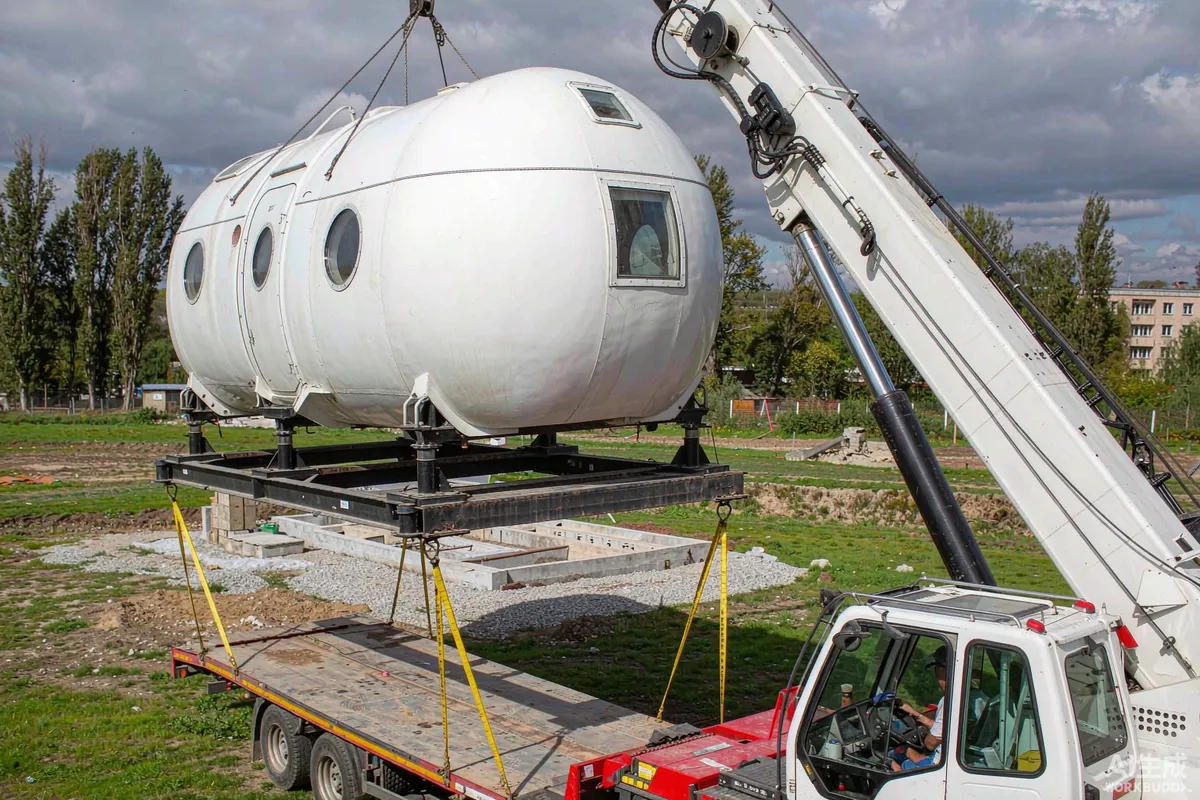
Yes - in most cases an installed capsule home can be lifted, transported and reinstalled. The unit was built to be handled, and that is precisely why it can be moved again. But relocation is a project with its own costs, permits and risks, not a formality. Whether it is worth doing depends on the distance, the access at both ends, and how much of the site work you can reuse.
The short answer for buyers: assume that moving a unit costs a meaningful fraction of what it cost to install it the first time, that it takes the unit out of service for a period, and that the second site has to be prepared before the first one is dismantled. Plan it as a project, and it usually goes well. Treat it as an afterthought, and it becomes expensive.
Why Operators Move Units
Relocation is rarely the original plan. It usually follows a change in circumstances, and recognising which kind of change you are dealing with helps you decide whether moving is the right response.
- A lease or licence ends. The land arrangement was always temporary and is not renewed.
- A pilot site proves the concept. Units placed to test demand are moved to a permanent location once the numbers are known.
- Demand shifts within a site. A unit that performs poorly in one position may do better nearer a view, a path or a facility.
- The site is redeveloped or re-zoned, and the units have to come out before work starts.
- An owner-occupier relocates and wants to take the unit rather than sell it.
- Seasonal repositioning. Some operators move units between summer and winter positions; this only makes sense over short distances.
In each case the decision is the same one: compare the cost and downtime of moving against the cost of selling the unit in place and buying another at the destination. Freight over a long distance can erase the difference, while a move within one property is usually clearly cheaper than replacement.
What Has to Be Disconnected First
Nothing lifts until every connection is released and capped. This is the part that is most often underestimated, because the connections that were quick to make on installation day now have to be undone safely.
- Electrical supply - isolated at the source, then disconnected and the cable end made safe.
- Water supply - shut off and drained, with the pipework protected against freezing if the unit will stand through cold weather.
- Drainage and waste - capped at both sides so that nothing is left open at the old site.
- Data and communications - any hard-wired cable released and its route recorded.
- Gas, where present - isolated by a qualified person, not by whoever is on site that day.
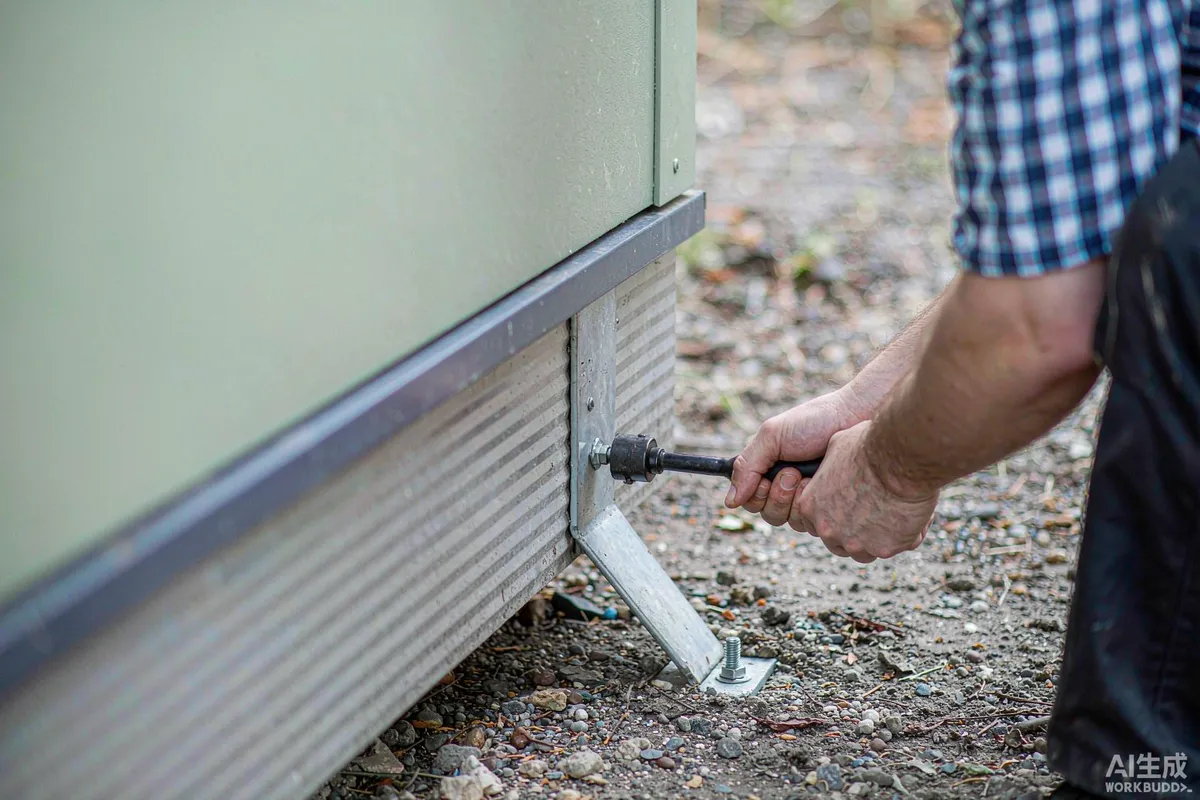
- Anchoring and tie-downs - released in the sequence the installer specified, so the unit does not shift unevenly.
- Steps, decking, ramps and skirting - removed or detached; some of this may travel with the unit, some may not.
Photograph every connection before you disconnect it. Reinstallation is far faster with a set of reference images than from memory, and it also gives you evidence of condition if there is a later dispute.
Can the Unit Survive Being Lifted Again?
Generally yes, provided it is lifted the way it was designed to be lifted. The questions worth asking your supplier before you commit are practical ones.
- Where are the designated lifting points? A unit should be lifted from its designed points, not from wherever a sling happens to fit.
- Is there a lifting or handling procedure - spreader bar, sling angles, maximum allowable tilt?
- What is the transport configuration? Some units travel whole; others are designed to fold or reduce in width for transport, which changes the vehicle and permit picture entirely.
- How are glazing and doors protected in transit? Large glass is the most vulnerable item on the unit.
- What seals, gaskets or fixings should be inspected or replaced on reinstallation?
Repeated handling is not free. Expect to inspect seals, exterior fixings, glazing gaskets and any panel joints after the move, and budget for a small amount of remediation rather than assuming the unit arrives exactly as it left.
Access, Transport and Route
The physical move is governed by the worst piece of the route, not the average. A road that is fine for ninety per cent of the journey is irrelevant if the last two hundred metres will not take the vehicle.
- Crane standing area at both ends - firm, level ground with room for outriggers.
- Overhead restrictions - trees, cables, bridges, gateways.
- Width and height limits on the route, and any restriction that applies to an oversize load.
- Ground bearing along any track the vehicle must cross, particularly after rain.
- Turning space at the destination, so the vehicle does not have to reverse a long distance.
- Timing constraints - some roads restrict oversize movements by time of day or season.
Oversize load requirements, escort vehicles and notification periods differ between jurisdictions. Confirm what applies to your route with the transport contractor and the relevant authority rather than assuming. Requirements may vary by application, market and applicable standard.
Reinstallation at the New Site
The destination should be ready before the unit leaves the origin, otherwise the unit sits on a truck while work is finished - which is the most expensive way to store it.
- Supports or foundation prepared and cured, to the tolerances the unit requires.
- Access route compacted and checked for bearing after any recent weather.
- Services brought to the connection point and tested before the unit arrives.
- Unit lifted into position from the designated points.
- Levelled and re-anchored, then rechecked after settling.
- Services reconnected and the unit re-commissioned - water, waste, electrical, ventilation, heating.
- Seals, glazing and doors inspected and adjusted after transit.
- Interior surfaces and finishes checked for damage in transit and photographed.
Re-levelling matters more than people expect. A unit that is slightly out of level can produce doors that swing on their own, water that does not drain from a shower tray, and glazing seals under uneven load. Check it with a level, not by eye.
What It Costs and How Long It Takes
Relocation cost is a collection of separate line items rather than a single figure. When you ask for a quote, make sure all of these are in it, because a quote that covers only the transport is not a quote for moving the unit.
| Cost element | Notes |
|---|---|
| Disconnection | Electrical and plumbing labour at the origin; gas work if applicable |
| Crane at origin | Depends on reach, ground and time on site |
| Transport | Vehicle type, distance, escorts, permits |
| Crane at destination | Often similar to the origin lift |
| Site work at destination | Supports, services, access - sometimes the largest item |
| Recommissioning | Trades, testing, adjustments |
| Lost revenue | Nights the unit is not bookable; often overlooked |
| Making good | Seals, finishes, minor repairs after transit |
Downtime is the hidden cost. For a rental unit, every day out of service is a night you cannot sell, and a relocation that slips by a week costs more than the difference between two transport quotes.

When Moving Is Not Worth It
There are situations where the sensible answer is to sell in place and buy again at the destination.
- Long distance or international transport, where freight dominates the arithmetic.
- Poor access at either end, requiring road works, tree clearance or a larger crane than the site can host.
- A unit near the end of its planned service at that location, where the reinstallation cost will not be recovered.
- Site work that cannot be reused - if the destination needs entirely new services and supports, the saving from moving the box is small.
- A tight reopening date that leaves no room for the slip that relocation projects often hit.
Get both numbers - move cost including downtime, and sell-and-replace cost - before deciding. Operators often assume moving must be cheaper because the unit is already owned; once transport, permits and lost nights are included, that assumption is not always true.
Planning the Move: A Short Checklist
- Confirm with the supplier that the unit is designed for repeated lifting, and get the lifting procedure.
- Photograph all connections, anchoring and the unit condition before disconnection.
- Survey both sites for crane standing, access and ground bearing.
- Confirm transport classification, route restrictions and any permit or escort requirement.
- Prepare the destination fully - supports, services, access - before the unit is lifted.
- Schedule the move outside peak booking periods where possible.
- Budget for making good: seals, finishes, minor repairs.
- Re-level, re-anchor and re-commission, then recheck after settling.
A capsule home is a manufactured asset rather than a fixed building, and that is genuinely useful when circumstances change. The move is straightforward when it is planned as a project - and expensive when it is improvised.
More from the Blog

Capsule Home Cost Guide: What You Really Pay in 2026
EXW, shipping, install and the hidden line items — a transparent breakdown of total landed cost.
Read article →
How to Install a Capsule Home in 3 Days: A Step-by-Step Guide
From site prep to first guest — the exact sequence our install crews follow on every deployment.
Read article →
Real Owners, Real Numbers: Success Stories
How a lakeside resort, a Spanish glamping site and a Singapore dealer hit their targets.
Read stories →Talk to the Factory
Ready to Ride the 2026 Wave?
Get the latest catalog, pricing tiers and a layout sketch for your land — straight from the engineering team.