Pre-Delivery Inspection: What to Check Before Your Capsule Home Ships
A structured walkthrough of a finished capsule home at the factory: envelope, glazing, services, interior finish and documentation - before it goes into a container.
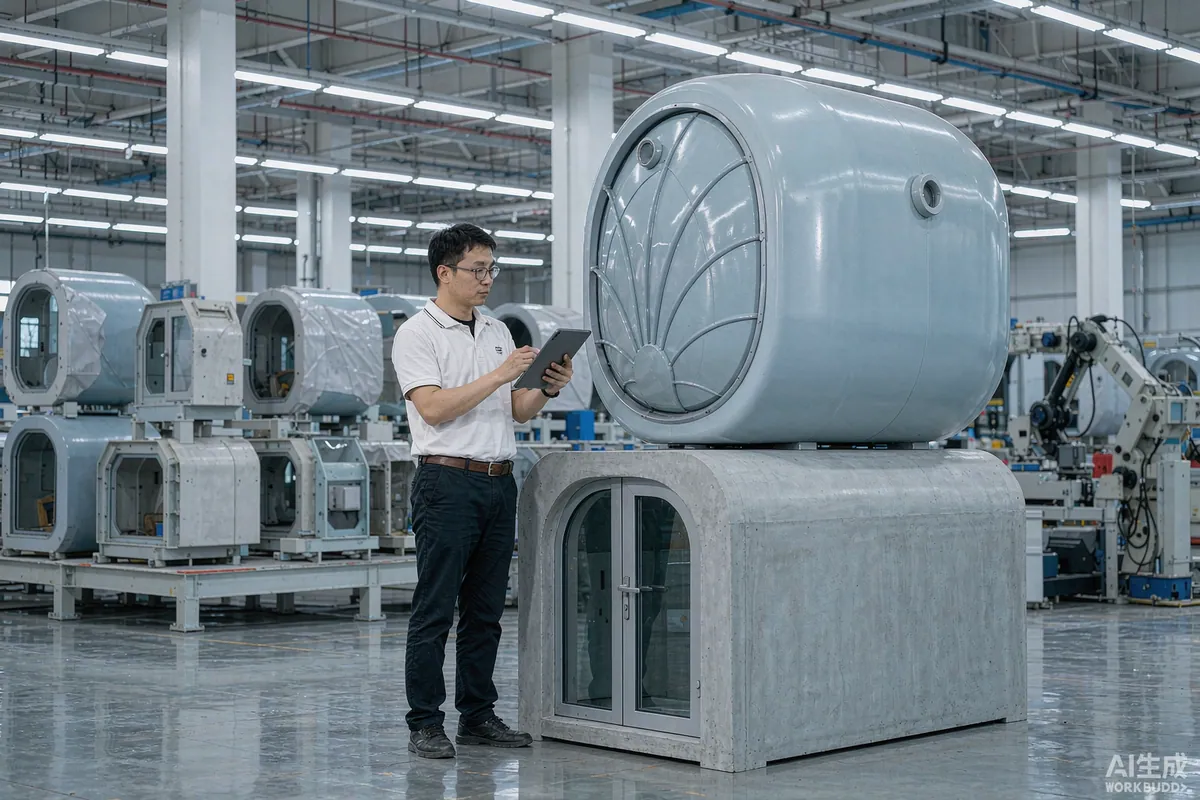
Almost every defect that is expensive to fix in a prefab capsule home is cheap to fix at the factory and awkward to fix after delivery - because the parts are behind finished panels, and because the unit is now several thousand kilometres away. A pre-delivery inspection (PDI) is the structured walkthrough you run before the unit is released for shipping. It takes half a day, it can be done in person or on video, and it is the last moment at which a problem is still a factory problem.
The Short Answer
Inspect in a fixed order: exterior envelope and joints first, then glazing and doors, then services under real load, then interior finish, then documentation and spares. Run the services rather than looking at them - a water heater that has never been fired and a drain that has never carried water tell you nothing. Record everything as a numbered punch list with photographs, and agree in writing who closes each item and when.
When to Do It and Who Should Be There
The useful moment is when the unit is complete: fit-out finished, services connected to a test supply, and before packing or container loading. Ask for the inspection to be scheduled at that point rather than at a convenient point.
- In person if the order is large, highly customised, or the first of a repeat programme.
- On video for repeat units or smaller orders - a live walkthrough with a second camera for detail shots works well, provided you can direct the operator to specific points.
- By a third party where you cannot attend and the order value justifies it. An independent inspector is cheaper than a dispute.
Agree the acceptance criteria before the inspection. "Satisfactory" is not a criterion. "No visible gaps in sealant runs, all doors latch without force, all circuits energise and all drains clear under a two-minute flow" is.
Exterior Envelope and Joints
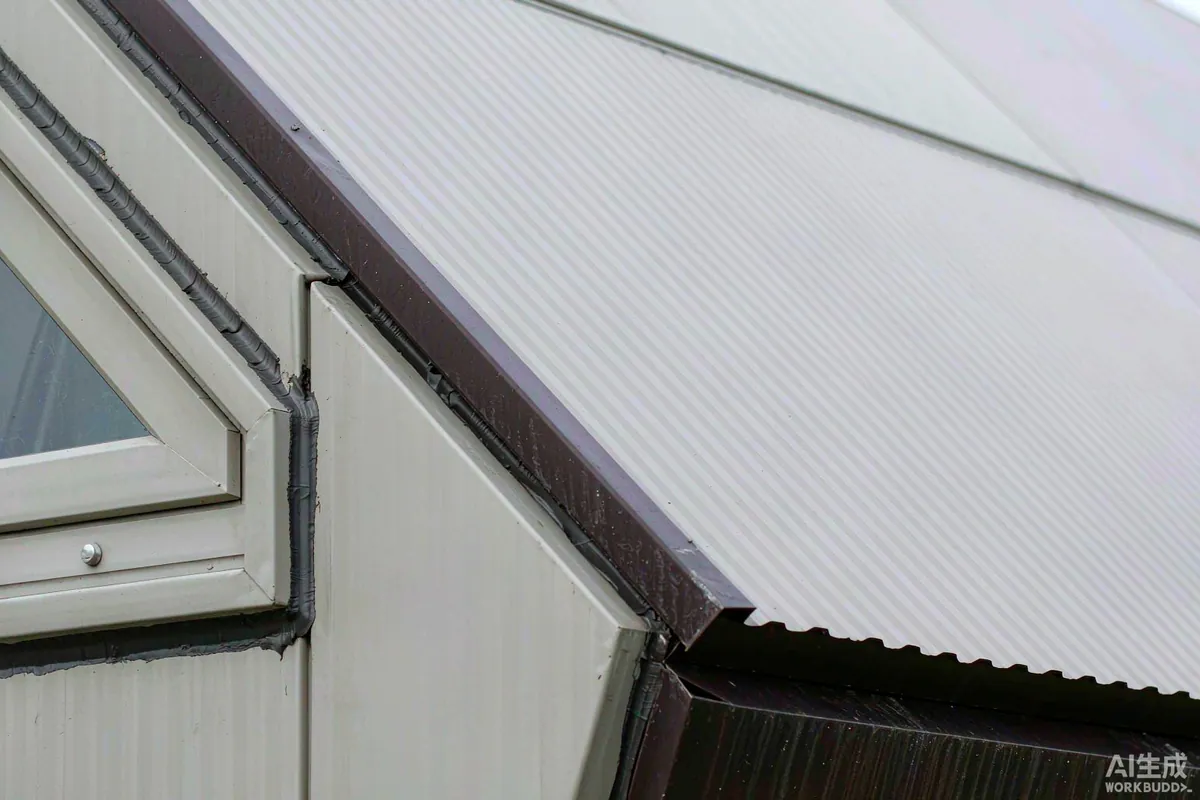
Walk the whole shell slowly, in good light, and look at the transitions rather than the panels. Panels rarely fail; joints do.
- Sealant runs. Continuous, no gaps, no skips, no tooling marks that break the bead. Pay attention to corners and to where a vertical run meets a horizontal one.
- Panel joints and trim. Consistent reveals, no standing edges, no gaps at corners, trim seated fully.
- Roof and upper surfaces. Standing water is the enemy. Check falls, outlets, and that any roof penetration - vent, flue, cable entry - is properly flashed and sealed.
- Underside. The least inspected part of any unit and often the most informative. Look at drain points, service entries, protective coating and any transport damage from moving the unit within the factory.
- Finish. Consistent colour and sheen across panels; check for scratches, touch-ups and overspray, ideally at an angle to the light rather than straight on.
Glazing, Doors and Openings
Openings are the most handled, most transported and most used parts of the unit. Test every single one rather than sampling.
- Open and close every window, vent and door. Note any that bind, stick, or need unusual force.
- Check latching and locking: does the lock engage fully, and does the key or handle turn without resistance?
- Inspect glass for scratches, chips and coating defects - view at an angle and against a bright background.
- Check gaskets: seated, continuous, not twisted or pinched at corners.
- Verify that seals compress evenly. A door that closes but leaves a visible gap at one corner will leak air, water and noise.
- Confirm that openable areas actually open to the extent you expect, and that stays and restrictors hold.
If the unit has large panoramic glazing, ask how it is protected for transport and whether any bracing or protective film is fitted for the journey - and whether that film is removed before handover, because film left on for months in the sun is difficult to remove cleanly.
Services Under Load
This is the section people skip, and it is the one that catches the expensive problems. Everything should be operated, not merely present.
| System | What to run | What you are looking for |
|---|---|---|
| Electrical | Every circuit, every luminaire, every socket | All circuits energise, protective devices hold, no warm outlets or flicker |
| Heating and cooling | Both modes for a sustained period | Reaches setpoint, condensate drains correctly, no unusual noise or vibration |
| Water supply | Every outlet, hot and cold | Steady flow, hot water reaches temperature, no leaks at any connection |
| Drainage | Run water continuously for several minutes | No backing up, no slow drains, no drips under the unit |
| Ventilation | Extract fans at full speed | Air moves, no rattle, dampers or backdraught shutters operate |
| Appliances | Each one through a full cycle where practical | Operates, no transport damage, doors and drawers seated |
| Controls and automation | Scenes, timers, remote or app control | Responds as specified, fails safely if the network drops |
Water deserves particular attention, because a leak inside a finished panel assembly is the worst kind of defect to discover later. Run the drains until you are satisfied, then look underneath the unit with a light. Requirements may vary by application, market and applicable standard - verify which tests the factory performs as standard and ask for the results rather than assuming.
Interior Finish and Fit-Out
Finish defects are cosmetic individually and cumulative in effect: a guest or an owner sees all of them at once. Work systematically around the unit rather than scanning the room.
- Surfaces: scratches, dents, chips, delamination at edges, inconsistent gaps between panels.
- Joinery: doors and drawers aligned, soft-close working, catches holding, shelves seated.
- Flooring: no lifting at thresholds, no gaps at the perimeter, transition strips fitted.
- Sanitaryware: sealed at the base, no drips, silicone neat and continuous, shower screen seated.
- Ceiling and lighting: no sagging, no untrimmed penetrations, luminaires flush and aligned.
- Everything that should be present: check the specification line by line - the missing item is usually noticed after handover.
Documentation, Spares and Transport Preparation
The paperwork is part of the product. A unit without documentation is harder to maintain, insure and resell, and the documentation is much easier to assemble at the factory than to reconstruct later.
- As-built drawings and electrical schematic, matching the unit as delivered rather than as catalogued.
- Appliance manuals, ideally in the language of the destination market.
- Warranty document stating coverage period, what is covered, and the claims route.
- Spare parts list and any consumables supplied with the unit - filters, bulbs, seals, touch-up materials.
- Declaration of conformity or equivalent documentation where the destination market requires it. Requirements may vary by application, market and applicable standard.
- Packing list and photographs of the unit before it is wrapped or loaded.

Ask how the unit is secured for transit and what transport protection is used - corner protection, bracing, breathable wrap rather than sealed plastic, and internal fixings for anything that can move. Transit damage is a claim process; prevention is a five-minute check.
Closing the Punch List
Write every finding down with a number, a location, a photograph and an agreed remedy. Then agree three things before the unit ships: who does the work, when it is done, and how you verify it. For distant buyers, verification is usually a photograph or a short video of the specific item - adequate for most cosmetic issues, less so for anything involving a sealed assembly.
- Fix before shipment for anything inside a panel, behind a seal, or requiring factory tooling.
- Fix on site for purely cosmetic items where a spare part can travel with the unit instead.
- Accept with a credit only where you can genuinely live with the defect, and record the agreement in writing.
Be realistic about the last category. A defect you notice every day for the next decade is not worth a small credit.
The Takeaway
A pre-delivery inspection is the cheapest insurance in a factory-built purchase. Inspect in a fixed order - envelope, openings, services under load, interior finish, documentation - test rather than look, record everything with photographs, and agree how each item closes before the unit is released. Haishu builds and finishes A Series units in the factory with a three-day installation programme on site, which means the factory is where the unit can still be put right quickly, with the tools and the people already there.
More from the Blog

Capsule Home Cost Guide: What You Really Pay in 2026
EXW, shipping, install and the hidden line items — a transparent breakdown of total landed cost.
Read article →
How to Install a Capsule Home in 3 Days: A Step-by-Step Guide
From site prep to first guest — the exact sequence our install crews follow on every deployment.
Read article →
Real Owners, Real Numbers: Success Stories
How a lakeside resort, a Spanish glamping site and a Singapore dealer hit their targets.
Read stories →Talk to the Factory
Ready to Ride the 2026 Wave?
Get the latest catalog, pricing tiers and a layout sketch for your land — straight from the engineering team.