Capsule Home Maintenance: A Seasonal Checklist for Owners
A practical seasonal maintenance routine for capsule homes: shell seams, seals and gaskets, glazing, drainage, ventilation and the utility cupboard.

A capsule home is a factory-built envelope with few moving parts, so maintenance is mostly inspection and cleaning rather than repair. Budget a short check four times a year, a deeper pass before winter, and an extra look after any severe storm. Most of it takes under an hour, and the tasks that matter most are the ones that keep water out and air moving.
Why a Routine Matters More Than a Repair Budget
Water and dirt cause almost every avoidable issue in a prefab unit. A seal that is cleaned twice a year will outlast one that is never touched. A drain channel cleared in autumn prevents an overflow in January. Because the structure and finish are integrated, a small neglect at a joint can travel further than it would in a conventionally built room - which is exactly why a short, regular look is worth more than an occasional deep clean.
Quarterly: 30-Minute Walk-Around
- Rinse the shell with clean water and a soft cloth or brush. Avoid abrasive pads and strong solvents on coated surfaces.
- Inspect shell seams and panel joints for gaps, lifting sealant or trapped dirt.
- Check door and window gaskets for cracks, flattening or sections that have come away from the frame.
- Clear drainage channels, gutters and downpipe outlets of leaves and grit.
- Open and close every window and door; note any that have become stiff or dropped on their hinges.
- Look under the unit: supports should sit square on the piers, with no sign of movement or standing water.
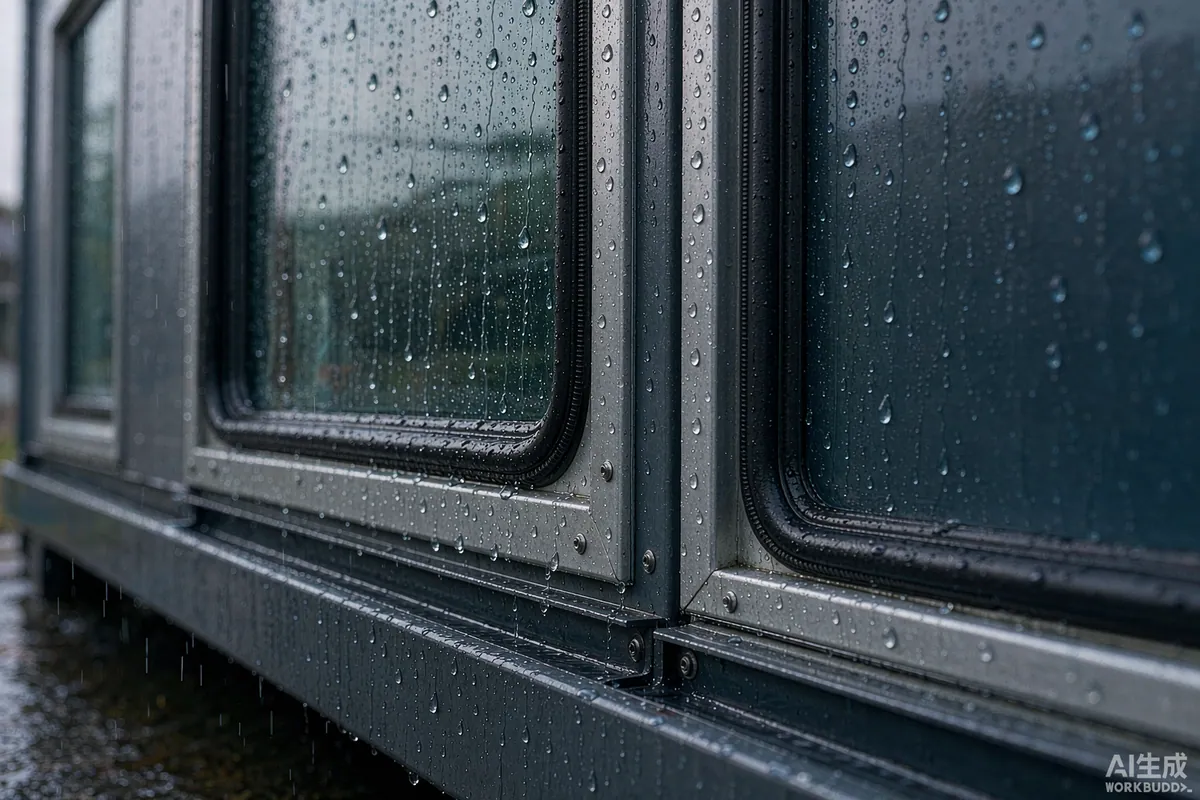
Glazing and Seals
Panoramic glazing is the feature owners value most, and it needs the least intervention - mainly keeping the frames and weep holes clear. Clean glass with a non-abrasive cloth and a mild solution; wipe the frame channels rather than hosing them, so dirty water does not enter the drainage path. If you see condensation between panes, that is a sealed-unit issue rather than a cleaning issue, and it should be logged and reported rather than left.
Check that weep holes at the bottom of frames are open. A blocked weep hole is the most common reason water appears at a window sill.
Ventilation and Interior Moisture
A tight, well-insulated envelope holds heat efficiently, which also means it holds moisture if it is not ventilated. Run extract ventilation during and after showers and cooking, keep internal doors from the wet room open when the unit is unoccupied for a period, and avoid drying wet clothing inside without extraction. In high-occupancy rental use, set the house rules to say the same thing.
If you notice persistent condensation on cold surfaces, the cause is almost always ventilation or heating pattern rather than a defect in the envelope. Increasing background ventilation and keeping a low, steady heat usually resolves it.
The Utility Cupboard
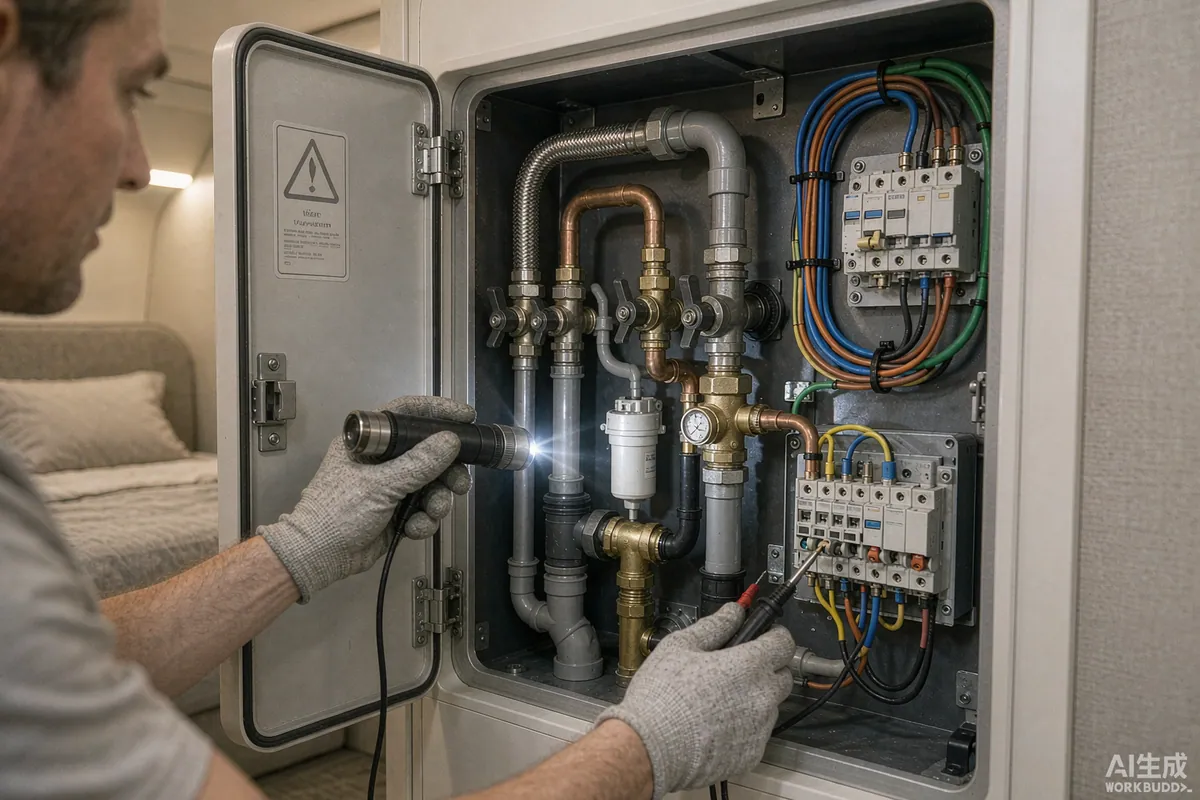
Once a quarter, open the service panel and look - do not touch - at three things: connections, filters and signs of moisture.
- Connections. Look for staining or mineral deposits around plumbing joints.
- Filters. Clean or replace ventilation filters to the schedule in the handover documents.
- Moisture. Any damp patch, however small, is worth investigating the same week.
Isolate power before any work inside the panel, and keep the panel closed and latched afterward, particularly in rental units.
Pre-Winter Pass
In cold climates, do one longer pass before the first freeze:
- Drain or protect external water lines and any unused outdoor tap.
- Confirm the heating system runs cleanly before you need it, not on the first cold night.
- Check the roof and shell for debris after leaf fall, and clear it.
- Verify that drainage outlets are free and that water discharges away from the pad.
- If the unit will be empty for weeks, set a low background heat and arrange periodic checks.
Post-Storm Check
After high wind, hail or heavy snow, walk the same quarterly list plus two extras: look for impact marks on glazing and cladding, and confirm that supports and anchors have not shifted. Photograph anything you find before you touch it - useful both for your own log and for any warranty conversation.
Keep a Simple Log
| Record | Why it helps |
|---|---|
| Date and what was done | Shows a consistent routine rather than ad-hoc attention |
| Photographs of anything unusual | Makes remote diagnosis possible without a site visit |
| Parts replaced and where from | Avoids re-ordering the wrong item next season |
| Contractor notes | Hands over cleanly if you change service providers |
A one-page log in a folder, or a shared note on your phone, is enough. If you operate several units, one log per unit with a common structure makes comparison easy and turns maintenance into a schedule rather than a reaction.
What to Leave to a Professional
Cleaning, inspection and filter changes are owner tasks. Anything involving the electrical installation, refrigerant circuits, structural supports or sealed glazing units should be handled by a qualified tradesperson. If a unit is let to guests, arrange those checks between stays rather than during them.
This routine applies across the Haishu A series - a compact A30 in a backyard and a double-deck A70 in a resort follow the same checklist. Larger units simply have more glazing and more seals to walk, so allow proportionally more time.
Maintenance in Rental Operation
When paying guests use the unit, maintenance changes character. You no longer notice a small fault when it appears - you find it in a review. That shift is worth designing for, and the adjustments are simple.
Build Checks Into the Changeover
Add four items to the cleaner's routine that take under two minutes in total: run a hand along the door seals, glance at the window reveals for moisture, check that the extract fan is actually moving air, and confirm the heating responds to the thermostat. Any of these failing is far cheaper to fix between stays than during one.
Keep a Photographic Standard
Photograph the unit in its correct state - how the blinds sit, how the bed is dressed, where the remote lives - and keep those images in a shared folder. Cleaners and contractors work to the standard they can see, and a photograph resolves in seconds what a written instruction often does not.
Expect Consumables to Need Replacing
In full-time letting, filters, gaskets and door hardware wear several times faster than in occasional personal use. Set a calendar reminder rather than waiting for a visible fault, and hold the consumables on site so a replacement does not wait on a delivery.
- Schedule a deeper inspection at least twice a year, timed to the shoulder season when the unit is empty.
- Keep one named contractor who knows the unit; continuity is worth more than the lowest hourly rate.
- Log guest-reported issues separately from your own findings - repeated reports usually point to one underlying cause.
- Review the log annually and decide what to upgrade rather than repair.
Well-run rental units are not the ones that never need attention. They are the ones where attention happens on a schedule, before a guest is standing in the room.
More from the Blog

Capsule Home Cost Guide: What You Really Pay in 2026
EXW, shipping, install and the hidden line items — a transparent breakdown of total landed cost.
Read article →
How to Install a Capsule Home in 3 Days: A Step-by-Step Guide
From site prep to first guest — the exact sequence our install crews follow on every deployment.
Read article →
Real Owners, Real Numbers: Success Stories
How a lakeside resort, a Spanish glamping site and a Singapore dealer hit their targets.
Read stories →Talk to the Factory
Ready to Ride the 2026 Wave?
Get the latest catalog, pricing tiers and a layout sketch for your land — straight from the engineering team.