Laundry Provision for Long-Stay and Workforce Capsule Housing
How much laundry provision does a capsule home need? Match in-unit machines, shared facilities and off-site service to stay length, and handle moisture, power and noise.
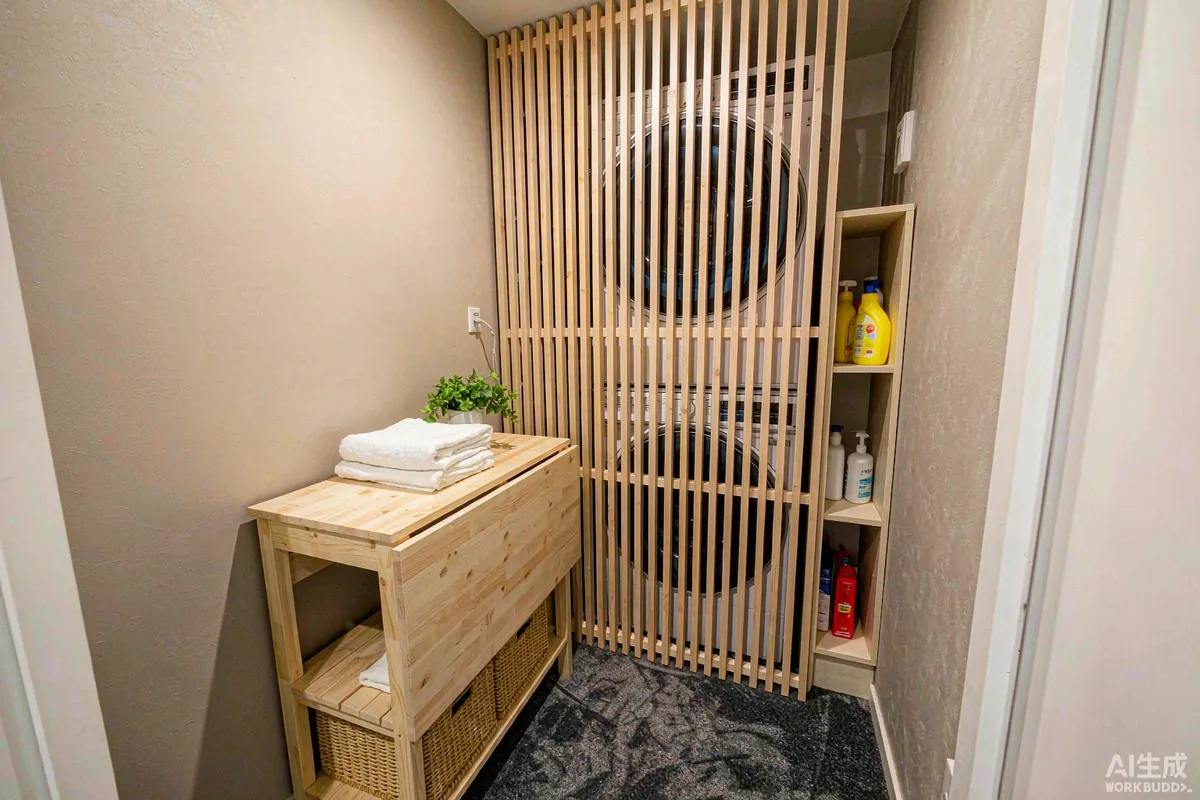
Laundry is the amenity that separates a short-stay unit from somewhere people can actually live. Guests staying two nights will manage without it. Guests staying two weeks, or a workforce on rotation for months, will not - and if the provision is wrong, they will dry clothes over every surface in the unit and create a moisture problem you did not plan for.
The decision has two halves. First, how much laundry provision the length of stay requires. Second, whether the unit and the site can physically support it - which is usually the harder question, because washing and drying put water, moisture, power and vibration into a very small building.
Match Provision to Length of Stay
| Use pattern | Practicable provision | Notes |
|---|---|---|
| Short stays, up to a few nights | None, or a small drying rack | Guests plan around it; storage space is better spent elsewhere |
| Week-long holidays | Access to a shared facility on site | One or two machines serving several units is usually enough |
| Extended stays, several weeks | In-unit machine, or a well-run shared facility | Check what guests of that length actually expect in your market |
| Workforce or long-term occupancy | In-unit or a properly sized shared laundry | Duty cycle is the design driver, not convenience |
| Mixed site | Both, with the shared facility sized for peak | Avoid designing the shared room for average use |
Be honest about the use pattern before specifying. An in-unit machine that is used once a fortnight is expensive space; a shared room sized for average rather than peak demand will generate complaints on Sundays.
In-Unit Machines: What Fits and What It Costs You
A compact unit has limited options, and each carries a trade-off in cycle time, moisture and space.
- Stacked washer and dryer - full capacity in a narrow footprint, in the vertical space you have. Best where laundry demand is genuinely high.
- Single washer-dryer combination - one machine, one footprint, but wash and dry happen sequentially in the same drum, so throughput is slower and loads are smaller.
- Compact or apartment-sized machine - fits smaller spaces, at the cost of load size.
- Washer only, with line or rack drying - removes the drying problem from the unit entirely, if your climate and your guests allow it.
Whichever you choose, the space has to be more than a gap. It needs a door or screen, a surface to fold on, somewhere to put detergent, and enough clearance to load the machine without contortion.
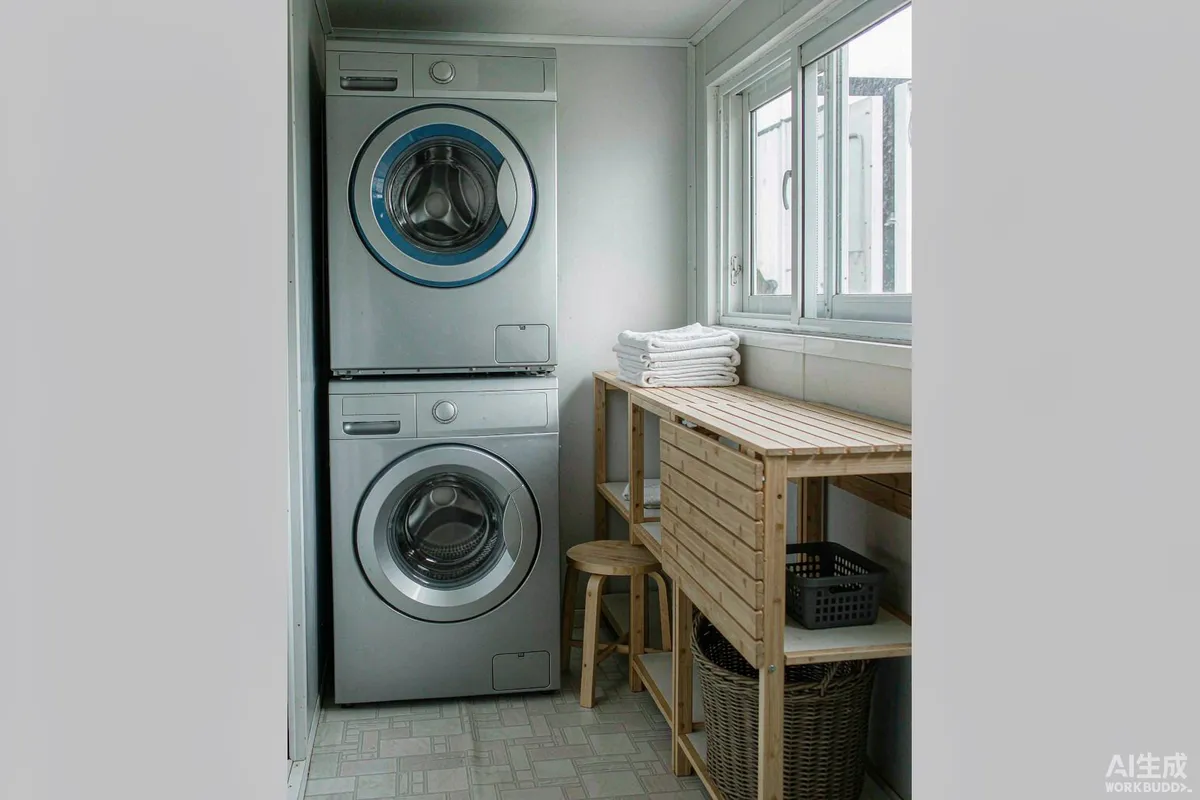
Moisture: The Constraint People Underestimate
Drying clothes puts water into the air. In a large house that is absorbed; in a small, well-sealed unit it raises humidity quickly, and sustained humidity produces condensation on cold surfaces, damp textiles and eventually mould. This is the single biggest technical argument for venting a dryer outside rather than into the room.
- Vented dryers remove moisture to outside - effective, but need a duct route through the envelope.
- Condenser dryers collect water in a tank or drain, needing no duct but still adding some heat and moisture to the room.
- Heat pump dryers run cooler and are generally gentler, with longer cycle times.
- Any indoor drying needs deliberate ventilation - an extract running during and after the cycle, not just a window left ajar.
- Specify a duct route at factory stage if you want a vented dryer; retrofitting a penetration through a finished envelope is not a small job.
If your units run on limited ventilation or in a cold climate, treat the moisture question as a design decision rather than an appliance choice. Where condensation and ventilation are already a consideration, adding laundry makes them more so.
Water, Waste and Power
A machine is a load on three systems at once, and the drain is usually the awkward one.
- Water supply - connection at the machine, with an accessible isolation valve.
- Drainage - a proper connection to the waste system, sized for the discharge rate; improvised arrangements cause overflows.
- Electrical load - a dedicated circuit is normal, and the loading needs to be included in the unit's electrical planning rather than added afterwards.
- Leak risk - machines fail at hoses and seals. Consider a leak detection or automatic shutoff arrangement, especially in an unattended rental.
- Water pressure - check that the supply supports the machine while other fixtures are in use.
Where a unit's drainage or electrical capacity was designed without a machine in mind, a shared facility may be the more sensible answer. That is a design question worth asking before ordering rather than after installation.
Noise and Vibration in a Light Structure
A spinning drum in a small, light building is noticeable - to the occupants and sometimes to neighbouring units. This is not usually a structural problem, but it is a comfort one, and it is easier to design out than to explain away.
- Level the machine properly during installation; most vibration complaints trace back to levelling.
- Locate the machine away from the sleeping area where the layout allows it.
- Consider anti-vibration pads and check whether the floor construction needs any additional treatment.
- Run noisy cycles during the day - a simple note in the house information avoids most complaints.
- Test it from the neighbouring unit if units are close together, and at night.
- Check the door and screen closures, which reduce transmitted sound more than people expect.
Shared Facilities That Work
For most holiday sites, and for many workforce sites, a shared laundry is the better answer: fewer machines to buy, no moisture inside the units, and simpler maintenance. It works when three things are right.
- Capacity sized for peak, not average. Count the changeover day, not a quiet Tuesday.
- A predictable way to use it - booking system, clear hours, or enough machines that neither is needed.
- Somewhere to wait and fold. A bench and a surface turn a chore into a tolerable one.
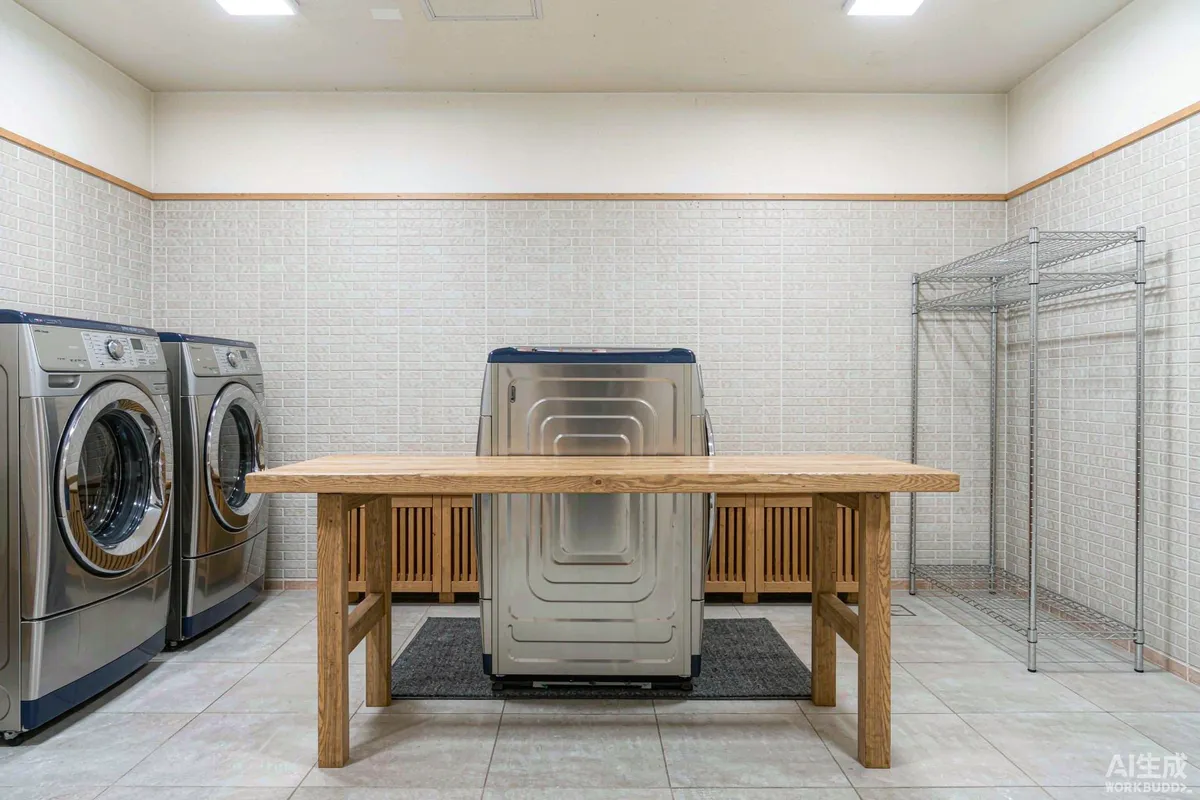
Add the practical details: lighting, a sink, somewhere to hang what cannot be tumble-dried, clear instructions in the languages your occupants speak, and a cleaning routine. A laundry that is not cleaned is a laundry people complain about.
Workforce and Long-Term Occupancy
Long-term use changes the specification, because duty cycle replaces convenience as the driver.
- Choose machines rated for frequent use rather than domestic light-duty models.
- Plan for maintenance access and a service arrangement - downtime affects everyone on shift.
- Decide payment model in advance and make it simple to administer.
- Provide enough machines for a shift changeover, not for the site average.
- Expect heavier soiling in some trades, and choose cycle options accordingly.
- Keep consumables stocked and assign responsibility for that explicitly.
- Ventilate the room well, because a continuously running laundry generates a lot of moisture.
Housekeeping and Guest Information
Whatever you provide, tell people how to use it. Most laundry complaints are instruction failures rather than equipment failures.
- State what is provided in the listing, so nobody packs for the wrong assumption.
- Give clear operating instructions, with a photograph of the controls.
- Say where the water isolation valve is and what to do if there is a leak.
- Explain the drying arrangement - vented, condenser, or a rack - and roughly how long a cycle takes.
- Include the filter and lint cleaning task in the turnover checklist.
- Check the machine at every turnover - door seal, filter, drum, and any sign of a leak.
A Short Checklist
- Use pattern and length of stay established before specifying.
- In-unit machine or shared facility chosen on that basis, and sized for peak.
- Moisture path resolved: vented, condensing, or deliberate ventilation for indoor drying.
- Water, waste and electrical capacity confirmed, with isolation and leak protection.
- Noise and vibration checked from the sleeping area and from neighbouring units.
- Machines levelled and commissioned, with a maintenance arrangement for long-term use.
- Clear guest instructions with photographs, plus the leak procedure.
- Turnover checklist includes filter, seal and leak inspection.
Laundry is unglamorous and it is one of the clearest signals that a unit was designed for how people actually live. Get it right and long stays become straightforward - both for the guest and for the moisture balance of the building.
More from the Blog

Capsule Home Cost Guide: What You Really Pay in 2026
EXW, shipping, install and the hidden line items — a transparent breakdown of total landed cost.
Read article →
How to Install a Capsule Home in 3 Days: A Step-by-Step Guide
From site prep to first guest — the exact sequence our install crews follow on every deployment.
Read article →
Real Owners, Real Numbers: Success Stories
How a lakeside resort, a Spanish glamping site and a Singapore dealer hit their targets.
Read stories →Talk to the Factory
Ready to Ride the 2026 Wave?
Get the latest catalog, pricing tiers and a layout sketch for your land — straight from the engineering team.