Choosing Kitchen and Appliance Specs for a Capsule Home
Compact kitchens fail on power, heat and clearance, not on looks. Here is how to specify appliances and a galley that work in a small capsule home.
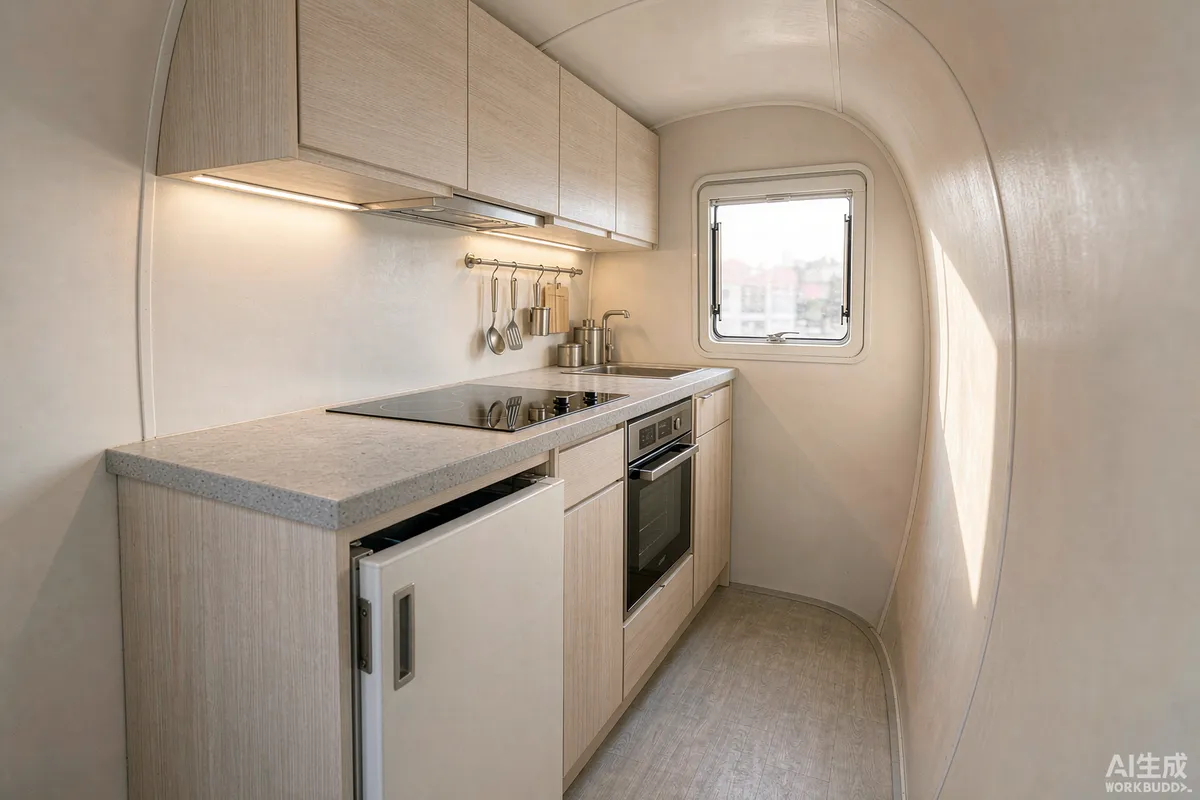
A kitchen in a capsule home is not a small version of a house kitchen - it is a galley with different priorities. Space is the obvious constraint, but the decisions that actually determine whether the kitchen works are electrical load, heat and moisture rejection, ventilation, clearance for doors and drawers, and how much noise the appliances make in a room you sleep in. Choose on those criteria and a compact kitchen works comfortably every day. Choose on appearance alone and you get a kitchen that trips breakers, fogs the glazing and rattles at night.
The Short Answer
Size the electrical supply before choosing appliances, prefer induction over gas for heat and moisture reasons, choose a refrigerator with a quiet compressor and a door that clears the aisle, and put the water heater where its noise and any leakage do the least harm. Then check clearances on a drawing - door swings, drawer runs and the space in front of every appliance - because those are the failures that cannot be fixed after delivery.
Start With Power, Not With Products
Every appliance decision is downstream of the electrical provision. A compact unit can run a cooktop, a refrigerator, a water heater, a microwave and a small washer-dryer, but not necessarily all at once on a modest supply. Diversity matters: if two high-draw appliances are likely to run together, the circuit and the supply need to allow for it.
- List the loads you actually intend to run, with their ratings.
- Identify what runs simultaneously - cooktop plus water heater is the common combination.
- Check voltage and frequency for the destination market, and the plug and socket type.
- Decide what is optional and could be omitted if the supply is tight.
- Confirm the protection layout and how each appliance is isolated for service.
Raising the electrical provision is a factory decision and is straightforward on the drawing. Discovering on site that the supply cannot support the kitchen is not.
Cooking: Induction, Gas or Portable
| Option | Advantages | Trade-offs |
|---|---|---|
| Induction cooktop | Low waste heat, no combustion products, easy to clean, precise control | Needs compatible cookware; a notable electrical load |
| Gas hob | Familiar control; works during a power cut | Adds moisture and combustion products; needs ventilation, gas installation and leak checks by a qualified person |
| Portable plug-in hob | Flexible, replaceable, low commitment | Slower, occupies counter space, less integrated |
| Combination microwave or oven | One appliance does several jobs | Compromise performance in each role |
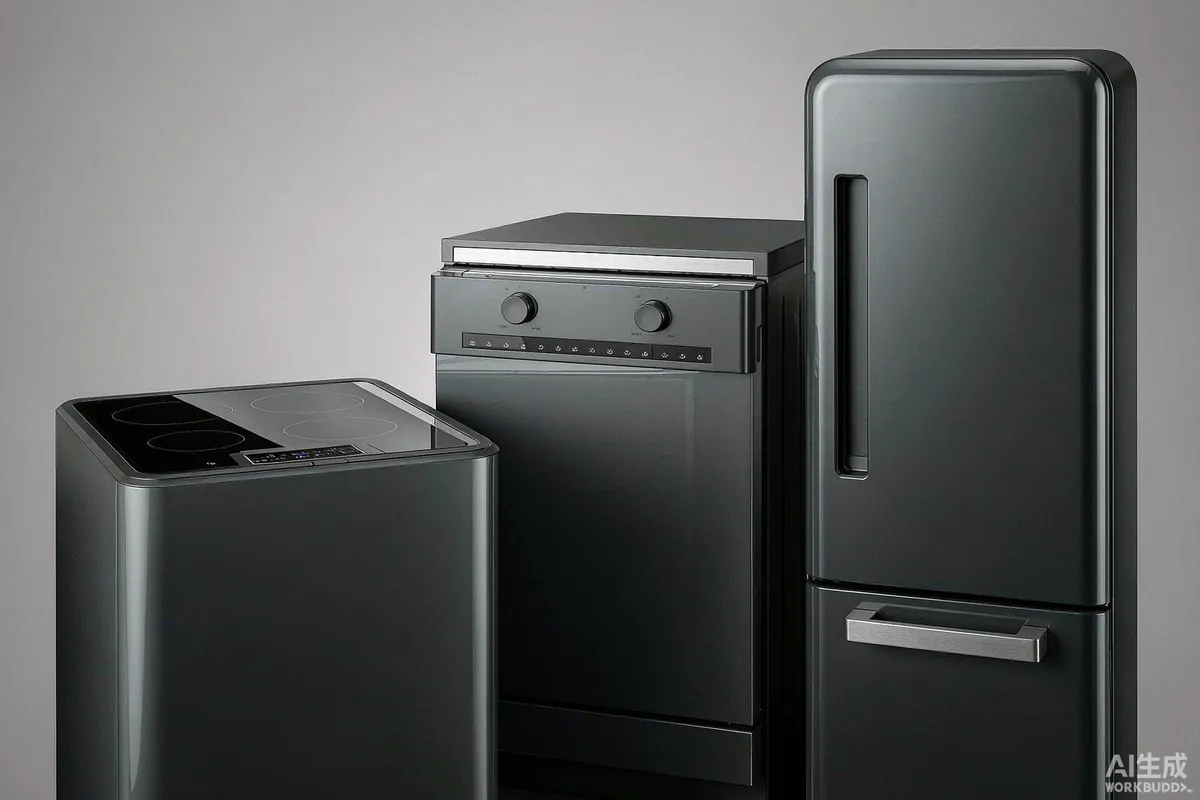
In a small sealed volume, the waste heat and moisture from cooking matter as much as the cooking itself. Induction puts far less of both into the room, which is why it is the common choice for compact units. Where gas is specified, ventilation and a carbon monoxide alarm are not optional extras. Requirements may vary by application, market and applicable standard, so confirm what applies locally before specifying.
Refrigeration, Dishwashing and Laundry
Refrigeration
Choose by noise, capacity and door clearance rather than by features. A refrigerator in a unit where people sleep is audible at night; a compressor rated for quiet operation, mounted so it does not transmit vibration into the structure, is worth specifying deliberately. Check that the door can open fully without blocking the aisle, and that the unit can be removed for service without dismantling joinery.
Dishwashing
A slim dishwasher drawer or a compact countertop machine is a reasonable choice for rental use, where turnover matters more than capacity. For occasional personal use, a well-arranged sink and draining area may be the better use of the space. The deciding question is how many covers the kitchen serves per day.
Laundry
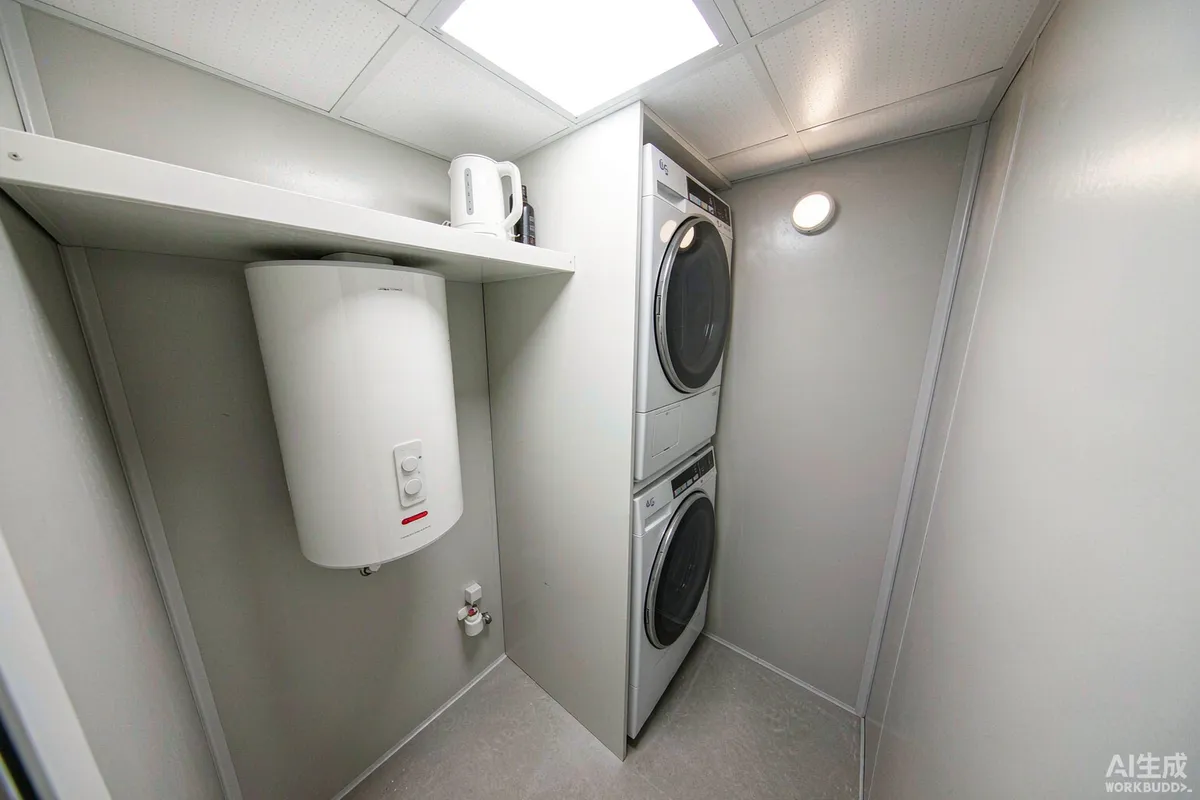
A combined washer-dryer saves space but is slow and adds heat and moisture. A washer alone, with drying outdoors where the site allows, often suits a capsule home better. If a dryer is included, it needs to be vented or condensing as appropriate, and its moisture output has to go somewhere.
Water Heating and the Wet Wall
Water heating is usually the largest single electrical load in the unit, and the choice is between storage and instantaneous types.
- Storage type. A tank holds a finite volume of hot water and reheats on a schedule or on demand. Simple and forgiving, but it occupies space and reheating is slow.
- Instantaneous type. Heats on demand and never runs out, but needs a substantial electrical supply at the moment of use.
- Siting. Whichever type is used, it should sit where noise is not intrusive, where any leak is noticed quickly, and where it can be reached for service.
Sizing should follow real usage - how many people, how many showers, and whether the unit turns over daily or is occupied continuously. An undersized water heater is one of the most common sources of complaints in rental use, and it is a specification error rather than a product fault.
Clearance: The Checks That Prevent Regret
Most kitchen problems in compact units are geometric, and all of them are visible on a drawing before anything is built.
- Door swings. Refrigerator, oven and cabinet doors must clear each other and the aisle.
- Drawer runs. Fully extended drawers must not collide with handles or appliances opposite.
- Working space. Enough clear counter beside the cooktop and the sink to work safely.
- Head height. Overhead cabinets should not force anyone to work with their head against a shelf.
- Heat and steam paths. Nothing heat-sensitive should sit directly above the cooktop.
- Service access. Every appliance must be removable without cutting joinery.
- Waste and recycling. A defined place for both, sized for the actual stay length.
Specifying It Once, for Many Units
Where several units are being ordered, the kitchen is the strongest argument for standardization. One cooktop, one refrigerator, one water heater and one control layout across the whole fleet means one spares list, one maintenance routine and staff who already know how everything works. Differences in colour, handles and soft goods can still give each unit its own character without touching any of that.
Noise, Heat and Where They Go
In a compact unit the kitchen is separated from the sleeping and living space by little more than a few steps, which makes three by-products of cooking worth planning for deliberately.
Noise
Refrigerator compressors, extractor fans and dishwashers are all audible in a small volume, and what is tolerable during the day is not tolerable at night. Look at published noise ratings where they exist, and consider where each appliance sits relative to the bed. Mounting matters as much as the appliance itself: anything that transmits vibration into the structure will be heard throughout the unit.
Heat
Everything electrical becomes heat eventually. An oven, a hob and a dishwasher all add to the cooling load, and that is noticeable in a heavily glazed unit on a hot afternoon. Cooking at cooler hours, using lids, and choosing appliances that reject less waste heat into the room all reduce the effect.
Moisture and odour
Both are best dealt with where they are produced. A recirculating extractor with a clean filter handles odour reasonably well; a ducted one removes moisture as well. Where there is a choice, ducting to the outside is the stronger answer in a small sealed volume.
Haishu fits A30, A50 and A70 units in the factory as turnkey dwellings, so the kitchen specification - appliances, electrical provision, water heating, ventilation and clearances - is settled at the drawing stage and verified before the unit ships. The buyer's job is to state the usage pattern honestly: how many people, how often the unit turns over, and what the electrical supply at the site can deliver.
The Takeaway
Specify the electrical provision first, choose appliances that suit the volume rather than the showroom, and check clearances on paper. Prefer low waste heat, quiet operation and service access over feature lists. Decide water heating on real usage, not on tank size alone, and keep the whole kitchen identical across a fleet. Those choices are made once and lived with for years.
More from the Blog

Capsule Home Cost Guide: What You Really Pay in 2026
EXW, shipping, install and the hidden line items — a transparent breakdown of total landed cost.
Read article →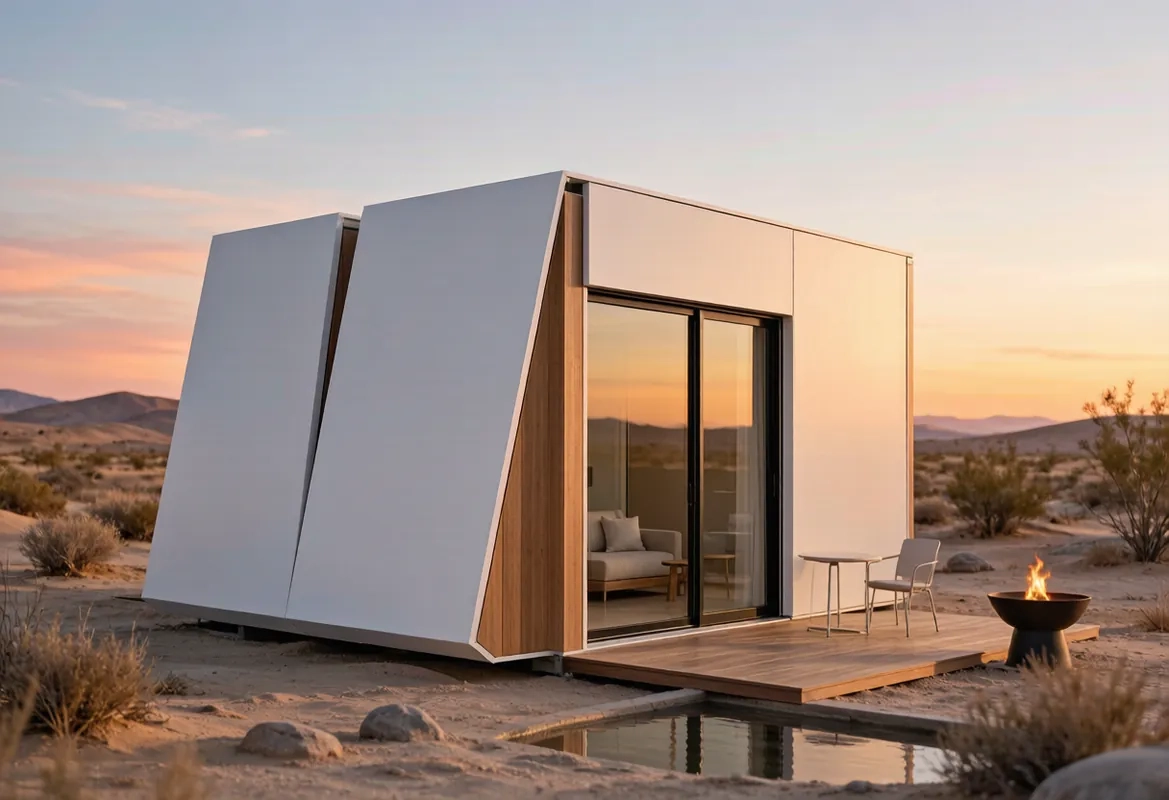
How to Install a Capsule Home in 3 Days: A Step-by-Step Guide
From site prep to first guest — the exact sequence our install crews follow on every deployment.
Read article →
Real Owners, Real Numbers: Success Stories
How a lakeside resort, a Spanish glamping site and a Singapore dealer hit their targets.
Read stories →Talk to the Factory
Ready to Ride the 2026 Wave?
Get the latest catalog, pricing tiers and a layout sketch for your land — straight from the engineering team.