Lighting a Capsule Home: Layers, Colour Temperature and Glare
How to plan interior lighting in a space capsule home - ambient, task and accent layers, colour temperature choices, and controlling glare from large glazing.
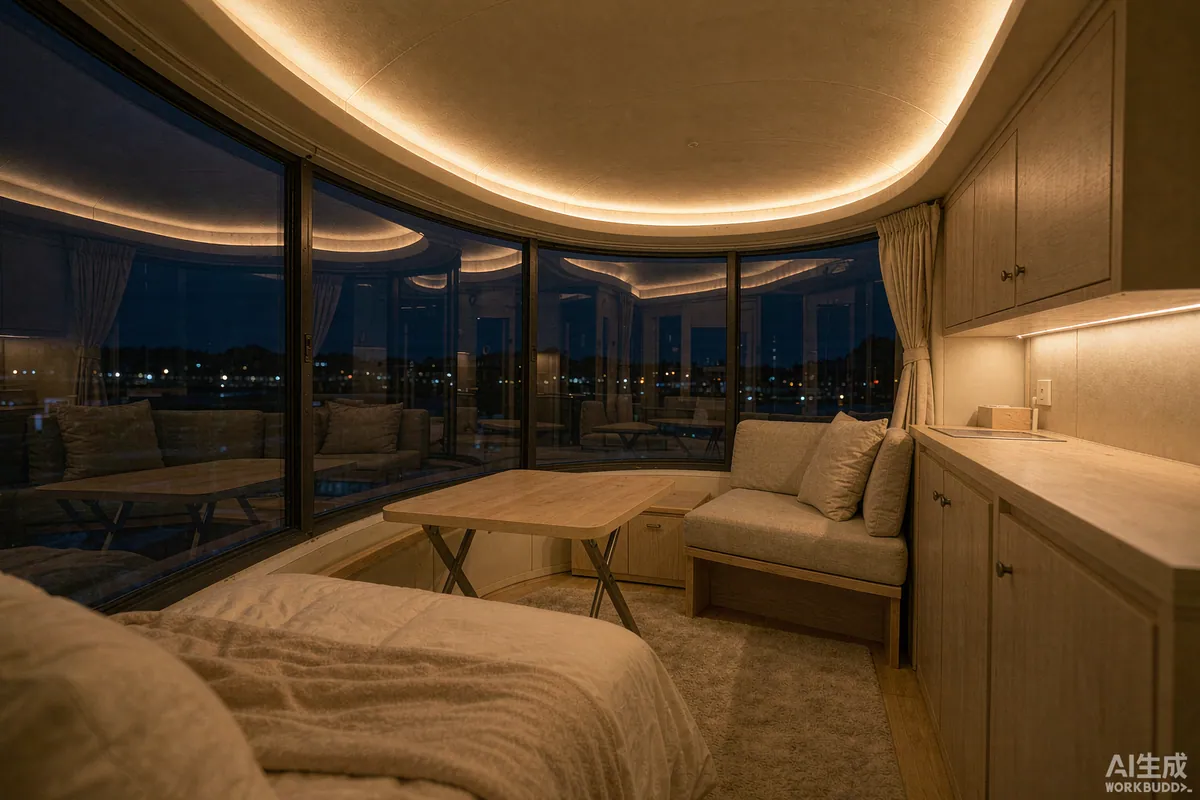
Light a capsule home in three layers and it stops feeling like a well-lit box: ambient light for general use, task light for the things people actually do, and accent light for the surfaces and edges that make the space feel finished. The reason layering matters more here than in a house is that a capsule interior is small, curved and heavily glazed. One ceiling fixture lights everything harshly and leaves the glass as a black mirror at night; three dimmable layers make the same room read as warm and considerably larger.
The Short Answer
Plan ambient light on dimmable circuits, add task lighting at the desk, kitchen counter and bedside, and use accent lighting - concealed strips, coves, under-shelf runs - to pick out the curved shell and the joinery. Use a warmer colour temperature in living and sleeping zones and a neutral one where people need to see accurately. Keep the light sources away from direct view from a seated position, and put exterior lighting on separate control so the glass does not become a mirror at night.
Why Glazed Interiors Need a Plan
Panoramic glass is the reason people buy a capsule home, and it creates two specific lighting problems.
- Reflection at night. A bright interior on dark glass turns the window into a mirror. The occupant sees their own reflection instead of the view. The fix is lower ambient levels and light sources positioned away from the glass line.
- Contrast by day. A bright window against a dim interior is uncomfortable and makes the room feel smaller than it is. Daylight balance is mostly about how much ambient fill you provide during the day, not about brighter bulbs.
Both are solved by the same thing: more circuits at lower levels, rather than one circuit at a high level.
The Three Layers
Ambient
The general wash that lets you move around safely. In a small unit this should be indirect where possible - light bounced off the ceiling or a concealed cove rather than a bare source in the field of view. Indirect light makes a curved shell read as a curve, which is worth a great deal in a compact space.
Task
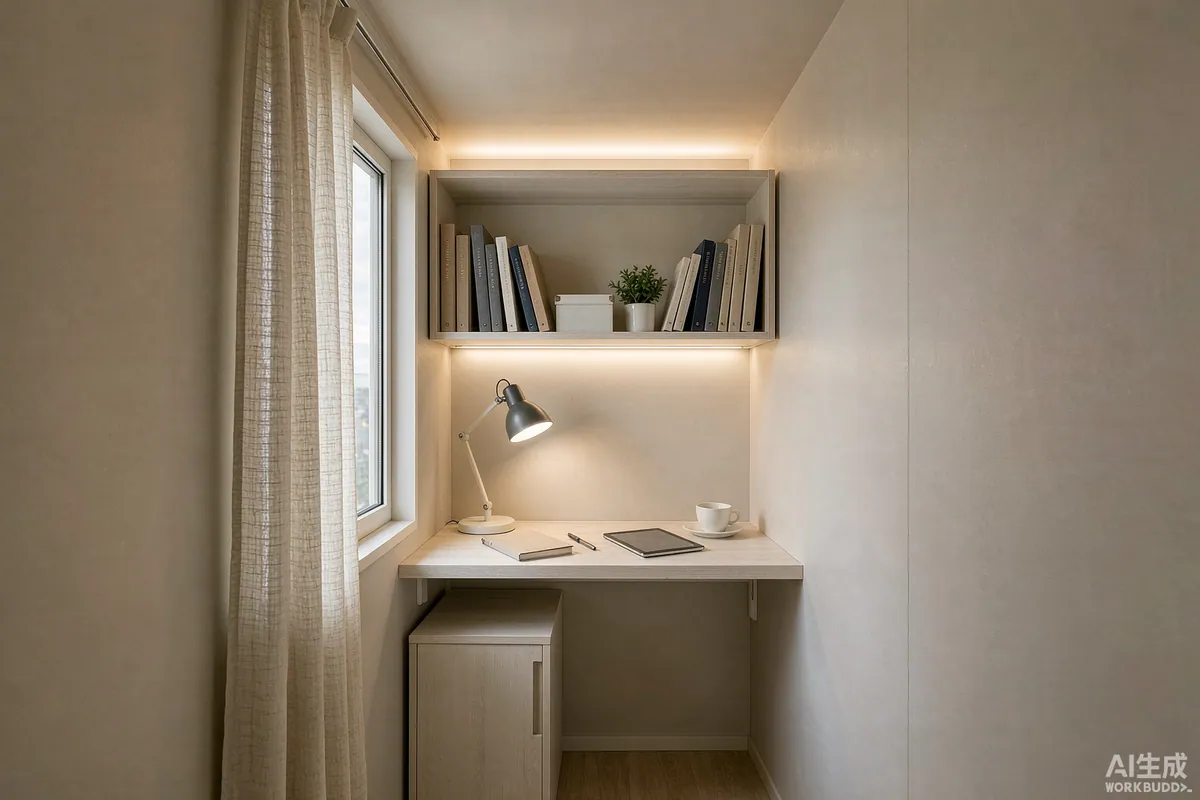
Light where work happens: the kitchen counter, the desk, the bedside, the bathroom mirror. Task lighting is judged by whether you can see the work without straining, and in a small unit it is often the layer that gets skipped because "the room is already lit". It is also the layer people notice first when it is missing.
Accent
Light that draws the eye to a surface rather than filling the room: a strip under a shelf, a wash along the shell curve, a small spotlight on a piece of joinery. Accent is what makes photographs of a unit look good and what makes a rental listing stand out.
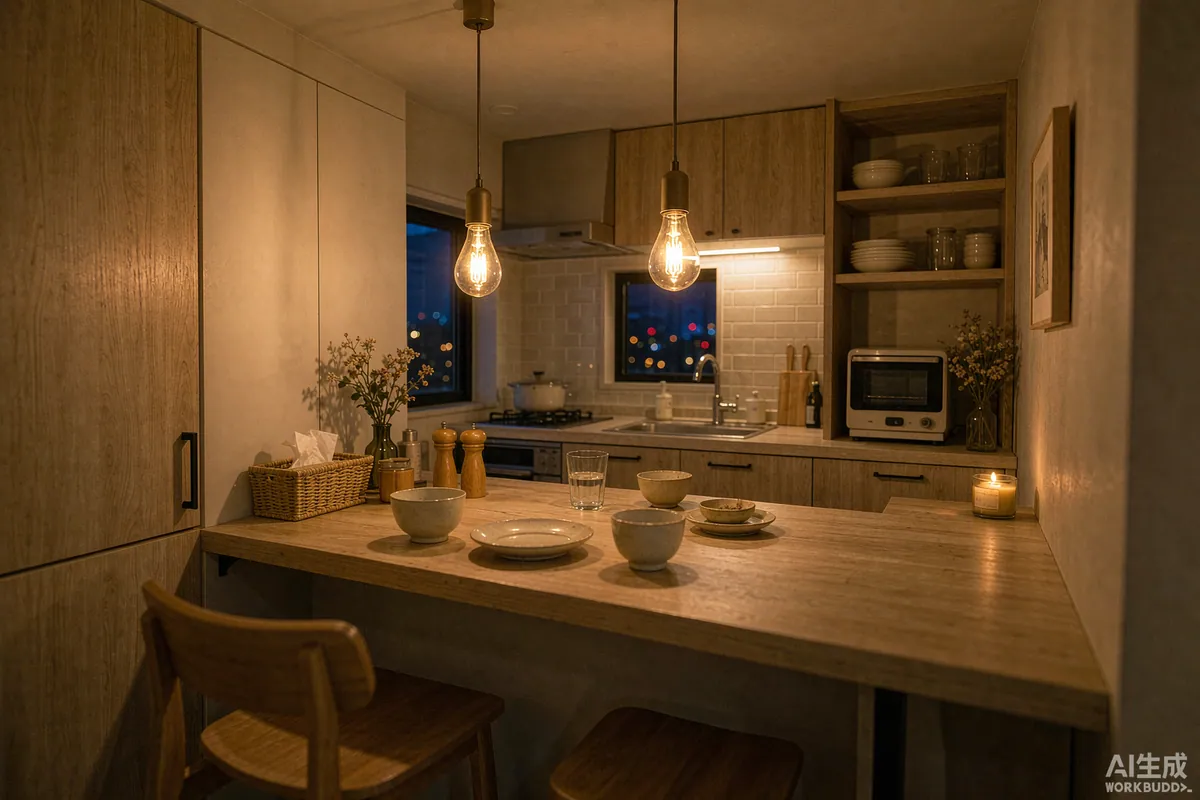
Colour Temperature by Zone
Colour temperature is the single most noticeable lighting choice, and it is a choice - not a default. Warm light suits relaxation; neutral light suits tasks and accurate colour. Mixing them arbitrarily is what makes interiors feel disjointed.
| Zone | Suggested character | Why |
|---|---|---|
| Living and seating | Warm | Comfortable in the evening, flattering to materials |
| Sleeping | Warm, low level, separately switched | Bright light near bedtime is the most common complaint |
| Kitchen counter | Neutral to warm | Food and surfaces need accurate colour |
| Desk or workspace | Neutral | Reduces eye strain on screens and documents |
| Bathroom mirror | Neutral, from both sides | Lighting from above only creates shadows on the face |
Consistency within a zone matters more than the exact number. Pick a temperature for the living space, use it throughout that space, and change it deliberately at the zone boundary.
Glare and Sightlines
In a compact unit, almost every seated position is close to a light source. A fixture that would be fine in a large room is uncomfortable two metres away. Before finalising positions, sit where people will sit and look at what is in view.
- Keep bright sources out of the direct line of sight from beds and seating.
- Use shades, diffusers or recessed positions rather than exposed bulbs where possible.
- Avoid a single high-output central fitting; several lower-output sources read better and dim more usefully.
- Check the reflection in the glazing at night, with the interior lit as it would normally be.
Control: Where the Money Is Best Spent
Dimming is the highest-value lighting upgrade in a capsule home, because it lets one set of fixtures serve several purposes. A living space that can go from bright and practical to low and warm is effectively two rooms.
- Put ambient lighting on at least two circuits, so you can light half the room.
- Use dimmers on ambient circuits; put task circuits on simple switches.
- Place bedside and seating-area controls where they can be reached without getting up.
- Keep exterior and deck lighting on its own switch, so the glass does not mirror at night unless you want it to.
- If you add smart control, keep a physical switch as well. Guests should not need an app to turn on a light.
Common Mistakes
Most lighting problems in compact units come from a small set of repeated decisions, and all of them are avoidable at specification stage.
- One circuit for everything. The room is either too bright or too dark, and there is no setting between the two.
- Downlights on a grid. Evenly spaced ceiling spots light the floor and leave the walls dark, which makes a small room feel like a corridor.
- No task lighting. The room is lit, but the counter and the desk are in shadow because the light is behind whoever is working.
- Exposed bulbs near the bed. Glare at close range is the complaint that appears in reviews rather than in snag lists.
- Ignoring the evening reflection. A unit that looks good in daylight photographs badly at night because the glass mirrors the interior.
- Smart control without a switch. Convenient for the owner, baffling for a guest arriving in the dark.
Where a unit is let out, walk through it yourself at night with the lights set as a guest would find them. That single check catches more than any specification review.
What to Confirm Before Production
Lighting positions are fixed during manufacture, and moving them afterwards means opening finished surfaces. A short list:
- Number of lighting circuits and which fixtures are on each.
- Whether ambient circuits are dimmable.
- Colour temperature by zone, specified as a single consistent value per zone.
- Positions of bedside, desk, counter and mirror lighting, checked against the furniture layout.
- Whether concealed cove or under-shelf runs are included, and where.
- Exterior lighting positions and whether they are switched separately.
- Switch positions, including whether bedside switching is possible.
Haishu configures lighting as part of the interior specification, so these are questions for the order stage. On a compact unit like the A30, where the same surface is living space, workspace and sleeping area at different times of day, the circuit split matters more than the fixture count.
The Takeaway
Light a capsule home in layers, dim the ambient ones, keep task lighting separate and neutral, and check the sightlines from every seated position. The goal is not brightness - it is control. A small interior that can be lit three different ways is more comfortable, photographs better, and feels considerably larger than the same space under one ceiling fitting.
More from the Blog
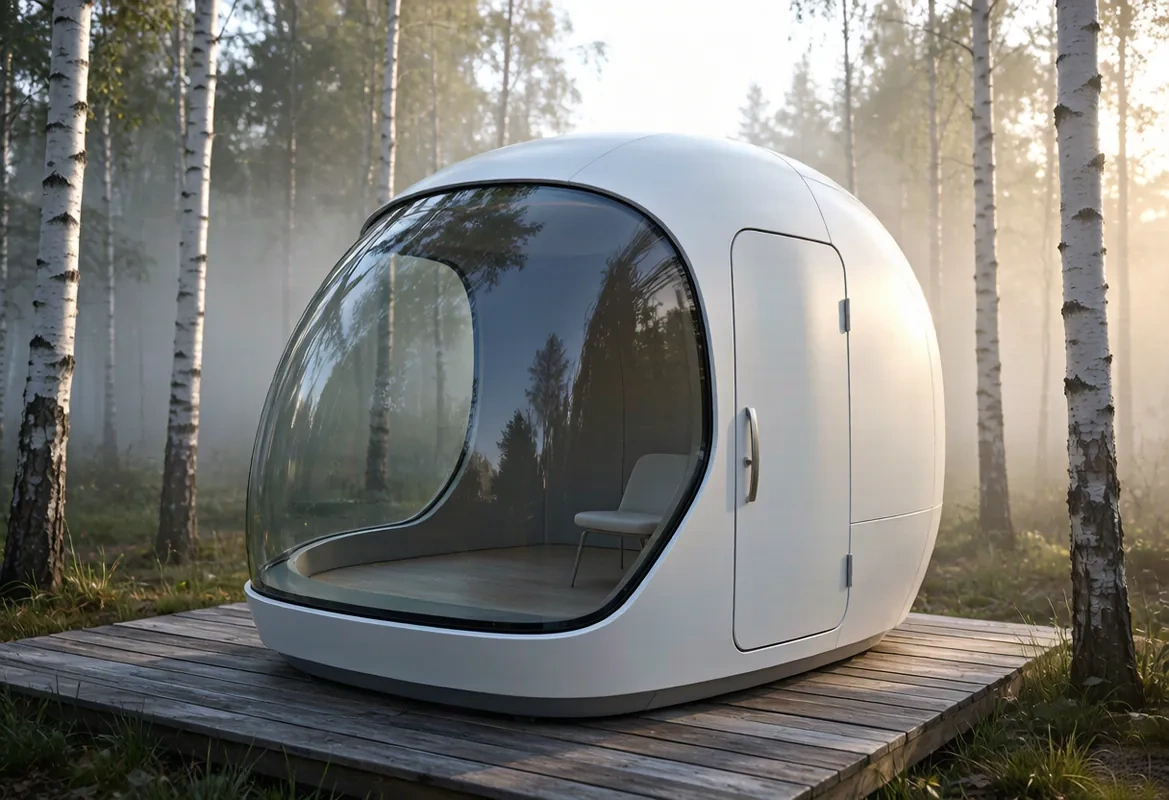
Capsule Home Cost Guide: What You Really Pay in 2026
EXW, shipping, install and the hidden line items — a transparent breakdown of total landed cost.
Read article →
How to Install a Capsule Home in 3 Days: A Step-by-Step Guide
From site prep to first guest — the exact sequence our install crews follow on every deployment.
Read article →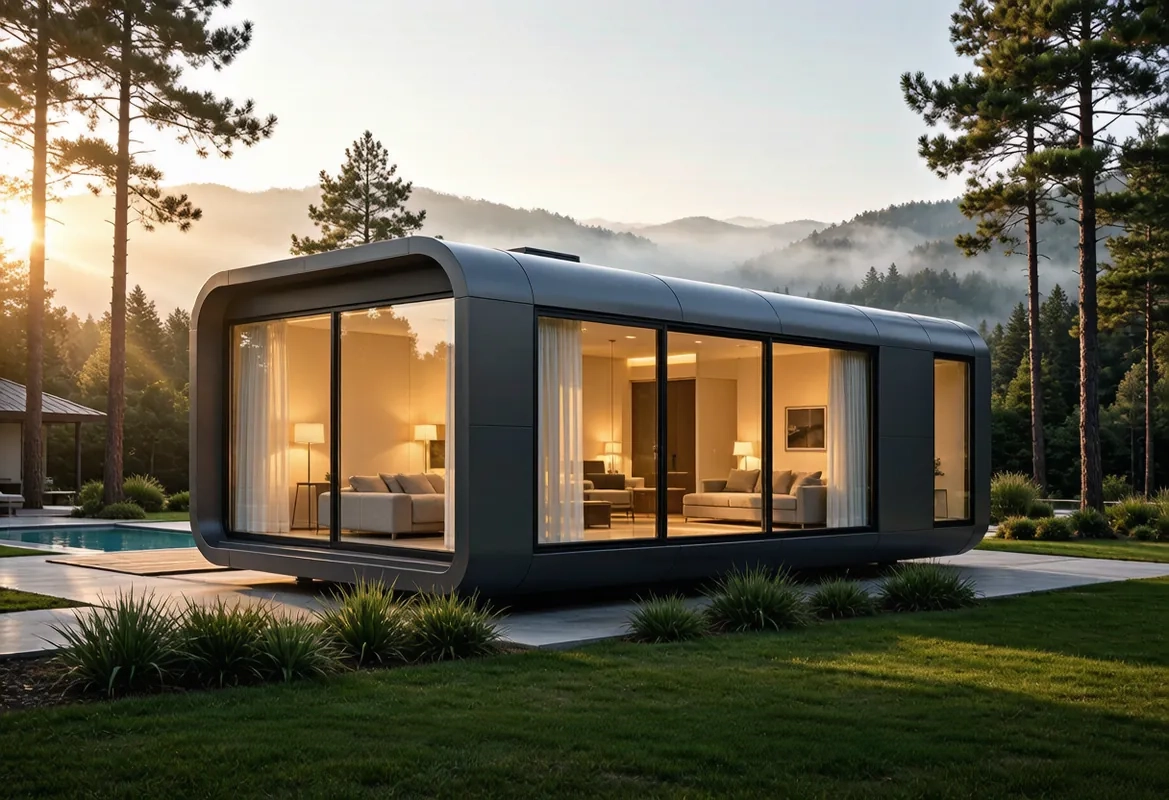
Real Owners, Real Numbers: Success Stories
How a lakeside resort, a Spanish glamping site and a Singapore dealer hit their targets.
Read stories →Talk to the Factory
Ready to Ride the 2026 Wave?
Get the latest catalog, pricing tiers and a layout sketch for your land — straight from the engineering team.