Planning a Hot Tub or Soak Tub Beside a Capsule Home
What a soak tub adds to a capsule rental - and what it costs in structure, water, power and turnaround time. A planning checklist covering loads, drainage, hygiene and winter operation.
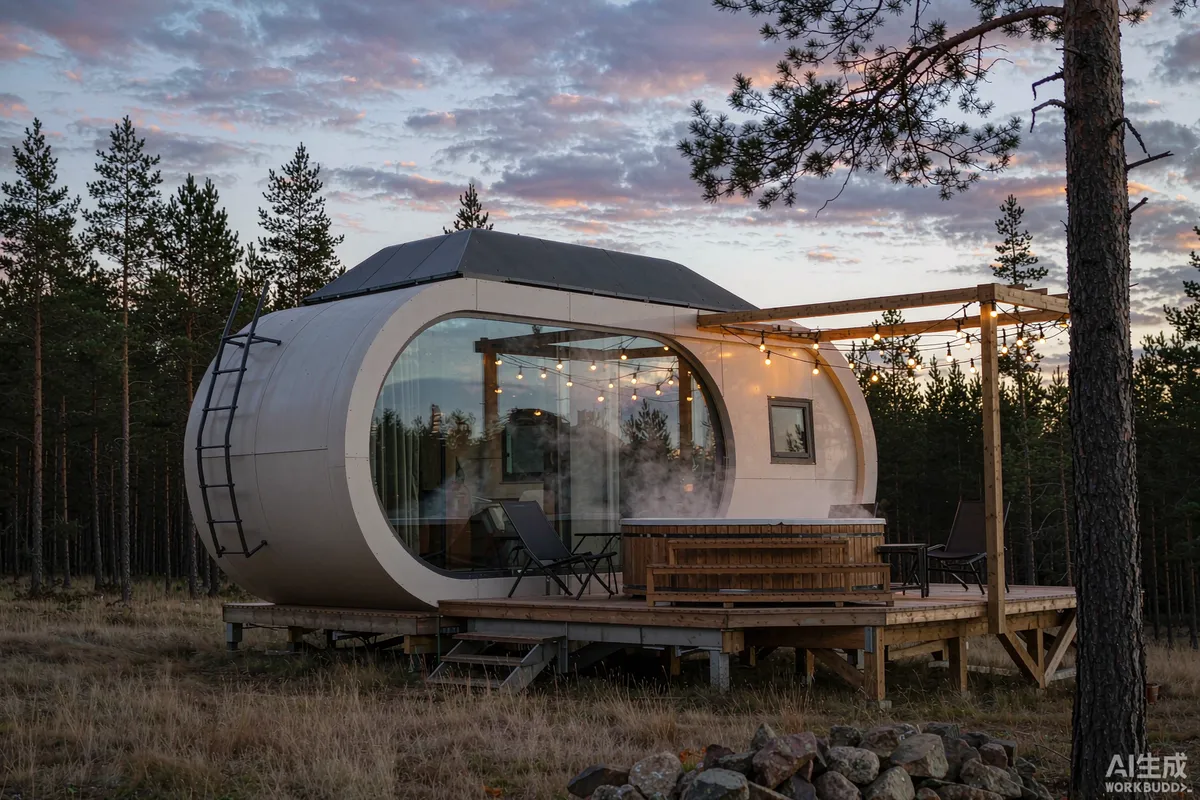
A soak tub is one of the few additions that reliably changes how a capsule home performs commercially: it lifts shoulder-season occupancy and it photographs well. It also introduces four things the base unit was not planned around - a concentrated structural load, a large volume of heated water, an additional electrical circuit, and a daily hygiene task. Those are manageable, but they are far cheaper to resolve at the design stage than after the deck is built. Where a tub is intended, treat it as part of the specification rather than as furniture, and confirm every assumption against the actual unit, site and local requirements. Requirements may vary by application, market and applicable standard.
Start With the Load, Not the Catalogue
A filled tub with occupants weighs far more per square metre than a person walking on a deck. The first conversation belongs with whoever is specifying the deck or terrace, not with the tub retailer.
- Decide where the tub sits relative to supports. A tub placed over a long span behaves differently from one directly above a beam line or pier.
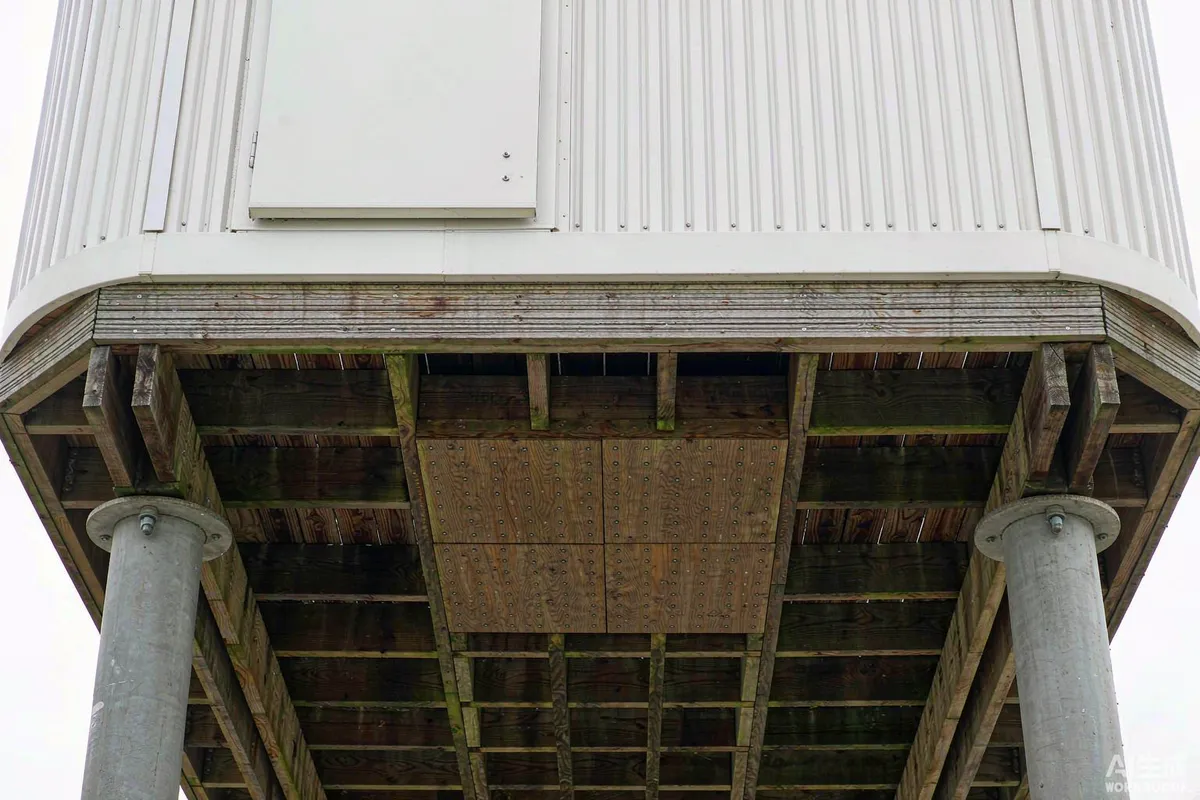
- Confirm the deck was designed for the concentrated load. Decking that is adequate for normal occupancy may not be for a point load of this size, particularly at an edge or cantilever.
- Plan access to the underside. Equipment is installed beneath most tubs, and it will need service. A hatch designed in advance is far better than one cut later.
- Check what sits below. If soil, services or a finished ceiling lie beneath the tub position, a leak becomes considerably more consequential.
The practical test is simple: give the designer the filled weight before the deck is detailed, and ask them to confirm the layout works. If that conversation happens after installation, the options narrow to moving the tub or rebuilding the deck.
Water and Drainage
Tub water comes from two directions: filling from the unit supply, and emptying to somewhere appropriate. Both need planning, and the second is the one most often improvised.
| Question | Why it matters |
|---|---|
| Where does the fill come from? | Filling several hundred litres competes with showers and the kitchen; it can affect other guests if several units share a supply |
| How long does filling take? | A long fill on turnaround day occupies time that housekeeping does not have |
| Where does discharge go? | Treated or untreated discharge has to reach a lawful destination; this should never default to the ground beside the deck |
| How often is it drained? | Draining frequency drives both water cost and the amount of work per cycle |
| Is there splash-out routing? | Water displaced by bathers needs somewhere to go that is not the deck structure |
Where a cluster of units shares one connection, add the tub to the peak demand calculation rather than assuming there is spare capacity. That calculation is covered in more detail in the discussion of shared supply for multiple units.
Electrical Supply and Running Cost
Heating and holding water is the dominant operating cost of a tub, and the shape of that cost depends on climate, usage and how well the unit retains heat.
- Confirm the circuit before choosing the tub. The heater and pump need a dedicated supply sized for continuous duty, and the existing unit load plan rarely has room left by default.
- Ask for measured or estimated consumption for your case. Published figures assume conditions that may not match a windy, cold site.
- Decide the holding strategy. Holding temperature continuously costs more than recovering between uses, but guests rarely tolerate a long warm-up.
- Check the insulation and cover specification. A well-insulated shell with a tight cover loses far less heat than the alternative, and this is where running cost is decided.
- Meter it if the unit already has monitoring. A tub that can be measured can be justified; one that cannot tends to be blamed for every high bill.
Hygiene: The Part That Decides Whether to Offer It at All
A tub shared between successive guests needs a defined routine and someone clearly responsible for it. This is not a task to leave to general housekeeping judgement.
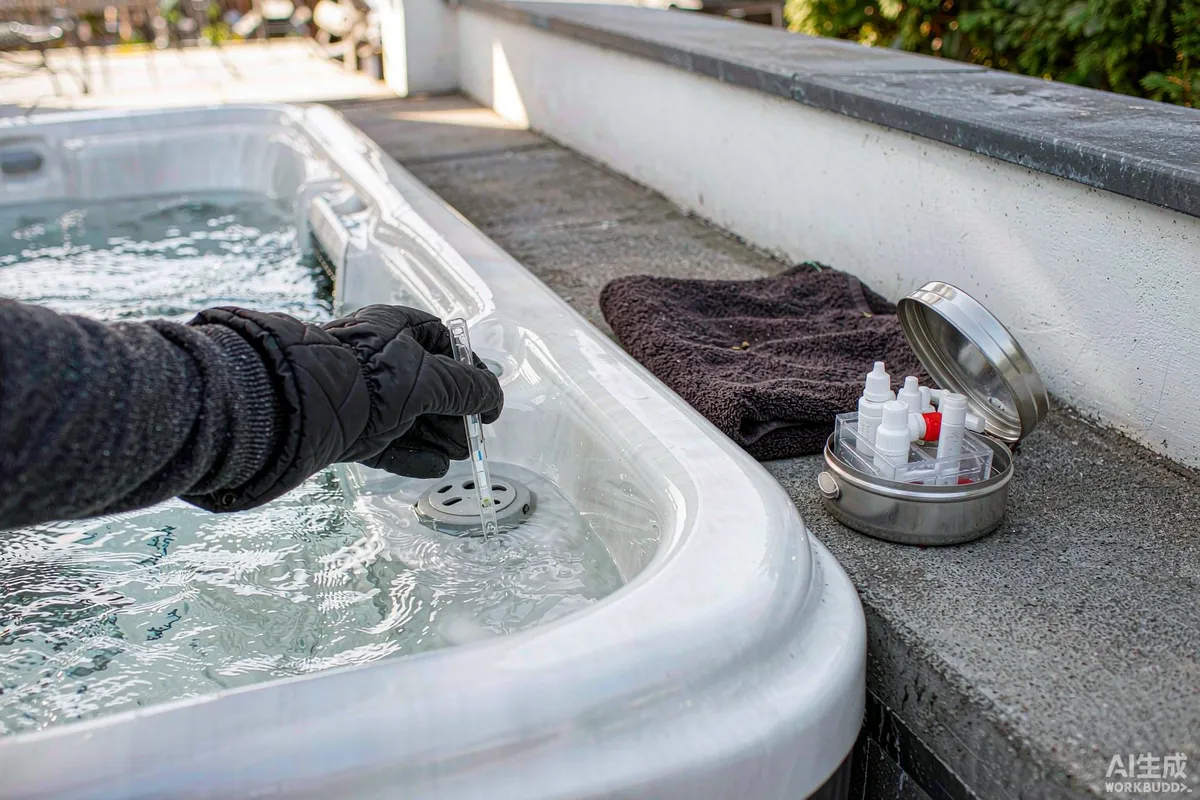
- Write the routine down. What is tested, with what, how often, and what the acceptable range is. A short procedure sheet is more reliable than memory.
- Test and record. Simple test strips and a log sheet take minutes and give evidence that the routine was followed, which matters if a question is ever raised.
- Size the routine to your turnover. If changeover is same-day, whatever the tub requires must fit inside that window, or the tub must be closed during cleaning.
- Plan for the water itself. Fill water quality varies by source; hard or iron-rich water brings its own staining and maintenance problems.
- Have a closure criterion. Decide in advance what condition triggers taking the tub out of service, and who has authority to do it.
Public accommodation is generally held to a higher expectation than a private hot tub, and what counts as adequate treatment, testing frequency and record keeping differs between jurisdictions and between operators. Do not infer a rule from a general guideline or from what another owner does - confirm the applicable expectation with the relevant local authority or a qualified professional for your location and use case. Requirements may vary by application, market and applicable standard.
Safety and Supervision
Whatever the regulations in your market, the practical arrangement should assume that guests will use the tub at night, in cold weather, and after drinking.
- A cover that locks or latches. Keeps heat in and removes an open-water hazard when the tub is not in use.
- A non-slip approach. The route from door to tub, and the step itself, are where falls happen.
- Lighting that is adequate but not glaring. Guests should be able to see the edge and the steps without losing the reason they came out.
- Short, plain rules in the unit. A few sentences on time limits, cover use, glass near the tub and children's supervision.
- A clear switch-off and emergency contact. Guests should know where the isolated control is and who to call.
Winter, Low Season and Shoulder Nights
The tub is often the reason someone books in the cold months, which means it has to work when conditions are least favourable.
- Confirm freeze protection. Pipework and equipment exposed during closure need a defined approach, and the arrangement should survive an unexpected cold snap.
- Expect longer recovery. Cold incoming water and low ambient temperature both extend warm-up time, so set expectations in the welcome material.
- Decide whether the tub operates year-round. A seasonal decision is easier to communicate than an intermittent one guests cannot predict.
- Check the walkway in snow and ice. A tub reached across an untreated deck is a liability regardless of how pleasant it looks in photographs.
Questions to Put to the Supplier
- What is the filled weight, and what supporting structure do you recommend beneath it?
- What electrical supply does it require, and does it fit a unit already specified without the tub?
- What is the estimated energy use per day in continuous holding, and in intermittent use?
- What water treatment and testing routine do you recommend for short-term rental use?
- What is the recommended drain-down procedure, and where should discharge be routed?
- What service access is required, and can it be accommodated on a deck rather than at ground level?
- What warranty covers the shell, the heater and the pump, and what is excluded under rental use?
Get the answers in writing, along with the unit specification. A tub that arrives and then turns out to need a new circuit and a rebuilt deck is the most expensive version of this amenity, and it is entirely avoidable with a specification written before the order.
More from the Blog

Capsule Home Cost Guide: What You Really Pay in 2026
EXW, shipping, install and the hidden line items — a transparent breakdown of total landed cost.
Read article →
How to Install a Capsule Home in 3 Days: A Step-by-Step Guide
From site prep to first guest — the exact sequence our install crews follow on every deployment.
Read article →
Real Owners, Real Numbers: Success Stories
How a lakeside resort, a Spanish glamping site and a Singapore dealer hit their targets.
Read stories →Talk to the Factory
Ready to Ride the 2026 Wave?
Get the latest catalog, pricing tiers and a layout sketch for your land — straight from the engineering team.