The Handover Documentation Pack You Should Receive With a Capsule Home
What documentation should arrive with a capsule home: drawings, service schedules, appliance manuals, warranties, spare parts list and commissioning records - and why each matters later.
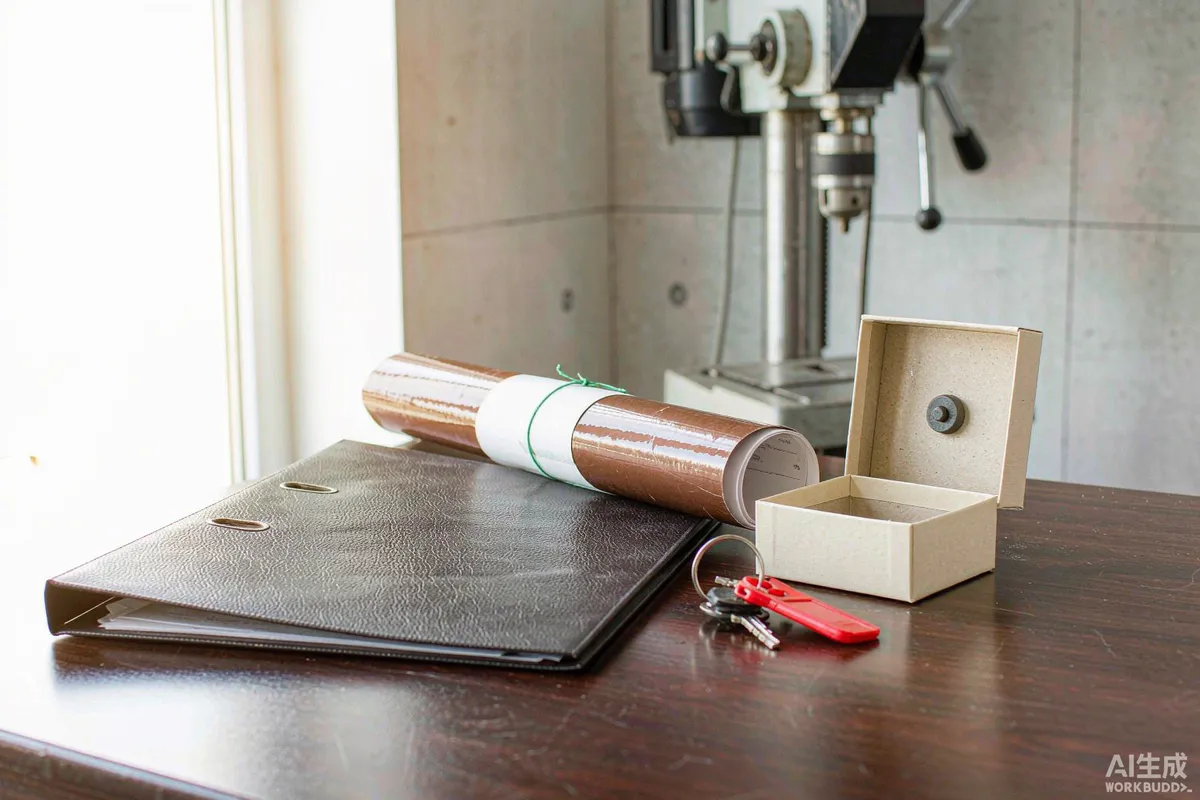
Documentation is the least exciting part of a capsule home order and the part people most often skip asking for. Then, two years later, a heating component fails, an insurer asks a question, a local authority wants a detail, or a new maintenance contractor needs to know where the isolation valve is - and nobody can find the answer.
The useful moment to request documents is before shipment, not after. It is a normal request at that stage, it costs nothing extra, and it is much harder to reconstruct once the unit has left the factory and the production file has moved on.
What a Complete Pack Usually Contains
Suppliers differ in how they package this, but a serious handover set covers the following ground. Ask for it as a list rather than hoping it arrives.
- General arrangement drawings - dimensions, layout, door and window positions, weights.
- Foundation or support layout - positions, levels, tolerances, bearing requirements.
- Lifting and handling procedure - designated lifting points, sling arrangement, transport dimensions.
- Service connection schedule - water, waste, electrical, ventilation, data; positions and ratings.
- Electrical information - load schedule, circuit arrangement, protective devices, connection requirement.
- Appliance manuals - for every fitted item, in a language your team can use.
- Materials and finishes schedule - what the unit is finished in, and how to maintain it.
- Warranty document - scope, duration, exclusions, and the claim process.
- Spare parts list - recommended spares with part references.
- Maintenance schedule - what to check, and at what interval.
- Commissioning or inspection records - what was tested before shipment.
- Serial and identification records - unit, and major components where applicable.
Not every supplier will have every item in the exact format you expect. The point is to ask for the set and see what comes back, then decide which gaps actually matter for your use.

Why Each Document Matters Later
It is easier to justify the request when you know what each item is for. These are the situations in which each one gets used.
| Document | When you will need it |
|---|---|
| General arrangement | Planning a deck, a ramp, a second unit, or answering a permit question |
| Support layout | Preparing the site, and for any later re-levelling or relocation |
| Lifting procedure | The first installation, and every subsequent move |
| Service schedule | Connecting utilities, and any later fault-finding |
| Electrical information | Sizing a supply, adding circuits, or a periodic inspection |
| Appliance manuals | Warranty claims, winterisation, and writing the guest house manual |
| Finishes schedule | Ordering matching materials for repair or refinishing |
| Warranty document | The day something fails, and to know what is excluded before it does |
| Spare parts list | Stock planning, and getting the right part on the first order |
| Maintenance schedule | Building the annual calendar and briefing whoever does the work |
| Commissioning records | Showing the unit was tested, and establishing a baseline condition |
Language, Units and Format
Practical details that cause more friction than they should.
- Ask for the language you need. Manuals in a language your maintenance team cannot read are effectively missing.
- Confirm the measurement units and whether drawings are dimensioned in metric or imperial.
- Request both a physical and a digital copy - the physical set goes in the unit, the digital set goes in your records.
- Ask for editable or printable files where you may need to annotate them.
- Check the revision or issue date so you know whether you have the version matching your unit.
- Confirm any document required by your market is included, rather than assuming it exists.
Checking the Pack at Handover
Do not file it unopened. Thirty minutes with the pack at handover prevents a great deal of later correspondence.
- Check the unit serial or identification matches the documents you were given.
- Confirm the as-built reality matches the drawing - door positions, service points, controls.
- Verify every fitted appliance has a manual, and that the model matches what is installed.
- Read the warranty scope and exclusions now, while you can still ask a question.
- Record the commissioning results and keep them with the unit file.
- Photograph serial plates and component labels - they are easier to read in a photograph than behind an appliance.
- Log what is missing and ask for it in writing, on the day, not months later.
Photographing labels is disproportionately useful. Serial numbers on the underside or rear of appliances are the single most commonly missing piece of information in a later warranty claim.
Building Your Own Unit File
Whatever the supplier provides, you will end up maintaining your own record. Set the structure up once and apply it to every unit.
- One file per unit, physical or digital, identified by the same reference used in your booking or asset system.
- Supplier documents in one section, your own records in another.
- Installation records - level readings, support layout, photographs before backfill.
- Service connection records - who did what, and what was tested.
- Maintenance and repair history with dates and costs.
- Warranty claims and outcomes.
- Inventory, with photographs of condition at handover and after any refurbishment.
Use one identifier everywhere - on the unit marker, in the booking system, on the meter label and on the file. A unit called different things by different people will eventually be mis-serviced.
What to Do When Something Is Missing
Gaps are normal; the response to them is what matters.
- Ask in writing, with the specific item named, and keep the thread.
- Ask early. Documentation requests get harder to satisfy as time passes and records are archived.
- Accept an equivalent - a photograph of a serial plate may be as useful as a certificate.
- Record what you could not get, so the gap is known rather than discovered.
- Feed it into the next order. A specification that stated the documentation requirement is easier to enforce than a conversation afterwards.
Warranty Registration and Records
Documentation and warranty only work together if the administrative side is done at the right time. A surprising number of claims fail on dates rather than on substance.
- Register the unit where the supplier requires it, and note the confirmation.
- Record the start date of each warranty period - units delivered in batches may have different dates.
- Diary the expiry of each element, because different components often carry different periods.
- Keep proof of purchase and delivery with the unit file rather than in an email account.
- Record maintenance as it is done, since many warranties are conditional on it.
- Note who is authorised to claim - useful when a contractor or a new member of staff is involved.
- Photograph before claiming. Most suppliers will ask for images, and a claim sent with them moves faster.
The practical test is whether someone who has never seen this unit could pick up the file and make a claim from it. If not, the file is incomplete - regardless of how much paper is in it.
A Request Checklist
- Documentation set requested in writing before shipment.
- Language, units and file formats specified.
- Drawings: general arrangement, support layout, lifting procedure.
- Service and electrical schedules.
- Appliance manuals for every fitted item.
- Warranty scope, exclusions and claim process.
- Spare parts list, maintenance schedule, commissioning records.
- Serial numbers recorded and photographed.
- Gaps logged and requested the same day.
- Per-unit file set up with a single consistent identifier.
Requirements for documentation, declarations and marking vary by market and by how the unit is classified on arrival. Requirements may vary by application, market and applicable standard - confirm what your authority or insurer expects, and ask your supplier for it by name.
More from the Blog

Capsule Home Cost Guide: What You Really Pay in 2026
EXW, shipping, install and the hidden line items — a transparent breakdown of total landed cost.
Read article →
How to Install a Capsule Home in 3 Days: A Step-by-Step Guide
From site prep to first guest — the exact sequence our install crews follow on every deployment.
Read article →
Real Owners, Real Numbers: Success Stories
How a lakeside resort, a Spanish glamping site and a Singapore dealer hit their targets.
Read stories →Talk to the Factory
Ready to Ride the 2026 Wave?
Get the latest catalog, pricing tiers and a layout sketch for your land — straight from the engineering team.