Capsule Homes on Farms and Vineyards: Planning an Agritourism Stay
Agritourism suits capsule homes well, but working land imposes its own rules. Here is how farms and vineyards plan a guest unit.
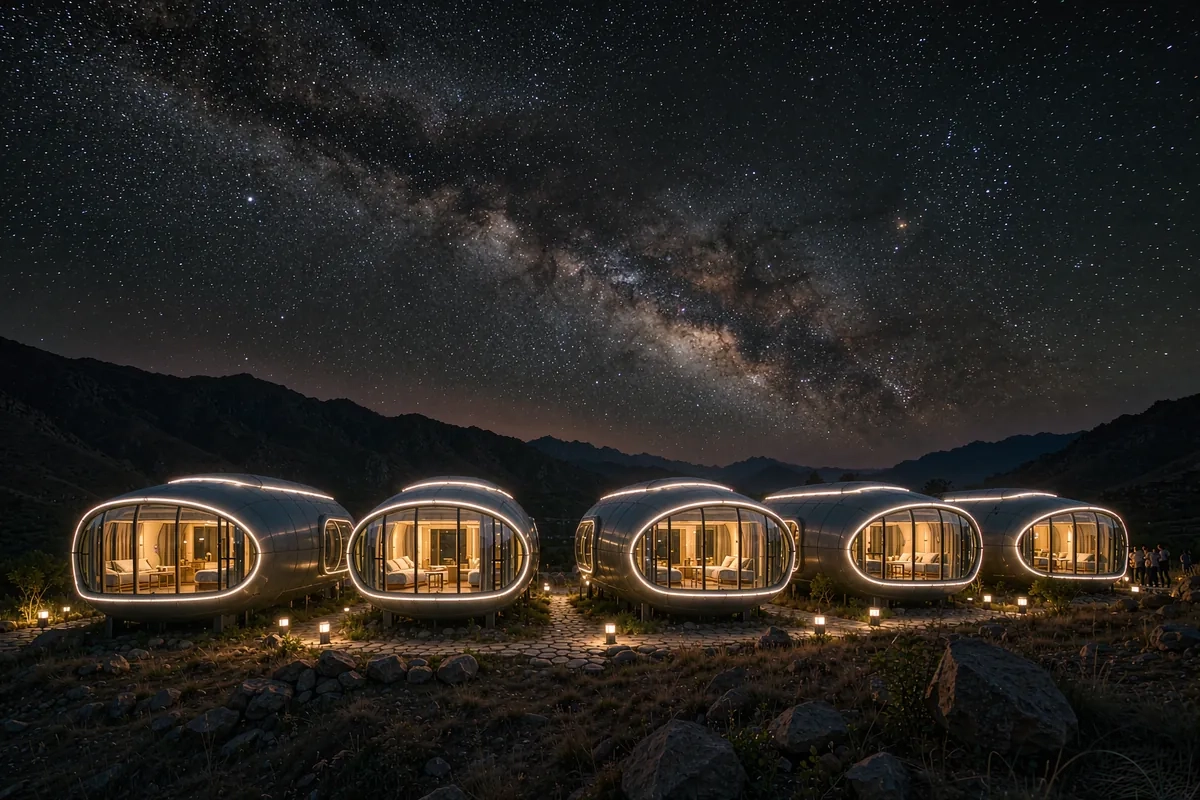
Farms and vineyards are among the strongest fits for a capsule home. The land already has the thing guests are paying for - space, quiet, a view and a working landscape - and the unit adds accommodation without the long programme and heavy footprint of a conventional build. A compact unit can be placed with minimal ground disturbance, delivered in a single lift, and moved later if the plan changes.
The catch is that a working farm is not an empty plot. Machinery has to get through, livestock and crops impose their own constraints, and rural land brings services and approvals questions that do not exist on a serviced site. Plan around the farm's operations rather than around the view, and the unit works with the business instead of against it.
Why the Fit Is Genuinely Good
- Low ground disturbance. A compact unit on piers or a light pad leaves most of the field intact.
- Speed. Accommodation can be earning within a season rather than within a building programme.
- Reversibility. If the placement does not work, the unit can be relocated - valuable on land that may change use.
- Scale control. One or two units can be tested before committing to more.
- Distinctive product. A well-sited pod photographs in a way that a converted outbuilding does not.
That combination is why agritourism operators are among the more interesting buyers in this category: the unit solves an accommodation problem and a marketing problem at the same time.
Siting Around the Farm's Operations
This is where most farm placements are won or lost. The farm was working before the guest unit arrived and will keep working after it.
| Constraint | What it means for siting |
|---|---|
| Machinery routes | Never block a track; keep the unit clear of turning and passing widths |
| Spray and dust drift | Set the unit away from sprayed rows and from bare ground that generates dust |
| Livestock | Keep a real barrier; animals damage cladding, glazing and service runs |
| Odour and noise | Prevailing wind and distance from sheds, slurry storage and handling areas |
| Seasonal operations | Harvest traffic, early starts and night work near the unit |
| Biosecurity | Some enterprises restrict visitor movement for disease-control reasons |
Walk the site with whoever runs the farm, at the busiest point in the calendar if possible. Constraints that are invisible in February are obvious in September.
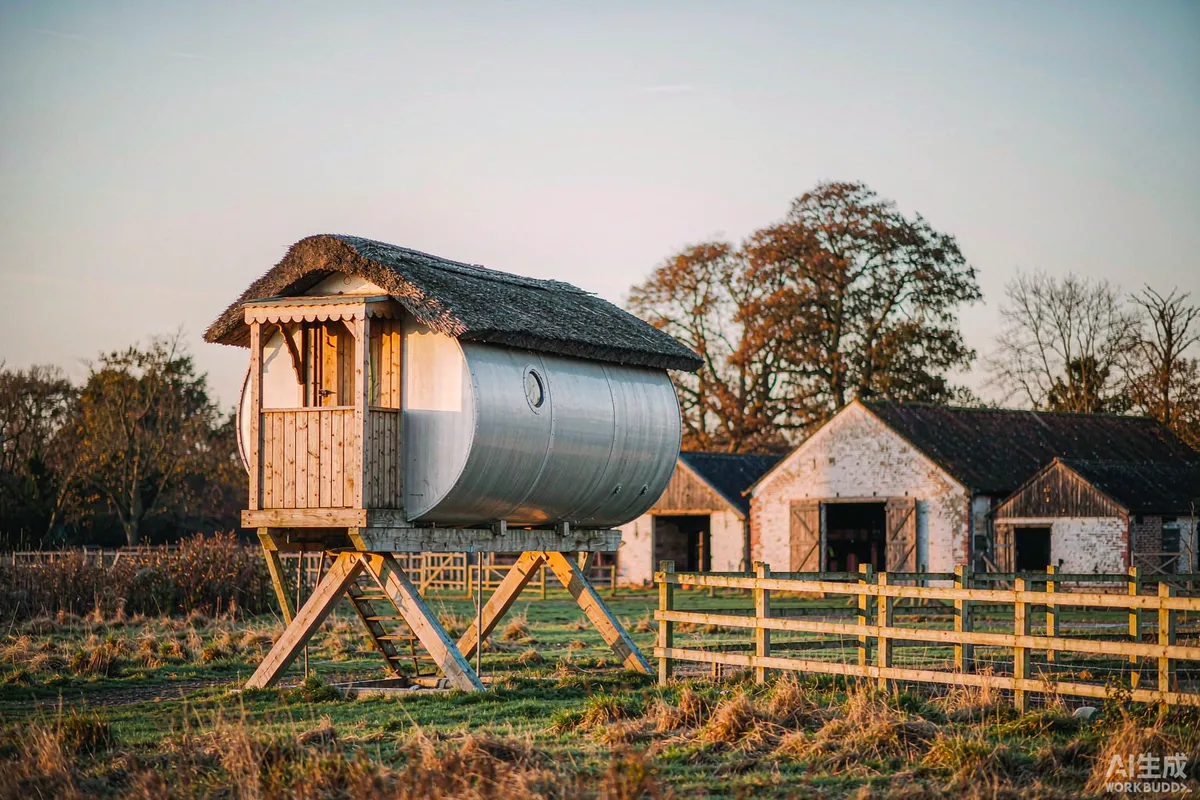
Access: Two Different Routes
A farm guest unit needs two separate access solutions, and conflating them is a common error.
- Delivery access - a one-off route for the transport vehicle and crane, which may be firmer, wider or temporary.
- Guest access - a route that works year-round, in the dark, in wet weather, for a guest towing a suitcase and driving an ordinary car.
Guest access is the harder of the two. A farm track that is perfectly usable for a tractor can be impassable for a low-clearance car in March. Decide early whether the route needs upgrading, surfacing, lighting and passing places, and budget for it separately - it is frequently the largest non-unit cost on a farm project.
Services on Rural Land
- Power - confirm spare capacity at the farm supply and the distance to a connection point; long runs need proper sizing.
- Water - a farm supply may need treatment and separate metering for a letting unit.
- Drainage and waste - a septic tank or treatment plant sized for the occupancy, sited with access for emptying.
- Data - rural connectivity varies widely; test on site before promising guests anything.
- Heating and hot water - sized for the worst case, since a rural letting in cold weather has no fallback.
Where grid services are impractical, off-grid options exist - but they change the specification, the cost and the maintenance burden. Decide which way you are going during design, not after the unit arrives.
The Guest Experience
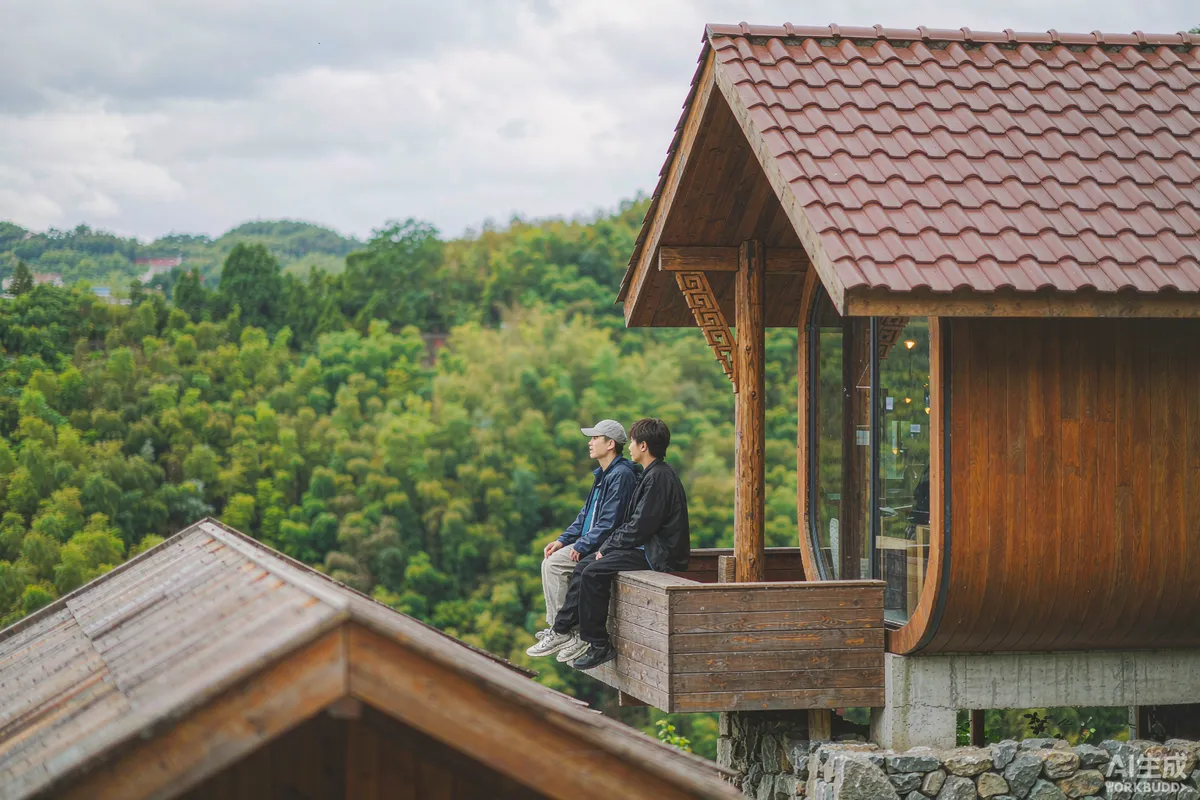
On a farm the landscape is the amenity, and the unit should be positioned to use it rather than to compete with it. A pod placed for privacy and outlook sells better than one placed for convenient services - provided the services still reach it.
- Orient the glazing at the view you would describe in the listing.
- Give guests outdoor space - a small deck and somewhere to sit outside.
- Separate guest parking from farm operations clearly.
- Provide clear arrival instructions; rural navigation fails at the last kilometre.
- Set expectations honestly about farm sounds, smells and seasonal activity.
Approvals on Agricultural Land
This is the part that needs the most care. Many jurisdictions treat agricultural land as a restricted category, where new accommodation requires a change of use, a specific permission, or both - and where rules differ between a diversification letting, a worker's dwelling and a permanent residence.
- Establish the land's current planning classification before ordering anything.
- Ask specifically about tourist or short-stay letting, which is often a distinct category.
- Ask about any agricultural occupancy or diversification conditions already attached to the holding.
- Confirm drainage and waste arrangements, which are usually controlled separately.
- Confirm whether the placement is treated as temporary or permanent - it changes the whole regime.
Requirements may vary by application, market and applicable standard. Take the classification question to the local planning authority and a licensed professional before you commit; on agricultural land this is the single decision most likely to change the project.
Working With the Seasons
A farm is a seasonal business and the guest unit has to fit that rhythm rather than fight it. Harvest is the obvious pressure point: machinery moves early and late, tracks carry mud and dust, and the parts of the farm that are charming in June are working in October.
- Plan the placement around the harvest window - both for delivery and for the first guests.
- Set expectations in the listing about seasonal activity rather than apologising for it later.
- Use the quiet season for maintenance - exterior cleaning, seal checks, deck treatment.
- Consider what the unit does in winter - closed, let, or used by the farm for staff or family.
- Photograph the unit in the season you sell hardest, and again at its worst, so the listing is honest.
Operators who lean into the seasonal character - harvest stays, vineyard pruning weekends, spring lambing - often find the farm's calendar becomes a selling point rather than a constraint. That only works if the placement was planned around it.
A Sensible Sequence
- Walk the site with the farm operator, at the busiest time of year.
- Confirm the planning position for short-stay letting on this land.
- Choose the location around machinery, livestock and drift - then refine it for the view.
- Confirm delivery access and crane standing ground.
- Design the services: power, water, drainage, data.
- Upgrade the guest access route.
- Place the unit, build the deck, and photograph it in the season you will be selling.
Follow that order and a farm placement is one of the lower-risk, higher-return uses for a capsule home. Skip the planning step or the machinery conversation and it becomes an expensive ornament in a field.
More from the Blog
Capsule Home Cost Guide: What You Really Pay in 2026
EXW, shipping, install and the hidden line items — a transparent breakdown of total landed cost.
Read article →
How to Install a Capsule Home in 3 Days: A Step-by-Step Guide
From site prep to first guest — the exact sequence our install crews follow on every deployment.
Read article →
Real Owners, Real Numbers: Success Stories
How a lakeside resort, a Spanish glamping site and a Singapore dealer hit their targets.
Read stories →Talk to the Factory
Ready to Ride the 2026 Wave?
Get the latest catalog, pricing tiers and a layout sketch for your land — straight from the engineering team.