Refinishing a Capsule Home Exterior: Cleaning, Repair and Repainting
How to clean, repair and refinish the exterior shell of a space capsule home - surface preparation, coating choice, and when a repair belongs back at the factory.

Refinishing a capsule home exterior is ninety per cent preparation and ten per cent coating. The unit is delivered with a factory finish applied under controlled conditions, and that finish is better than anything you can achieve outdoors - so the goal of maintenance is to preserve it for as long as possible, and the goal of refinishing is to reproduce factory conditions as closely as the site allows. Wash gently and often, repair damage while it is small, and only repaint when the existing coating has genuinely reached the end of its life.
The Short Answer
Wash the shell with a mild detergent and a soft brush on a schedule set by how exposed the site is. Treat scratches and chips as soon as you see them, using the touch-up material supplied with the unit. Before any refinishing, identify what the existing coating is, because compatibility decides whether the new coat adheres or lifts. Clean, degrease, sand the damaged area, prime bare metal, then apply the topcoat in the conditions the coating manufacturer specifies. Keep the paperwork: the finish specification is part of what makes a unit resaleable.
Routine Washing
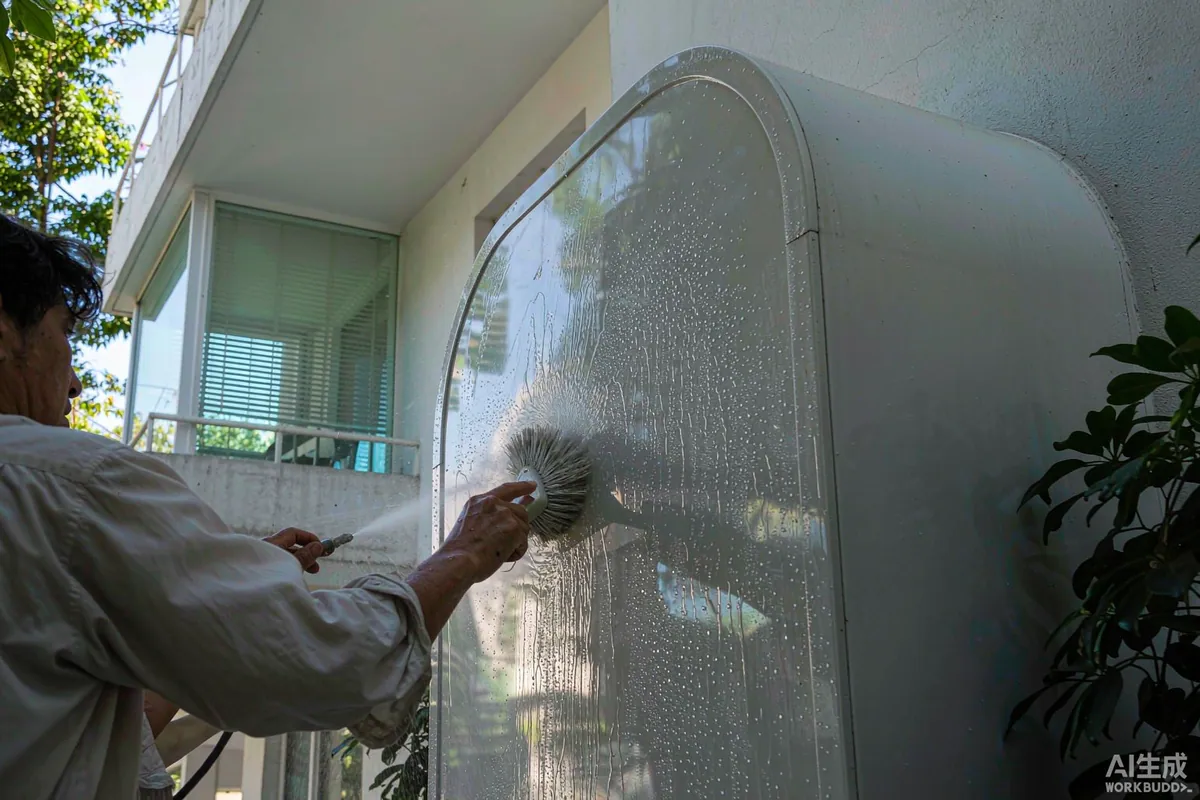
Most exterior damage that gets blamed on coating failure actually starts with dirt. Grit left on a surface holds moisture, and organic growth on a shaded elevation does the same. Washing is the cheapest maintenance there is.
- Use a mild pH-neutral detergent and a soft brush or cloth - not an abrasive pad.
- Rinse with clean water afterwards; detergent residue attracts dirt.
- Work from the top down, and do not let detergent dry on the surface.
- Avoid high-pressure washers near seals, glazing channels and coating edges.
- Pay attention to horizontal surfaces and shaded elevations, where growth starts.
Frequency depends entirely on exposure. A sheltered garden unit may need one wash a year; a coastal or roadside unit may need several. On a coastal site, fresh water rinsing also removes salt before it concentrates - see the coastal maintenance guidance for that specific case.
Repairing Chips and Scratches
Every unit picks up minor damage in transport and installation. Left alone, a chip becomes a corrosion point; treated early, it disappears. The repair sequence is short but the steps are not optional.
- Clean and degrease. A repair over a contaminated surface will fail regardless of what you paint on top.
- Feather the edges. Sand the surrounding coating so the repair blends rather than sits on top.
- Prime bare metal. This is the step that decides whether the repair lasts. Do not skip it.
- Apply the topcoat in thin coats rather than one thick one, and allow the stated drying time between coats.
- Record it. Note the date, the product and the location, so a pattern can be spotted later.
Use the touch-up material supplied with the unit where you have it. Matching colour is easy; matching a coating system is not, and an incompatible product can lift the surrounding finish.
What Affects How Long a Finish Lasts
Two identical units age at different rates, and the difference is almost always site conditions rather than coating quality. Knowing which factors apply to your plot tells you how much maintenance to expect.
- Orientation. The elevation that takes the worst of the weather and the most sun degrades first, and it degrades visibly faster than the sheltered side.
- Shade and damp. A shaded elevation stays wet longer, which encourages organic growth and keeps any contamination active.
- Salt and road spray. Both leave deposits that hold moisture against the surface.
- Contact with vegetation. Plants against the shell trap water and abrade the coating in wind.
- Abrasion. Anything that rubs - a gate, a stored item, a bike leaned against the wall - creates the damage that corrosion starts from.
None of this means a finish is inadequate. It means maintenance should be judged by exposure rather than by age, and that the worst-facing elevation is the one to inspect first.
Deciding Whether to Refinish
Repainting is a real project, not a weekend job, and it is worth being honest about whether it is needed. Three signs point to genuine coating failure rather than cosmetic dullness:
- Chalking that does not wash off. Pigment on your hand after cleaning means the binder is degrading.
- Flaking or lifting at edges and joints. Adhesion loss spreads, and spot repair will not hold it.
- Corrosion under the coating. Visible as staining or bubbling. The coating has to come off to deal with it properly.
Dullness on its own is often recoverable with a proper clean and a suitable restorative product. Try that before committing to a full repaint.
If You Do Refinish: Preparation
The outcome is decided before a brush is opened. A factory finish works because it is applied to a clean, prepared surface in controlled conditions - and the closer you get to that, the better the result.
Steps
- Identify the existing coating, and confirm what is compatible with it. Ask the factory if you are unsure.
- Wash thoroughly and degrease. Any residue will show as a defect in the new coat.
- Abrade to provide a key, and remove all dust afterwards.
- Prime all bare metal the same day you expose it, before it can oxidise.
- Mask glazing, seals and hardware. Overspray on seals and glass is difficult to remove cleanly.
- Apply within the temperature and humidity range the coating specifies, and out of direct sun and wind.
Two conditions defeat most site refinishing: damp and dust. If the unit is on a gravel plot next to a track, or in a humid spell, the practical answer is to wait rather than to work around it.
When to Send It Back
Some work genuinely belongs in a factory bay. Panels with structural damage, large-area coating failure, or anything that needs the unit dismantled are not site jobs. A factory can strip, prepare and recoat in controlled conditions, and it can match the original system rather than approximating it. The cost of transport is usually lower than the cost of a poor result that has to be done twice.
This is also the argument for buying from a supplier who documents the finish system and supplies touch-up material. Haishu finishes shells in the factory as part of turnkey delivery, which means there is a specification to return to - the unit's original coating is known, not guessed at.
Safety and Compliance
Working at height, handling coating products, and disposing of wash water and waste are all subject to local rules. Requirements may vary by application, market and applicable standard. Use appropriate access equipment rather than ladders on uneven ground, follow the coating manufacturer's instructions for handling and ventilation, and collect wash water rather than letting it drain to ground where that is required.

Keeping Records
Keep a simple log: date, what was done, what product was used, and photographs before and after. It takes minutes and it does three useful things - it shows where a recurring problem is, it supports a warranty conversation, and it is evidence of maintenance when the unit is sold. Buyers of second-hand units ask about the shell finish more than about almost anything else, and a dated record is a better answer than an assurance.
The Takeaway
Wash gently and often, repair chips immediately with the right material, and only refinish when the coating has actually failed. If you do refinish, spend the time on preparation and compatibility rather than on the topcoat. And keep the records - the finish is the first thing a buyer looks at and the easiest thing to devalue through neglect.
More from the Blog

Capsule Home Cost Guide: What You Really Pay in 2026
EXW, shipping, install and the hidden line items — a transparent breakdown of total landed cost.
Read article →
How to Install a Capsule Home in 3 Days: A Step-by-Step Guide
From site prep to first guest — the exact sequence our install crews follow on every deployment.
Read article →
Real Owners, Real Numbers: Success Stories
How a lakeside resort, a Spanish glamping site and a Singapore dealer hit their targets.
Read stories →Talk to the Factory
Ready to Ride the 2026 Wave?
Get the latest catalog, pricing tiers and a layout sketch for your land — straight from the engineering team.