Capsule Homes in Emergency and Disaster Relief Housing: What Deployment Really Involves
Factory-built capsule units are increasingly considered for post-disaster shelter. What actually determines whether they can be deployed fast - stock, logistics, site services and permissions.
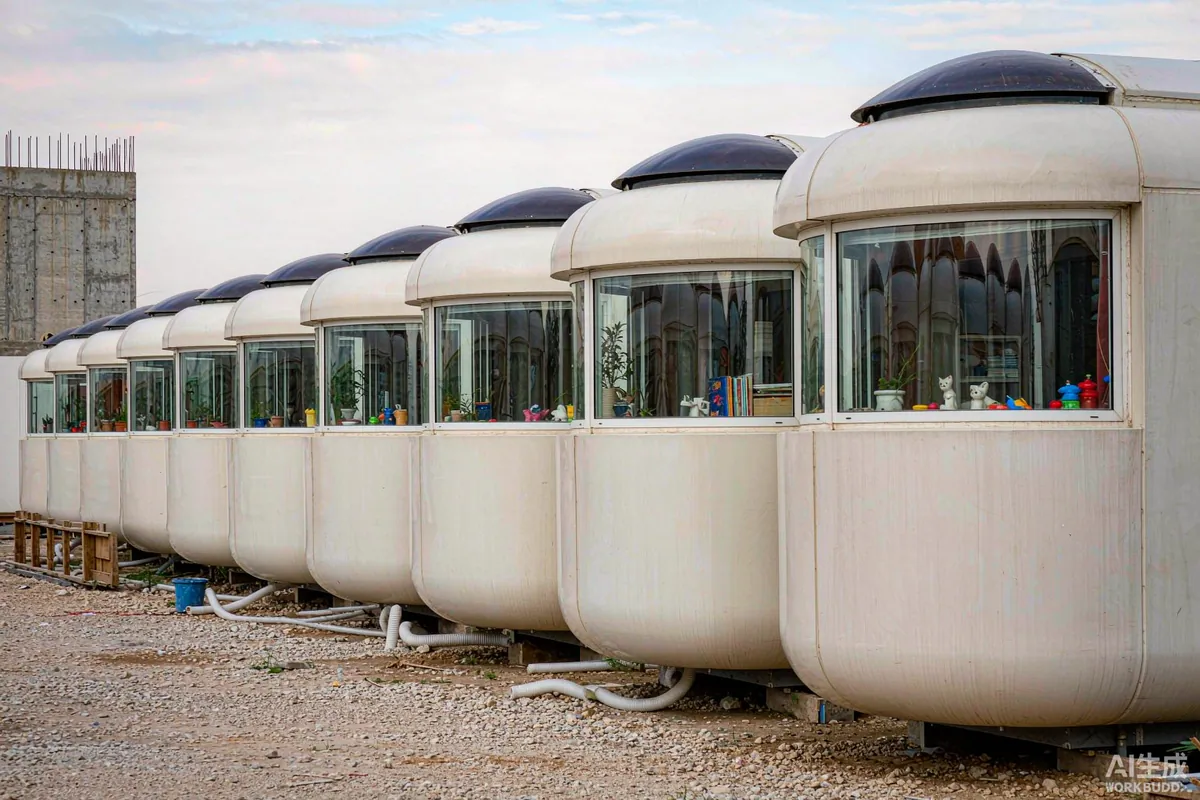
When a disaster displaces households, the shelter question is answered in stages: immediate refuge, then transitional shelter, then permanent reconstruction. Factory-finished capsule units are increasingly discussed for the middle stage, and occasionally for the first. The interesting question is not whether a unit can house someone - obviously it can - but whether it can arrive, be placed and be made habitable inside the timeframe that matters, on a site that has just been damaged.
The Short Answer
Three things decide it: how quickly finished units can reach the affected area, whether the receiving site can provide or substitute for water, power and waste services, and how the unit is classified under local rules for temporary occupation. A unit that is comfortable and durable still fails the brief if it arrives after the emergency phase or cannot legally be occupied. Planning for all three has to happen before an event, not during one.
Three Shelter Phases, Three Different Requirements
Conflating the phases is the most common analytical error in this field. Each has a different clock and different success criteria.
| Phase | Timescale | What is needed | Where a capsule unit fits |
|---|---|---|---|
| Emergency refuge | Days | Capacity, speed, minimal services | Poor fit: freight and site preparation rarely complete in days |
| Transitional shelter | Months to a few years | Dignity, privacy, weatherproofing, basic services, security | Good fit: durable, lockable, warm, repeatable |
| Recovery and reconstruction | Years | Permanent housing or a return home | Partial fit: units may be redeployed, sold on, or converted to other uses |
The transitional phase is where a factory-finished unit has the strongest case. It needs housing that is better than a tent and faster to provide than permanent construction, and it needs to last long enough that building it properly is worthwhile.
Lead Time Is the Governing Constraint
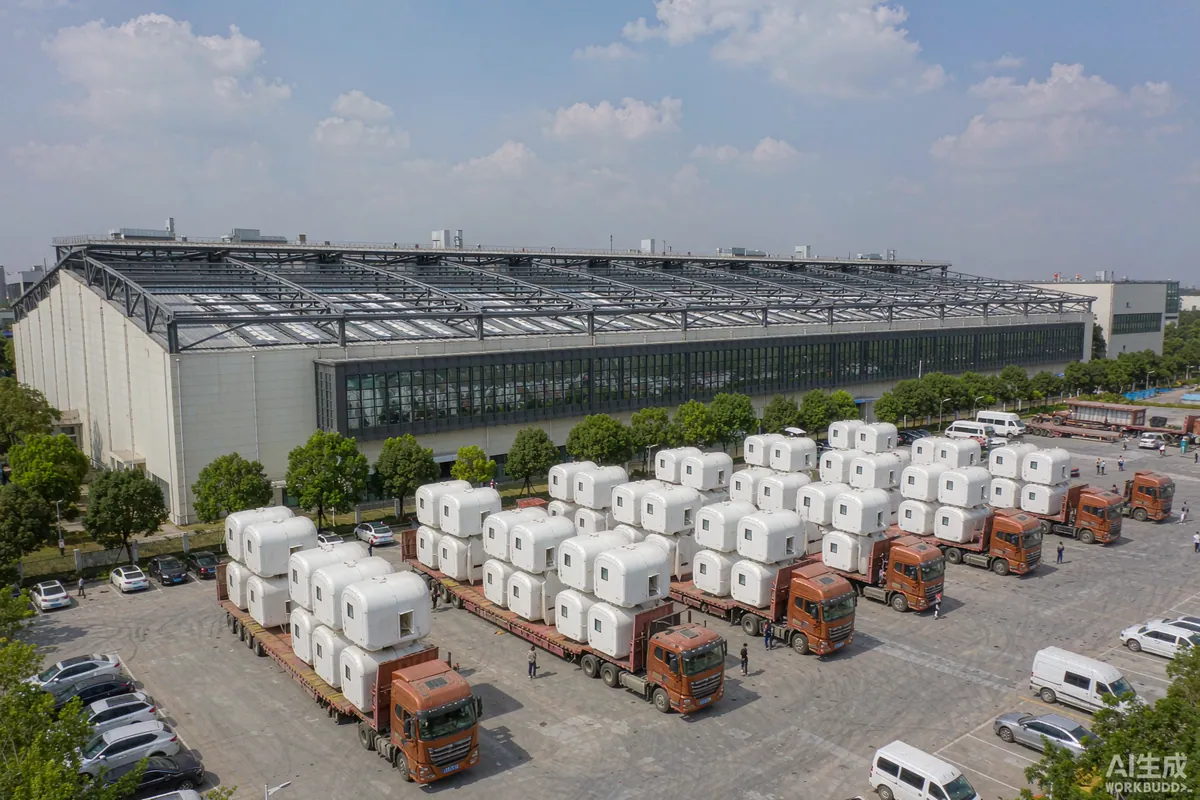
A capsule unit is a manufactured product, and manufactured products have production time before they have transit time. Haishu's A Series is quoted at 10-60 working days depending on configuration and order size, with units shipped one per 40HQ container from China. For a planned programme that is a workable schedule. For an unplanned emergency it is not, unless stock exists.
- Pre-positioned stock. The only way to compress lead time to days. It requires warehousing, maintenance of stored units, and someone willing to fund inventory that may not be used for years.
- Standing agreements. Framework contracts with agreed specifications and priority production slots, activated when needed. Cheaper than stock, slower than stock.
- Reactive procurement. Ordering after the event. Realistic for the transitional phase, unrealistic for the emergency phase.
Standardisation is what makes either of the first two viable. A programme that specifies one or two configurations can hold stock and spare parts; a programme that allows bespoke units cannot.
Logistics Into a Damaged Area
The hardest logistics problem is rarely the ocean leg. It is the last stretch: a port or road network that may be damaged, congested with relief traffic, or subject to access controls.
- Containerised transport helps. A unit that travels as standard cargo moves on existing equipment and handling infrastructure rather than requiring specialised trailers or permits.
- Weight and dimensions matter. Bridge limits, road width, crane availability at the destination and ground bearing capacity all constrain placement more than the transport does.
- Placement equipment is a real constraint. If the crane capable of placing the unit does not exist locally, it has to come from further away - and in a disaster it is competing with everything else.
- Plan for the packaging. Protective wrap, dunnage and crating become waste that has to be managed on a site with no waste system.
Haishu designs its A Series units to travel one per 40HQ container and to be placed and made ready in roughly three days once the site is prepared. That is a genuine advantage in a programme context - but "once the site is prepared" is doing a great deal of work in that sentence.
Site Readiness: The Part That Takes the Time
A finished unit needs four things on arrival, and in a disaster-affected area each may be missing.
- A level, bearing-capable ground point. Pads, piers or screw piles - chosen for the soil, the slope and how quickly they can be installed.
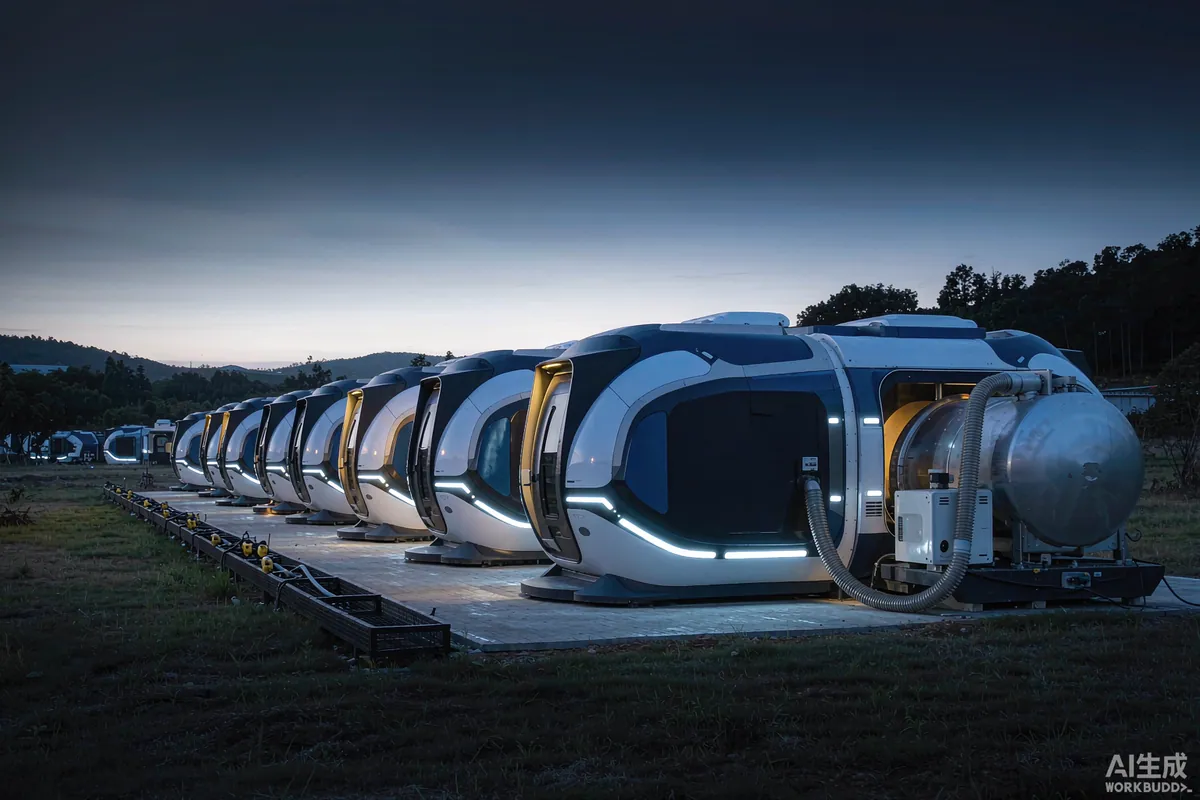
- Power. Grid connection if it survives, otherwise generation. A cluster of units sharing one generator is far more efficient than per-unit generation, and quieter.
- Water and sanitation. Often the binding constraint. If there is no mains supply and no sewer, the programme needs tanked water, collection or treatment, and a servicing plan - and that plan, not the housing, is usually the hard part.
- Access. For delivery, for placement equipment, and afterwards for residents, servicing and emergency vehicles.
Programmes that pre-identify and pre-assess potential sites - checking access, ground conditions and service availability in advance - compress the response dramatically. It is unglamorous work that pays off entirely at the moment it is needed.
Classification and Permission
Whether a factory-built unit may be occupied, and for how long, depends on how the jurisdiction classifies it. A unit treated as a temporary structure may be permitted quickly under emergency provisions; the same unit treated as a dwelling may face the full building approval process. This is a legal question that varies enormously between jurisdictions and between emergency and non-emergency conditions.
- Establish the classification before procurement, not after delivery.
- Understand what emergency provisions exist, how they are activated, and when they expire.
- Ask what happens at the end of the permitted period - extension, removal, or conversion.
- Confirm which documentation the authority will require for the unit.
Requirements may vary by application, market and applicable standard. For emergency and transitional shelter specifically, engage the relevant authority early and in writing; the answer determines whether a unit is a solution or a storage problem.
Why a Durable Unit Is Better Than a Disposable One
The argument for a well-built unit over a lightweight emergency shelter is not comfort for its own sake. It is that the transitional phase routinely lasts longer than planned, and a shelter that degrades after one winter has to be replaced - doubling the cost and doubling the disruption for the household living in it.
- Weatherproofing and insulation extend usable life across seasons and reduce the energy needed to keep units habitable.
- Lockable, private space supports security of belongings and personal safety, which are frequently cited as priorities by residents.
- Relocatability allows units to follow the recovery: from a shared site to a household plot, or from shelter use to a different function entirely.
- Residual value means the asset is not written off at the end of the emergency. Units can be sold, redeployed as workforce or tourism accommodation, or converted.
That last point is the one budget holders respond to. An asset that still has value after the emergency changes the arithmetic of the whole programme.
What a Realistic Programme Looks Like
The programmes that work share a shape: they are planned in advance, they are standardised, and they treat services as seriously as shelter.
- One or two standard configurations, specified and costed in advance.
- Pre-assessed sites with known access, ground conditions and service options.
- A standing logistics plan including freight, handling equipment and staging.
- Pre-agreed classification and permission route with the relevant authority.
- A servicing and maintenance plan for the occupied period, not just a delivery plan.
- An exit plan: what happens to the units when the transitional phase ends.
None of this is specific to capsule units - it applies to any factory-built shelter - but the characteristics of a factory-finished unit make the advance planning more valuable, because the payoff comes from compressing a schedule that is otherwise dominated by production and freight.
Where This Is Heading
Interest in factory-built shelter is growing for reasons that predate any single event: housing supply pressure, the cost and time of conventional construction, and a growing expectation that transitional accommodation should be decent rather than merely adequate. The technical capability is not the limiting factor. The limiting factors are stock, pre-arranged logistics, site preparation and legal classification - all of which are procurement and policy questions rather than engineering ones.
The Takeaway
Capsule units are a strong fit for transitional shelter and a poor fit for immediate emergency refuge, and the difference is lead time rather than quality. Programmes that work are planned before the event: standardised configurations, pre-assessed sites, arranged logistics, an agreed classification route, and a plan for services and for the exit. Get those right and a factory-finished unit is genuinely useful; get them wrong and it arrives after the phase it was bought for.
More from the Blog

Capsule Home Cost Guide: What You Really Pay in 2026
EXW, shipping, install and the hidden line items — a transparent breakdown of total landed cost.
Read article →
How to Install a Capsule Home in 3 Days: A Step-by-Step Guide
From site prep to first guest — the exact sequence our install crews follow on every deployment.
Read article →
Real Owners, Real Numbers: Success Stories
How a lakeside resort, a Spanish glamping site and a Singapore dealer hit their targets.
Read stories →Talk to the Factory
Ready to Ride the 2026 Wave?
Get the latest catalog, pricing tiers and a layout sketch for your land — straight from the engineering team.