Keeping Dust and Sand Out of a Capsule Home in Arid Climates
Practical steps to limit dust and sand ingress in a desert or arid-site capsule home: entry design, filtration, sealing, cleaning routines and landscape choices that reduce the load.

Dust control in an arid site capsule home is not a cleaning problem, it is a sequence problem. Fine particulate gets in through four routes: on guests' shoes and clothing, through gaps in the envelope when wind pressure builds, through ventilation and fresh air intakes, and through doors that stand open during arrival and housekeeping. Deal with the entry first, filtration second, sealing third, and cleaning last, and the total dust load drops noticeably instead of being redistributed. Requirements may vary by application, market and applicable standard.
Why Arid Sites Are Harder Than They Look
A dry site feels clean until the wind gets up. The challenge is not only visible sand but the fine fraction that stays airborne for hours and settles on every horizontal surface.
- Fine fraction travels. Particles small enough to remain suspended enter with any air change, filtered or not.
- Wind pressure finds gaps. A sealed modern unit is good at keeping air out, but any unsealed penetration becomes a preferential path.
- Static and dry air make dust cling. Smooth synthetic surfaces hold fine dust rather than releasing it to a cloth.
- Diurnal temperature swings drive pressure changes. Heating and cooling through the day pumps air through any leak, drawing dust with it.
- Water is scarce. Wet cleaning has to be planned around supply, and dry methods need to be effective enough to substitute.
Design the Entry as a Dust Airlock
The single most effective measure is making the entrance a place where dust is left behind rather than carried in. That is a design decision, and much cheaper before the unit is sited than after.
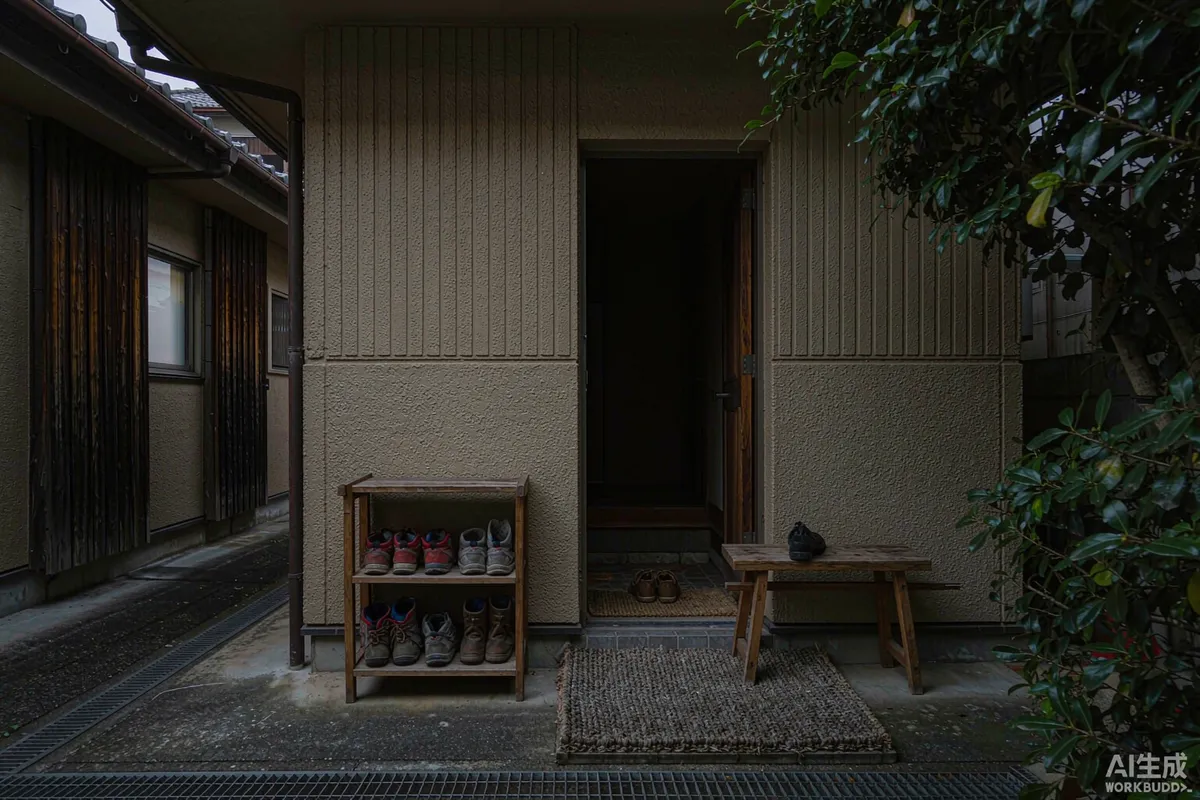
- Hardstanding before the threshold. A broom-finished pad or deck at the door removes the loose material that a natural surface keeps generating.
- Two-stage matting. A coarse scraper mat outside and a finer absorbent mat inside; both need to be cleanable and sized so a person takes at least two steps on each.
- A defined shoe-off point. A bench, a shelf and a visible cue do more for compliance than a written request.
- A covered threshold. Shade over the entry reduces wind-blown dust settling in the door reveal and keeps the seal out of direct sun.
- A place for outdoor gear. Bags, boots and camping equipment are the largest dust carriers on any site; give them somewhere that is not the living floor.
Filtration and Ventilation Strategy
Sealing a unit completely is not the goal; you still need fresh air and you still need to manage humidity from cooking and showering. The goal is controlled air changes through a filter rather than uncontrolled air changes through gaps.
- Filter the mechanical ventilation. Whatever fresh-air provision the unit has, check whether the intake is filtered and what grade, and set a replacement interval you can actually maintain.
- Check recirculating units too. Air conditioners and heat pumps often have a washable pre-filter that is easy to forget and that visibly affects dust load when neglected.
- Position intakes thoughtfully. An intake facing the prevailing dusty wind, or mounted low near ground level, will load its filter far faster.
- Positive pressure helps. Slightly pressurising the interior with filtered air discourages infiltration through gaps. This needs to be designed deliberately rather than assumed.
- Track filter condition by calendar. In a dusty season, replace by date rather than by appearance; a filter can look acceptable long after it has stopped working well.
Where air quality, filtration ratings or ventilation rates are regulated for your accommodation type, confirm the applicable requirement locally. Requirements may vary by application, market and applicable standard.
Seal Checks That Actually Matter
A systematic walk-around twice a year finds the openings that account for most ingress. Work from outside in, and write down what you find.
| Location | What to look for | Typical action |
|---|---|---|
| Door perimeter seal | Flattened, torn or hardened sections; light visible at the closing edge | Replace the seal; check the door still latches cleanly afterwards |
| Window gaskets | Gaps at corners, compression set, cracking from UV exposure | Replace affected lengths; consider shade for the most exposed elevations |
| Service penetrations | Unsealed gaps where pipes, cables or ducts pass the envelope | Seal with a compatible, durable product rated for the movement involved |
| Roof and wall joints | Hairline openings, degraded sealant, loose trim | Clean and re-seal; refasten trim before resealing |
| Vent and louvre openings | Missing or damaged screens and covers | Refit screens; confirm the closure mechanism still operates |
| Threshold and door sweep | Daylight under the door, worn sweep | Adjust the sweep; check the threshold is still level |
Cleaning Order for a Dusty Interior
Method matters more than product. Cleaning in the wrong order simply moves dust from high surfaces to low ones, then back again on the next gust.
- 1. High to low. Shelf tops, headboards, window reveals, then furniture, then the floor - never the reverse.
- 2. Dry first, damp second. A microfibre cloth that lifts and holds dust beats a wet cloth that turns it into streaks; follow with a lightly damp pass only where needed.
- 3. Vacuum with filtration. A vacuum that leaks fine dust through its own exhaust undoes the work. Check the machine's filter condition as part of the routine.
- 4. Leave the wet areas for last. Bathroom and kitchen have their own sequence, and water is too valuable on an arid site to use twice.
- 5. Reset the entry. Beat out or vacuum the mats and sweep the pad; this is what keeps tomorrow's load lower.
Landscape and Surface Choices That Lower the Load
The cheapest dust control happens outside the unit. Every square metre of stabilised ground is a square metre that stops generating dust.
- Stabilise the routes people actually walk. Broom finish, gravel bound with a stabiliser, or paving on the main paths and around the entry.
- Break the wind. A permeable screen, a low wall or planting on the prevailing wind side reduces wind speed at the unit and lets more dust drop out before it arrives.
- Avoid creating a dust source. Bare graded ground upwind of the units will keep supplying material; stabilise or plant it.
- Choose planting that tolerates the conditions. Species suited to the local climate and water availability will establish; anything else fails and leaves bare ground again.
- Keep hard surfaces cleanable. Smooth finishes that can be swept and occasionally washed with limited water are more practical than textured ones that trap fine material.

What to Tell Guests
One short paragraph in the welcome sheet prevents most frustration. Guests interpret dust as poor housekeeping; explained as a property of the site, with a clear expectation, it becomes part of the experience.
- Ask for shoes off at the bench, and say why.
- Say where to leave outdoor gear.
- Say what to do if a wind event brings dust in - usually a mat and a cloth kept in a known place.
- Invite a message rather than a review, by giving a contact route that is actually monitored.
Over a season, the combination of a staged entry, maintained filtration, sealed penetrations and stabilised ground reduces the dust load far more reliably than cleaning harder. Start with the entry and the filters; they are where the returns are.
More from the Blog

Capsule Home Cost Guide: What You Really Pay in 2026
EXW, shipping, install and the hidden line items — a transparent breakdown of total landed cost.
Read article →
How to Install a Capsule Home in 3 Days: A Step-by-Step Guide
From site prep to first guest — the exact sequence our install crews follow on every deployment.
Read article →
Real Owners, Real Numbers: Success Stories
How a lakeside resort, a Spanish glamping site and a Singapore dealer hit their targets.
Read stories →Talk to the Factory
Ready to Ride the 2026 Wave?
Get the latest catalog, pricing tiers and a layout sketch for your land — straight from the engineering team.