How Quiet Is a Capsule Home? Acoustic Comfort Explained
Sound in a capsule home is shaped by glazing, seals and mechanical equipment more than by wall thickness. What to check before you order and what to fix after delivery.

A well-built capsule home is quiet, and the reason is the same as for its thermal performance: a sealed, insulated envelope with few penetrations. What surprises buyers is where the noise comes from. In a conventional house, party walls and thin windows dominate. In a capsule, the walls usually perform well and the weak points are the large glass areas, the door seals, the roof under heavy rain, and any mechanical equipment mounted on or next to the shell. If you want quiet, specify the glazing and the seals first.
The Short Answer
Insulated sandwich panels with sealed joints block airborne noise effectively, so traffic and neighbour noise is rarely the problem. The three things that do cause complaints are single or thin glazing next to a road, a poorly sealed entrance door, and impact noise from rain or hail on a hard roof surface. Mechanical equipment - heat pumps, extract fans, fridge compressors - is the fourth, and it is the one most often overlooked during specification.
Where Sound Gets In
- Glazing. The largest area of the envelope is the least acoustically massive part of it. This is the single biggest variable.
- Door and window seals. Air gaps carry sound. A door that closes hard against a compressed gasket is quiet; one that rattles is not.
- Roof and wall impact. Rain on a metal-skinned roof produces broadband impact noise that no amount of insulation in the walls will stop.
- Service penetrations. Every hole for power, water or ventilation is a potential sound path if it is not sleeved and sealed.
- Mechanical equipment. Anything with a compressor or a fan transmits vibration into the structure unless it is isolated.
The Wall Build-Up
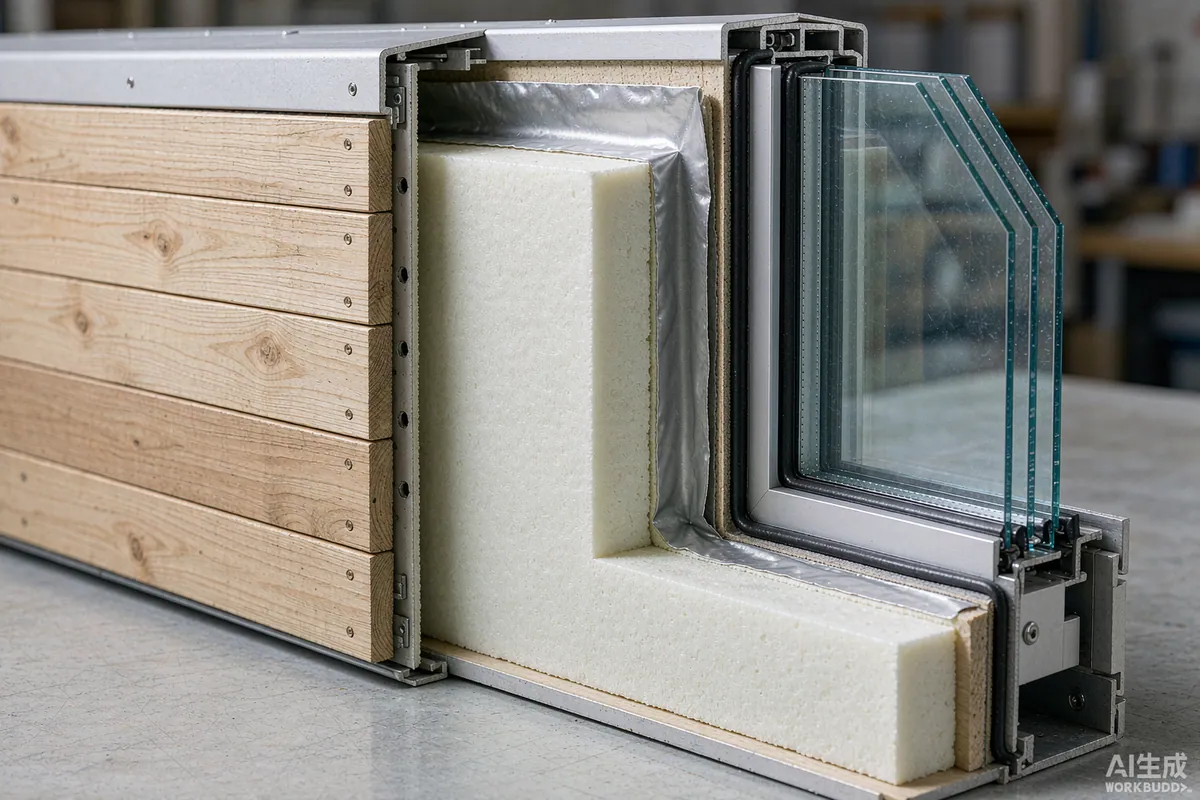
Capsule walls are typically a sandwich: an outer skin, a rigid insulation core and an inner lining. This construction performs better acoustically than its weight suggests, for three reasons.
Mass on both faces
Two skins separated by a core behave better than a single layer of the same total weight. Ask what the outer and inner skins are made of, not just how thick the panel is.
Decoupling
The insulation core breaks the direct path between the skins. Where the inner lining is fixed on resilient mounts rather than screwed straight to the outer skin, performance improves again.
Absorption
Insulation inside the cavity absorbs energy rather than reflecting it. This is why a hollow cavity performs worse than a filled one, even at the same thickness.
Glazing Is the Decision That Matters
Panoramic glass is the point of a capsule home, so the answer is not less glass - it is better glass. Compare options qualitatively and ask the supplier what is fitted as standard on the model you are buying.
| Glazing type | What it does well | Where it falls short |
|---|---|---|
| Single pane | Lowest weight and cost | Poor for both noise and heat; rarely appropriate on a habitable unit |
| Standard double glazing | Solid improvement on airborne noise | Performance depends heavily on cavity width and edge sealing |
| Asymmetric double glazing | Unequal pane thickness reduces coincidence dip | Slightly more expensive; availability varies by model |
| Laminated pane | The interlayer damps sound and adds security | Heavier; needs frame and hardware rated for the weight |
If your site is near a road, a railway or a neighbouring business, say so at the quotation stage. Glazing is far cheaper to specify up front than to replace after delivery.
Rain, Hail and the Roof
Impact noise from precipitation is the complaint buyers least expect. A hard outer skin sheds water efficiently and sounds like it. Mitigations are practical rather than exotic: an inner lining decoupled from the outer skin, a roof build-up with an absorptive layer, and soft interior finishes - rugs, upholstery, curtains - that reduce the reverberant build-up inside. If you are buying for a wet climate, ask specifically what the roof build-up is.
Mechanical Noise
- Heat pumps. The outdoor unit is the usual culprit. Site it on an anti-vibration pad, away from the sleeping area and away from a neighbour's window.
- Extract fans. Bathroom and kitchen fans should be on flexible duct, not rigid pipe screwed to the structure.
- Appliances. A fridge with a compressor mounted on hard feet will transmit into the floor. Isolation feet are cheap.
- Plumbing. Pipe runs should be clipped with resilient inserts, especially where they cross a sleeping zone.

What to Ask Before You Order
- What is the standard glazing specification on this model, and what upgrade options exist?
- How is the roof built up, and is the inner lining decoupled from the outer skin?
- How are service penetrations sleeved and sealed?
- What type of door and window gaskets are used, and are they replaceable?
- Where will the heat pump outdoor unit be mounted, and on what isolation?
- Can I see or hear a finished unit before I commit?
Inside the Unit: Reverberation in a Small Space
Blocking sound from outside is only half of acoustic comfort. The other half is what happens inside. A compact room with hard surfaces - glass, laminate flooring, a metal ceiling - is acoustically live. Voices sound sharp, footsteps carry, and everything from a kettle to a conversation is louder than it needs to be. In a space this size, absorption is the cheapest improvement available.
Three interventions do most of the work. Soft floor coverings stop impact noise travelling through the structure. Fabric - curtains, upholstery, a upholstered headboard - breaks up reflections off the largest hard areas. And a small amount of acoustic absorption on one ceiling or wall surface reduces the overall reverberant level without making the room feel dead. None of these require construction work, and all of them can be reversed.
This matters commercially as well as domestically. Guests reviewing a rental unit rarely write that a room was reverberant; they write that it felt harsh, or that they could hear everything. Soft finishes are a low-cost specification line with a direct effect on how a space is described in reviews.
How to Judge Quiet Before You Buy
Measurements are useful but easy to misuse. A decibel figure quoted without a context - what was measured, where, under what conditions - tells you little. What you can do instead is comparative and practical:
- Visit or view a finished unit and simply stand inside with the door closed while someone talks outside.
- Ask to see the glazing fitted to the actual model, not a sample board.
- Ask whether the door has a compression seal and how it is adjusted over time.
- If the unit is a rental, ask whether mechanical equipment has ever generated a guest complaint.
- Where a supplier provides acoustic data, ask which standard or test method it was produced under.
That last point is worth repeating: test results are only comparable when the method is the same. Requirements may vary by application, market and applicable standard.
Fixes After Delivery
Most acoustic problems found after installation are cheap to correct. Replace worn gaskets, add a brush or drop seal to the entrance door, fit heavier curtains across the glass, put the heat pump on proper isolation feet, and add soft furnishings to break up reverberation. Structural changes - swapping glazing units, adding mass to a wall - are possible but expensive, which is why the specification conversation belongs before the order, not after it.
The Takeaway
Quiet is a specification outcome, not a marketing adjective. Walls in a factory-built capsule generally do their job; the glass, the seals and the mechanical equipment decide the result. If you tell the supplier what your site sounds like - road, wind, rain, wildlife, neighbours - you give them the information they need to get the build-up right the first time. Requirements may vary by application, market and applicable standard.
More from the Blog

Capsule Home Cost Guide: What You Really Pay in 2026
EXW, shipping, install and the hidden line items — a transparent breakdown of total landed cost.
Read article →
How to Install a Capsule Home in 3 Days: A Step-by-Step Guide
From site prep to first guest — the exact sequence our install crews follow on every deployment.
Read article →
Real Owners, Real Numbers: Success Stories
How a lakeside resort, a Spanish glamping site and a Singapore dealer hit their targets.
Read stories →Talk to the Factory
Ready to Ride the 2026 Wave?
Get the latest catalog, pricing tiers and a layout sketch for your land — straight from the engineering team.